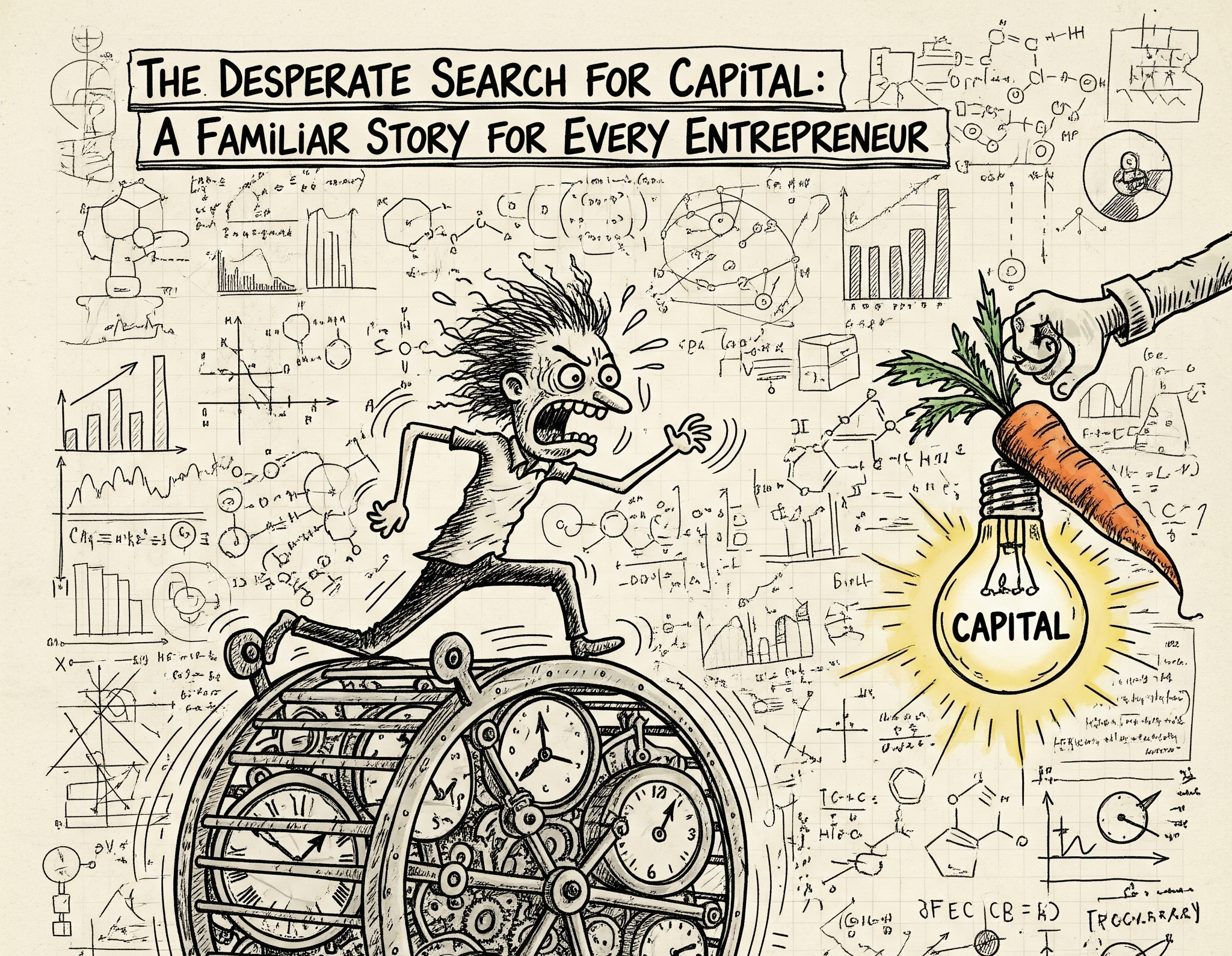
Most business owners who end up in expensive short-term business funding did not walk into it blindly. They were shown something better first: a reasonable long-term business loan, a sensible monthly payment and a clear path forward. They did their part. They sent the documents, answered the calls and waited.
Then the better option abruptly vanished, and something far more costly took its place at the exact moment they could least afford to say no. If that sounds familiar, the mistake was not yours alone. The short-term, expensive business funding process and trap was built to work that way.
This article pulls back the curtain on the “phantom business loan” option: how it works, why it lands when it does, what it really costs and the strategies that move a business out of the short-term cycle and into the world of long-term business financing, where the terms are built to last.
The Business Financing Offer That Sets the Clock
It usually starts with a conversation that feels like relief. A business funding broker listens to your situation and describes a long-term business loan with reasonable terms: a multi-year repayment schedule, a manageable monthly payment and a rate that sounds like it came from a bank. Then comes the paperwork. Bank statements, tax returns, a schedule of existing business debt, receivables reports, a copy of your driver's license and sometimes a personal financial statement. You hand it all over, and you are assured that underwriting is moving along.
That single offer does far more than describe a product. It sets the clock. Once you believe a sensible long-term business loan is in process, you stop shopping. You put off the conversation with your bank. You plan payroll, inventory purchases and vendor commitments around a closing date that feels real because a suspected business finance professional told you it was.
This pattern is common enough in short-term business lending that experienced owners have a private name for it: the phantom business loan option. It is the offer that sets the timeline, shapes your planning and holds your attention, yet was rarely positioned to close in the first place.
The power of the phantom long-term business loan is not in its terms. It is in the waiting. Every week spent waiting on an option that does not exist is a week you are not building a real alternative, and that lost time becomes the leverage that is used against you later.
How the Long-Term Business Financing Option Quietly Fades
Weeks pass. The updates sound encouraging and vague at the same time. The file is with credit. They need one more month of statements. The committee meets on Thursday. Then weeks and even months may pass. Each new request is small enough to seem reasonable, and each one quietly extends the timeline while keeping you engaged.
Eventually the tone changes. The long-term business lender has tightened its criteria. It wants two more years of operating history. It is not doing deals in your industry right now. Notice what is usually missing: a written decline you can read, the name of the institution that reviewed the file or any explanation you could take to another source. The option does not end so much as it fades.
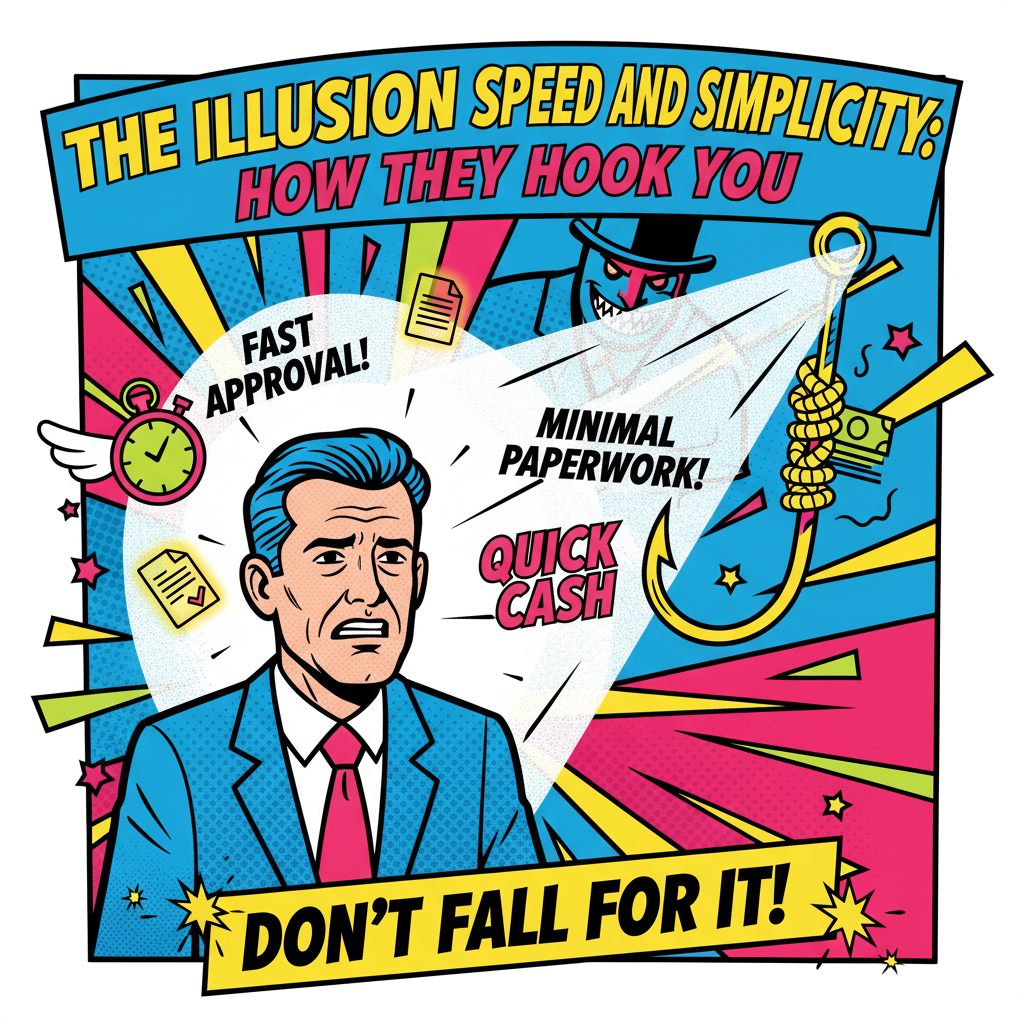
And in that same conversation, often in the same breath, a new set of offers appears. The terms are measured in months, not years. Payments are 5 to 10x higher than the longer-term option that was described. Principal paydown is aggressive from the first day, and the cost of capital is far higher than anything discussed at the start. It is presented as what is available right now, or as a “bridge” until the long-term business loan “comes through”.
That bridge rarely leads anywhere except to another bridge. Here is the insider's tell: if you never received a written term sheet, never heard the name of an actual institution and never saw a real decline, there is a strong chance the long-term option never existed as a live application at all.
Who the Business Funding Broker Really Works For
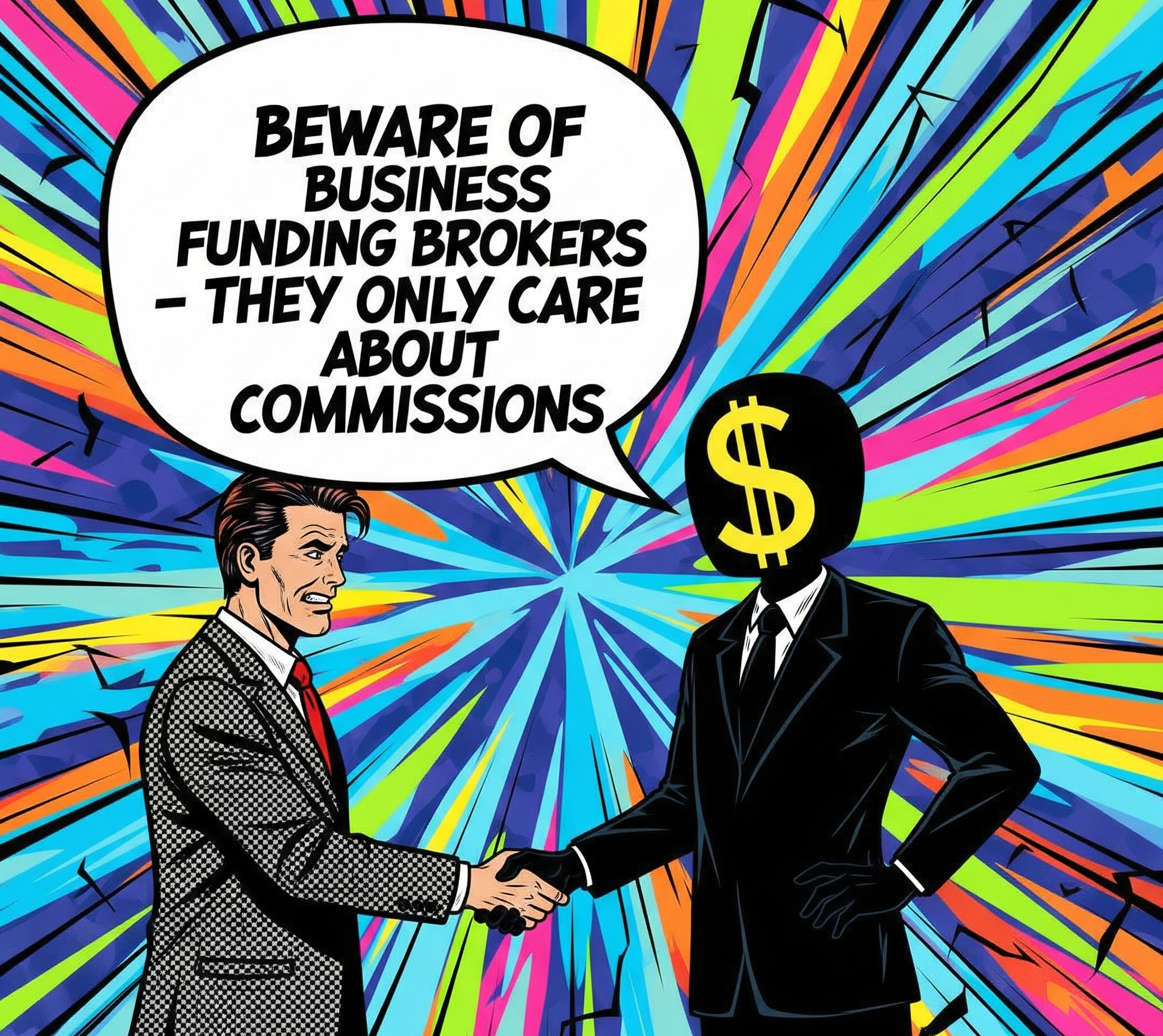
The uncomfortable truth is that many business funding brokers do not work in long-term business financing at all. They have no working relationships with commercial banks, SBICs or private business credit providers. In many cases they never even submitted an application to a long-term business creditor, because there was no one in their network to submit it to and they do not know how to read, let alone create, an institutional business credit package to submit to an investment committee for consideration of a potential transaction.
Their business model is short-term and transactional. They are paid commissions by the very short-term business funders they bring you to, often as 8% to 13% “points” on the amount funded, and they are frequently paid again when the deal is renewed or when another position is layered on top. Quick, expensive, layered transactions are not an unfortunate side effect of that model. They are the model, the model created to trap your business in a business debt spiral down.
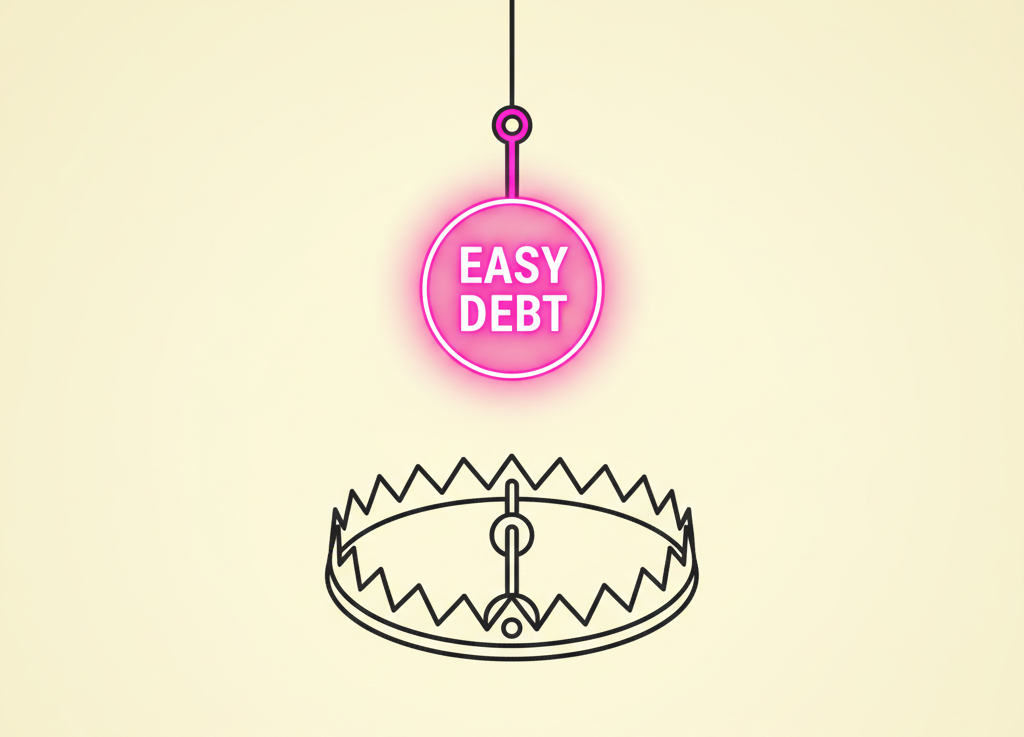
This is less about villains than about incentives. A business funding broker who is paid on volume and speed has every reason to keep you engaged with the promise of something better while steering you toward the product that actually pays the commission. The long-term business loan is the hook. The short-term business advance is the catch.
If you feel you should have seen it sooner, give yourself some credit. The process was designed by people who run it every day. You were running a business while they were running a playbook, and nobody in that conversation had a duty to tell you which one you were in.
Why the Switch Lands When Business Cash Flow Is Tightest
The timing of the switch is not an accident. Owners look for business funding because something is already tight: receivables are slow, a seasonal dip has arrived, a large order needs to be filled, a tax bill is due or a critical piece of equipment has failed.
By the time the phantom option fades, the months of waiting have usually made that original problem worse. Payroll is still due every two weeks. Vendors have been stretched as far as they will go. Some owners have already accepted a smaller short-term business advance just to hold things over while the long-term business loan was supposedly in process.
At that moment your negotiating position is at its weakest. You no longer have time to start over with a bank, and everyone involved knows it. The replacement offer does not need to be good. It only needs to be fast and available when you feel you have run out of choices.
Recognizing this pattern is itself a strategy. The moment of greatest pressure is the moment to slow down, not speed up. A decision made under a manufactured deadline is rarely the decision you would make with a clear view of your business cash flow, and a short delay to get that clear view is almost always cheaper than the alternative.
The Credit Underwriting Question Nobody Asked
Here is a question many owners ask too late: wasn't the business funder supposed to check whether my business could actually afford these payments?
In long-term business lending, the answer is yes, and that analysis sits at the center of the process. A commercial bank or private business credit provider studies business cash flow, business debt service coverage, existing obligations and how the new payment and business loan structure fits your operating cycle. The goal is a business loan that can be repaid from normal operations without starving the business that produces the revenue.
Many short-term business funders underwrite very differently. Their focus is on deposit volume, average daily balances and how quickly they can recover their capital. Whether the payment is sustainable for the life of the deal is often a secondary concern. Some products are structured as a purchase of future receivables rather than a business loan, which can change the protections and disclosures that apply to you. This can greatly alter the risk profile of the business funding.
The result is an approval that feels generous on the day it funds and becomes mathematically difficult within weeks. Add a second or third position on top of the first, and aggressive withdrawals can absorb a startling share of revenue before rent, payroll or inventory is paid. That outcome is not a failure of discipline on your part. It is the predictable product of underwriting that was never designed to protect your business in the first place.
When the Accommodating Business Funder Stops Accommodating
Before the business funding arrives, the experience is fast, friendly and flexible. Calls are returned in minutes, documents are reviewed in a day and money arrives in hours. The business funder seems eager to help, because at that stage it is.
The experience often changes when payments need to be amended because the original underwriting missed the mark. Requests for payment relief move slowly. Calls are routed to a collections department. Contracts may contain personal guarantees, strict default triggers, fees for returned debits and, in some states, provisions that make it easier for the business funder to pursue a judgment. The relationship that felt accommodating can turn adversarial almost overnight.
Some business funders will agree to a temporary payment reduction, but it frequently extends the term at extra cost or arrives packaged as a renewal that resets the clock and generates a fresh commission. Many owners respond by taking another short-term business advance to cover the first one, which is exactly how a single position becomes a stack.
It is worth knowing that many of these agreements contain reconciliation language that allows payments to be adjusted to actual receipts when revenue declines. Read your contract before you need it, document any drop in sales carefully and put every request in writing. A firm tone from a collections desk does not mean you are out of options.
Reading the Real Cost Behind the Replacement Offer
Replacement offers rarely quote an annual percentage rate, and if it does, it is high. Instead you hear about a factor rate, a payback amount or a holdback percentage. These terms make the cost feel smaller than it really is.
Consider a simple example. A business receives $100,000 at a factor rate of 1.35 and repays it through weekly debits over 8 to 9-months. The total payback is $135,000, so the cost is $35,000 for half to three-quarters of a year. Because principal is being repaid from the very first day, the business never has use of the full amount for the full term, and the effective annual cost can climb well past 100 percent. Origination fees (business funding broker fees) deducted from the proceeds push the real number higher still.
A practical test cuts through the language. Ask three questions: how much will actually land in my account, how much will I repay in total, and over how many days? Those three numbers let any business finance advisor or accountant calculate an annualized cost you can compare directly against a long-term business loan.
When that comparison is made against long-term business financing priced in the low-to-mid teens and amortized over several years, the gap is usually not a matter of a few points. It is often the difference between a business that rebuilds and a business that spends the next two years working for its business funders.
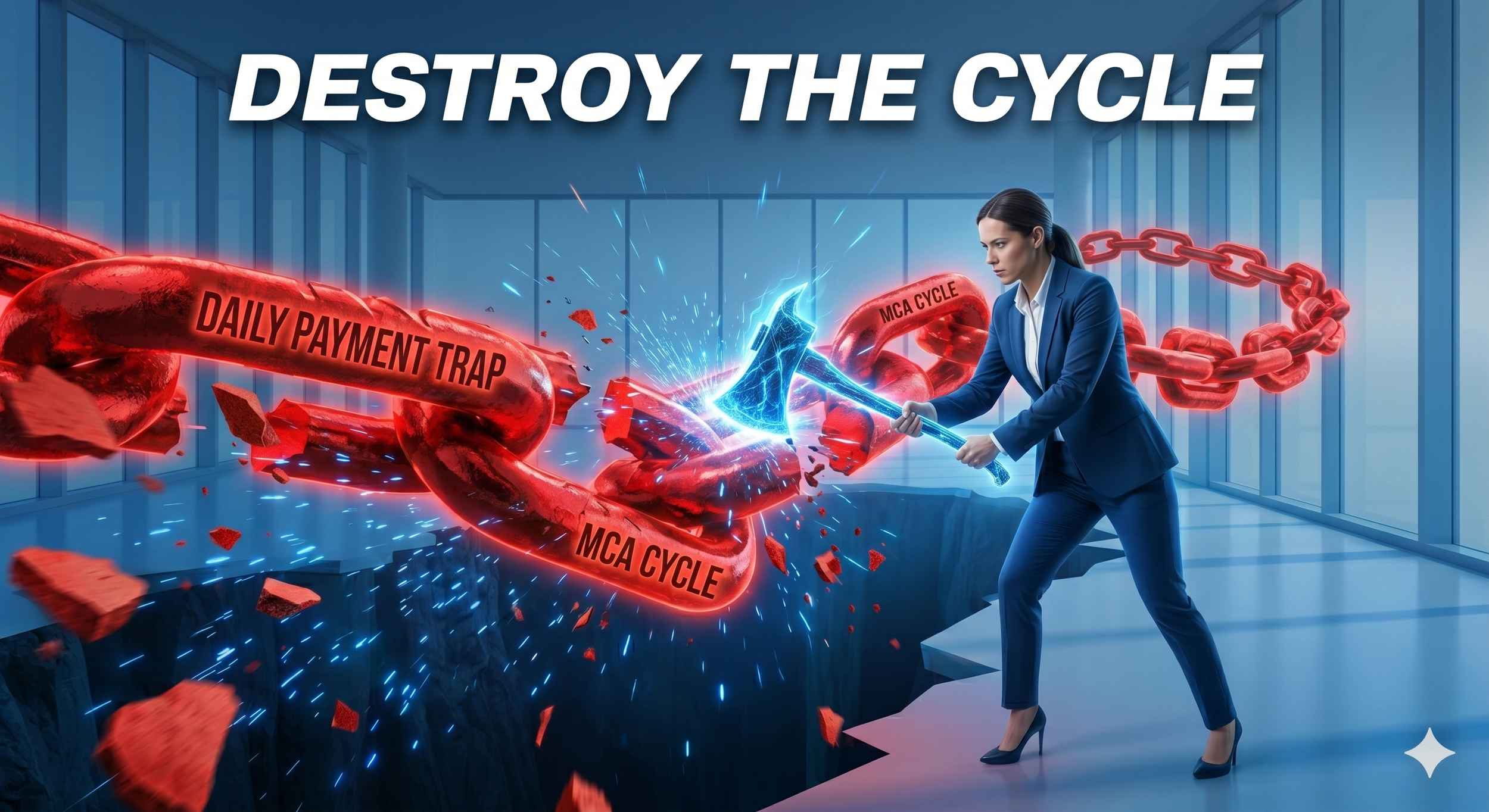
Business Debt Refinancing That Breaks the Short-Term Business Funding Cycle
If you are already carrying short-term positions, there is a way out, and it starts with an honest inventory. List every position along with its remaining balance, its payment amount and frequency, the remaining payback and any early payoff terms. Some agreements offer a discount for early payoff, while many do not, and that detail matters when planning a business debt refinancing.
Next, build a true picture of business cash flow. Compare what your operations actually produce against what your business debt service consumes every week. That picture tells you how much payment your business can truly support and becomes the foundation of any credible plan.
Business debt refinancing means consolidating expensive short-term positions into a single longer-term obligation with a new loan and a new payment that fits your operations. Long-term business creditors will want to understand how the positions accumulated and where the business is heading. Clean financial statements, a clear explanation and a realistic forecast carry real weight. In some cases a negotiated payoff or workout with existing business funders comes first, and the business debt refinancing follows.
Be cautious of consolidation offers that come from short-term business funders themselves. Many are simply a larger position with a shorter runway. A genuine business debt refinancing lowers the payment and extends the term. Anything else only renames the problem.
Where Long-Term Business Financing Actually Lives
Getting away from short-term and expensive business funders means moving into a different part of the market entirely: the long-term business financing world of private business credit providers, SBICs and commercial banks, where, at the time of this writing, business financing is generally priced in the 11% to 15% APR range for qualified businesses. These are institutions that underwrite to business cash flow, amortize over years instead of months and want your business to succeed because their repayment depends on it. Reaching them requires working with a business finance advisor, not a transactional business funding broker, because the preparation, positioning and relationships involved are entirely different from those of a quick short-term deal.
Commercial banks typically offer the lowest cost of capital for businesses that fit their criteria, along with more documentation and longer timelines. Small Business Investment Companies, known as SBICs, are privately managed investment funds licensed by the U.S. Small Business Administration that provide business debt and equity capital to growing companies, often with more flexibility than a traditional bank. Private business credit providers are nonbank institutions that serve businesses that do not fit neatly inside a bank's criteria, offering multi-year terms structured around business cash flow rather than daily deposits.
Each of these sources has its own appetite, its own documentation standards and its own way of evaluating risk. Knowing which one fits your business, and presenting your business in the way that institution expects to see it, is often what separates an approval from a quiet decline.
Why a Business Finance Advisor Changes the Outcome
The difference between a business finance advisor and a transactional business funding broker comes down to who they work for and what they are paid to deliver. A business finance advisor works on your behalf to assess whether your business is ready for long-term business financing, prepare a complete and credible package, position the story behind your numbers and approach the institutions most likely to approve it. Just as importantly, a business finance advisor will tell you honestly when you are not ready yet and what needs to change first.
Before trusting anyone with your documents and your timeline, ask a few direct questions. Which specific institutions will receive my application? Can I see the term sheet in writing? How are you paid, and by whom? Do you work with commercial banks, SBICs and private business credit providers? What happens if the long-term option does not close? Clear, specific answers are a good sign. Vague answers are the phantom showing itself early.
The “phantom business loan option” only has power when you do not know it is there. Now you do. With the right business finance advisor, a real plan for business cash flow and access to the long-term side of the market, the next offer you consider can be one that was actually designed to close, and designed to help your business last.

More Business Finance and Strategy Articles: