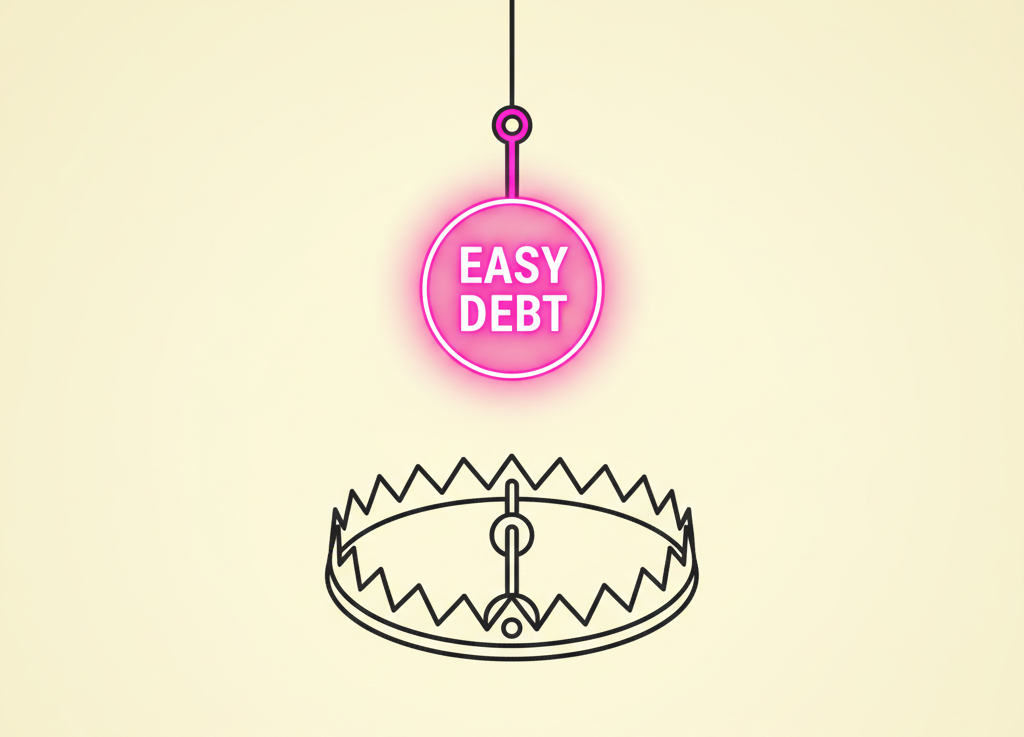
If you are currently paying excessive annualized rates on a 6 to 12-month payback period for business funding such as merchant cash advance (MCAs) or short-term business loans, you are not stuck, you are misinformed and have been misled. Many business owners with strong personal credit (680, 700 and higher) and a stable operating history are placed into expensive, short-term financing not because it is their best option, but because it is the fastest and most profitable option for the broker who arranged it.
This article explains why that happens, how the business financing industry's commission structure works against you and what a realistic path toward long-term, sustainably priced capital actually looks like. Let’s walks through business bridge financing, private credit and commercial bank facilities, asset-backed lines of credit and even SBA-backed term loans.
Let’s look at the business financing options that exist specifically to replace short-term debt with financing that fits your business cash flow, not your broker's commission payout schedule. You worked hard to build a business credit profile and a track record that qualifies you for better terms. It's time to get out of the predatory short-term business financing world.
The Hidden Cost of Fast Money Business Financing
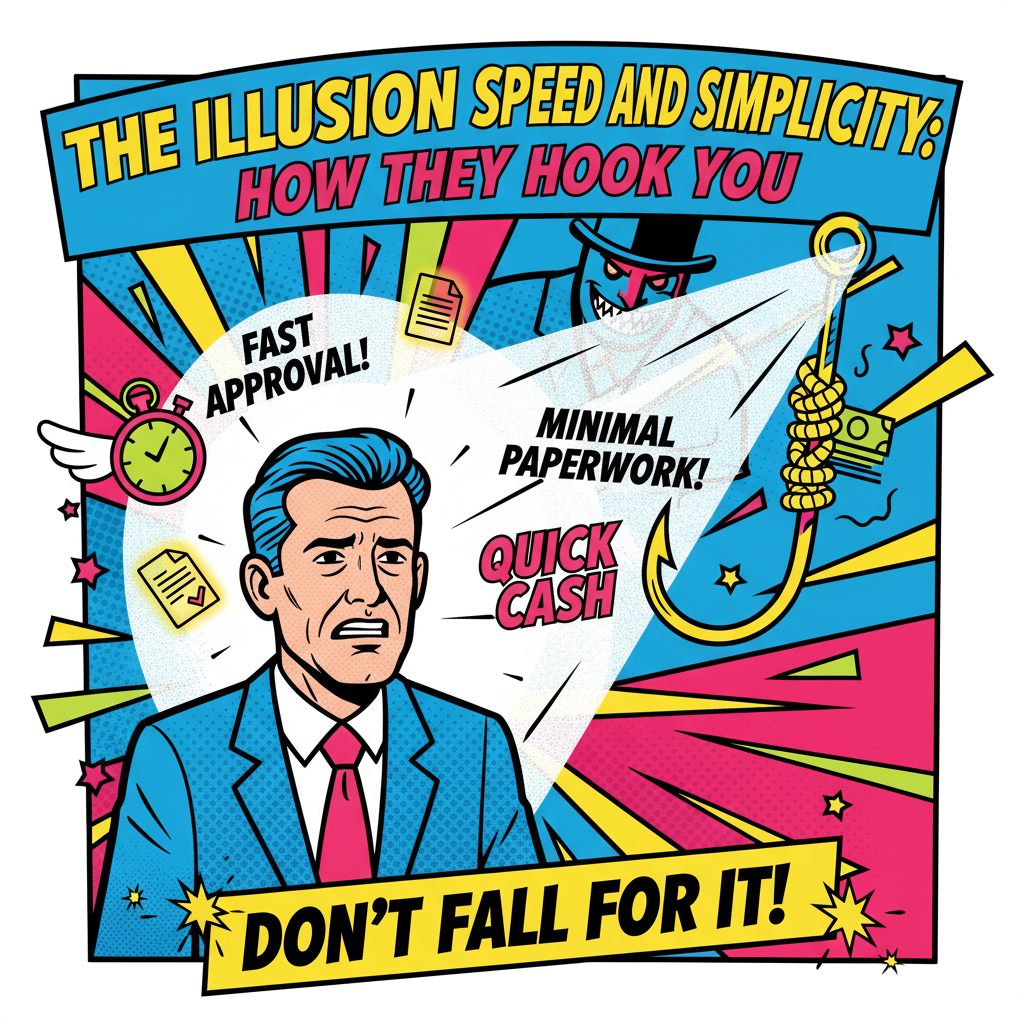
Short-term business financing is marketed on speed of underwriting and capital delivery. Same-day or 24-hour funding sounds appealing when cash flow is tight, and for a genuine emergency, speed has real value. But speed comes at a price that most business owners never see broken out in plain terms: annualized percentage rates that frequently land between 40% and 100%, sometimes higher, once factor rates and fees are converted into a true annualized cost of capital.
Consider the mechanics. A merchant cash advance (MCA) quoted at a 1.35 factor rate on a $150,000 advance with a 9-month repayment term does not sound alarming when it's presented as "35 cents on the dollar." But converted to an annualized rate, that same advance frequently works out to somewhere between 65% and 90% APR, depending on how quickly payments are collected. Daily or weekly ACH debits compound the pressure because they pull directly from your operating cash before you've had a chance to use that revenue for payroll, inventory or rent.
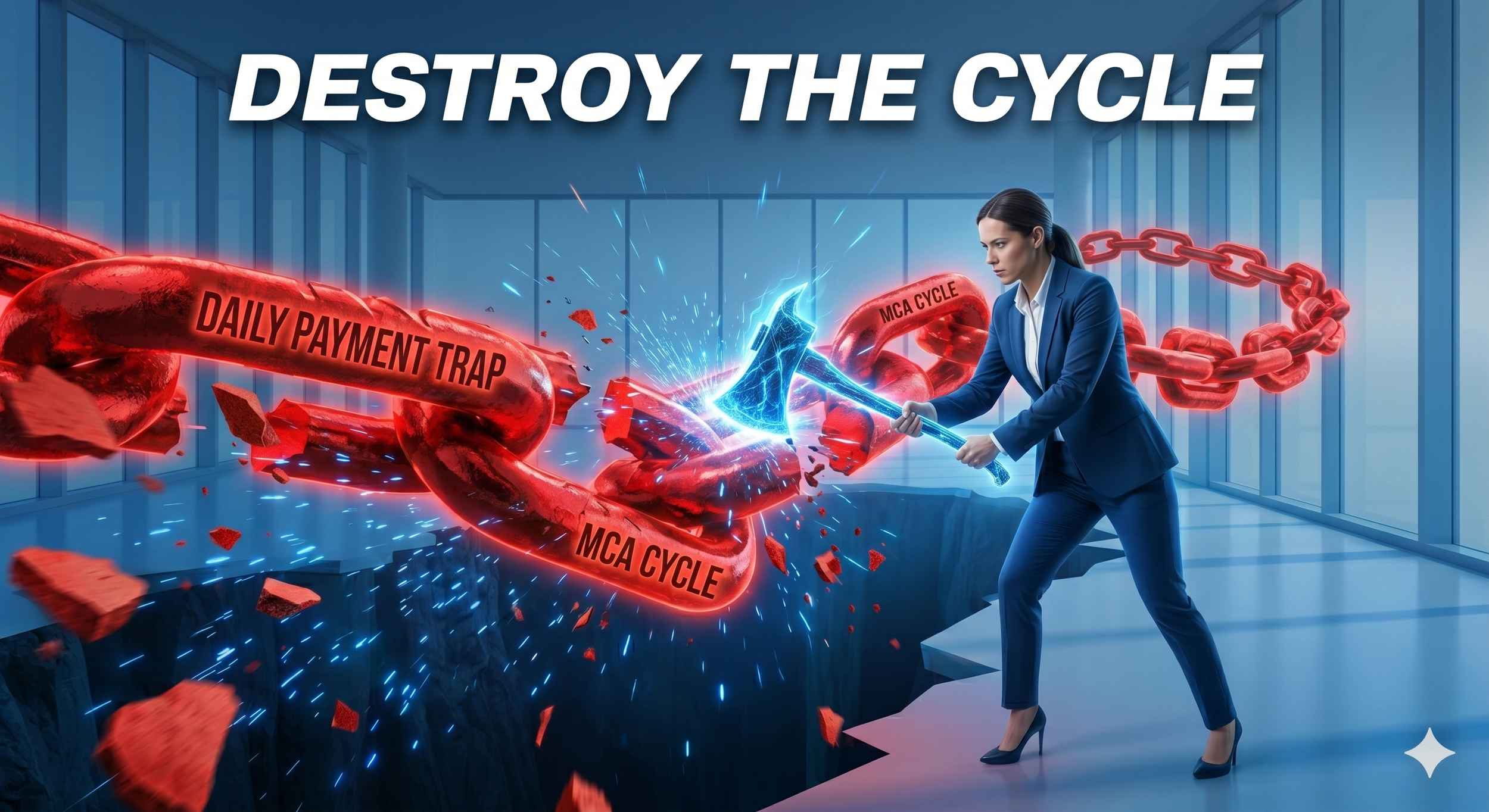
The result is a business financing structure that is engineered to be renewed, and frequently. Once the original balance is paid down to a certain threshold (40% to 50% typically), many lenders and brokers proactively offer a "renewal" or "top-up" effectively “refinancing” the remaining balance into a new advance with fresh fees and the same predatory payback period. Business owners can find themselves in a cycle of stacked or serially renewed short-term business debt for years, paying enormous financing costs on capital that should have been financed once, properly, at a fraction of the rate.
All of this is completely unnecessary for business owners with the credit and operating history to qualify for something dramatically better.
Why Your Business Funding Broker Steered You Wrong
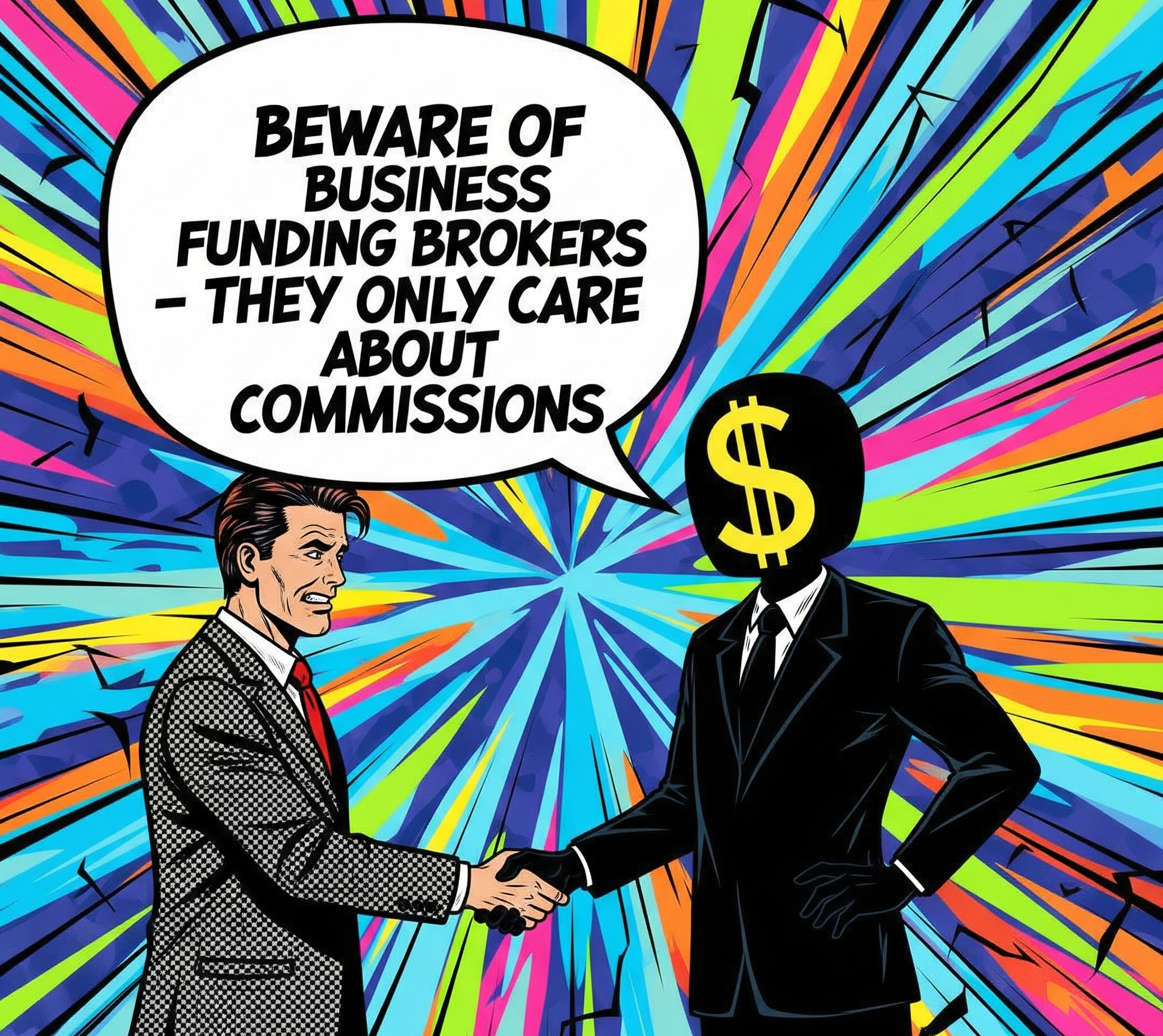
Most business owners assume their financing broker is shopping the entire market on their behalf. In reality, many business funding brokers, sometimes calling themselves "funding advisors" or "capital consultants" work from a limited panel of alternative lenders who pay the broker a commission, typically 8% to 15% of the funded amount, and sometimes more. That commission is baked directly into your cost of capital (1.08 to 1.15 of the 1.35 or 1.45 “factor rate”). The lender charges you enough to cover the commission, their own cost of funds, and their profit margin, which is precisely why short-term alternative financing carries such steep effective rates.
This creates a structural conflict of interest. A broker paid on a percentage of the funded amount, and paid faster and more reliably through short-term alternative lenders than through banks or SBA channels, has little financial incentive to steer you toward a 3-year private credit or commercial bank credit facility at single-digit or low-teens annualized interest rates when a 9-month merchant cash advance closes in 48 hours and pays a bigger, faster commission. The broker's business model rewards speed and volume, not your long-term cost of capital.
It's worth being direct about this: a broker is not your fiduciary. Most commercial finance brokers have no legal obligation to act in your business’ best financial interest. They are compensated to close deals, not to minimize your interest expense and maximize your business funding payback period. That doesn't make every broker predatory as many are honest and transparent about the trade-offs but it does mean the incentive structure of the industry, left unchecked, tilts toward speed and short terms rather than the lowest sustainable cost of capital for a qualified borrower. The business funding industry favors brokers, not business owner’s.
If your broker's "network" only ever produces short-term, high-cost offers regardless of how strong your credit and financials are, that is a signal about their weak network, not about your creditworthiness.
What Your Credit Profile Actually Qualifies You For
A FICO score of 680, and especially 700 or higher, combined with two or more years of consistent business revenue, is a meaningfully strong profile in the commercial lending world. Business owners with this profile are routinely eligible for financing products that alternative short-term lenders simply don't offer, because those lenders are built to serve borrowers who can't qualify for private credit, commercial bank or SBA financing.
Lenders assess a combination of factors: personal credit score, business credit history (including any trade lines and payment history with vendors), time in business, annual revenue, cash flow coverage ratios, existing debt load and collateral availability. A business borrower with strong personal credit, two-plus years in business, and healthy monthly cash flow typically clears the underwriting bar for commercial banks, SBA lenders and private credit funds. all of which offer materially lower rates and materially longer repayment terms than alternative short-term business lenders.
The mismatch happens when a qualified borrower is funneled into a product built for a much riskier borrower profile: a startup with no credit history, a business with recent bankruptcies, or an owner with a sub-625 FICO score. Those borrowers may genuinely have no alternative to high-cost, short-term financing. A borrower with 680+ credit and a stable operating history almost always does have an alternative it simply isn't available through a broker whose referral network is limited to short-term, high-commission and self-serving business financing products.
Understanding where you actually sit in the business credit spectrum is the first step toward recognizing that you have been offered a product priced for someone else's business risk profile.
Bridge Financing: The First Step Toward Real Relief
For a business currently carrying expensive short-term debt, the fastest practical relief is often an 18-to-24-month bridge facility. Bridge financing exists specifically to "bridge" a business from an unsustainable financing structure to a long-term business credit facility, without requiring the borrower to wait months for a protracted underwriting process and transaction to close while high-cost payments continue to erode business cash flow that has turned negative.
A properly structured business bridge loan accomplishes three things simultaneously. First, it pays off or consolidates the existing short-term balances that are straining operating cash flow. Second, it extends the repayment horizon to 18 or 24 months, which meaningfully lowers the periodic payment burden compared to a 6-to-12-month product, even before accounting for a lower rate. Third, and most importantly, it buys time… time to assemble the financial documentation, tax returns and bank statements a private credit lender or commercial bank will require, and time to let a few months of clean payment history accrue on the new facility, which strengthens the eventual refinance application.
Bridge lenders in this space are typically private credit funds, specialty finance companies or non-bank lenders who understand this exact transition and price the facility accordingly usually well below the effective APR of the short-term products being replaced, though still a premium versus a commercial bank or private credit facility. The bridge is not the final destination. It is a deliberate, temporary step designed to stop the bleeding and set up qualification for a longer-term, lower-cost facility at 24, 30, 36 and even 60-month amortizations.
Private Credit is a Faster Path to Institutional-Quality Capital
Private credit funds and commercial banks have become one of the most important sources of mid-market and small-business financing over the past decade, filling a gap between expensive alternative lenders and the sometimes slow, document-heavy process of a traditional bank or SBA loan. Private credit funds are non-bank institutional lenders often backed by insurance companies, pension funds or private capital that lend directly to businesses using more flexible underwriting than a regulated bank, while still pricing based on real credit risk rather than maximizing commission volume.
For a business owner with strong credit and a bridge facility performance history, private credit often becomes the next logical step: a 24-to-36-month term facility (or even 60-month Asset-Backed Line of Credit or ABL) priced meaningfully below short-term alternative lending, with underwriting that can move faster than a bank because private funds are not subject to the same regulatory capital and compliance processes. Private credit lenders will still evaluate cash flow, collateral and credit profile carefully, but they are generally more willing to structure around a business' specific situation such as seasonal revenue, a recent large contract, an acquisition or a temporary dip in a single quarter's numbers, than a bank's standardized underwriting model allows.
The trade-off is cost: private credit is typically priced slightly higher than a bank facility, though still dramatically lower than short-term alternative financing. For many businesses coming off a bridge loan, private credit represents the right middle step (a facility long enough and cheap enough to materially reduce financing costs) while the business continues building the track record needed to eventually qualify for bank-level or SBA-level pricing.
Commercial Bank Credit Facilities: The Gold Standard
A traditional commercial bank credit facility, whether a term loan or a revolving line of credit, remains the benchmark for cost-effective business financing. Typically structured over 24, 30, or 36 months (and sometimes longer), priced at rates that can be a fraction of alternative short-term financing, particularly for business borrowers with strong personal and business credit.
Traditional bank underwriting is more document-intensive and takes longer to close than alternative financing (often four to eight weeks rather than 24 to 48 hours) because banks are subject to regulatory capital requirements and formal credit committee processes. Banks will want two to three years of business and personal tax returns, year-to-date financial statements, a debt schedule, a personal financial statement, and often a full personal guarantee. For businesses with clean books and consistent profitability, this process is very achievable, and the payoff is substantial: markedly lower rates, longer terms, and a banking relationship that can support future growth financing, treasury services and lines of credit.
This is precisely why the timeline matters. A business coming directly out of a distressed, high-cost short-term financing situation often cannot qualify for a bank facility immediately as banks are cautious about recent derogatory payment history or a business debt structure that signals financial stress. This is where the bridge to private credit and commercial bank sequence becomes strategic: 18 to 24 months of clean payment performance on a bridge or private credit facility rebuilds the financial profile a bank underwriter wants to see, positioning the business to graduate into bank-level pricing and terms.
Asset-Based Lines of Credit: Leveraging What You Already Own
For businesses with meaningful accounts receivable, inventory, equipment, or other tangible assets, an asset-based line of credit (ABL) is frequently one of the most underused financing tools available. An ABL is a revolving credit facility secured by specific business assets — most commonly receivables and inventory — with availability that flexes up or down based on the value of those assets, and terms that commonly run five years (60 months).
ABL financing is particularly valuable for businesses with strong assets but inconsistent or seasonal cash flow, since the borrowing base is tied to collateral value rather than solely to trailing cash flow ratios. A distributor, manufacturer, or wholesaler carrying substantial receivables and inventory, for example, may be able to access a larger, longer-term facility through an ABL than through a standard cash-flow-based term loan, because the lender's risk is anchored to the collateral rather than solely to projected earnings.
ABL lenders — which include specialized finance companies, commercial banks with asset-based lending divisions, and some private credit funds — typically charge rates well below short-term alternative financing, and the five-year revolving structure means the business isn't facing a refinance event every 12 or 24 months. For business owners currently pledging future revenue to a merchant cash advance provider, moving to an ABL secured by receivables or inventory the business already owns is often a straightforward, materially cheaper alternative, provided the business has the asset base to support it.
SBA-Backed Loans and Lines of Credit: Long Runway, Low Cost
The U.S. Small Business Administration doesn't lend money directly in most programs, it simply guarantees a portion of loans made by SBA-approved banks and non-bank lenders, which reduces the lender's risk and allows those lenders to offer longer terms and lower rates than they could otherwise extend to a small business. For qualified borrowers, SBA-backed financing is often the single most cost-effective long-term option available, with repayment terms that can extend to 10 years (120 months) for working capital and general business purposes, and even longer for real estate (15, 20 and even 25-years on SBA 504 loans).
The qualification bar for SBA financing is meaningful as lenders will review personal and business credit, collateral, cash flow, industry risk and use of proceeds, but a borrower with 680+ credit, consistent revenue and a clean recent payment history is a realistic SBA candidate, especially once that borrower has rebuilt a clean track record coming out of a bridge or private credit facility. Given the combination of long repayment terms and low relative cost, SBA-backed financing should be a serious consideration for any qualified business owner looking to permanently exit short-term, high-cost business debt rather than simply renewing it again.
How to Vet a Financing Partner Who Actually Works for You
The single most important step in escaping a cycle of expensive short-term financing is choosing who you work with next. Not every business finance broker or advisor operates on the commission-maximizing model described earlier, but it is on you to verify that before signing anything. A few concrete questions separate a business finance broker working for you from one working primarily for their own commission.
Ask directly what range of products the business finance broker or advisor can access, not just what they're offering you. A business finance broker or advisor with genuine access to bank, SBA, private credit and ABL relationships should be able to explain, in plain terms, why a particular structure fits your specific business credit and cash flow profile, rather than presenting only one type of product regardless of your qualifications. Ask how the broker is compensated, and by whom since a business funding broker paid a flat, disclosed fee by you or a transparent, modest commission by a bank or SBA lender, has a very different incentive structure than one paid 10%-plus commissions by short-term alternative lenders.
Request the true annualized cost of capital for any offer, not just the factor rate or "cents on the dollar" framing. If a broker resists converting a proposal into an actual APR or annualized cost of capital, that resistance is itself informative. Finally, ask what the plan looks like beyond the immediate financing since a business finance broker or advisor genuinely working in your interest should be willing to map out a multi-step path (bridge financing, then private credit or commercial bank, then possibly SBA-backed loan or ABL) rather than treating each transaction as a standalone event disconnected from your long-term cost of capital.
An independent commercial finance advisor, a fee-based consultant or a banker at a bank where you already hold deposit relationships can often provide a second opinion before you sign a new short-term agreement, particularly one being pitched as a "renewal."
Building Your Long-Term Business Financing Roadmap
Replacing expensive short-term business debt financing is rarely a single transaction. It is a sequence and a path. The realistic path for most qualified business owners looks something like this: first, secure an 18-to-24-month bridge facility that consolidates and pays off existing high-cost short-term balances, immediately reducing serious payment pressure and stopping the compounding cost of repeated renewals. Second, use that bridge period to assemble clean financial documentation and build on-time payment history and more business free cash flow, which materially improves your position for the next step.
Third, at or before the bridge facility's maturity, pursue the appropriate longer-term structure based on your business's specific asset base and cash flow: a private credit facility (24-to-36 months) if speed and flexible underwriting still matter most; a commercial bank term loan or line of credit (24-to-36-plus months) if your financials now support standard bank underwriting; an asset-based line of credit (60 months) if your business carries substantial receivables, inventory, or equipment; or an SBA-backed term loan or line of credit (60-to-120 months) if you want the longest runway and lowest realistic cost of capital available to a small business.
Throughout this process, track one number more than any other: your true annualized cost of capital across all outstanding financing. Every refinance or new facility should move that number down, not simply extend the payment schedule while leaving the effective rate untouched. A business owner with a 680-plus FICO score and a steady operating history has real leverage in this market, and leverage that a narrow network of high-commission short-term lenders will never fully reflect back to you. Taking the time to move deliberately from bridge financing toward commercial bank and private credit financing is the path that actually gets you the cost of capital and payback terms that you deserve, not that you are “stuck with”.

More Business Finance and Strategy Articles: