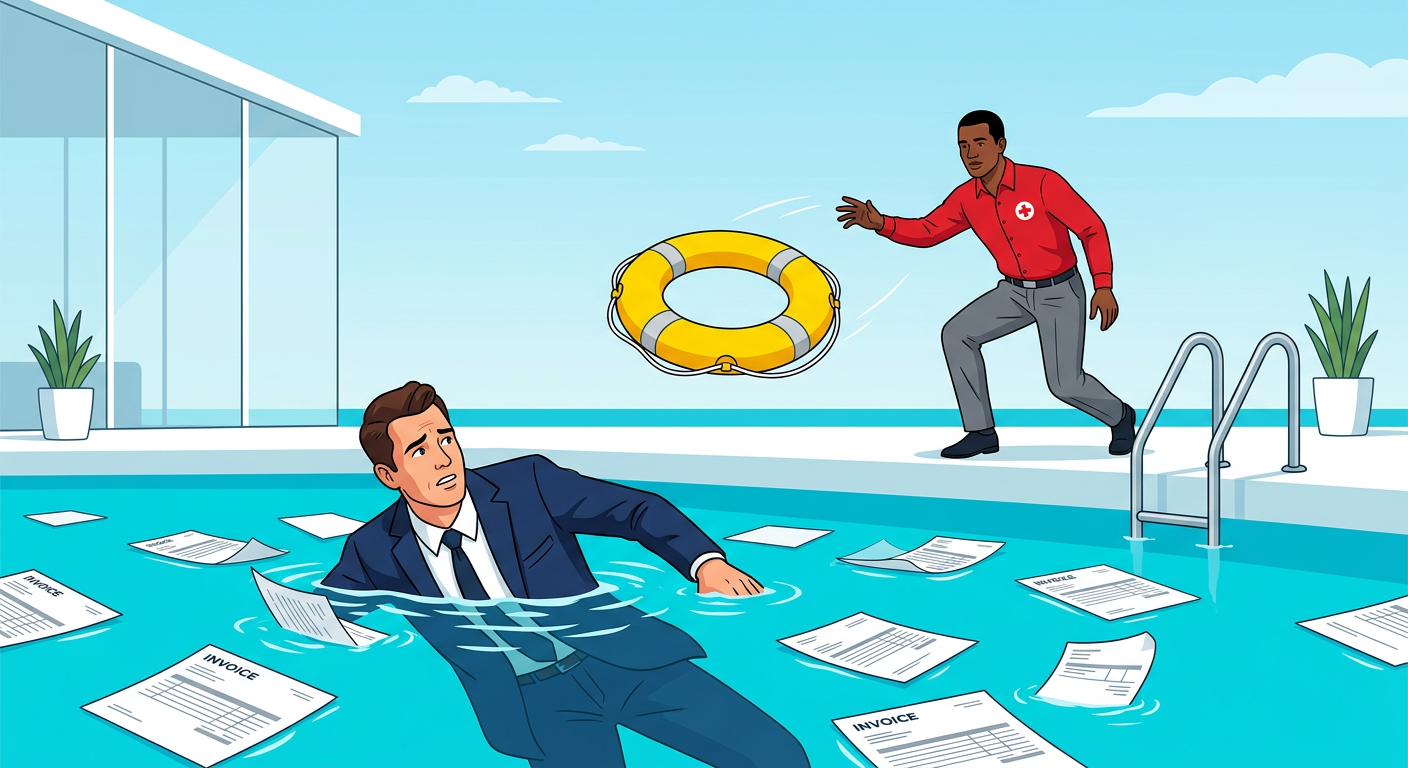
If your business has taken on expensive business debt like expensive term loans or merchant cash advances (MCAs) with rates that quietly eat your profit margins, you already know the feeling. It doesn't show up all at once. It shows up in the space between what you thought you'd have left over and what's actually sitting in the account on a Friday afternoon.
The good news is that expensive business debt is rarely a dead end. It's a solvable problem. But solving it takes more than hope, and it takes more than trusting the first friendly voice that calls you promising a way out. This article walks through what actually gets a business owner out of the expensive business debt cycle, and just as important, what keeps well-meaning business owners stuck in it for far longer than they need or want to be.
Why Time Works Against You
Expensive business debt behaves differently than almost any other financial challenge a business owner faces. A slow sales month can be recovered the following quarter. A difficult employee situation can be resolved with a conversation and a plan. But expensive business debt compounds the longer it sits unaddressed.
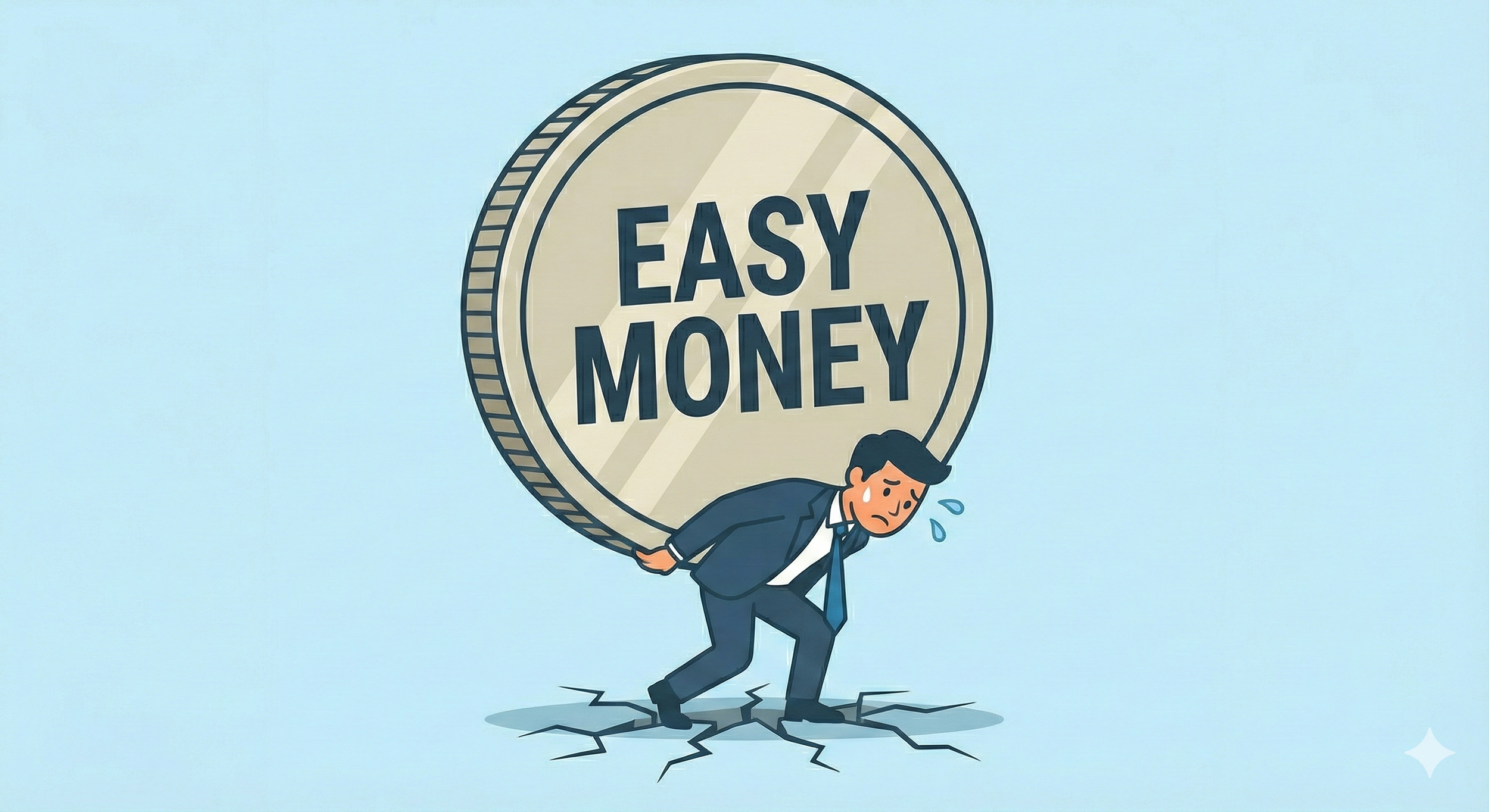
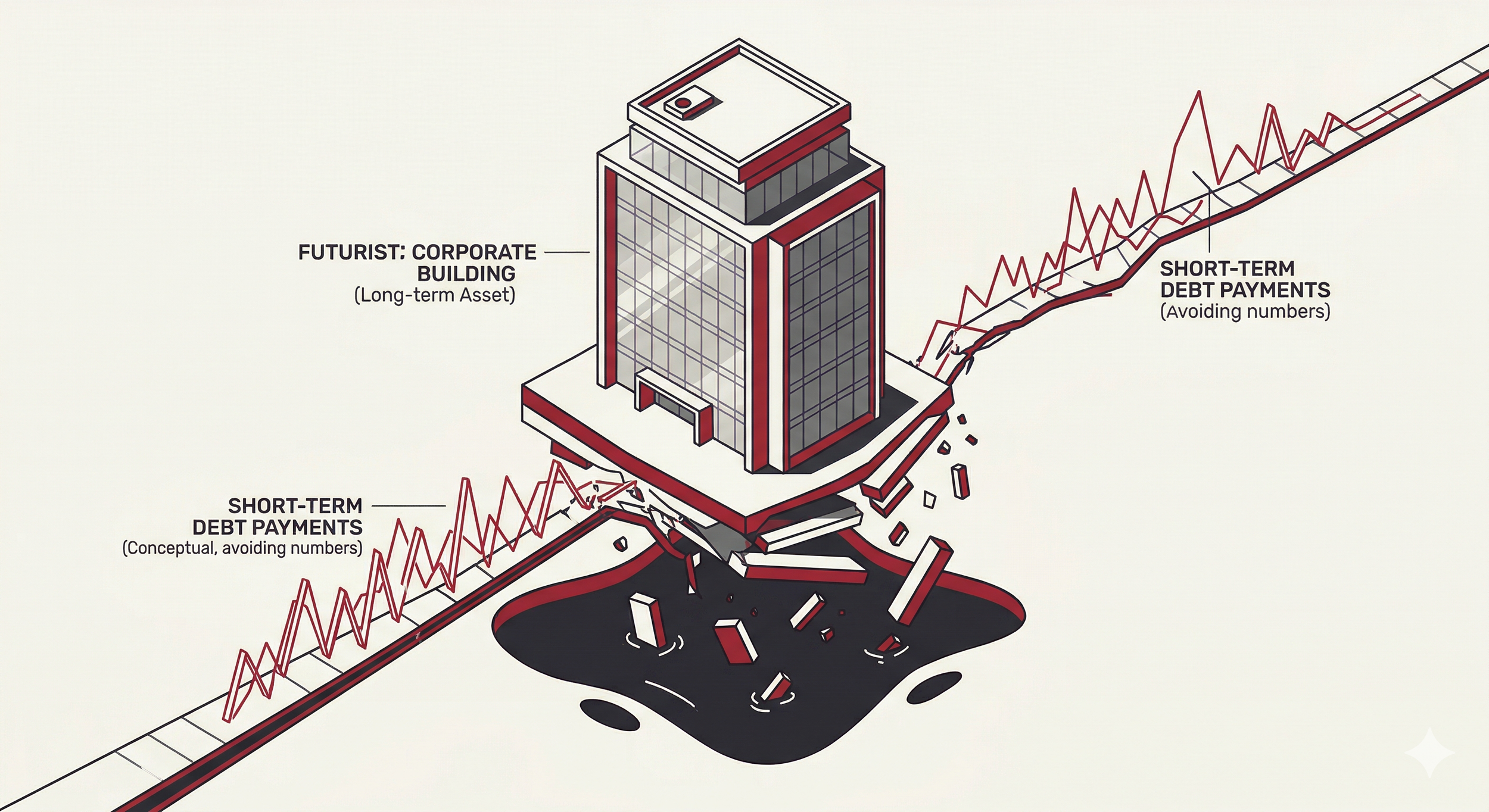
Every month that passes under a high-cost repayment structure is another month where cash that should be reinvested in the business inventory, payroll, marketing, a new hire, a piece of equipment, is instead flowing out the door to service aggressive and expensive business debt that was priced for speed, not for sustainability. The math only gets worse from there. Business owners who wait six months to address expensive business debt almost always find their options have narrowed by the time they act. Lenders that might have restructured or refinanced the existing business debt at month two are far less willing at month eight, once the business's cash flow has been visibly strained for a longer stretch.
This is the first and most important thing to understand: the version of your business that exists today, with today's cash flow and today's credit profile, has more options than the version of your business that will exist in six months if nothing changes. Time is not a neutral factor here. It is actively working against you, and every week of inaction is a week where your negotiating position and your available solutions both get smaller.
The Real Cost of Doing Nothing
It's worth being specific about what inaction actually costs, because the number is usually much larger than business owners expect. Expensive business debt, particularly merchant cash advances (MCAs) and similar products with “factor rates” rather than traditional interest rates, often carries an effective annual cost well beyond what a business owner would ever knowingly agree to if it were presented as a single number up front.
When that cost is spread across small, frequent payments it becomes almost invisible in the moment. But it is not invisible on the balance sheet. Owners who delay addressing this debt often describe a slow tightening: first they stop taking a full owner's draw, then they push out payments to their own vendors, then they start turning down growth opportunities not because the opportunities aren't good, but because there's no cash cushion left to fund them.
The cost of doing nothing isn't just the interest or fees that accumulate. It's the OPPORTUNITY COAST, or the opportunities the business quietly stops pursuing while all of its energy goes toward staying current on payments that were never designed to be sustainable in the first place. That is the real price of inaction, and it is almost always higher than the cost of confronting the problem directly.
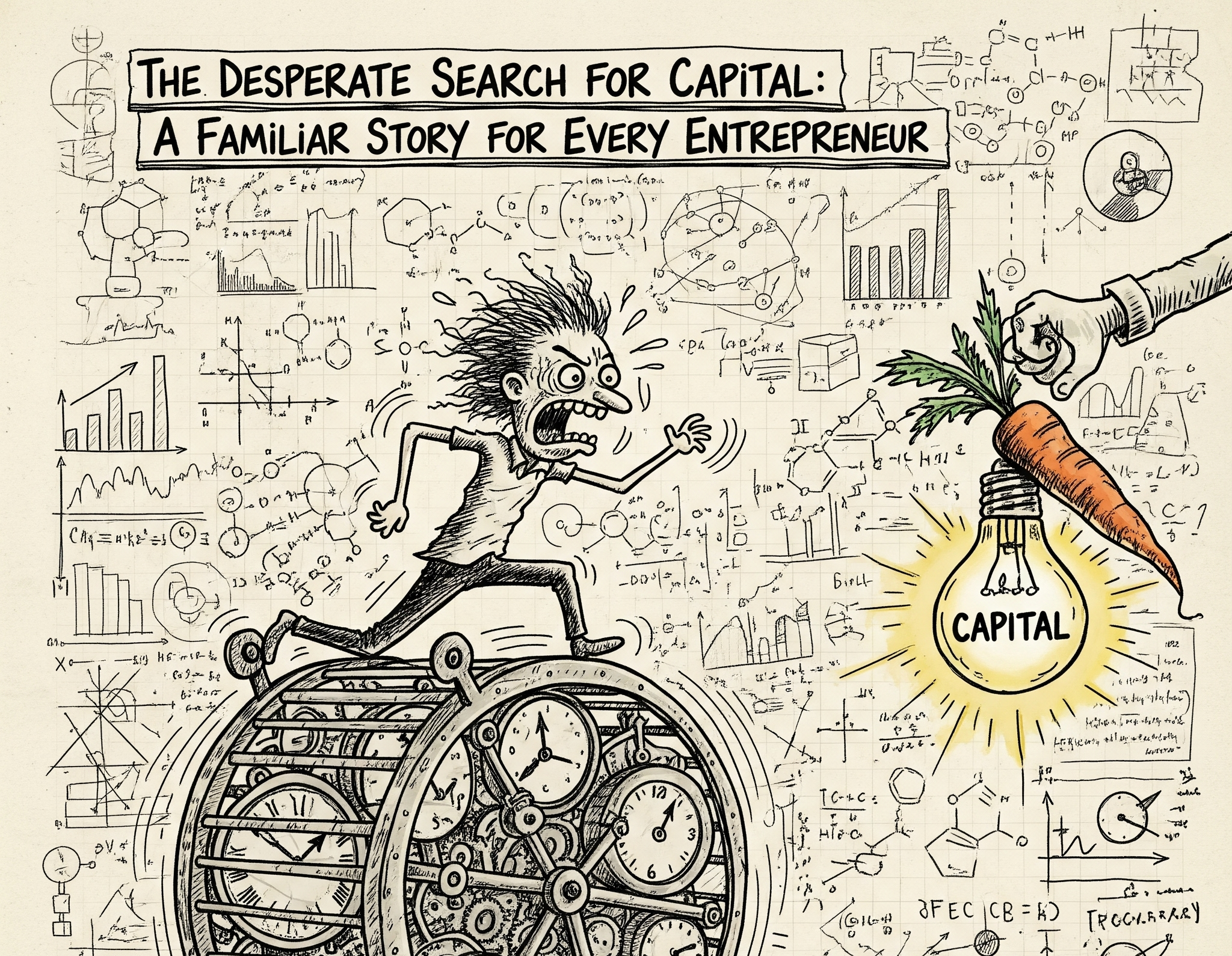
There is also a compounding stress cost that rarely shows up in any spreadsheet but affects every decision an owner makes. Business owners carrying expensive, high-frequency business debt often describe a kind of financial tunnel vision where every decision gets filtered through whether it protects tomorrow's payment, rather than whether it grows the business. Hiring decisions get delayed. Marketing budgets get cut first, even when they're the thing that would generate the revenue needed to solve the underlying problem. The longer this goes on, the harder it becomes to separate a temporary cash crunch from what starts to feel like a permanent state of the business, even when a clear, achievable path out exists.
How Most Business Owners End Up Here
Very few business owners set out to take on expensive business financing. Almost no one looks at a factor rate, calculate the effective annual percentage cost, and decide it's the right choice for their business. Instead, expensive business debt usually arrives at a moment of real need like a cash flow gap, an unexpected expense, an opportunity that required fast capital, combined with a sales process designed to make that fast capital feel like the obvious answer.
That combination isn't an accident. It's the business model of a large part of the funding industry. Speed is marketed as the primary benefit because speed is what a business owner in a tight spot is most focused on. The cost of that speed is dramatically higher than a traditional bank loan, a private credit facility or SBA financing and often buried in terms that are difficult to compare against other options because they aren't expressed as a simple interest rate.
Understanding how you got here isn't about assigning blame to yourself. It's about recognizing that the same high-pressure sales tactics that led to the original business debt are often still present when you go looking for a way out, which is exactly why the next several sections matter so much.
The Problem With Business Funding Brokers
When a business owner realizes they're in over their head with expensive and unsustainable business debt, the natural instinct is to call someone who works in business financing and ask for help. Often, that means calling a business funding broker and sometimes the very same broker, or the same type of broker, who arranged the original expensive business debt. So the insanity begins.
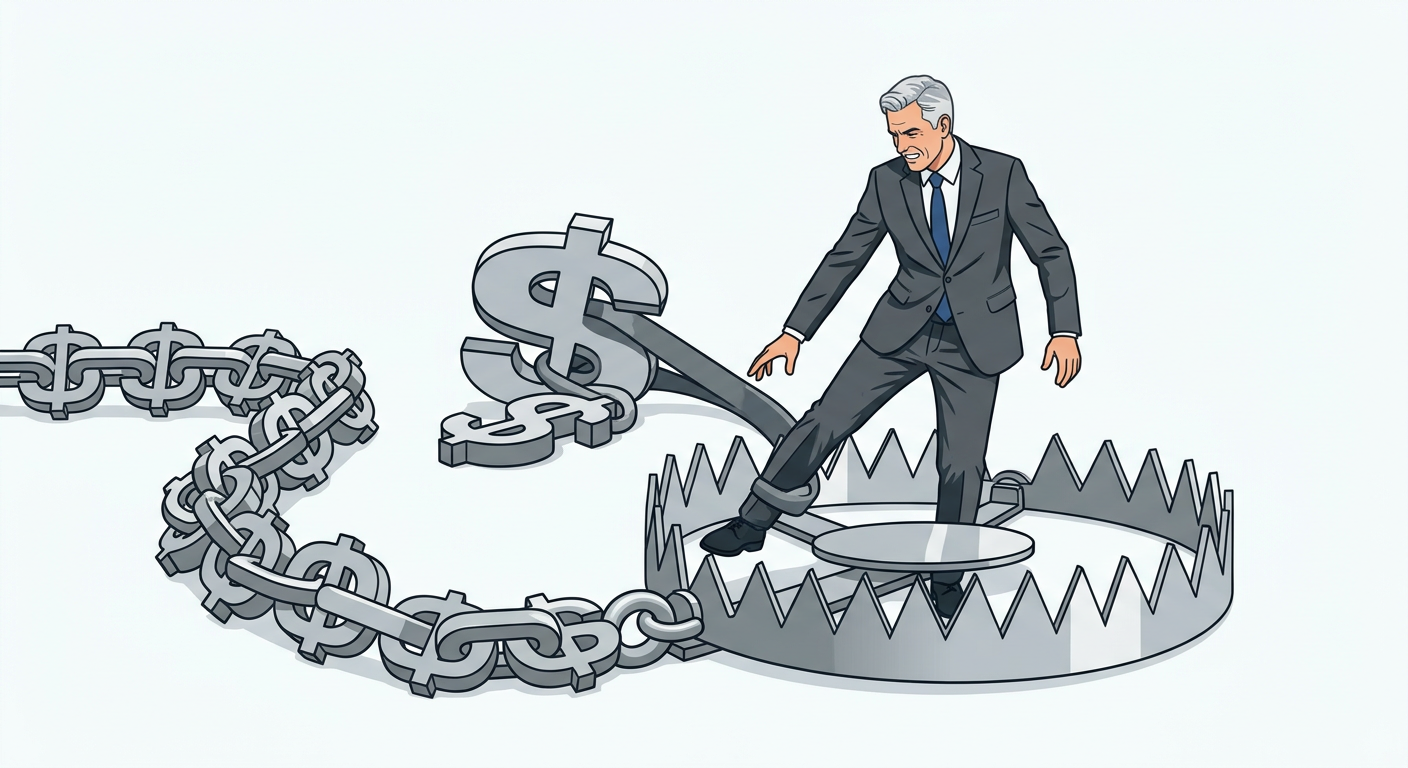
This is one of the most consequential mistakes a struggling business owner can make. A funding broker's business model is typically built around placing loans and collecting a commission from the lender when that loan closes. That means the broker's financial incentive is aligned with originating new financing, not with minimizing what you pay over time or with steering you away from products that generate the business debt and negative cash flow spiral you're already in.
To be clear, this doesn't mean every broker is acting in bad faith. Many genuinely believe they're helping. But the incentive structure matters more than intent. A broker who is paid to close deals, and paid more when those deals involve higher-cost products, is not the neutral party you need when you're trying to get out of expensive debt. Asking that broker how to escape expensive business debt is a little like asking the salesperson who sold you the wrong car how to get out of the payments; the honest answer might exist, but it's competing against an incentive to sell you another car.
Why Business Lenders Showing Up in Google Searches Means Nothing
One of the most common and most costly assumptions business owners make is that a lender or advisor who appears prominently in Google search results, or who runs ads across every platform they use, must be reputable. It feels logical: a company spending that much on visibility must be established, trustworthy and successful.
That logic doesn't hold up. Appearing at the top of a Google search, or running heavy paid advertising across search engines and social media, primarily tells you one thing: that company has a large marketing budget and an aggressive customer acquisition strategy. It tells you nothing about whether their financing products are fairly priced, whether their advisory advice is sound, or whether their past clients would recommend them.
In fact, there's a reasonable argument that heavy advertising spend should prompt more scrutiny, not less. Marketing budgets have to be funded from somewhere, and in the business lending space, that somewhere is often the spread built into the cost of the financing itself. A business lender or business funding broker who spends heavily to be the first thing you see when you search for help is not necessarily the lender or broker best positioned to actually help you. Visibility is not a credential. Treat it as what it is as an advertising outcome, and evaluate everything else independently.
This applies just as much to paid placements and 'best of' listicles as it does to standard search ads. Many of the roundup articles ranking lenders or advisors for business debt relief are themselves paid placements or affiliate arrangements, where inclusion is purchased rather than earned through client outcomes. Treat any list, ranking, or comparison site the same way you'd treat a search ad, as marketing, not as independent research unless you can verify exactly how the list was compiled.
Don't Ask the Fox Who Sold You the Henhouse
This point deserves its own space because it is so often overlooked in the moment of crisis. If a business funding broker or lender sold you the expensive business debt that's now straining your business, that same broker or lender is rarely the right source for objective advice on how to get out of it.
There are two reasons for this. First, as covered above, the incentive structure usually rewards them for keeping you in predatory financing products, not for helping you exit them. Second, and more subtly, a broker who sold you the original business debt has a natural interest in defending that original decision, even to themselves. Admitting that the product they sold you was poorly suited to your business is uncomfortable, and people (even well-intentioned ones) tend to avoid conclusions that require that kind of admission.
The practical implication is simple: when you're looking for a real path out of expensive business debt, look outside the relationship that created the problem. Seek out a business finance advisor or a business lender who had no role in the original transaction and who has nothing to gain from you simply refinancing into another version of the same product. A truly independent perspective is worth more at this stage than a fast answer from someone already inside the deal.
Why Online Reviews Cannot Be Trusted Here
Once business owners learn to be skeptical of advertising and search rankings, the next instinct is often to check online reviews instead. Unfortunately, in the business funding and lending space, online reviews are one of the least reliable signals available and in many cases, they are actively manufactured.
It is well documented across the business financial services and business lending industry that a significant share of online reviews are generated through incentivized campaigns, review-gating (only asking satisfied customers to leave feedback while quietly avoiding requests to unhappy ones), or in more troubling cases, outright fabrication. Five-star review pages can be built by firms whose actual client outcomes look nothing like what the reviews suggest. A business owner scrolling through a wall of glowing five-star reviews has no reliable way to know which of those reviews reflect a real client experience and which were generated to build exactly that impression.
This doesn't mean reviews are worthless as a single data point, but they should never be treated as proof of a business lender's or business advisor's real-world track record, especially when you're making a decision about how to handle business debt that could meaningfully affect your business's survival. If a review page is the primary or sole evidence a lender or broker offers you of their trustworthiness, treat that as a gap to fill, not a box that's been checked.
How to Actually Vet a Lender or Advisor
If advertising visibility and online reviews aren't reliable, what should a business owner actually do before trusting a business lender, business funding broker, or business finance advisor with a business debt restructuring conversation? The answer is more effort than skimming a search results page, but it's not complicated, and it's the single highest-leverage step you can take before making a decision that will affect your business for years.
Ask directly for references from real, current or recent clients, and then actually call them. Not a testimonial written for a website, but a phone conversation with a business owner who went through a similar situation with that same lender or advisor. Ask that reference specific questions: What was your situation before you worked with them? What did they actually deliver? Were there costs or terms that surprised you later? Would you work with them again if you were back in the same spot?
Ask how long the business lender or business finance advisor has been operating, and ask for specifics about the types of businesses and business debt situations they've actually handled, not just industries they claim to serve. Ask what happens if the proposed solution doesn't work as expected; a credible business advisor will have a clear, specific answer, while an evasive one will pivot back to urgency and closing the deal.
It's also worth asking directly how the advisor or broker gets paid, and by whom. If they're compensated by the business lender for placing you into a particular financing product, that's important context for evaluating their recommendation. It doesn't automatically disqualify them but you deserve to know it before you decide how much weight to put on their advice.
Take the same approach to any business lender directly, not just business funding brokers. Ask for a handful of businesses in a comparable size range or industry who have gone through the same type of transaction you're considering, and ask if you can speak with them. A business lender confident in their own track record will make this easy. A business lender who hesitates, offers only written testimonials, or steers you back toward the reviews on their website instead of a real conversation, is telling you something important.
What Real Business Debt Relief Actually Looks Like
Genuine solutions to expensive business debt tend to share a few characteristics that are worth recognizing, because they look different from the fast, one-size-fits-all pitches that got many owners into trouble in the first place.
Real solutions start with an honest look at the full picture which includes every outstanding balance, every payment obligation and actual cash flow, not just the piece of the puzzle a particular lender's product happens to address. A credible business finance advisor will want to understand your entire business financial position before proposing anything, because a solution that fixes one business loan while ignoring three others isn't really a solution.
Real solutions are also willing to say no. If consolidation, refinancing or restructuring isn't the right fit for your situation, a trustworthy advisor will tell you that plainly, even if it means no transaction and no commission for them. That willingness to walk away from a deal that isn't right is one of the clearest signals of genuine expertise versus a sales process dressed up as advice.
In practice, real relief can take several different shapes depending on your specific numbers: it might mean consolidating multiple high-cost obligations into a single, lower-cost facility; it might mean negotiating directly with existing lenders for modified terms; it might mean a structured restructuring plan that extends timelines in exchange for lower payments; or, in some cases, it might mean the honest conclusion that the business needs to address operational cash flow issues before any refinancing will hold. None of these paths are exciting to hear about, and none of them are as fast as the original sales pitch that got you into expensive business debt in the first place, but each one is grounded in your actual numbers rather than in someone else's commission structure.
Finally, real solutions come with a clear explanation of the tradeoffs, not just the benefit being sold, but what you're giving up or taking on in exchange. If a proposed path out of expensive business debt sounds like it has no downside at all, that's a signal to slow down and ask more questions, not a reason for relief.
Building a Plan You Can Actually Trust
Getting out of expensive business debt is rarely about finding one perfect transaction that makes the problem disappear overnight. It's about building a plan grounded in an honest look at your numbers, built with people who have no conflicting incentive to sell you into another expensive product and validated by people who have actually lived through the same situation you're in now.
Start today, not next quarter. Every week of delay narrows your options and adds to the total cost of the expensive business debt you're carrying. Resist the pull of the loudest advertiser or the fastest promise, and instead put in the modest extra effort of picking up the phone and talking to real businesses who've walked the path you're considering. Ask hard questions of anyone offering to help, especially about how they get paid and what happens if their plan doesn't work as promised.
Expensive business debt feels permanent when you're inside it. It rarely is. But getting free of it takes exactly the things this article has walked through: acting now instead of later, seeking advice from people without a conflict of interest, and verifying claims with real conversations rather than search rankings or star ratings. That combination, urgency plus genuine due diligence, is what actually gets business owners out of expensive and aggressive business debt and back to running the business they set out to build.

More Business Finance and Strategy Articles: