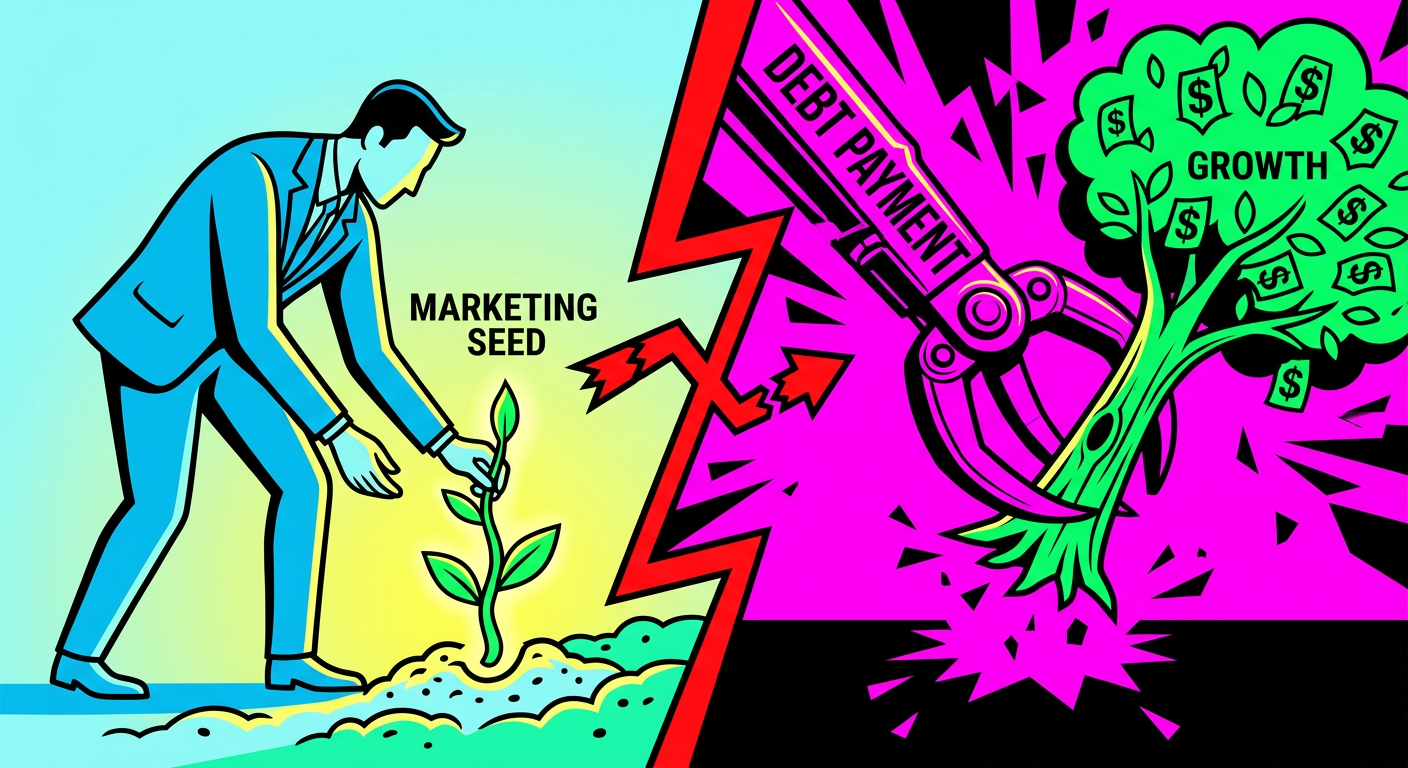
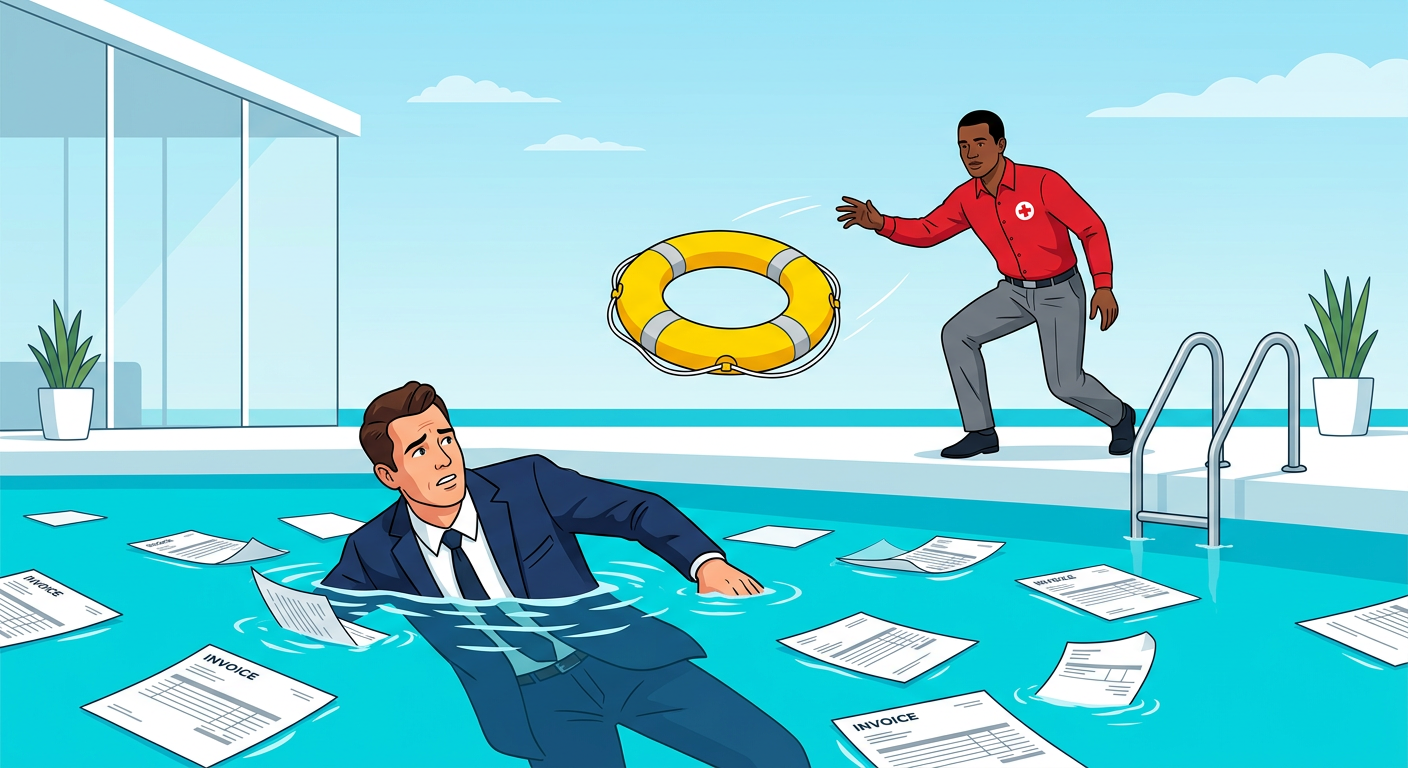
Most business owners think about business debt refinancing only when something feels wrong: a payment that stings, a rate that seems high or a month where the account balance dips lower than it should. By then, the best options have often narrowed. The more interesting truth is that a business refinancing window opens quietly, usually when things are going reasonably well, and it tends to close before most owners notice it was ever there as cash flow tightens.
At the center of the business debt refinancing window sits a relationship few owners examine closely: how the schedule of their business loan amortization lines up with the actual rhythm of their business cash flow. When those two move together, business debt becomes a tool. When they drift apart, even a modestly sized business loan can feel heavier than it really is.
This article walks through how that business debt amortization mismatch develops, the signals that suggest a business debt refinancing window is open, and the practical strategies business owners use to realign their business debt payback with the way cash flow actually moves through their company.
The Quiet Mismatch Inside a Payment Schedule
When a business loan is originated, the amortization schedule is built around a few numbers: the principal, the rate, the term and the payment frequency. What it is usually not built around is the specific shape of your business cash flow. Not all business lenders will look at your revenue and decide whether you can afford the payment, but some will, and affordability on average is a different question than affordability in the month when receivables slow down or inventory needs restocking.
This is where the quiet business debt amortization mismatch starts. A business that earns most of its revenue in four months of the year may carry a business loan with level monthly payments for 18-months. A contractor paid on 45 or 60-day terms may be making daily or weekly payments on a short-term business advance. A company that just finished a major equipment purchase may be paying it off over 18 months when the equipment will produce revenue for 5 to 7-years.
None of these arrangements is necessarily a mistake. Often the business borrowing was the best option available at the time it was arranged, under the conditions the business faced then. The point is that conditions change. Revenue grows, credit profiles improve, collateral appreciates, and time in business accumulates. The original structure stays the same while the business around it evolves. Over months and years, the distance between what the payment schedule assumes and what the business actually does can widen into real strain.
Owners usually sense this before they can name it. It shows up as a recurring tightness around certain dates, a habit of timing vendor payments around business debt service, or a feeling that the business is profitable on paper but never seems to have room to breathe. That feeling is often less about the total amount of business debt and more about how the business debt payments are scheduled.
How Business Loan Amortization Shapes Your Month
Amortization is simply the process of paying down a business loan over time through scheduled payments that cover both interest and principal. The details of how those payments are structured, however, have a large effect on business cash flow.
Payback term length is the most visible lever. A longer-term spreads principal repayment over more payments, lowering each one. A shorter-term concentrates principal into fewer payments, raising each one but reducing total interest over the life of the business loan (if interest rates are the same on long and short term). Many owners focus on the rate and overlook that the term often has a bigger influence on monthly breathing room. A slightly higher rate over a longer term can produce meaningfully lower payments than a lower rate over a compressed term.
Payment frequency matters as well. Aggressive and short-term business debt remittances, common with business merchant cash advance (MCA) products and some short-term business term loans and lines of credit, pull money from the operating account before it has a chance to accumulate. For businesses with uneven receipts, this can create a sense of constant drain even when the total cost is manageable. Lower total monthly business debt service payments give business cash flow more time to build between obligations.
Structure is the third lever. Fully amortizing business loans pay off the entire principal over the term. Some products include interest-only periods at the start, which can help when a new investment needs time to produce revenue. Others include balloon payments, where a portion of principal comes due at the end. Revolving products like a business line of credit have their own rhythm, with balances that rise and fall as the business draws and repays.
Understanding these levers is the foundation for everything that follows. Business debt refinancing is not only about securing a lower rate. Very often the most valuable outcome is a structure whose shape fits the business better: a term matched to the asset, a payment frequency matched to receipts and an amount that leaves room for the business to operate with confidence and, most importantly, actual cash reserves.
Why the Best Business Debt Refinancing Window Opens When You Least Expect It
There is a paradox at the heart of business debt refinancing. The time an owner most wants to refinance is when payments feel heavy and the business is under pressure. The time a business lender is most willing to offer favorable terms is when the business looks strong, stable and well managed. Those two moments rarely coincide.
The window most owners miss is the stretch after the business has improved but before any new cash flow strain appears. Revenue has grown for several consecutive quarters. Credit scores have recovered from an earlier rough patch. An earlier short-term business advance has been paid down substantially. In this period, the business often qualifies for products and terms it could not access when the original business debt was arranged, or the more likely case is, the business may not have been shown the best options for business financing since more expensive business debt pays ridiculously inflated commissions paid by the business lender to the broker that is supposed to be working for you.
Because things feel fine, owners frequently let this window pass. The existing payments are manageable for now, attention is on growth, and business debt refinancing feels like a project for a rainy day. But when the rainy day arrives, the business may look less attractive to business lenders than it did even a few months earlier. A dip in revenue, an unexpected expense or a spike in credit utilization can shift the business into a less favorable tier just when better terms would help most.
The strategic insight is to treat refinancing as something done from a position of strength rather than a reaction to stress. Owners who review their business debt during good stretches, not only during hard ones, tend to find options with longer terms, lower costs, and structures that support the next stage of growth rather than constraining it.
The Signals That Your Business Debt Refinancing Window Is Opening
Because the business debt refinancing window opens quietly, it helps to know what to watch for. Several signals tend to indicate that a business may now qualify for better business financing than it currently carries.
Revenue trends are a big signal. Consistent growth over several quarters, especially when reflected in bank statements and tax returns, improves how a business lender views capacity to repay. Even if the original business loan was sized appropriately, higher and steadier revenue may support consolidating or extending existing business debt on better terms.
Credit improvement matters for both the business and its owners. If personal or business credit scores have climbed, if old late payments have aged, or if credit utilization has fallen, the pricing and structure available may have shifted noticeably.
Paydown progress is often overlooked. When an existing business advance or short-term business loan has been substantially repaid, the remaining balance may be easier to refinance into a longer, lower-payment product. Some owners also discover that early-payoff discounts or reduced prepayment penalties have taken effect after a certain point in the term.
Finally, changes in business collateral can open doors. Real estate that has appreciated, equipment that is now fully owned or growing accounts receivable can all support business financing structures that were not possible earlier.
When two or three of these signals appear at once, it is usually worth a careful look at the full picture of the company's business debt.
Reading Business Cash Flow the Way a Business Lender Does
To time a business debt refinance well, it helps to see the business through the eyes of the people evaluating it. A business lender is ultimately asking one question: How reliably can this business generate enough business cash flow to cover its obligations, with some cushion left over?
The most common measure is the business debt service coverage ratio. In simple terms, it compares the cash a business generates from operations (after all expenses paid) to the total payments it owes on its business debt over the same period. A ratio of 1.0 means the business generates exactly enough to make its payments. Many business lenders look for something above that, often 1.25 or higher, to feel comfortable that the business can weather a soft stretch of a month or few months in the future.
Here is where alignment becomes powerful. Because the ratio depends on total payments, restructuring existing business debt into longer terms can improve it even if the total amount owed stays the same. A business carrying two short-term products with high monthly payments may show a weak ratio, while the same balances consolidated into a single longer-term business loan could show a healthy one. Better alignment does not just ease the monthly budget; it can make the business look stronger for future business funding as well.
Business lenders also look at the consistency of deposits, the number and size of negative-balance days, and how balances behave around payment dates. A business whose account regularly dips close to zero before a large receipt lands may be perfectly profitable, but the pattern signals tight business cash flow. Smoothing that pattern, partly by moving away from aggressive remittances on a short payback period, often improves how the business is perceived as far as financing decisions made by management.
Owners who review their own bank statements with this lens before applying are often surprised. They see the same patterns a business lender will see, and they have a chance to address them, or at least explain them, before the conversation begins.
Matching Term Length to the Purpose of the Business Borrowing
One of the most useful principles in aligning business loan amortization with business cash flow is matching the term of the business borrowing to the useful life of whatever it paid for or whatever the borrowed capital is being invested into.
Friction arises when the categories get mixed. It is common for a business to use short-term business funding for a long-term purpose because it was fast and accessible at the moment the need appeared. That choice may have been entirely reasonable at the time. But once the urgency has passed, the mismatch remains and it quietly pressures business cash flow every month.
A business debt refinancing review often starts by listing each obligation alongside what it paid for. Where a long-life asset is attached to a short-life payment schedule, there may be an opportunity to move that balance into a structure with a matching term. Equipment business financing, commercial real estate business loans and longer-term working capital programs all exist precisely to make this kind of alignment possible.
The Stacked Business Advance Puzzle
A situation that comes up frequently among small and medium-sized businesses is the accumulation of several short-term payback business debt obligations, taken one after another. Each business stacked business financing may have made sense on its own, solving an immediate need quickly. Together, they can create a layered schedule of withdrawals that leaves very little cash flow left in the operating account.
This pattern calls for a thoughtful approach rather than alarm. The key insight is that the total balance is often far more manageable than the combined payment schedule suggests. A business owing a moderate total across three products may be paying out a large share of daily receipts, simply because each product was designed for rapid repayment.
When a business in this position has steady revenue and has shown it can carry the payments, it may be a candidate for consolidation into a longer-term business loan. The consolidation pays off the existing balances and replaces several high-frequency payments with one predictable total payment that is significantly less and paid back over a longer period. The effect on business cash flow can be dramatic, freeing up working capital the business can redirect into operations or growth.
There are details to weigh. Business short-term and short payback loans are typically priced with a factor rate rather than an interest rate, and the remaining cost may or may not be reduced by early payoff depending on the agreement. Some contracts include terms that affect how and when they can be settled. A careful review of each agreement, ideally with a Business finance advisor who understands these products, helps clarify the true cost of each option.
Timing matters here too. Business debt consolidation tends to be most available, and on the best terms, when the business has been making its existing payments consistently and revenue is steady. Approaching it from that position, rather than after payments have begun to slip, keeps more doors open.
Working With a Business Finance Advisor to Time the Move
The business debt refinancing window is often easiest to see from the outside. Owners are busy running the business, and the gradual improvements that open new business financing options usually happen in the background without drawing attention. This is one reason many owners find value in working with a Business finance advisor who reviews the full picture periodically.
A Business finance advisor can map existing business debt against business cash flow patterns, identify where amortization schedules and revenue rhythms are out of step, and recognize when the business has crossed thresholds that unlock better options. Because a Business finance advisor typically works across a range of business lenders and products, they can compare structures the owner might not know exist, from private credit business financing providers to commercial banks to equipment business financing and SBA programs.
Perhaps most importantly, a Business finance advisor can help with timing. Knowing when to move, and when to wait a few months for a milestone or a stronger quarter, is often the difference between an adequate refinance and an excellent one. They can also help evaluate the full cost of each path, including prepayment terms, fees, and the total cost of extending a term weighed against the value of improved monthly business cash flow.
The goal of all of this is not simply lower payments. It is business debt that works with the business rather than against it: obligations sized to the business's real capacity, terms matched to the life of what was funded, and payment schedules that fit the natural flow of revenue. When those pieces line up, business funding becomes a foundation for growth rather than a weight to carry.
The window is open more often than most owners realize. The businesses that benefit most are usually the ones that look for it before they need it.

More Business Finance and Strategy Articles: