When the payments on a costly business loan or merchant cash advance (MCA) start squeezing your business, the first instinct is to call the person who arranged it. They know your file, they know the lender, and they answered the phone quickly the last time you needed money. It feels like the natural place to start.
It is usually the wrong place. Most financing brokers are paid when new money is placed, not when your total cost goes down. They also have every reason to defend the deal they already sold you. Asking them for a way out is like asking the salesperson who sold you the car with the bad transmission whether you should buy another car from the same lot.
This article explains why that conflict exists, how to recognize when you are being steered instead of helped, and what a genuinely independent business finance advisor can do that a broker cannot. If your business is carrying debt that feels heavier every week, read on before you make the next call.
The Funding Trap Many Business Owners Walk Into
Most small and medium-sized business owners do not set out to take on expensive business debt with a short-term payback. It usually happens during a moment of pressure. A large customer pays late. Payroll lands in the same week as a quarterly tax bill. Equipment breaks down in the middle of the busy season. A bank says no, or says yes but needs six weeks to fund. Into that gap steps a broker who promises money in a day or two, with minimal paperwork and an approval that feels almost effortless.
At the time, the speed feels like a lifeline. The owner signs, the funds arrive and the immediate crisis passes. Then the payments begin. With many short-term products, including merchant cash advances (MCAs) and some high-cost term loans, those payments are pulled daily or weekly straight from the business bank account. The cost is often expressed as a factor rate or a flat fee rather than an annual percentage rate, which makes it hard to compare to anything else. An owner who would never knowingly agree to a triple-digit annual cost of capital can end up paying something in that range without fully realizing it.
Within a few months, the business cash flow that was supposed to be rescued is being drained by the very financing meant to rescue it. Revenue is still coming in, but less of it stays in the account. The owner starts to feel squeezed again, often more tightly than before.
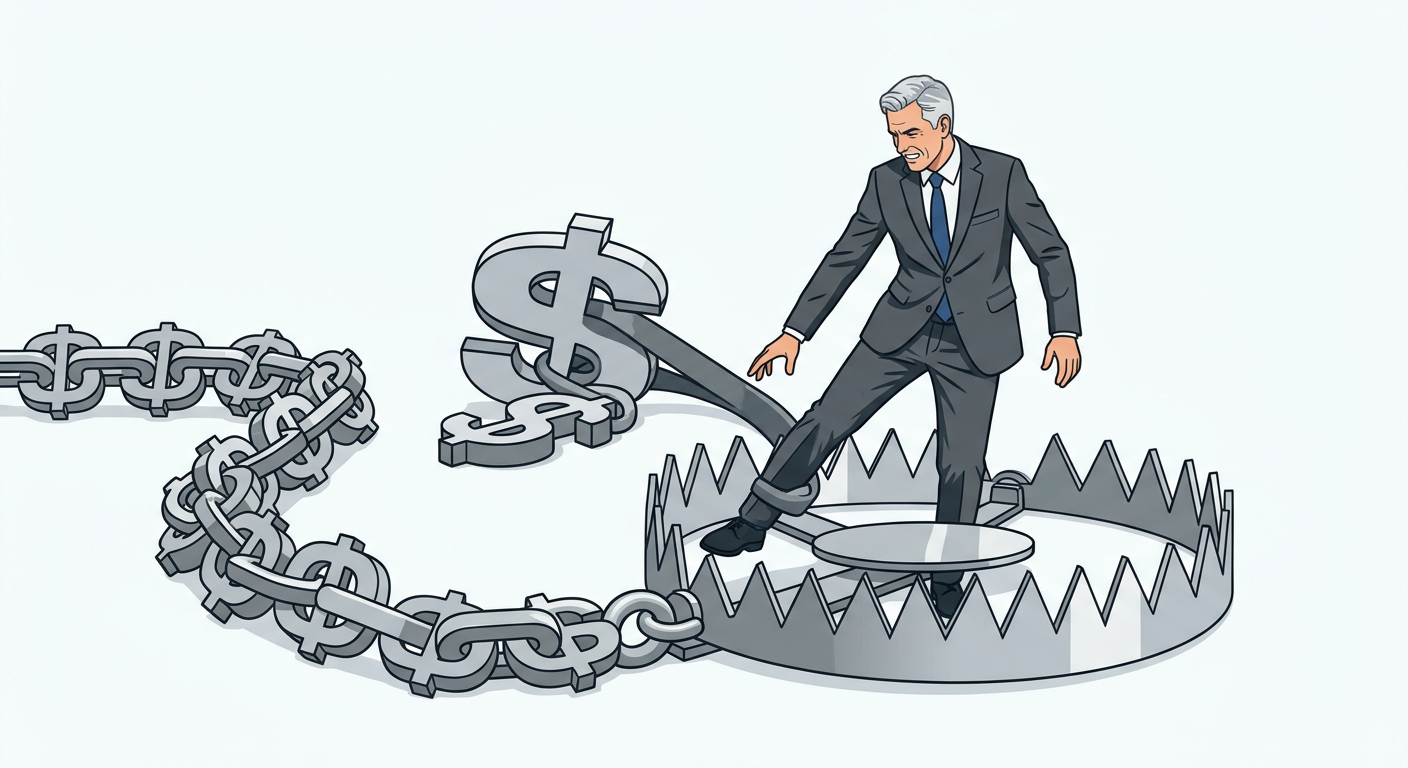
This is the moment when the trap closes. The owner picks up the phone and calls the broker. The broker is friendly, responsive, and has a solution ready. Very often that solution is more financing: a renewal, a larger advance that pays off the first one, or a second position stacked on top of the first. The owner walks away with a little breathing room and a much heavier long-term burden.
Understanding why this pattern repeats is the first step to breaking it. The problem is rarely that the broker is a bad person. The problem is that the broker's business model points in a different direction from your best interests.
How Funding Brokers Actually Get Paid
To understand the advice you receive, you have to understand how the person giving it earns a living. In most business lending, brokers and independent sales organizations are compensated when a deal funds. Their pay is typically a commission tied to the size of the financing, sometimes expressed as points on the amount funded, sometimes built into the fees or the factor rate you pay. In some arrangements, the broker earns more when the pricing on your deal is higher, because their commission comes out of the spread.
Notice what is missing from that business funding broker picture. A broker is generally not paid to reduce your total cost of capital. They are not paid a bonus when you pay off a loan early and stop borrowing. They are not paid for telling you that you should not borrow at all, or that you should negotiate with your existing lender, or that a slower bank loan would save you a meaningful amount of money. Their revenue comes from origination, which means new money going out the door.
That has a direct effect on the advice you get. When the only tool a person is paid to use is new financing, every problem tends to look like a financing problem. If your payments are too high, the answer is a refinance. If you are short on cash, the answer is an additional advance. If you are struggling to keep up, the answer is consolidation into a larger product. Each of those answers may produce a new commission. Each of them may also leave you in a deeper hole.
Some brokers are honest and careful and will tell you plainly when more business debt is a bad idea. But even the best-intentioned business funding broker is working inside a system that rewards volume and renewals. When you ask a broker how to lower your costs, you are asking them to give advice that may reduce their own income. That is a lot to expect from anyone.
There is also the question of which lenders a broker works with. Many brokers place deals with a specific group of funders who pay them well and approve quickly. If those funders mainly offer high-cost, short-term products, then the broker's menu of solutions is limited to more of the same. The broker may sincerely believe they are finding you the best available option, when in fact they are finding you the best option within a narrow and expensive shelf.
Why Refinancing Through the Same Broker Often Makes Things Worse
When an owner tells the broker that the current payments are unsustainable, the most common response is a refinance or renewal. On the surface it sounds sensible. The new deal pays off the old balance, the payment may be spread over a longer period, and sometimes a bit of extra cash is added to help with immediate needs. The owner feels relief.
The details often tell a different story. With many short-term products, the full cost is fixed at the start. If you pay off a merchant cash advance early with the proceeds of a new one, you may not receive any discount on the remaining fee, depending on your contract. That means you can end up paying the full cost of the first deal and then layering the full cost of a second deal on top of it. Every renewal can reset the clock on a fresh round of fees.
Origination fees and broker compensation are often charged again on the new amount, including the portion that simply repays the old balance. In effect, you are paying to borrow money that goes straight back to the lender you already owe. The extra cash you receive may be a small slice of the total, while the cost is calculated on the whole thing.
Then there is stacking. When a first advance is not enough, some owners are offered a second or third advance from different funders, each with its own daily or weekly debit. The combined withdrawals can quickly exceed what the business can sustain. Many advance contracts prohibit additional financing without consent, so stacking can also create a contract default, giving the original funder grounds to accelerate or pursue remedies.
The cycle is easy to see from the outside and hard to see from the inside. Each individual decision feels like a fix. Only when you add up the total amount paid across all the deals does the real cost appear. A broker who earns a fee on every new placement has little incentive to show you that total. An independent advisor's job is to show it to you first.
The Natural Instinct to Defend the Original Deal
Beyond compensation, there is a quieter reason the broker is a poor guide out of expensive business debt. They sold you the deal. Admitting that it was too costly, poorly structured or unsuitable for your business means admitting that their earlier advice was flawed. Very few people enjoy doing that, and in a business built on referrals and reputation, it can feel like a direct threat.
So the conversation tends to drift toward justification. You may hear that the rate was the best available given your credit profile, that the speed was worth the cost, that every business in your industry uses this kind of financing or that the problem is your cash flow rather than the product. Some of those statements may contain a grain of truth. But they all point in the same direction: the original deal was fine, and the solution is something other than questioning it.
That defensive posture closes off options that might actually help. If the original contract contains terms that are unusually aggressive, an independent reviewer might spot them. If the funder's collection practices go beyond what the agreement allows, someone with fresh eyes might notice. If the deal was priced far above the market for a business with your revenue and history, that is useful information when you approach other lenders or negotiate a modification. A broker who needs the original deal to look reasonable is unlikely to surface any of this.
There is also the relationship between the broker and the funder to consider. Brokers depend on funders to keep approving their clients. A broker who helps a client challenge a funder, push for a restructuring, or move to a cheaper source of capital risks damaging a relationship that pays their bills. Even if they are sympathetic to your situation, their loyalties are divided.
None of this requires bad intent. It is simply human nature combined with business incentives. Recognizing it lets you set reasonable expectations. The business funding broker may be helpful for answering factual questions about your account, but they are not the right person to decide whether the deal itself should be unwound.
Warning Signs You Are Being Steered, Not Helped
It is not always obvious when advice is driven by the adviser's interests rather than yours. These signals suggest you are being steered toward a sale rather than guided toward a solution.
The first is urgency. If you are told that an offer expires today, that rates are about to rise or that you must sign before the end of the week, slow down. Real solutions to a business debt problem rarely depend on signing within hours. Pressure to act fast is often a sign that the person wants the deal closed before you have time to compare.
The second is a single solution. If every conversation ends with a new advance, a renewal, or a consolidation loan and no one mentions negotiating with your current lender, cutting costs, restructuring payments, or simply waiting, then you are hearing from someone who only has one tool.
The third is vague pricing. If you ask for the total amount you will repay, the effective annual cost, or the fees being charged, and the answers are fuzzy or framed only as a daily payment amount, that is a red flag. A trustworthy adviser wants you to understand the full cost and will help you calculate it.
The fourth is reluctance to put things in writing. If promises about payment flexibility, early payoff discounts, or future rate reductions are made verbally but do not appear in the contract, assume they do not exist.
The fifth is discouraging second opinions. If the person reacts poorly when you say you want an accountant, attorney or independent adviser to review the offer, ask yourself why. Good advice holds up under scrutiny.
The sixth is unexplained cash-out. If a refinance includes extra money you did not ask for, consider whether that amount simply makes the deal larger and the commission bigger. More money is not always more help.
If you recognize several of these signs in your current relationship, it is time to bring in someone with less stake in the outcome.
What an Independent Business Finance Advisor Does Differently
An independent business finance advisor is someone who had no role in arranging your existing financing and who will not earn a commission by placing you into a new product of the same kind. That independence changes the entire conversation, because the advisor's job becomes understanding your situation rather than closing a transaction.
The work usually starts with a full picture. A good advisor will gather every financing agreement your business has signed, review the actual payments leaving your account, and calculate what each obligation really costs. Many owners are surprised by this exercise. Seeing the true combined cost in one place, often for the first time, is a turning point.
Next comes a review of the terms. An independent advisor can look for clauses that matter: how defaults are defined, whether there is a reconciliation provision that lets payments adjust when revenue falls, whether early payoff earns any discount, what personal guarantees exist, and what remedies the funder can pursue. Some of these provisions can become leverage in a negotiation. Where legal questions arise, a good advisor will tell you when you need an attorney rather than guessing.
Then the business finance advisor looks at the business itself. Expensive business debt is often a symptom of a deeper business cash flow problem, such as thin margins, slow-paying customers, seasonal swings or costs that grew faster than revenue. An advisor who looks only at the debt may miss the reason it was needed in the first place. An advisor who looks at the whole operation can help you address both.
Finally, the advisor considers the full range of options, including ones that do not involve new borrowing at all. That might mean negotiating a modified payment schedule with your current funder, requesting a reconciliation based on actual receipts, pursuing a lower-cost loan from a bank, credit union, or government-backed program if you qualify, restructuring vendor terms, or making operational changes that free up cash. Because the advisor is not paid by any single lender, they can recommend whichever path is genuinely best.
The difference is not that independent advisors are smarter or kinder than brokers. It is that their incentives line up with yours. When their success depends on your business becoming financially healthier, their advice naturally points that way.
Questions to Ask Before You Trust Anyone With Your Business Debt
Whether you are speaking with a broker, a debt relief company, a consultant, or a financial professional, a few direct questions will reveal a great deal about whose interests are being served.
Start with compensation. Ask, "How are you paid, and by whom?" A trustworthy adviser will answer clearly. If they are paid a flat fee or an hourly rate by you, their incentives are relatively clean. If they are paid a commission by lenders when a new deal funds, you know their advice may lean toward new financing. If they are paid a percentage of the savings they produce, ask how savings are measured and who decides.
Ask about prior involvement. "Did you, or anyone you work with, arrange any of my current financing?" If the answer is yes, they cannot be fully independent about whether that financing was a good idea.
Ask what they will do if the best answer is no new money. "If you conclude that I should not take on any more financing, what happens next, and how do you get paid?" The answer will tell you whether they can afford to give you that advice.
Ask for the total cost of any recommendation. "What is the total I will repay, and what is the effective annual cost, including all fees?" Anyone recommending a financial product should be able to give you these numbers, in writing, before you sign.
Ask about alternatives. "What other options did you consider, and why did you rule them out?" A real adviser will have looked at several paths and can explain the tradeoffs. A salesperson will have looked at one.
Ask about credentials and references. Find out what training or licensing they hold, how long they have worked with businesses in your situation, and whether you can speak to clients they have helped. Be cautious of any firm that asks for large upfront fees before doing meaningful work, or that tells you to stop paying your lenders without explaining the consequences in detail.
These questions are not meant to be confrontational. Any honest professional will welcome them. If someone becomes evasive or offended, that is useful information in itself.
Realistic Paths Out of Expensive Business Financing
Every business is different, and there is no single formula for escaping costly business debt. That said, several paths come up again and again, and an independent advisor will typically weigh some combination of them.
The first is negotiating directly with your current funder. Lenders and funders generally prefer to be repaid over time rather than see a business fail. When a business can document a genuine decline in revenue, many funders will consider adjusting the payment amount, extending the schedule or temporarily reducing withdrawals. Some advance agreements contain reconciliation provisions designed for exactly this situation. These requests tend to go better when they are organized, documented and presented by someone who understands the contract and is not trying to sell the funder's competitor a replacement deal.
The second is replacing expensive capital with genuinely cheaper capital. This is not the same as the renewal a broker might offer. It means moving from high-cost, short-term products toward financing with lower rates and longer terms, such as a commercial bank or private credit fund, a line of credit, equipment financing or a government-backed loan program if the business qualifies. The process is usually slower and requires more documentation, which is exactly why an advisor who can help prepare the application is valuable. The key test is simple: the total cost of the new financing should be meaningfully lower, not just the payment; the payback term should be longer
The third is improving cash flow so the existing business debt becomes manageable. Sometimes the fastest relief comes from inside the business rather than from a lender. Tightening collections on receivables, renegotiating terms with suppliers, trimming costs that no longer earn their keep, adjusting pricing or selling underused assets can free up cash to meet obligations and pay balances down faster.
The fourth is a structured workout or restructuring. When multiple obligations are stacked and payments clearly exceed what the business can bear, a more formal approach may be needed. This can involve coordinated negotiations with several creditors at once. In more serious cases, it may involve legal advice about formal restructuring options. These are significant decisions with lasting consequences, and they should be made with qualified legal and financial guidance rather than under pressure from someone selling a product.
The fifth, and sometimes the most important, is simply stopping the cycle. Declining the next renewal, refusing to stack another advance, and committing to a plan that reduces business debt over time can feel uncomfortable in the short run. It is often the single decision that changes the long-term trajectory of the business.
Protecting Your Business While You Work Through It
Getting out of expensive business debt takes time, and the period in between can be stressful. A few protective habits will help you avoid making things worse while you work toward a solution.
Keep detailed records. Save every contract, amendment, email, and text message related to your financing. Track every payment that leaves your account and note the date, amount, and recipient. If a dispute arises later, documentation will matter far more than memory.
Communicate in writing. If you need to request a payment adjustment or discuss your situation with a funder, follow up any phone conversation with an email summarizing what was said. Written records protect you if promises are forgotten or denied.
Do not sign anything new under pressure. If you receive an offer while your cash is tight, give yourself permission to wait at least a day and have someone independent review it. A genuine opportunity will still be there tomorrow. A high-pressure offer that disappears overnight was probably not in your interest.
Be careful about stopping payments on your own. It can be tempting to block debits or close an account when payments feel unbearable, but doing so without understanding your contract can trigger defaults, collection actions, or claims under personal guarantees. Talk to an independent adviser, and where appropriate an attorney, before taking that step.
Protect your core operations. Prioritize the obligations that keep your business running and legally compliant, such as payroll, payroll taxes, rent, and critical suppliers. A good advisor will help you rank obligations by consequence so that short-term decisions do not create larger long-term problems.
Look after yourself. Owners carrying heavy debt often feel isolated and ashamed, and that emotional weight leads to rushed decisions. You are far from alone. Many well-run businesses have found themselves in this position after a bad stretch. Asking for independent help is a sign of good judgment, not failure.
Taking the First Step Toward Real Relief
If you have read this far, there is a good chance your business is carrying financing that costs more than it should. The good news is that the situation is rarely as hopeless as it feels in the middle of a tight week. The pathway out begins with a change in who you ask for help.
Start by gathering your documents. Pull together every financing agreement, your recent bank statements, and a simple summary of your monthly revenue and expenses. You do not need to analyze any of it yourself. Having it organized will make the first conversation with an advisor far more productive.
Next, choose your advisor deliberately. Look for someone who had no part in arranging your current debt, who will explain clearly how they are paid, and who does not earn a commission by placing you into another high-cost product. Ask the questions outlined earlier and pay attention to how they are answered.
Then commit to seeing the full picture before making any new decisions. Hold off on renewals, new advances, or consolidation offers until someone independent has reviewed your situation and calculated what you are truly paying. Even a short pause can prevent a costly mistake.
Finally, keep the goal in view. The aim is not just a smaller payment this month. It is a business that pays a fair price for capital, keeps more of what it earns, and is no longer dependent on the next round of fast money to survive. That goal is achievable for many businesses, but it rarely comes from the same source that created the problem.
The broker who sold you expensive debt may be pleasant, responsive, and well-meaning. But their compensation, their lender relationships, and their natural wish to defend the deal they arranged all pull in a direction that may not match yours. For a genuine way out, turn to someone whose only job is to help your business become stronger. That single choice can be the difference between another year of draining payments and a real, lasting recovery.

More Business Finance and Strategy Articles: