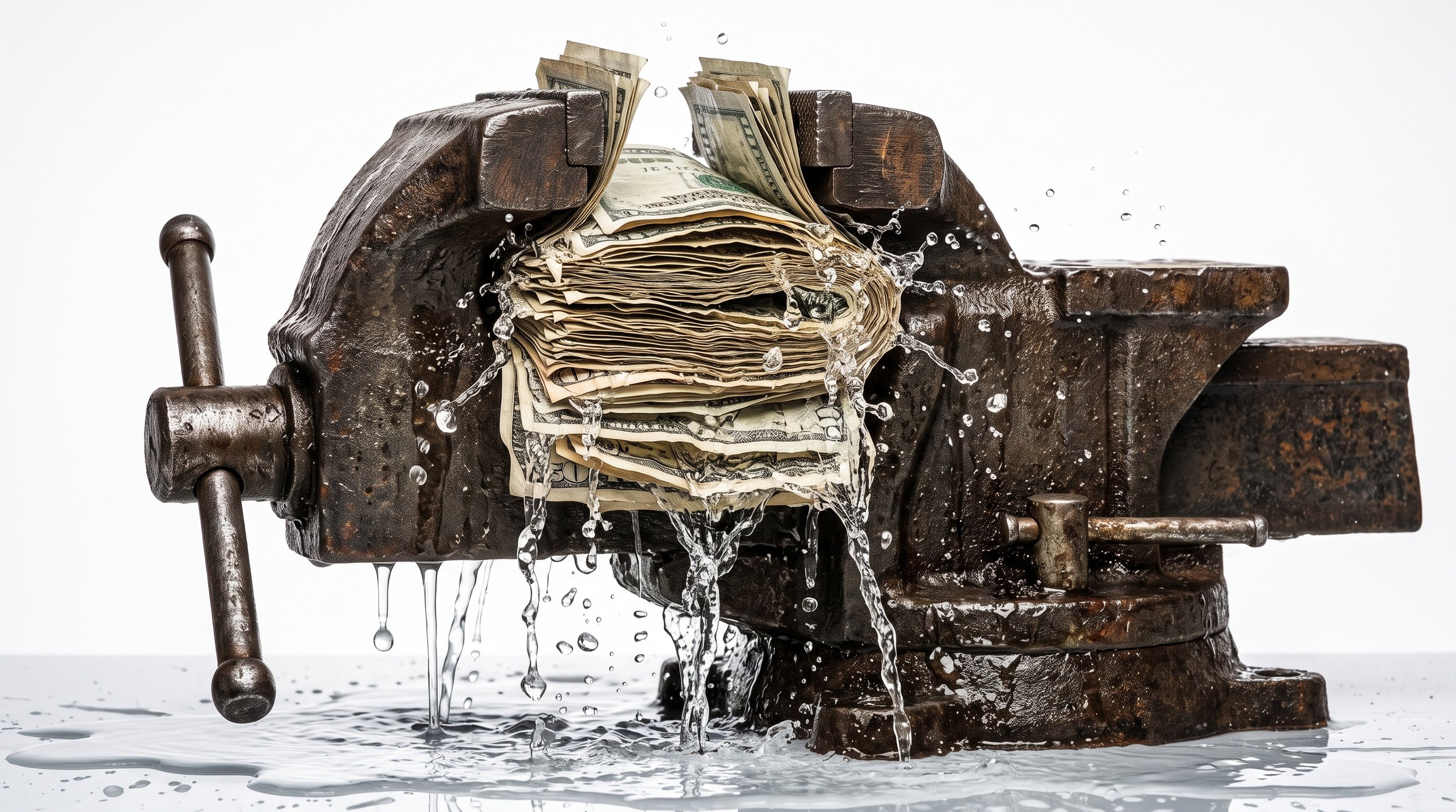
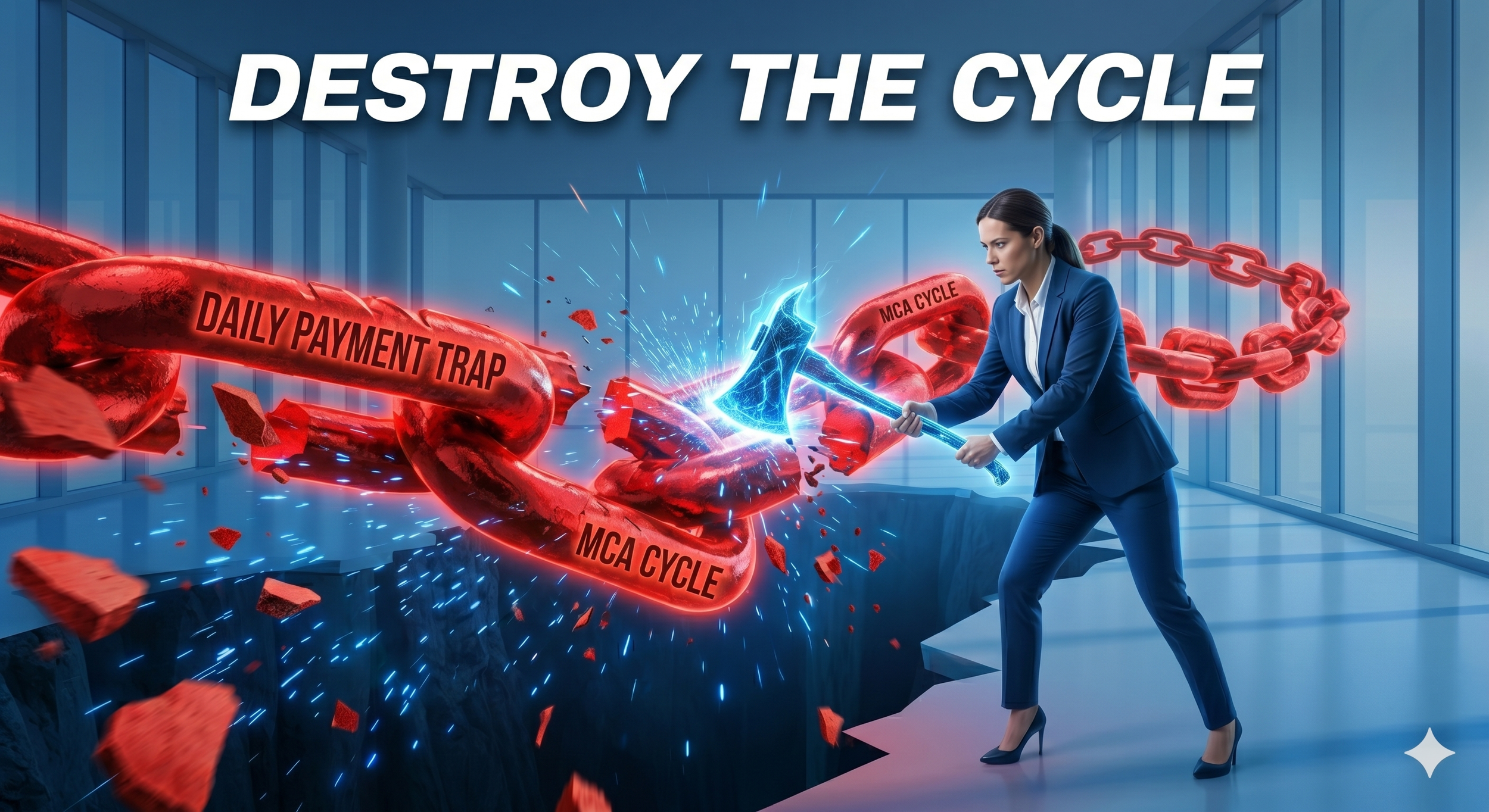
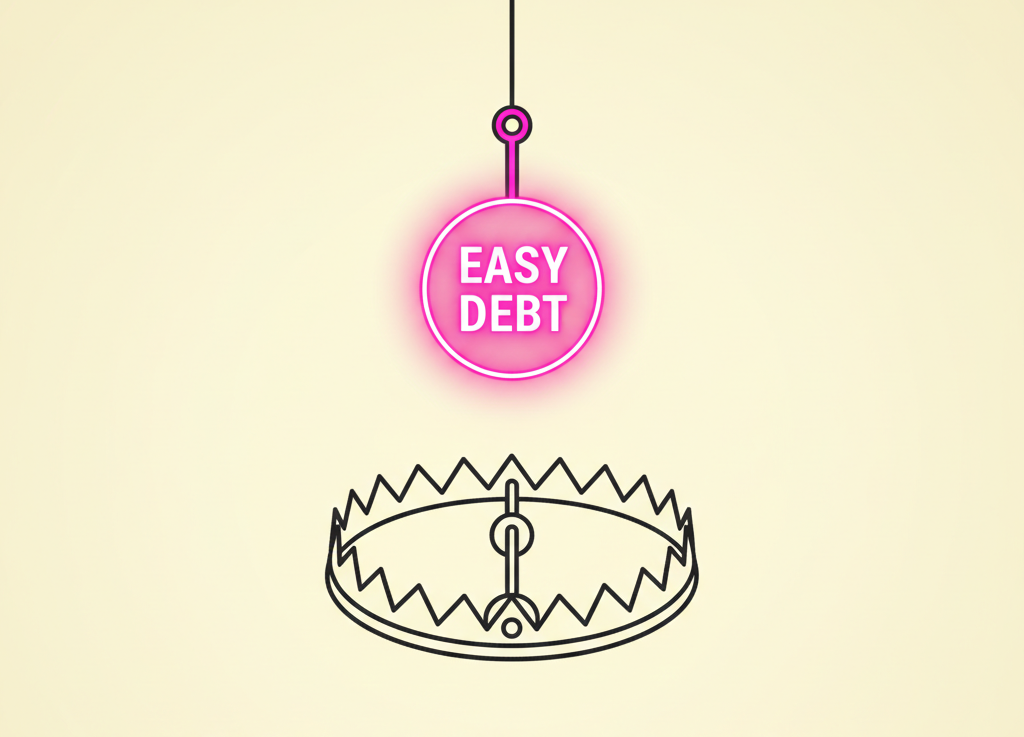
You went looking for capital to help your business grow, steady its cash flow or get through a tough season. You found a lender who approved you quickly, wired the money within days and made the whole process feel easy. Months later, the aggressive debits tied to a short payback period are draining your operating account, your vendors are waiting longer to get paid and the capital that was supposed to help your business is now the biggest threat to it.
This is not bad luck. It is the predictable result of borrowing from high-cost lenders whose business model is built around their own risk, not your ability to repay. Many of these lenders never asked the one question that matters most: after every operating expense is paid, can this business actually afford the business debt payment?
This article explains how these lenders work against the businesses they fund, why their approval should never be mistaken for a sign of affordability and what better-aligned capital looks like for a small to medium-sized business today. If you are already caught in the cycle, the most important step is recognizing it and taking action before the damage reaches your operations.
The Capital That Was Supposed to Help You
Every business owner who borrows money does so with a simple expectation: the funds will create more value than they cost. You borrow to buy inventory you can sell at a profit, to hire staff who will generate more revenue, to purchase equipment that increases capacity or to bridge a gap between when you pay your bills and when your customers pay you. When the math works, borrowing (financial leverage) is one of the most powerful tools a business owner has.
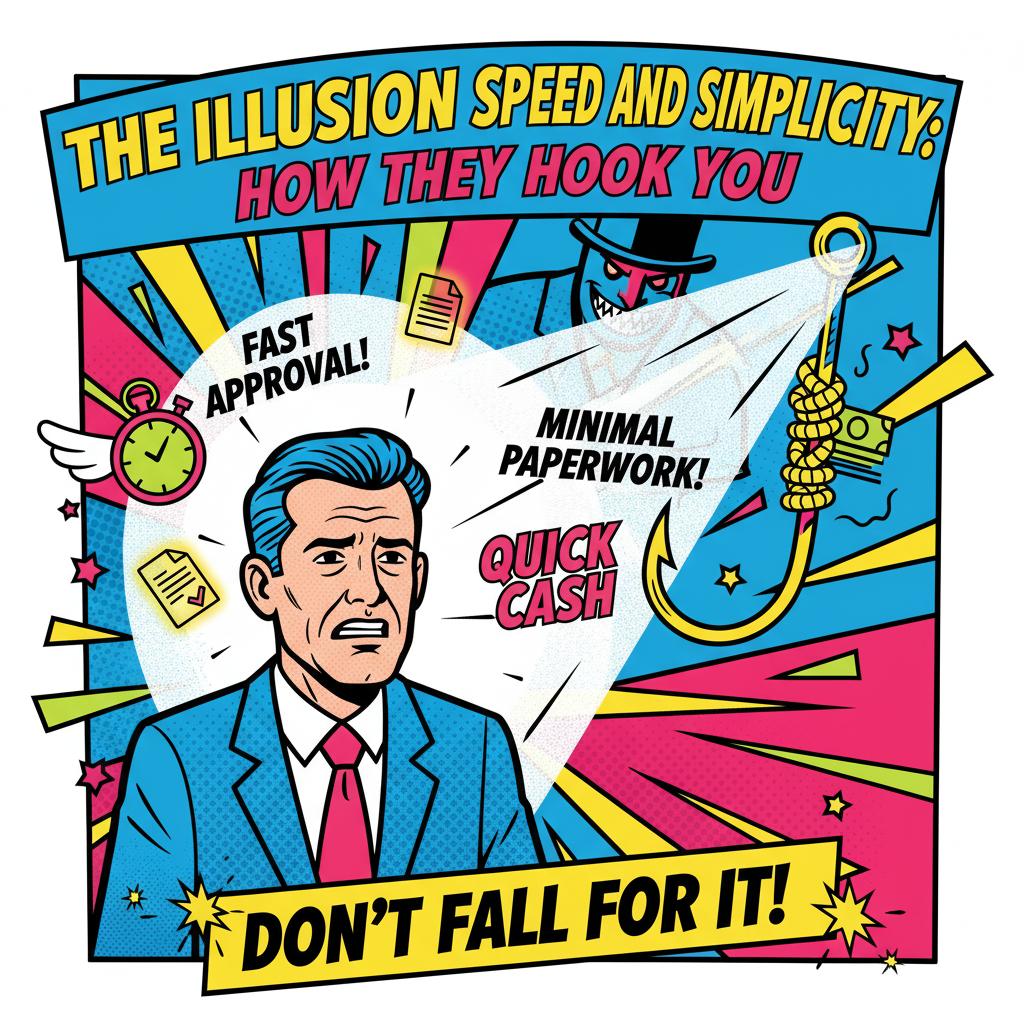
The problem is that the math does not work with every lender. A growing segment of the business lending market is made up of high-cost and short-term cash flow lenders who offer fast approvals, minimal paperwork and funding in as little as a day or two. On the surface, that speed feels like a gift. When a large payroll is due, a large order needs to be filled or a piece of equipment breaks down, the lender who says yes first often wins the deal.
What many owners do not realize until it is too late is that speed and convenience come with a price that can quietly reshape the entire financial profile of the business. Effective annual costs on these products frequently run well above 40 percent, and on many merchant cash advances (MCAs) and short-term business term loans, they climb far higher once factor rates, origination fees and compressed repayment schedules are translated into an annualized figure. Repayment is often collected in 12-months or less, directly from the operating account, before the owner has a chance to decide how the cash should be used.
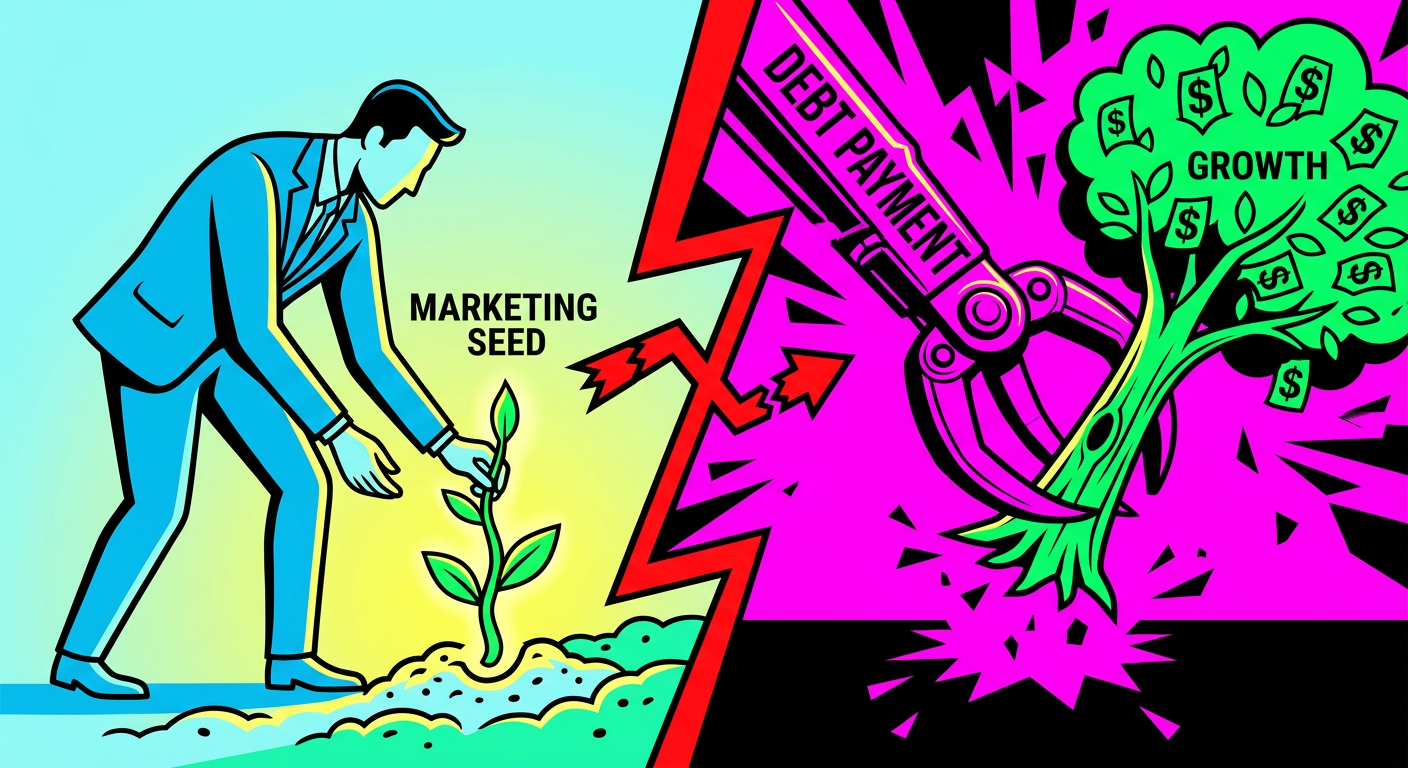
The result is a painful reversal. The capital you brought in to strengthen your business begins pulling cash out of it faster than the business can replace it. Instead of funding growth, it funds the lender's return. Instead of creating breathing room, it shrinks it. Many owners describe the experience the same way: they came to the lender for help, and the help became the problem.
Understanding why this happens is the first step toward getting out of it, and toward making sure it never happens again.
How High-Cost and Short-term Business Lenders Price Their Own Risk Into Your Business
High-cost and short-term business lenders are not charging high rates and cost of capital by accident. Their pricing is a direct reflection of the risk they choose to take, and the way they manage that risk tells you a great deal about whose interests they are protecting.
These lenders fund businesses quickly and with very little analysis. Because they do not take the time to deeply understand a borrower's financial condition, they know a meaningful percentage of their loans will go bad. Rather than reducing that risk through careful underwriting, they offset it through price. In simple terms, the businesses that repay are covering the losses on the businesses that do not. Every borrower in the portfolio is charged as if they are a high-risk credit, regardless of how healthy they actually are.
This creates a cycle that works directly against the borrower. The higher the cost of capital and the shorter the payback term, the larger the payment. The larger the payment, the more strain on cash flow. The more strain on cash flow, the more likely the business is to struggle or default. In other words, the lender's pricing actually increases the very risk it is supposed to compensate for. A business that might have been perfectly creditworthy at a reasonable rate can be pushed into distress simply by the weight of its ongoing business debt service obligations.
There is another layer to this. Short repayment terms, often 6 to 12-months, compress the repayment of principal into a very narrow window. Even if the stated cost were reasonable, paying back a large sum in a short period demands an enormous share of monthly cash flow. Combine a high-cost with a short-term and the payment can easily exceed what the business generates in free cash after expenses. This created negative business cash flow.
High-cost lenders protect themselves with frequent collections, personal guarantees, confessions of judgment in some cases and rights to debit your account automatically. Their risk is managed. Yours is multiplied. That imbalance is the core of the problem, and it is why the relationship so often feels adversarial from the very first payment.
Why Cash Flow Business Lenders Skip Affordability
Many of the business lenders in this segment describe themselves as “cash flow” lenders or funders. That sounds reassuring. It suggests they are looking closely at your cash flow to decide whether you can repay. In practice, the term usually means something very different.
For most high-cost and short-term cash flow business lenders, cash flow means deposits. They look at how much money flows into your bank account each month and use that figure to size an offer. If your business deposits a certain amount per month, they approve you for a percentage of that number. What they often do not do is subtract your rent, payroll, cost of goods, insurance, taxes, existing loan payments, and the other expenses required to keep the doors open.
That distinction matters enormously. Gross deposits tell a lender how much money moves through your business. They say almost nothing about how much money is left over. A business with strong revenue and thin margins can have impressive deposits and very little free cash. Sizing a loan payment based on revenue rather than on what remains after operating expenses is like approving a mortgage based on someone's gross salary without asking about their rent, car payment, or credit card balances.
Affordability is the question of whether the business can comfortably service its business debt payments out of the cash it actually keeps after operations. Responsible lenders measure this through a business debt service coverage, which compares the cash available after operating expenses to the total debt payments the business must make. A healthy business generally needs a meaningful cushion above its required payments so that a slow month, an unexpected repair, or a delayed customer payment does not put it in default.
When a lender skips this analysis, it is not because the analysis is too difficult. It is because the lender's model does not require it. Their pricing assumes some borrowers will fail. Their collection methods ensure they are paid first. Whether your business can absorb the payment and still operate in a healthy way is, quite simply, not their priority. Unfortunately, that is something many owners only discover once the payments begin.
The Illusion of Surface Underwriting
One of the most damaging aspects of high-cost, short-term lending is the false sense of security it creates. When a lender approves your business for a specific amount over a specific term, it is natural to assume they did the homework. Surely, you think, they would not offer this much money if they had not confirmed the business can handle it. That assumption is reasonable. It is also, far too often, wrong.
The underwriting behind many of these approvals is thin. A typical review might include the last three or four months of business bank statements, a glance at accounts receivable, the last two tax returns, a credit pull, and not much else. That is surface underwriting. It checks that money is flowing in, that the business exists, and that the owner has a pulse on paper. It does not build a picture of the business's true financial health.
Consider what surface underwriting misses. Four months of bank statements may capture your busiest season and none of your slow months. They may not reveal a large customer who is about to leave, a contract that is ending, or seasonal swings that leave you short in certain quarters. Tax returns from prior years may not reflect current margins. Receivables may include balances that are slow to collect or unlikely to be paid at all. Existing business debt from other lenders may be ignored or only partially accounted for.
Most importantly, surface underwriting rarely builds a real cash flow analysis that starts with revenue, subtracts every operating expense, normalizes for one-time items, and then asks whether the remaining cash can comfortably cover the new payment alongside all existing obligations.
This is why the approval itself can be deceptive. Owners understandably treat an approval as a professional opinion that the deal makes sense. In reality, it may simply be a judgment that the lender can collect enough, quickly enough, to earn its return even if your business struggles. An approval measures the lender's comfort, not your affordability. Knowing that difference can protect your business from taking on debt it was never positioned to carry.
Lenders Who Are Not Aligned With Your Goals
At the heart of this issue is alignment. A good lending relationship is built on shared interest. The lender succeeds when the business succeeds, because a healthy business repays its business debt, borrows again as it grows, and becomes a long-term client. When the incentives line up, the lender wants to structure capital in a way that supports the business's goals.
High-cost, short-term lenders operate on a very different set of incentives. Their returns are front-loaded and their exposure is brief. Because they recover their money quickly and at a high premium, they can profit even when the borrower ends up worse off. Many of them also benefit from renewals, where a borrower who has paid down part of an advance is offered a new, larger one, often with the remaining balance rolled in and new fees attached. The lender earns again, while the business resets its debt burden.
Think about what your business actually needs from capital. Growth initiatives, like opening a new location, adding a product line or winning a large contract often take a year or more to pay off. Equipment purchases deliver value over several years. Working capital supports operations on a continuous basis. None of these needs fits neatly into a six to twelve month repayment schedule at a high cost. When the term of the debt is much shorter than the time it takes the investment to generate a return, the business is forced to repay the loan before the money has done its job.
That mismatch is one of the clearest signs that a lender is not aligned with you. The cost and the short term together work against your long-term objectives. They pull cash out of the business precisely when it should be reinvested. They turn growth capital into a drag on growth.
A lender who is aligned with your business will want to understand your plans, structure repayment around the timeline of your investment and price the capital based on your actual risk rather than an assumed one. If your current lender shows no interest in any of that, it is worth asking whose goals the relationship really serves.
Brokers and Jokers Who Promised You Could “Take This Now and Refinance Later”
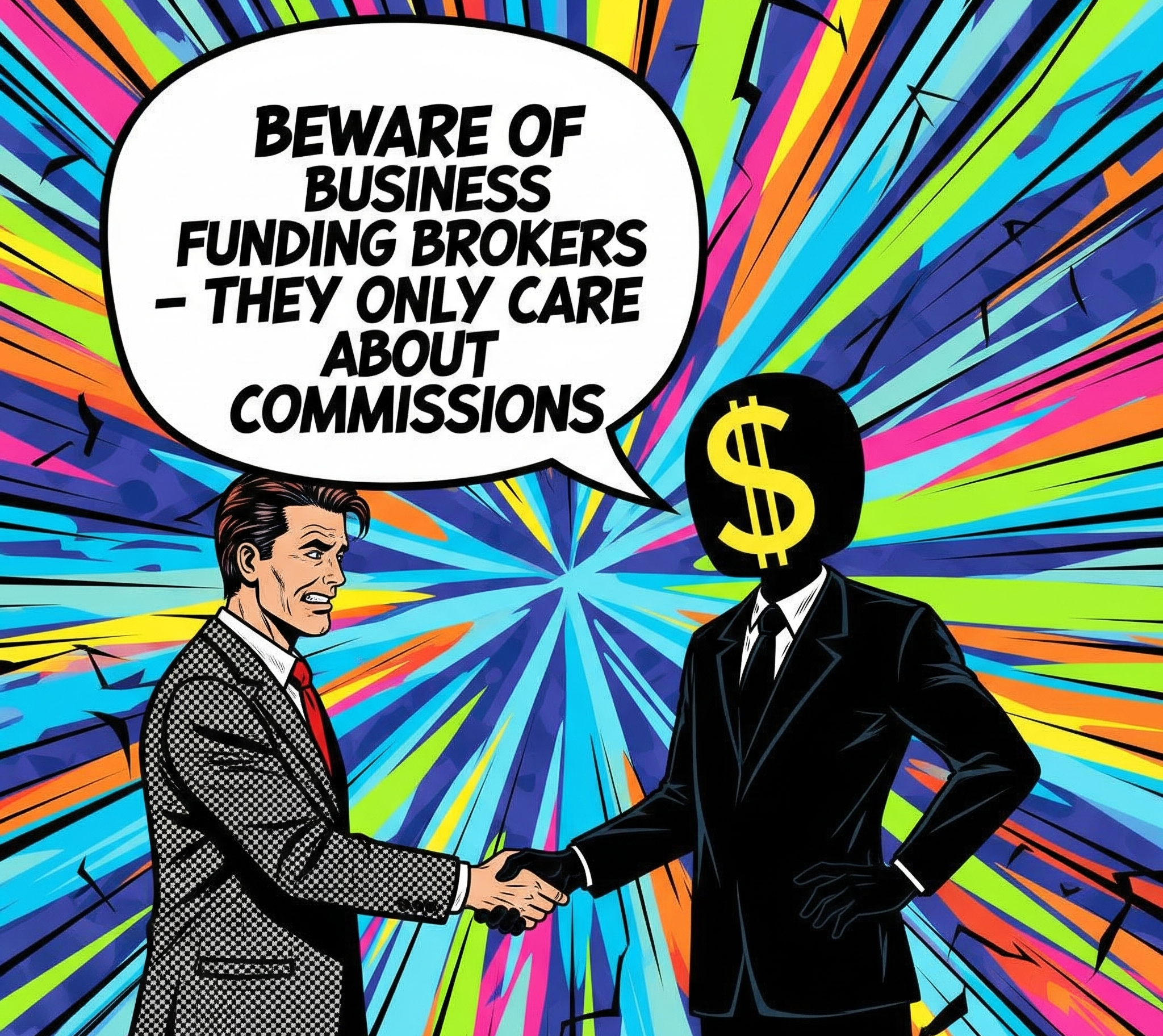
Not every problem starts with the lender. Many business owners are introduced to high-cost capital through brokers who earn commissions on every deal they place. Some brokers are knowledgeable and ethical. Too many are not.
You may have heard the pitch. Take this now, it is fast and it will get you through. Make your payments for a few months, build a track record and then we will refinance you into something better. It sounds reasonable, and when you are under pressure, it is easy to accept. The problem is that this promise rarely comes true in the way it is described.
Here is why. A high-cost, short-term loan often weakens the very financial profile that a better lender would want to see. The heavy payments reduce your free cash flow. Your bank balances run lower. Your vendor payments may slip. By the time you are ready to refinance, your business may look riskier to a traditional lender than it did before you took the original loan. Meanwhile, the broker who placed that first deal is often only able to offer another high-cost product, frequently from the same type of lender, and collects another commission in the process.
Some brokers are compensated more for placing higher-cost products, which creates a conflict of interest that is not always disclosed. Others simply lack access to institutional capital and can only offer what is in their limited network. Either way, the advice you receive is shaped by what the broker can sell, not by what your business needs.
The lesson is not that every intermediary is bad. It is that you need guidance from someone whose role is to analyze your business, understand your goals, and help you find the right structure of capital, rather than someone whose income depends on closing a fast deal. If an advisor's only solution to a high-cost loan is another high-cost loan, that is not a strategy. It is a cycle, and you deserve a way out of it.
Working With Business Finance Advisors and Private Credit
A qualified business finance advisor approaches capital very differently from a transactional funding broker. Instead of starting with a product, a good advisor starts with your business. They review your financial statements, normalize your earnings, analyze your existing debt and build a clear picture of what your business can comfortably afford. Only then do they look for capital that fits.
Central to this approach is a measure called adjusted EBITDA, which stands for earnings before interest, taxes, depreciation, and amortization, adjusted for one-time or non-recurring items and owner-specific expenses. Adjusted EBITDA gives lenders and advisors a clearer view of the true operating cash flow your business generates. Rather than sizing business debt based on gross deposits, institutional lenders size debt based on this figure, which directly ties the amount you borrow to your ability to repay it through operating income.
For many established small and medium-sized businesses, private credit facilities offer a compelling alternative to high-cost short-term lending. These facilities are generally sized at roughly two to four times your trailing-twelve-month adjusted EBITDA, depending on the strength and stability of your business. Their pricing is typically built on SOFR, the Secured Overnight Financing Rate, which is a widely used benchmark interest rate, plus a lender spread that reflects your credit profile. At the time of this writing, the all-in cost of capital on these facilities commonly falls in the mid-teens, in a range of roughly 14.5 percent to 16.5 percent.
Just as important as the cost is the structure. Private credit facilities often offer payback periods of 24, 36, or 60 months. Longer terms spread principal repayment over a period that better matches how investments actually generate returns, which keeps monthly payments manageable and leaves cash available to run and grow the business.
Compare that to a short-term advance with an effective annual cost several times higher and a repayment window of under a year. The difference in monthly cash flow can be dramatic, and it can be the difference between a business that is struggling to survive and one that has room to execute its plans.
Commercial Bank Lending and What It Takes to Qualify
For businesses with consistent profitability and solid financial reporting, commercial bank lending may offer the lowest cost of capital available, but not always the ability to easily increase the credit line based on increase in business assets, AR, revenue, etc. Commercial banks are generally more conservative than private credit lenders, and they typically lend up to about two times verified adjusted EBITDA. At current market rates, pricing on these loans commonly ranges from about 10.5 percent to 12.0 percent.
The key word in bank lending is verified. Banks expect to see clean, accurate and well-documented financials. That usually means reliable profit and loss statements and balance sheets, business and personal tax returns that reconcile with your internal books, a clear accounting of all existing debt, and a credible explanation of any adjustments you are making to arrive at adjusted EBITDA. Banks also look closely at business debt service coverage to confirm that your business can comfortably carry the new payment alongside all other obligations, and they often want to see collateral and a personal guarantee.
This level of scrutiny is not something to fear. It is exactly the kind of underwriting that protects borrowers. When a bank approves a loan after a thorough affordability analysis, that approval actually means something. It reflects a professional judgment that the business can repay without endangering its operations.
Many business owners assume bank financing is out of reach, especially if they have already been turned down once or have high-cost debt on their books. That is not always true. A capable business finance advisor can help prepare your financial package, identify adjustments that legitimately improve your adjusted EBITDA and present your business in the clearest possible light. In some cases, the right path is a staged approach, using a private credit facility to refinance expensive short-term debt, stabilize cash flow, and build a stronger financial record before transitioning to bank financing at a lower cost.
Whether the right fit is private credit, bank lending, or a combination of both, the common thread is the same: capital sized to what your business can afford, priced to your actual risk, and structured around your long-term goals.
Stop Working With Business Lenders Who Work Against You
If any part of this article sounds familiar, take it seriously. Lenders who charge excessive rates, collect aggressively, and never checked whether your business could afford the payments are not partners in your success. They are a risk to it, and the longer the relationship continues, the more damage it can do.
Start by getting a clear view of where you stand. List every business debt obligation your business carries, including the remaining balance, the payment amount, the payment frequency, and the effective cost. Calculate what those payments add up to on a monthly basis and compare that figure to the cash your business actually keeps after operating expenses. For many owners, seeing the full picture in one place is a turning point.
Next, stop adding to the problem. Resist the pressure to take another advance to cover the last one. Be skeptical of any broker whose solution is more of the same. Every new high-cost position makes it harder to refinance and harder to recover.
Then, seek out qualified help. Work with a business finance advisor who will analyze your business on its true merits, normalize your earnings, and look for capital that fits your affordability and your goals. Explore private credit facilities sized at two to four times your trailing twelve month adjusted EBITDA with costs in the mid-teens and terms of 24 to 60 months. Explore commercial bank lending at up to two times verified adjusted EBITDA at rates in the range of 10.5 to 12.0 percent if your business qualifies.
Finally, act before the problem reaches your operations, or before it gets any deeper. The best time to replace harmful debt is while your business still has the revenue, the relationships, and the reputation to attract better capital. Waiting only narrows your options.
You went looking for capital to help your business. You deserve capital that actually does. Choose lenders and advisors who are aligned with your long-term success, and leave behind the ones who are working against you.

More Business Finance and Strategy Articles: