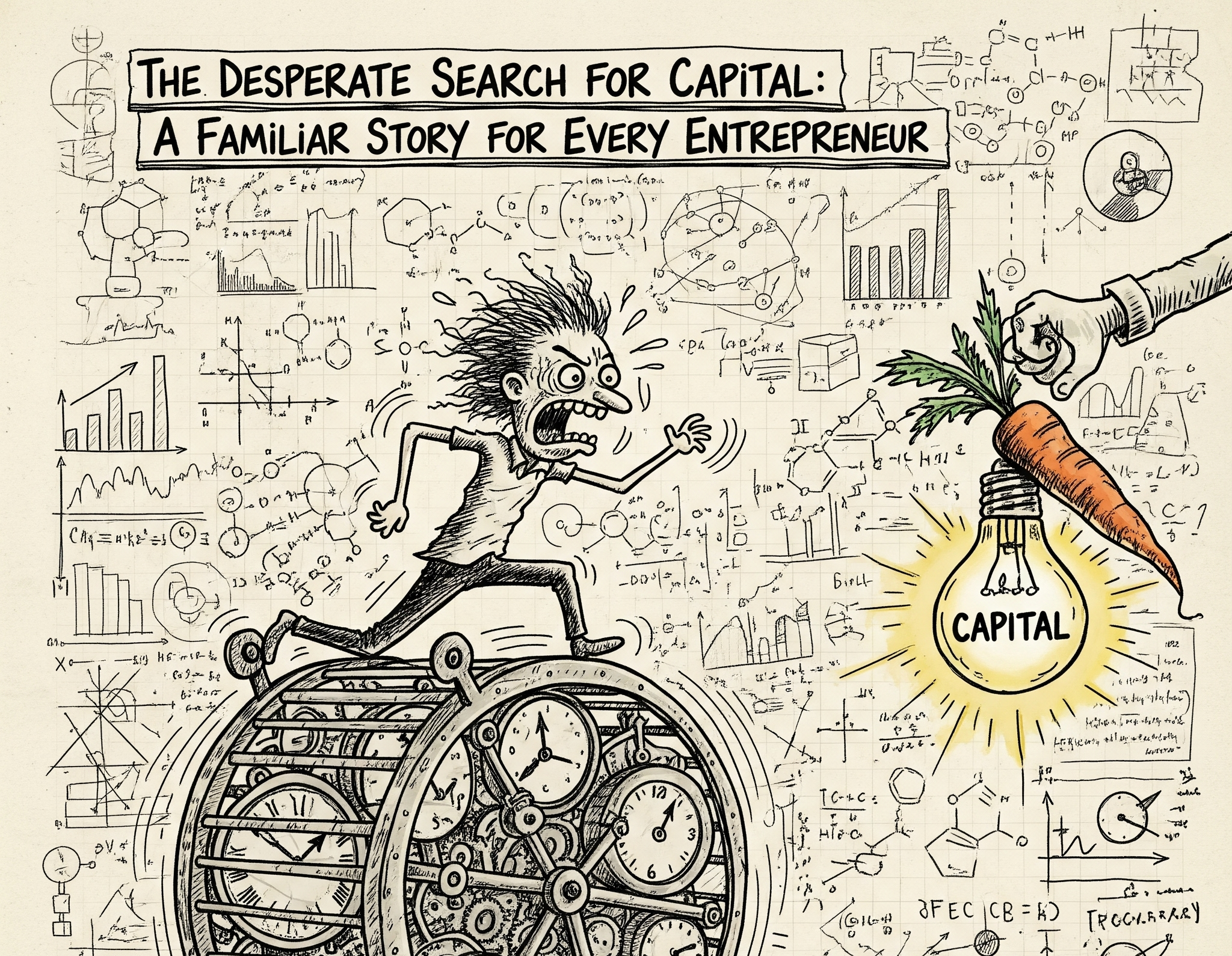
Business cash flow is the literal lifeblood that sustains operations, fuels expansion and keeps the doors open. When a sudden dip in revenue, an unexpected expense or a delayed client payment threatens this cash flow, business owners often find themselves in a state of high stress and vulnerability. In these moments of acute financial anxiety, the promise of quick, hassle-free capital can feel like a lifeline thrown to a drowning swimmer.
Unfortunately, lurking in the shadows of the “alternative” business financing industry is a highly coordinated ecosystem of predatory and opportunistic business funding companies and deceptive brokers. These actors are not looking to help your business grow; instead, they are engineered to exploit your financial desperation for their own astronomical gain. They employ high-pressure tactics, opaque contract terms and outright deception to trap well-meaning entrepreneurs in cycles of high-cost and high-payment business debt that frequently lead to negative cash flow, then operational distress and finally potential business insolvency and personal ruin.
To protect your hard-earned business, it is vital to understand the inner workings of this predatory funder and broker landscape. Let’s unmask the deceptive practices of business funding brokers, expose the destructive nature of the financial products they sell and explain how they systematically divert eligible borrowers away from safe, low-cost institutional capital like SBA loans and Private Credit business credit facilities to line their own pockets with exorbitant commissions paid by you.
The Mirage of Quick Capital and Stressed Business Owners
When business cash flow tightens, the psychological toll on a business owner is immense. Payroll deadlines loom, suppliers demand payment, and the fear of public failure or bankruptcy becomes a constant, grinding pressure. In this state of heightened stress, cognitive bandwidth is severely reduced. Psychologists and economists refer to this as the "scarcity mindset," where the immediate need to solve a pressing crisis overrides long-term strategic thinking.
“Predatory funding companies and brokers understand this vulnerability perfectly,
and they design their entire marketing and sales pipelines to exploit it.”
The marketing materials of these predatory business funding brokers and funders rarely mention interest rates, terms or fees. Instead, they focus entirely on speed, ease and lack of friction. Slogans like "Funding in 24 Hours," "No Credit Check Required," and "Bad Credit? No Problem!" are plastered across digital ads, social media and unsolicited email campaigns.
To a business owner who is worried about making payroll in forty-eight hours, these slogans sound like a miraculous solution. The brokers position themselves as sympathetic partners, claiming they want to "help you through this tough patch" or "provide the runway your business needs to reach the next level."
In reality, this is a calculated mirage. The ease of access is not a benevolent feature; it is a trap designed to bypass traditional underwriting standards that would otherwise protect the borrower from taking on unsustainable business debt that they cannot afford to pay. By framing the transaction as an urgent, limited-time opportunity, brokers prevent business owners from performing due diligence, consulting with trusted financial advisors or shopping around for better rates.
“The urgency [of predatory broker and funders] is entirely manufactured
to ensure that the stressed business owner signs the contract before
they fully comprehend the devastating financial
obligations they are about to assume.”
Brokers and Lenders Conspire for the Commission Hustle
To understand why so many small and medium-sized business owners end up with predatory, high-cost and high-payment funding, one must look at the hidden financial incentives that drive the business funding broker industry. In traditional finance, an independent business financial advisor or investment banker operates on a "success fee" model, typically charging around 2% to 4% of the total transaction value.
“This fee structure aligns the business finance advisor’s interests with the
long-term health of the business, as their reputation and business
rely on securing sustainable, competitive financing for their clients.”
In the unregulated world of alternative business funding, however, the commission structures are completely warped. High-cost, short-term finance companies that sell time-bomb products like Merchant Cash Advances (MCAs) and short-term, high-cost business term loans regularly pay brokers commissions ranging from 8% percent up to a staggering 15% percent of the total funded amount.
For example, if a broker convinces a business owner to accept a $100,000 predatory advance, the broker can pocket up to $15,000 in commission instantly. This massive commission is not paid out of the lender's profits; it is tacked onto the cost of the funding, directly inflating the business debt burden placed on the business.
This astronomical commission rate creates a severe conflict of interest. Even if a business owner qualifies for a low-cost Small Business Administration (SBA) loan, private credit or Small Business Investment Company (SBIC) financing, the broker has zero financial incentive to guide them down that path. Securing an SBA loan requires weeks of diligent paperwork and pays the broker a market-rate fee. Conversely, putting the client into a high-cost MCA takes less than forty-eight hours and pays a commission that is five to ten times larger.
“Consequently, business funding brokers systematically steer qualified,
healthy businesses away from safe, affordable institutional credit and
directly into predatory business debt traps solely to
maximize their personal payouts.”
The Mechanics of Predatory Financing: Unveiling Merchant Cash Advances
The most common and destructive product sold by predatory business funding companies is the Merchant Cash Advance, or “MCA”. While brokers and funding companies frequently refer to these products as "loans," they are legally structured as the purchase of future receivables (future revenue purchases). This legal distinction is highly deliberate: because MCAs are classified as commercial sales transactions rather than loans, they are not subject to state usury laws, which cap the maximum interest rates that can be charged to borrowers. This loophole allows MCA providers to charge equivalent annual percentage rates (APRs) that frequently exceed one hundred percent, sometimes reaching into the triple digits.
Instead of charging a traditional interest rate, MCA companies use a mechanism called a "factor rate." A factor rate is expressed as a decimal, typically ranging from 1.15 to 1.50. When a business owner takes an advance of $100,000 with a factor rate of 1.30, they must repay a total of $130,000. On the surface, this looks like a simple thirty percent cost. However, the critical deception lies in how this money is repaid. Rather than making monthly payments over several years, the business owner must make daily or weekly automatic clearing house (ACH) withdrawals directly from their business bank account, often over a very short term of 6 to 10-months.
Because the principal is being repaid weekly or even daily starting from day one, the average outstanding balance of the funding is roughly half of the initial amount. When you calculate the actual APR based on the rapid repayment schedule and daily compounding drain on cash flow, that seemingly simple 30% cost transforms into an actual APR of 80%, 150% or even higher. The weekly and sometimes daily ACH withdrawals slice directly into the business's operating cash, starving the company of the working capital it needs to buy inventory, pay employees and maintain basic operations.
The Broker’s “Bait-and-Switch” and Concealing of Legitimate Business Financing Options
A primary tactic used by deceptive funding brokers is the classic bait-and-switch, a maneuver designed to exploit the borrower's hope while systematically cutting off their options. When a business owner first contacts a broker, they are often seeking an SBA loan, a traditional bank line of credit or affordable and long-term business private credit relationship.
The broker, eager to capture the transaction, will enthusiastically assure the business owner that they are an excellent candidate for these low-cost options. They will ask the owner to submit extensive documentation, including tax returns, profit and loss statements and bank records.
Once the broker has obtained this sensitive financial data, the "wait-and-see" phase begins. The broker will stall for days or weeks, claiming that the SBA or bank underwriters are reviewing the file, asking for "just one more document," or processing the approval. In reality, the broker is either doing nothing or is actively shopping the business's bank statements to high-cost alternative lenders.
“The predatory business funding broker intentionally delays the process
until the business owner's financial situation reaches a critical breaking point,
until the exact day that payroll is due or a vital vendor must be paid.”
At this moment of maximum panic, the broker delivers the bad news: "The bank just turned us down because of an issue on your credit report," or "The SBA underwriting is going to take another six weeks, and we know you need the money tomorrow." But then, the broker offers a manufactured "rescue" option: "Don't worry, I have a special relationship with a private funding partner who can deposit $50,000 into your account by tomorrow afternoon. It’s a short-term bridge product. We will take this now, use it to solve your immediate crisis, and then we will refinance it into that cheap SBA loan in a few weeks." This promise of a future refinance is a complete lie, as the high-cost aggressive payments of the bridge funding will soon destroy the business's financial profile, making it completely ineligible for any traditional financing.
High-Cost Business Debt vs. Traditional Business Finance
To fully appreciate the predatory nature of alternative business funding, it is helpful to compare it directly to traditional business finance options. Traditional finance is built around the concept of sustainable growth: lenders provide capital at a cost that allows the business to generate a positive return on investment, ensuring that the business can comfortably service the debt while continuing to expand.
Predatory funding, by contrast, is a wealth extraction mechanism that drains capital out of the business faster than the business can possibly generate it.
Consider a healthy, growing business that needs $150,000 to purchase new equipment. If this business works with a traditional advisor to secure an SBA 7(a) loan or a private credit facility, they might secure a term of 3, 5 or 10-years at an interest rate of 11% to 16% range. The advisor charges a standard, transparent 3% to 4% success fee of $4,500 to $6000. The monthly payment on this loan would be approximately $2,500. This stable, predictable monthly debt service payment allows the business owner to plan their cash flow, retain their profits and reinvest in their operations. Over the course of a year, the total interest paid is manageable, and the business grows stronger.
Now, consider the exact same business steered by a predatory broker into a high-cost Merchant Cash Advance or “MCA”. The broker secures a $150,000 advance with a factor rate of 1.35 and a 9-month repayment term. The broker pockets a 15% commission ($22,500) directly from the funding company, which is ultimately charged back to the business (in the factor rate).
The business owner must repay a total of $202,500 over just 36-weeks. This requires a weekly ACH withdrawal of roughly $7500 or daily withdrawal each business day of $1,550 from the business bank account. Instead of a manageable $2,500 monthly payment, the business is hit with a devastating monthly drain of over $33,000. The cost of capital is not 11% to 16%; the effective APR of this transaction is over 130%.
Psychological Manipulation and High-Pressure Sales Tactics
The sales forces of predatory funding companies are run much like the infamous "boiler rooms" of Wall Street. Brokers undergo rigorous training in psychological manipulation, designed specifically to break down a business owner's defenses, induce panic and force immediate signatures on contract agreements. They are taught to identify the specific emotional triggers of small business owners, such as pride in their company, fear of letting down their employees and the stress of financial instability, and weaponize those emotions against them.
One common psychological tactic is the "implied takeaway." A broker will call a business owner and excitedly announce that they have secured a "highly exclusive, customized funding offer" that is only valid if signed within the hour. They will claim that another business is competing for the same pool of capital, or that the underwriting department will close the file if not executed immediately. This artificial scarcity bypasses logical analysis, triggering a fear of missing out (FOMO) and forcing the business owner into a reactive state. If the owner hesitates or asks to show the contract to their attorney, the broker will become aggressive, accusing the owner of "not being serious about saving their business" or warning that delaying will cause their credit score to collapse.
Another deceptive tactic is the masking of actual contract terms. Brokers will verbally describe the funding using familiar terms like "interest rates" and "monthly payments," even though the actual written contract specifies "factor rates" and "weekly debits." They know that busy business owners rarely read forty pages of dense, fine-print legal jargon under pressure. If a business owner notices the frequent payment clause in the contract and questions it, the broker will downplay it as a "standard industry formality" or reassure them that "we adjust the payments if your sales slow down." In reality, these verbal promises are legally meaningless, and the contract terms are strictly enforced by the funding company's aggressive legal teams.
The Destructive Cycle of Double-Funding and Debt Stacking
Once a business owner takes their first high-cost Merchant Cash Advance or “MCA”, the ACH withdrawals immediately begin to starve the business of cash. Within a few weeks, the owner realizes that the drain is so severe that they can no longer afford to buy inventory or pay their utility bills. The very product that was sold as a solution to their cash flow crisis has actually accelerated and deepened it. Sensing this growing desperation, the original broker (or competing brokers who have bought the business's data) will reach out with a seductive but deadly offer: "debt stacking."
Debt stacking, also known as "double-funding," occurs when a broker convinces a business owner to take out a second, third or even fourth MCA on top of the existing one. The broker will pitch this as a way to "consolidate" or "get extra breathing room." In practice, however, the new lender does not pay off the first advance. Instead, they simply layer a second frequent ACH withdrawal on top of the first. Now, instead of losing $1,000 a day, the business's bank account is drained of $2,500 every single day or $12,500 per week. This is the financial equivalent of pouring gasoline on a fire to put it out.
The funding companies and brokers engage in this practice because they are fully aware that the business is on the verge of collapse. They want to extract as much cash as possible before the inevitable default occurs. The broker earns another massive commission on each subsequent stack, while the business owner is pushed into a downward spiral from which recovery is virtually impossible. The operational cash flow of the business is completely cannibalized, leaving the owner with not many more choices but involuntarily default on the advances, shut down their business and face the aggressive collection practices of the predatory lenders.
Recognizing the Red Flags of Deceptive Funding Practices
Protecting your business from predatory funding begins with education and a high degree of skepticism when dealing with third-party finance brokers. Stressed business owners must learn to recognize the clear warning signs of deceptive practices before they sign any documents or authorize access to their bank accounts. If a broker exhibits any of the following behaviors, it is a definitive signal to terminate the relationship immediately and seek counsel from an experienced business finance and strategy professional.
The first and most prominent red flag is a refusal to disclose the actual Annual Percentage Rate (APR) of the funding. If a broker answers questions about cost by using terms like "factor rates," "total cost of capital," or "pennies on the dollar," and refuses to provide a written APR, they are actively hiding the true, triple-digit cost of the product.
Second, beware of extreme pressure to sign documents immediately. A legitimate financial advisor will encourage you to take the contract home, review it with your accountant and lawyer, and ask questions. A predatory broker will use artificial deadlines, constant phone calls and emotional manipulation to force a rapid signature.
Another major warning sign is when a broker requests that you alter or misrepresent your financial information on the application. They might ask you to inflate your monthly revenue, hide outstanding debts or even provide bank statements with edited transactions. Legitimate lenders maintain strict ethical guidelines and compliance standards, whereas predatory brokers are willing to commit fraud to secure an approval and capture their commission. Genuine financial advisors typically work on a success fee model, meaning they only receive compensation once a viable, accepted funding option is successfully closed.
Lastly, look out for the absolute lack of physical address, official corporate email domains, or transparent broker agreements. Predatory brokers often operate from unregistered burner numbers or personal email accounts, shielding themselves from regulatory scrutiny and making it nearly impossible for you to hold them accountable. If they cannot provide a clear, written breakdown of their commissions, or if they insist that they "don't get paid by you, only by the lender," they are concealing the massive conflict of interest that will ultimately drive them to sell you the most expensive, destructive product on their shelf.
Reclaiming Control with Sustainable Capital for Businesses
If your business is currently facing a business cash flow crisis, or if you have already been trapped in a high-cost business funding cycle, it is important to know that you are not powerless. There are safe, legitimate and sustainable capital paths available, but they require bypassing predatory brokers and working directly with reputable institutions. The key to long-term financial health is aligning yourself with capital partners who succeed when your business succeeds.
First, explore traditional commercial banking and local Credit Unions. While their underwriting standards are stricter and the process takes longer, their interest rates are capped, and their products are highly regulated. If your credit profile is not yet strong enough for a traditional bank, look into Community Development Financial Institutions (CDFIs). CDFIs are mission-driven financial institutions that receive federal funding specifically to provide affordable capital and technical assistance to underserved, minority-owned, or struggling small businesses. They prioritize community impact over profit maximization, making them an excellent alternative to predatory lenders.
Second, consider seeking an SBA-backed loan, such as the SBA 7(a) or Microloan programs. These loans are partially guaranteed by the federal government, which reduces the risk for lenders and allows them to offer longer repayment terms and lower interest rates to businesses that might not otherwise qualify for traditional credit. Additionally, private credit funds and Small Business Investment Companies (SBICs) represent excellent institutional sources of patient capital. These entities are regulated and provide flexible debt and equity structures designed to support business growth, rather than drain operational viability.
The Business Private Credit marketplace is a rapidly expanding sector of the financial system where non-bank entities, such as asset managers, institutional investors and private equity firms, originate private business loans directly to companies. Primarily serving middle-market businesses that require more specialized or expedited financing than traditional banks can provide, this market delivers flexible, bespoke capital solutions for acquisitions, growth and working capital. In exchange for the reduced liquidity of these privately negotiated and held loans, investors are drawn to the asset class for its potential to deliver higher yields, floating-rate income streams, and robust structural protections compared to public fixed-income markets.
Finally, if you are already trapped in an MCA cycle, do not face it alone. Seek out specialized legal counsel or commercial debt restructuring firms immediately. These professionals can negotiate with MCA companies to restructure your payments into more manageable payment schedules, helping you regain control of your cash flow, protect your assets and guide your business back onto a path of sustainable, long-term profitability. Taking the step to seek professional, ethical guidance can be the critical turning point that saves your business and preserves your personal financial well-being.