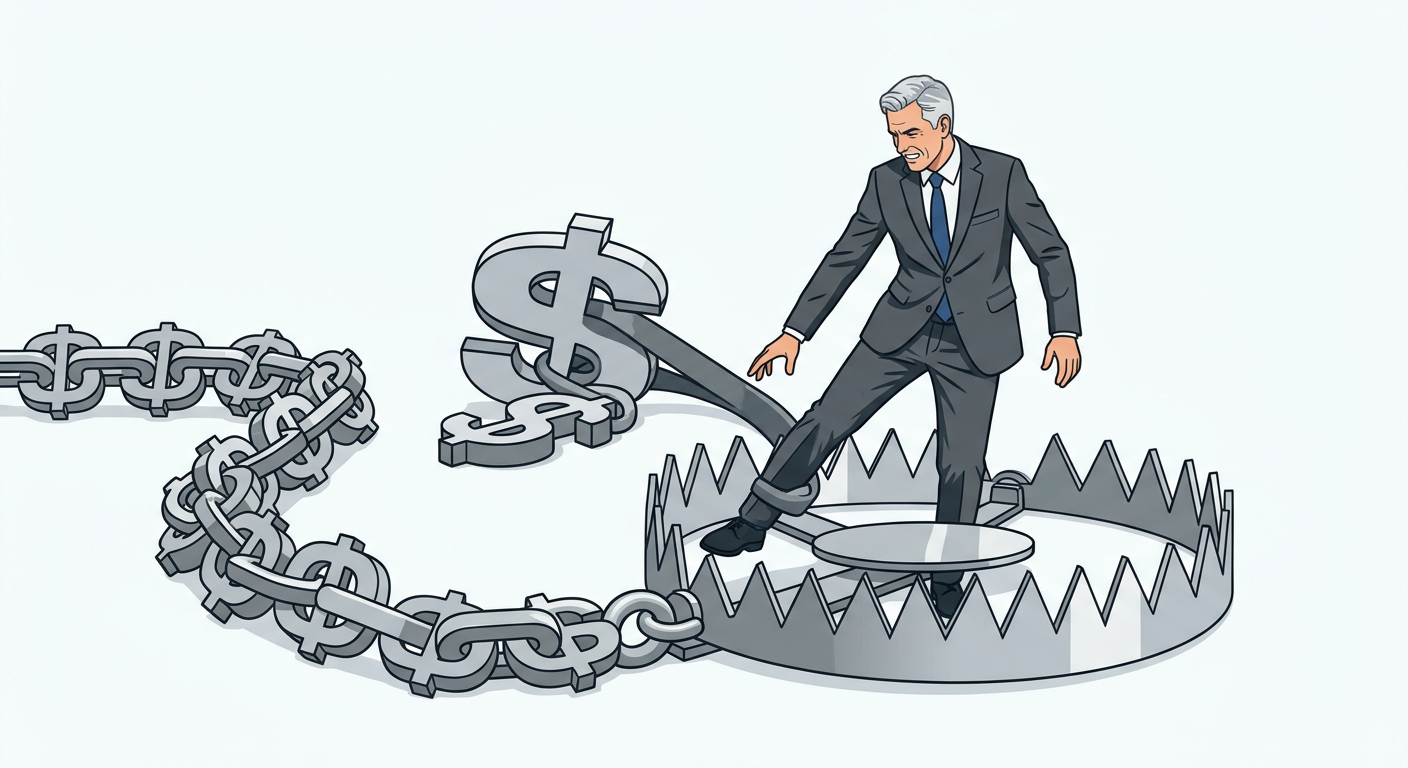
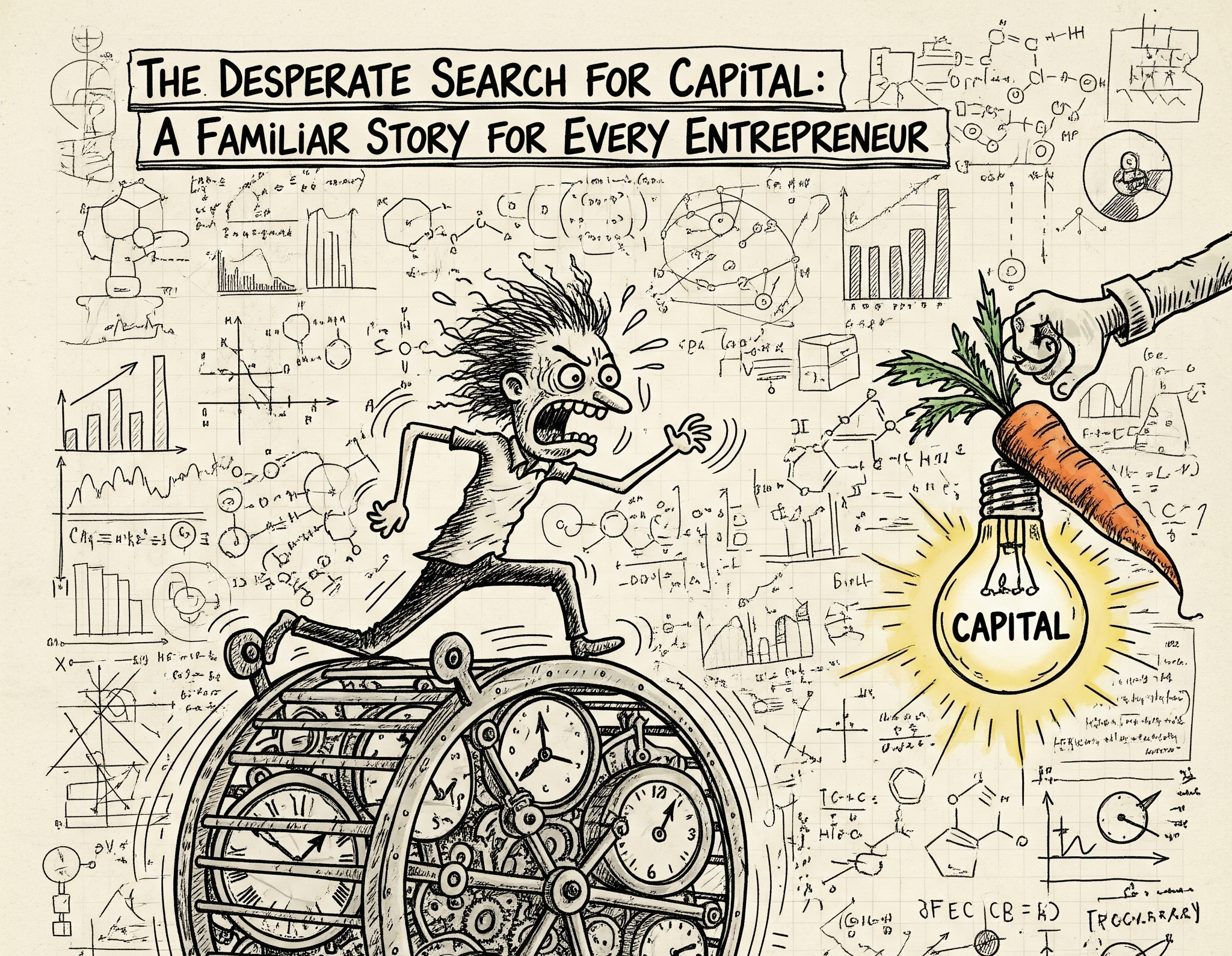
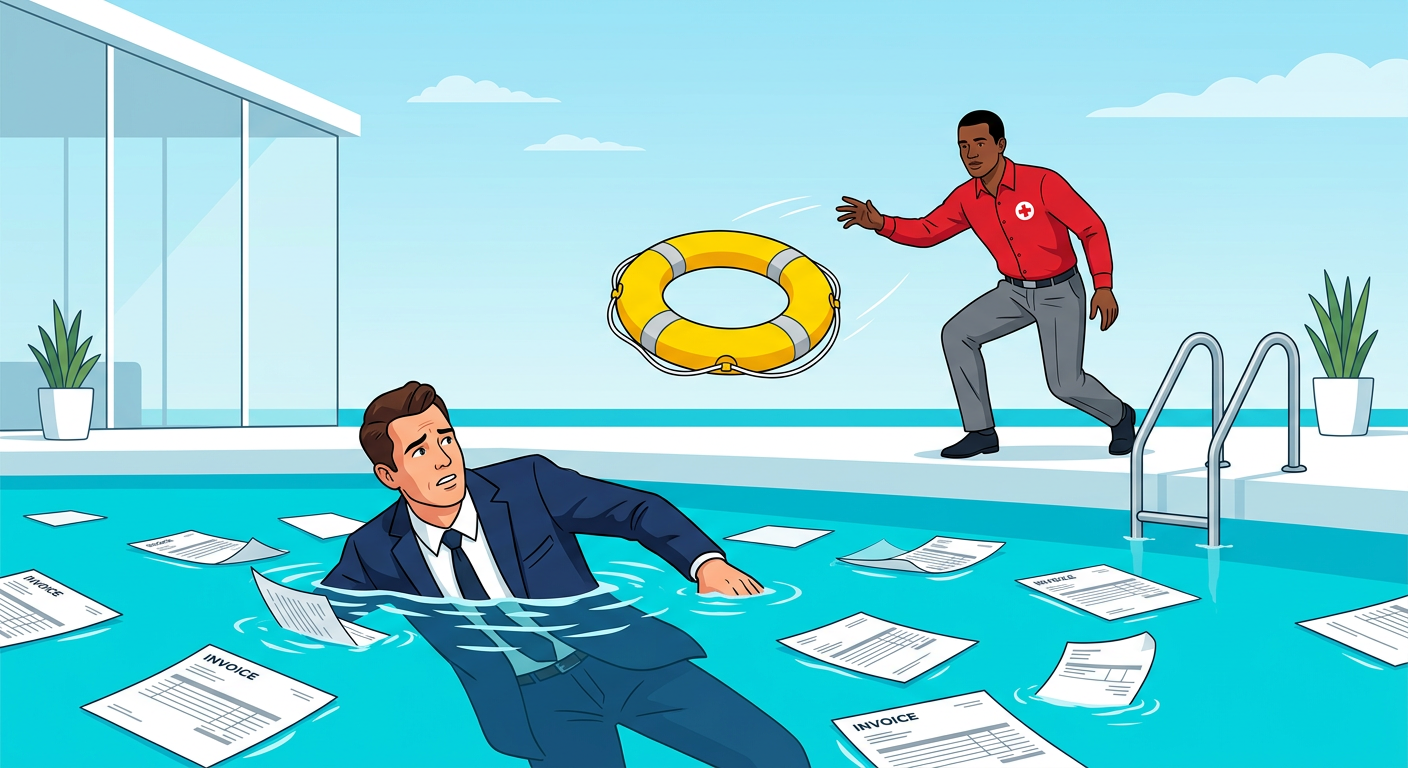
Your company is profitable. Your customers are paying. And your bank balance still drains toward zero before every payroll. That is not bad luck, and it is not a sales problem. In most cases, it is a business debt structural problem causing a business cash flow problem, and it will not fix itself.
Tight business cash flow caused by a badly structured business debt load is one of the most fixable problems a small or medium-sized company can face. The revenue is already there. The customers are already there. What has to change is the shape of the obligations sitting on top of them. Build the map. Set the strategy. Bring in the right help. Then rebuild a business debt structure that works for your company instead of against it and take back control of your business cash flow.
This article lays out exactly where business debt structures break down, how to find the breaks in your own company and the aggressive moves owners use to rebuild business cash flow and take back control of your operations and your company.
The Profit Illusion Draining Business Cash Flow
Here is the hard truth most owners learn too late: profit does not pay the bills. Cash flow does. A company can post a healthy profit every quarter and still run out of money, and improperly structured or too much business debt is usually the reason.
Business profit is an accounting number. It measures whether business revenue beat expenses. Business cash flow measures something far more urgent: whether money hits the account before it has to leave. Those are two different scoreboards, and plenty of owners are watching the wrong one.
The gap comes down to loan principal. Interest on a loan shows up on the income statement as an expense. Principal does not. So, every month, a company can send thousands of dollars out the door in principal repayments that never appear on the profit and loss statement. The financial books say the company is doing fine. The bank account balance says otherwise.
Run the numbers on a company doing $5.0 million in annual revenue at a 10 percent net margin. That is $500K in profit on paper. Now layer on equipment loans, a short-term working capital loan, and a merchant cash advance (MCA). Combined annual principal repayments can easily top $750,000. The company is profitable and still short on available business cash flow every single month. The owner works harder, sells more and wonders why nothing changes.
Nothing changes because the problem was never effort. It was business debt structure. Most business debt loads are built one emergency at a time. A piece of equipment dies. A slow season hits. A big contract demands materials up front. Each piece of business funding made sense in the moment. Nobody stepped back to see how all of it would behave once it was stacked together.
That is the profit illusion. It convinces owners that the fix is more revenue, when the real fix is reshaping the business debt obligations sitting below that revenue. The moment you stop treating tight business cash flow as a sales issue and start treating it as a design flaw, you gain leverage. Design flaws can be found. Design flaws can be fixed. The rest of this article shows you how to do both, and how to do it quickly.
The Real Cost of Short-Term Business Debt on Long-Term Business Assets
The single most common structural mistake in business lending is also one of the most expensive: paying for long-life assets with short-term payback loans
The rule is simple. Assets that last a decade should be paid for over years, with long-term business financing. Needs that last weeks should be covered with short-term business financing. Break that rule and business cash flow pays the penalty every month.
Why does this happen so often? Speed. Short-term business funding can land in your account in a day or two. SBA loans and conventional bank loans can take weeks of documents, questions and waiting. When payroll is due Friday, the fastest money wins, even when it is the wrong money that may end up hurting your business and operations. Providers of fast business funding understand this perfectly, and their products are built for owners making decisions under pressure.
Here is how to attack it. Pull every business debt obligation onto one sheet (business debt schedule). Next to each, write what it actually paid for and how long that asset or benefit will last. Circle every line where the loan term is dramatically shorter than the life of the asset. Those circled lines are your first targets. They are usually the obligations doing the most damage to monthly business cash flow, and they are also the easiest to defend in front of a lender. Asking to stretch payments on a ten-year asset over a longer period is a request any serious underwriter understands. Make that case, and make it early.
The Payment Frequency Effect Nobody Explains
Two business loans can cost exactly the same and still hit your company in completely different ways. The difference is how often the money leaves. The difference is period the loan is paid back.
Traditional bank loans and SBA products usually collect once a month. Many forms of alternative business financing, including merchant cash advances (MCAs) and plenty of online term loans and lines of credit, collect daily or weekly through automatic debits. That one detail can change everything about how business cash flow behaves.
The damage is worst for companies with lumpy revenue. Contractors paid on milestones. Retailers who do most of their sales on weekends. Medical practices waiting on insurance payments. These companies earn in waves, but daily and weekly business debt payments demand a flat, constant outflow. Lay a fixed drain over an uneven stream and business cash flow turns into a saw blade, with the balance diving toward zero between deposits and overdraft fees piling on.
There is a second cost that owners rarely see coming: you lose the picture. When dozens of small withdrawals hit every week, it becomes almost impossible to know where the company stands. Many owners only realize what they are really paying the first time they total a full month of daily or weekly debits. The number is usually a shock, and it is usually far bigger than they guessed.
The move here is aggressive and simple. Convert high-frequency business debt payments into a total monthly payment that the business can manage wherever possible, even if the total amount owed stays the same. That single change gives the company room to collect, plan and absorb a slow week without scrambling. When you compare business debt refinancing options, put payment frequency right next to interest rate. A slightly higher rate paid monthly can be far healthier for business cash flow than a lower cost pulled out of the account every single business day. Rate gets the headlines. Business debt payment frequency decides whether you sleep at night.
The Stacking Reckoning in Layered Business Funding
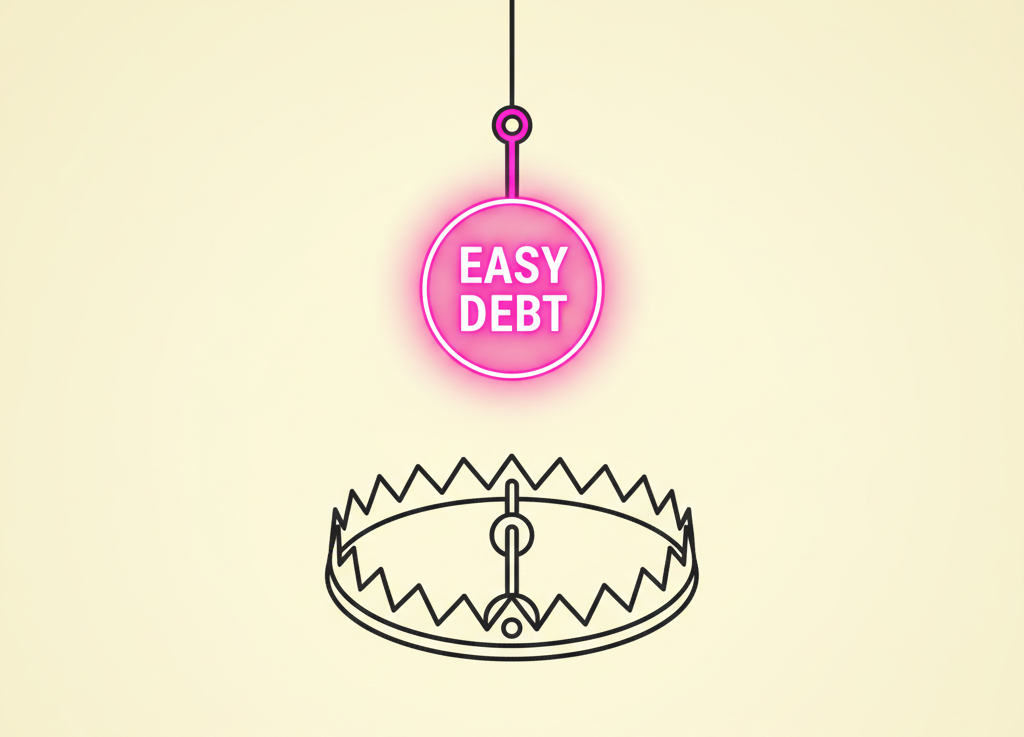
Business debt stacking is what happens when a company carries multiple short-term business funding products at once, usually from providers who do not know about each other. It almost never starts as a plan. It starts as a patch.
An owner takes short-term and expensive business financing to get through a slow quarter. A few months later the aggressive and frequent business debt payments are squeezing operations, and a second provider calls with an offer. It looks like relief. Then a third offer shows up, even faster and easier than the last. Each new business cash advance or short-term business loan is supposed to fix the pressure created by the one before it. Instead, each one adds a new withdrawal on top of the existing ones.
Before long, a quarter or a third or more of deposits can disappear before the owner touches a dollar. At that point the company is borrowing to make payments on earlier borrowing. That is not a business cash flow gap anymore. That is a short-term business debt cycle feeding itself, and it accelerates.
The reckoning tends to come all at once. One slow week, one late customer payment, one broken piece of equipment and ACH debits start bouncing across several providers in the same few days. Many merchant cash advance (MCA) agreements allow the provider to demand the entire remaining balance after a default. Many business financings also carry personal guarantees that can put the owner's own assets directly in the line of fire.
Business debt stacking also slams the exits shut. A bank or private lender reviewing a refinance application sees multiple, high-frequency debits on the statements and multiple UCC filings against the company. Even a strong operation with real customers and real margins can look too risky to approve once its business debt structure gets this tangled.
Be clear about what you are dealing with. Stacked business debt is not a problem more business funding can solve. Adding another layer only buys a few weeks and raises the stakes. The solution is structural, and it has to be deliberate: cut the number of layers, stretch repayment over a realistic time frame, and replace a swarm of frequent withdrawals with one predictable payment. Owners deep in a stack need a business finance advisor who knows how to deal with alternative providers, sequence payoffs in the right order and build a consolidation package that a traditional lender will actually approve.
The Factor Rate Myth and the Price Behind It
A lot of short-term business financing is never quoted with an interest rate. It is quoted with a factor rate, and that is no accident. A factor rate is a multiplier on the amount advanced. It’s a transaction where your future sales are sold at a discount to their full value. Take $100,000 at a factor rate of 1.35 and you repay $135,000. It sounds like 35 percent. Expensive, maybe, but tolerable.
That is the myth. The real price is far higher.
The $35,000 cost is fixed, but the repayment window is short, often six to twelve months, and the balance shrinks with every payment while the cost never does. Convert that to an annual percentage rate and the number routinely climbs past 70 percent. On shorter terms it frequently blows through 100 percent. A factor rate hides time, and time is exactly what determines the true price of money.
Then come the fees. Origination fees, underwriting fees, broker fees, administrative fees. Many are pulled out before the money ever reaches your account. Sign for $100,000, receive $93,000, and still owe $135,000. Every one of those deductions drives the effective cost higher.
There is one more cost almost nobody talks about. Most factor-rate products offer little or no discount for paying early. Pay off a traditional loan ahead of schedule and you save the remaining interest. Pay off a factor-rate advance early and you often still owe the full payback amount. That strips away one of the best weapons an owner has for cutting the cost of business debt once business cash flow improves.
To be fair, factor-rate products are not always the wrong choice. For a company that needs speed and has a short, high-return use, such as buying discounted inventory that will sell within weeks, they can work. The danger comes when they become a permanent fixture in the business debt structure, or when owners compare them to bank loans without converting them to an annual rate first.
So convert every obligation you carry to a true annual cost. Every single one. It takes little time to do this with the original contracts and AI, and it is one of the most eye-opening exercises an owner can do. It almost always reveals the same thing: the business funding that looked cheapest at signing is the most expensive money on the balance sheet.
Building a Brutally Honest Business Debt Map
You cannot fix what you have not measured. Before any refinancing, any consolidation, or any negotiation, you need a complete map of everything the company owes. Most owners do not have one. Loans were taken at different times, from different providers, and tracked in different places, or not tracked at all.
Build a business debt schedule and leave nothing out. For each obligation, list the lender, the original amount, the current balance, the payment amount, the payment frequency, the interest rate or factor rate, the effective annual cost, the maturity date, any prepayment penalties, the collateral pledged, and whether a personal guarantee is attached. Then add one more column: what the money was actually used for (“sources and uses”).
Now run four numbers.
First, total monthly business debt service. Convert every daily and weekly payment into its monthly equivalent and add them up. Most owners are surprised by the total.
Second, the business debt service coverage ratio. Divide net operating income by total business debt service. Most conventional lenders want at least 1.25, meaning $1.25 of operating income for every dollar of business debt payments. Below 1.0, the company cannot cover its obligations from operations, period. Know this number before a lender calculates it for you.
Third, the share of monthly revenue going to business debt payments. Many owners find that once this climbs past 15 to 20 percent, business cash flow turns fragile and every slow week feels like an emergency.
Fourth, rank every obligation by effective annual cost from highest to lowest. The top of that list is where your most expensive money lives, and it is where your attack begins.
This will not be comfortable. You may find you are paying far more than you thought. You may find an advance you believed was nearly finished still has months to run. Face it anyway. The map turns a vague, constant sense of pressure into a short list of specific, solvable problems. It also becomes your strongest tool in any conversation with a lender or a business finance advisor, because it shows exactly what needs to change and proves you are serious about changing it.
Aligning Business Debt With How Business Revenue Actually Arrives
Every company has a revenue rhythm. Some bring in money steadily every day. Others earn in seasonal surges, on project milestones, or on 30-, 60-, or 90-day invoice cycles. Your business debt structure should be built around that rhythm. If it is built against it, business cash flow will lose that fight every month.
Seasonal companies feel this most sharply. A pool contractor or holiday retailer may earn most of the year's revenue in four or five months. A flat monthly payment designed for a year-round operation forces that owner to hoard cash in the busy season and burn through it in the slow one. Some business lenders offer seasonal structures with heavier payments during peak months and reduced or interest-only payments during off months. They exist. But lenders rarely volunteer them. You have to ask, and you have to push.
Companies that invoice on terms face a different problem. Revenue is earned when the job is done, but the money arrives weeks later. A lump-sum term loan is a blunt tool for that gap. A revolving business line of credit or invoice-based business financing fits far better. You draw when receivables are outstanding and pay down when customers pay, so borrowing costs track real need instead of running nonstop.
Asset-heavy companies should tie long-term business financing directly to the equipment or property it buys. Equipment loans and leases often carry lower rates than unsecured products because the asset backs the loan, and the terms can match the working life of the machine.
Purpose matters as much as timing. Growth moves, such as a second location or a major new contract, need complimentary debt structures that give the investment time to produce returns before heavy repayment kicks in. Short-term working capital needs belong on flexible, revolving tools that can be paid down and drawn again as conditions shift. Mixing those up is how companies end up paying for growth before it grows or paying for last month's supplies for years.
Get the alignment right and the difference is immediate. Payments come due when money is in the account. Planning replaces scrambling for cash. Business cash flow stops being a daily battle and becomes something you actually control and can more highly predict.
Aggressive Refinancing and Consolidation Strategies
With the map built and the mismatches identified, it is time to move. The most direct fix is usually refinancing, consolidation, or both. The objective is blunt: replace multiple expensive, short-term, high-frequency obligations with fewer, longer, cheaper ones built for how the company really operates
Business debt consolidation means taking one new loan large enough to wipe out several existing balances. Done right, it cuts the total monthly payment, lowers the effective annual cost and makes the company's finances readable again. A company paying $50,000 a month across four short-term products might replace them with one term loan at around $5,500 a month over three years. That is thousands and thousands of dollars available now to invest back into operations every single month. So the opportunity cost is compounding returns on reinvestment of free business cash flow.
Private credit facilities and term loans are among the strongest tools available for this. Flexible and investment-grade private credit capital can see the post-transaction vision for qualifying companies to refinance existing business debt with terms typical of 30 to 36-months and sometimes 60-months for working capital, up to twenty-five years for real estate. Rates typically sit far below alternative products and a “few points” above bank rates. Yes, the process takes longer and demands real documentation. The payoff in business cash flow relief can be enormous, and it is worth the paperwork. Private credit investors that lend directly to businesses take the most risk out of all lender “types”.
Commercial bank term loans, equipment refinancing and real estate cash-out refinancing are other strong options. If the company owns its building or valuable equipment, that value can be put to work retiring the most expensive obligations on the books.
Timing is everything. There is a refinancing window, a stretch when the company still has the history, revenue and credit strength to qualify for better terms but has not yet started missing payments. Owners who wait for things to get bad first almost always find the best doors already closed. Move while payments are still current. That is when you have leverage, and leverage is what wins better terms.
Sequence matters just as much. If full consolidation is not available right away, go after the most expensive and highest total monthly payment obligation first. Clearing it cleans up the bank statements and can qualify the company for a larger, better refinance a few months later. Each step should set up the next one. A business finance advisor can design that sequence so every move builds momentum instead of creating new complications.
Rebuilding Business Credit From a Position of Strength
Restructuring the numbers is only half the job. The other half is changing how lenders see you. A company with a messy history of short-term business funding has to rebuild credibility before it can command the best terms, and that work starts now, not after the next crisis.
Business credit profiles at Dun & Bradstreet, Experian Business, and Equifax Business track payment history, balances, public filings, and the number of open accounts. Pay vendors and lenders on time, every time. Keep revolving balances well below their limits. Cut the number of active obligations. Each of those moves strengthens the profile month by month. And because many owners have personal guarantees on business debt, protecting personal credit is part of the same fight.
Bank statements may matter even more than credit reports. Underwriters reviewing a refinance will comb through 6 to 12-months or more of business bank activity. They want consistent deposits, healthy average daily balances, zero or very few overdrafts and as few automatic debits as possible. Even a few months of cleaner statements after paying off one high-frequency obligation can completely change how an underwriter reads the file.
Organized financial reporting builds confidence fast. Current profit and loss statements, balance sheets, accounts receivable aging reports and an up-to-date business debt schedule that all tie perfectly, as far as cash and reconciliation, tell a lender that the owner knows the company cold and is managing it on purpose. Owners who can clearly explain why the old structure formed and exactly how the new one will work get taken seriously. Owners who just ask for more money do not.
Then comes the hardest part: discipline. After a successful business debt restructuring, the offers for fast business funding will come back, and they will come hard. Alternative providers market aggressively to companies that just paid off balances, because those companies suddenly look like good prospects. Set firm internal rules before those calls start. Any new business financing gets measured against the business debt schedule. It gets approved only for a defined purpose with a clear return. Anything else gets declined. That discipline is what keeps the new structure from sliding back into the old one, and it is what turns a one-time fix into a permanent advantage.
Taking Control With a Business Finance Advisor
Most owners did not start a company to become experts in factor rates, underwriting criteria and lender appetite. That is exactly why so many business debt structures drift out of alignment. Decisions get made fast, under pressure, with only a few options in view and nobody looking at the whole board.
A business finance advisor or interim-CFO brings the whole board into view. A strong one starts with your business debt schedule, calculates the true cost of every obligation, measures your business debt service coverage ratio and pinpoints which mismatches are doing the most damage to business cash flow. From there, the business finance advisor maps out real options across private credit, commercial banks, SBA lenders, equipment lenders and compares all of them on the same annual-cost basis so nothing hides behind a factor rate.
The value goes well beyond picking a product. An experienced business finance advisor knows how to present a company to underwriters, which documents strengthen an application, and how to frame past short-term borrowing so it reflects the company's real strength instead of its worst quarter. When stacked advances are involved, the business finance advisor can also help negotiate payoff amounts or modified payment schedules with existing providers before a refinance closes.
Choose carefully. Look for full transparency about how the business finance advisor is paid. Look for experience with companies of your size and in your industry. Above all, look for someone willing to tell you not to borrow when restructuring or operational changes would serve you better. The right partner is focused on the long-term health of your company, not on placing the biggest loan possible.
Here is the bottom line: Tight business cash flow caused by a badly structured business debt load is one of the most fixable problems a small or medium-sized company can face. The revenue is already there. The customers are already there. What has to change is the shape of the obligations sitting on top of them. Build the map. Set the strategy. Bring in the right help. Then rebuild a business debt structure that works for your company instead of against it and take back control of your business cash flow.

More Business Finance and Strategy Articles: