
Complete the short form below to SETUP A CONSULTATION CALL TO speak
with A Business FinancE & Strategy Advisor.
REFINANCE. RESTRUCTURE. REBUILD.
Office Address and MAIN NUMBER:
262 CHAPMAN RD STE 240
Newark, DE 19702
1-833-460-1535
Articles covering Business Finance and Strategy Advice:

If you are currently paying excessive annualized rates on a 6 to 12-month payback period for business funding such as merchant cash advance (MCAs) or short-term business loans, you are not stuck, you are misinformed and have been misled. Many business owners with strong personal credit (680, 700 and higher) and a stable operating history are placed into expensive, short-term financing not because it is their best option, but because it is the fastest and most profitable option for the broker who arranged it.
This article pulls back the curtain on the specific tactics these brokers use, from the bait and switch to the fake “unsecured” loan pitch to the commission structure that quietly decides which lender gets your business. If you are currently shopping for capital, or you already have a deal on the table, understanding these tricks could save your company from a financing decision you cannot undo.
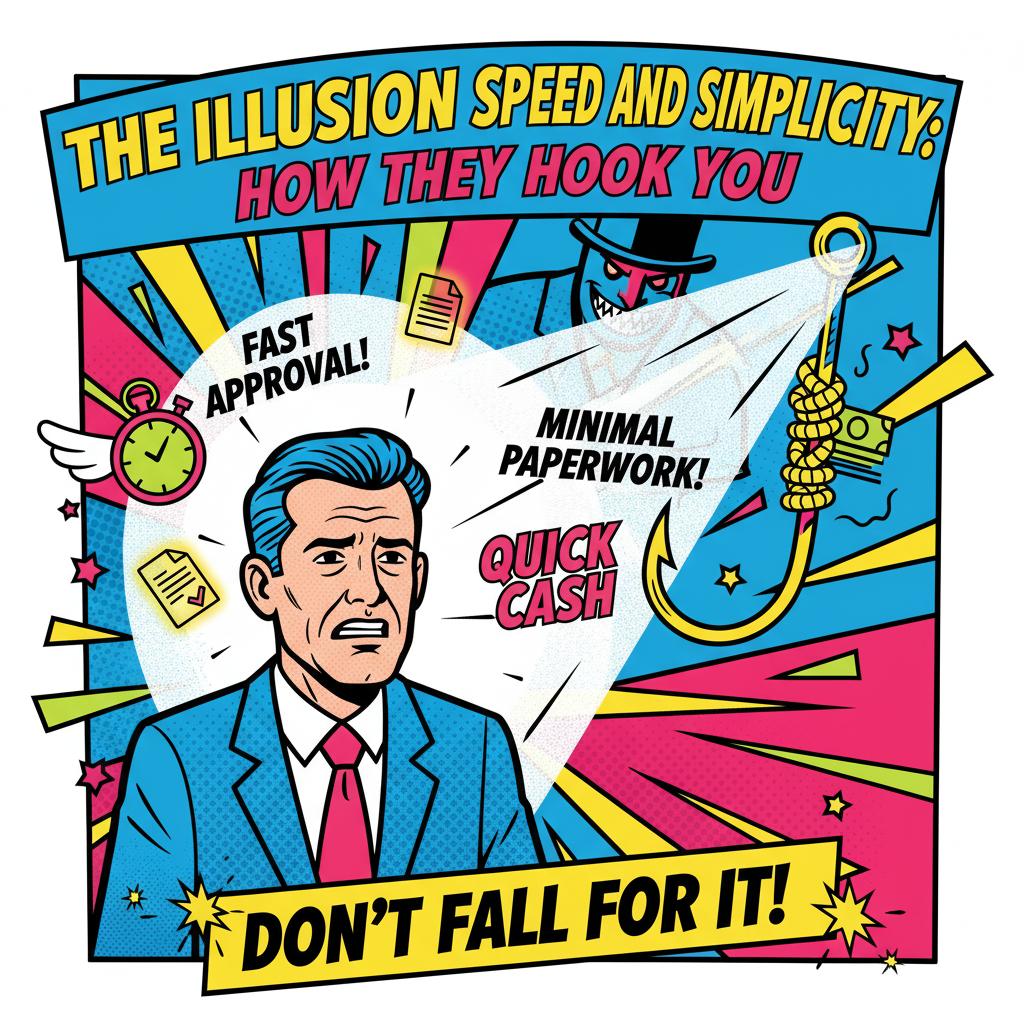
The critical error occurs when this temporary emergency capital becomes a permanent fixture on the corporate balance sheet. High-frequency payment structures, such as daily or weekly ACH withdrawals, create a highly volatile environment where capital behaves remarkably like a tightly stretched rubber band. The moment revenue enters the business operating accounts, it immediately snaps back to the aggressive creditors, leaving the operation starved for the very working capital it initially borrowed. This continuous, rapid outflow of cash paralyzes future growth, prevents strategic investment and places immense psychological strain on the leadership team trying to manage the daily chaos of low business liquidity.
You may be feeling the squeeze of business financing that was supposed to help you grow. Many business owners discover too late that the money they borrowed came with hidden costs that drain cash, disrupt operations and leave them more vulnerable post-transaction. The problem is rarely just the interest rate. It is the short payback period. The disconnect starts with the people and processes that stand between you and the longer-term, affordable business capital you need.
Business “funding” brokers present themselves as your advocates while collecting commissions from the lenders. Cash-flow lenders approve funding deals with underwriting that prioritizes volume over sustainability. The result is financing that extracts every available dollar of free cash flow and sometimes forces you to plug gaps with personal equity or high-interest credit cards. In the worst cases, you end up stacking new business debt just to service the old (reverse Ponzi scheme). This article explains how those dynamics work and what you can do to protect and fix your business balance sheet.
Let’s dismantle the most pervasive, dangerous and financially destructive myths currently surrounding business financing. By forcefully exposing the deceptive tactics and misleading rhetoric often employed by business funding brokers and aggressive alternative lenders, our primary goal is to empower you with the essential knowledge required to make highly informed and strategic business financial decisions. From exploring the dangerous illusion surrounding interest rates to uncovering the heavily disguised traps of revenue purchase factor rates and hidden broker commissions, we will systematically explore the critical nuances that ultimately dictate the true cost and operational impact when taking on business debt. Armed with the unvarnished and objective truth, you can more confidently and safely navigate the complex capital markets.
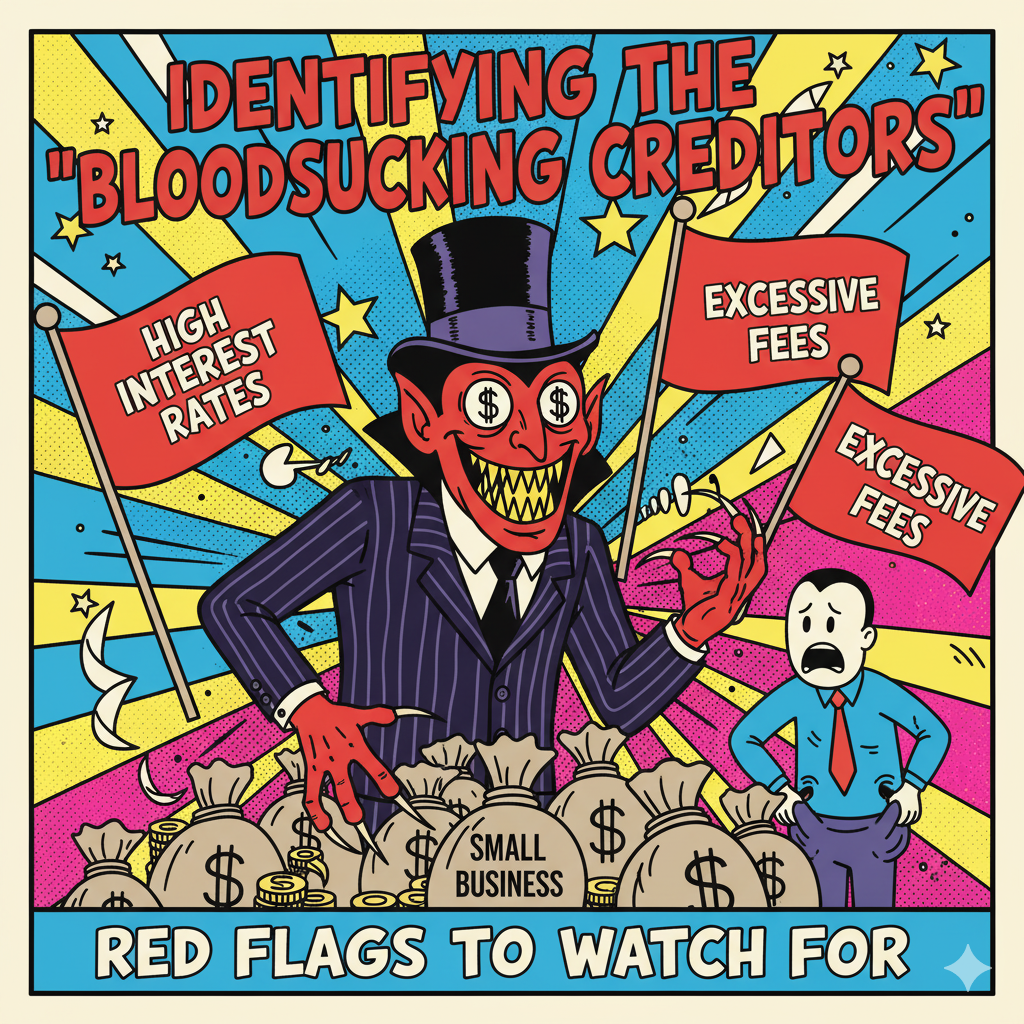
The world of business financing is littered with the corpses of companies that fundamentally misunderstood the mechanics of business debt leverage. Business owners frequently operate under the delusion that securing capital is the ultimate victory, completely ignoring the structural reality of the business debt they have just onboarded.
Today, mounting business debt is not just a symptom of poor sales and liquidity shortages; it is a systemic crisis driven by toxic lending products engineered to drain working capital at an unnatural velocity. When a company is suffocating under high business debt payments, the root cause is rarely the principal balance itself. The true killer is the payback structure. You are being destroyed by amortizations that are too short, designed to strip your business cash reserves before you can even deploy the capital for operational growth.
This creates a catastrophic operational environment where every dollar of incoming revenue is immediately cannibalized by aggressive business debt service payments. You are no longer running a business; you operate a highly stressful collection agency on behalf of your creditors. This relentless capital extraction triggers severe liquidity shortages, completely paralyzing your day-to-day operations. When you lack the cash to meet basic vendor obligations, float payroll or purchase inventory, stability vanishes. Growth becomes a mathematical impossibility. Outselling a structurally broken balance sheet and attempting to do so will likely result in accelerating your path to business “paper insolvency”.
Surviving this financial warfare requires an objective approach to your business liabilities. You cannot borrow your way out of a business debt trap with more short-term cash, and you cannot negotiate with predatory lenders using conventional corporate logic. The only path forward is a clinical, unapologetic restructuring of your existing obligations to secure a longer-term business debt payback horizon which frees up cash flow and bolsters overall liquidity.
The following blueprint dismantles the fatal errors that push mature businesses into the debt trap, exposes the lethal nature of short-term amortizations and outlines the exact tactical strikes required to force creditors to the table, halt the cash bleed and eventually permanently stabilize your balance sheet.

Running a small to medium-sized business is often heralded as a pursuit of ultimate freedom and boundless opportunity. Yet, beneath the veneer of entrepreneurial success lies a deeply hidden narrative that many founders face but few openly discuss. When a company's cash flow turns negative, the dream can rapidly transform into a relentless struggle for survival.
The pressure is magnified exponentially when the business is shackled by aggressive, short-term debt obligations. Capital that matures in a year or less, carrying astronomical annual costs, acts as a silent anchor, dragging down business cash flow, the balance sheet and the mental well-being of the leadership team.
The intersection of financial distress and psychological strain creates a profound emotional toll that reverberates through every aspect of a business owner's life. This is not merely a mathematical problem of revenues minus expenses; it is a daily, visceral experience of anxiety. Aggressive automatic clearing house (ACH) withdrawals systematically drain operating accounts, leaving the founder to agonizingly patch together payroll, vendor payments, and essential operational costs.
The mental bandwidth required to juggle these immediate crises strips away the capacity for strategic foresight, reducing brilliant innovators to panicked firefighters. The capital that was intended to bridge a temporary gap instead becomes a permanent crisis, suffocating the very enterprise it was supposed to save.
Acknowledging the depth of this struggle is the first necessary step toward reclaiming control. By dismantling the stigma associated with distressed balance sheets and aggressive debt, founders can begin to pivot from emotional paralysis to strategic action, ultimately charting a course toward cash flow stabilization and long-term structural health.
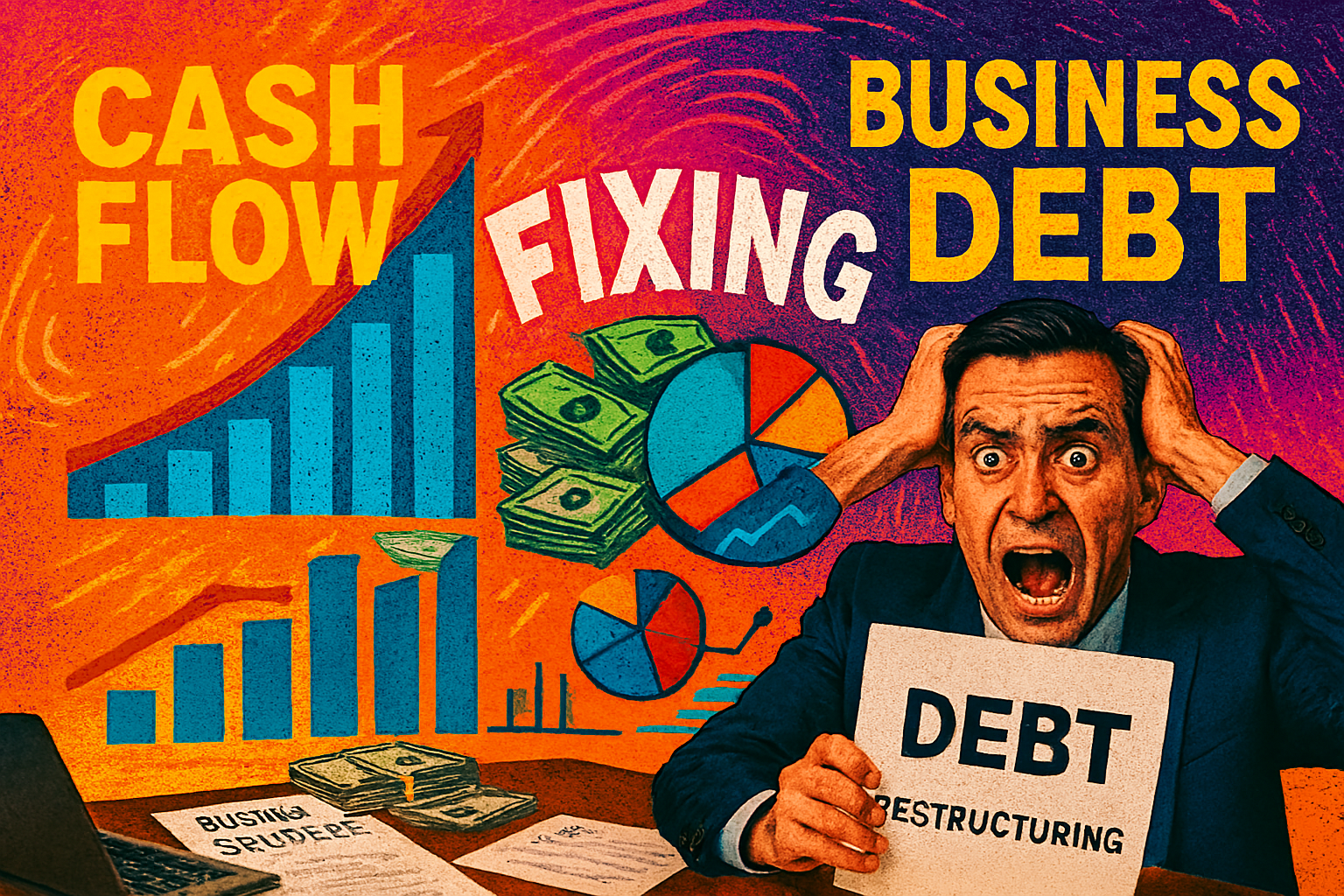
Faced with the immediate, pressing need to meet payroll, purchase essential inventory or execute on a massive new client contract, countless business leaders find themselves turning to the rapidly accessible, yet incredibly dangerous, world of high-cost, short-term financing. While these alternative financial products provide the illusion of immediate relief, they quickly reveal their true, parasitic nature and cause long-term issues by cannibalizing cash flow and then disrupting business operations.
Short-term business financing is engineered not to foster sustainable business growth, but to aggressively extract capital at exorbitant effective interest rates, often trapping the business in a relentless cycle of continuous borrowing just to simply service the crushing debt payment obligations.
The journey out of this high-interest, short-term business debt trap is not achieved by merely increasing sales or working harder; it requires a fundamental, strategic restructuring of the enterprise's entire balance sheet. The key to long-term survival and prosperity lies in successfully executing a pivot away from these toxic, short-term cash drains and transitioning toward sustainable, longer-term business financing solutions.
This transformative shift involves navigating the complex but incredibly rewarding landscapes of private credit markets, Small Business Investment Companies (SBICs) and advanced institutional lending facilities.
These longer-term solutions offer something the short-term market actively destroys: the gift of time. By amortizing business debt over several years rather than compressing it into a brutal 12-months or less, businesses can drastically reduce their monthly cash outlay, stabilize their operational liquidity, and reclaim the working capital necessary to actually execute their strategic vision.