When economic headwinds shift, market dynamics fluctuate, or unexpected operational hurdles arise, mounting business debt and accounts payable liabilities can rapidly become an overwhelming burden. Many business owners find themselves trapped in a stressful cycle of managing cash outflows just to keep the doors open, watching their hard-earned cash flow turn from positive to negative. When you are in this position, it can feel like you are running out of time and options, but the truth is that business debt itself is often not the problem rather, the structure (payback period and cost) of that business debt is what is suffocating your business.
Refinancing and restructuring your business debt properly is not merely about finding a new lender to pay off the old ones; it is a comprehensive, strategic process designed to realign your entire financial architecture. By approaching this transition systematically, you can mitigate operational risks, protect your equity and position your company for a sustainable, high-value recovery.
This guide outlines the exact, institutional-grade pathway to transition your business from negative cash flow back to positive, thriving territory. Through restructuring existing obligations, cleaning up your financial reporting and partnering with sophisticated private credit providers, you can unlock long-term, patient capital that recognizes the true underlying value of your enterprise.
As you read through this comprehensive guide, remember that financial distress is often a temporary state masking the true potential of your business's cash flow and EBITDA production. By taking proactive control of your company’s balance sheet, collaborating with experienced business financial advisors and presenting your company’s narrative in a language that sophisticated underwriters respect, you can build a stable liquidity cushion that safeguards your business for years to come. Let this be your roadmap out of the business debt trap and into a structured, well-capitalized and highly profitable future.
The Reality of Negative Cash Flow and Need for Restructuring
In the life cycle of any growing small to medium-sized business, cash flow is the absolute lifeblood of survival and expansion. When a company falls into negative cash flow, it means the cash leaving the business to cover operational costs, payroll, inventory and business debt service payments exceeds the cash entering the business from operations (sales and accounts receivable).
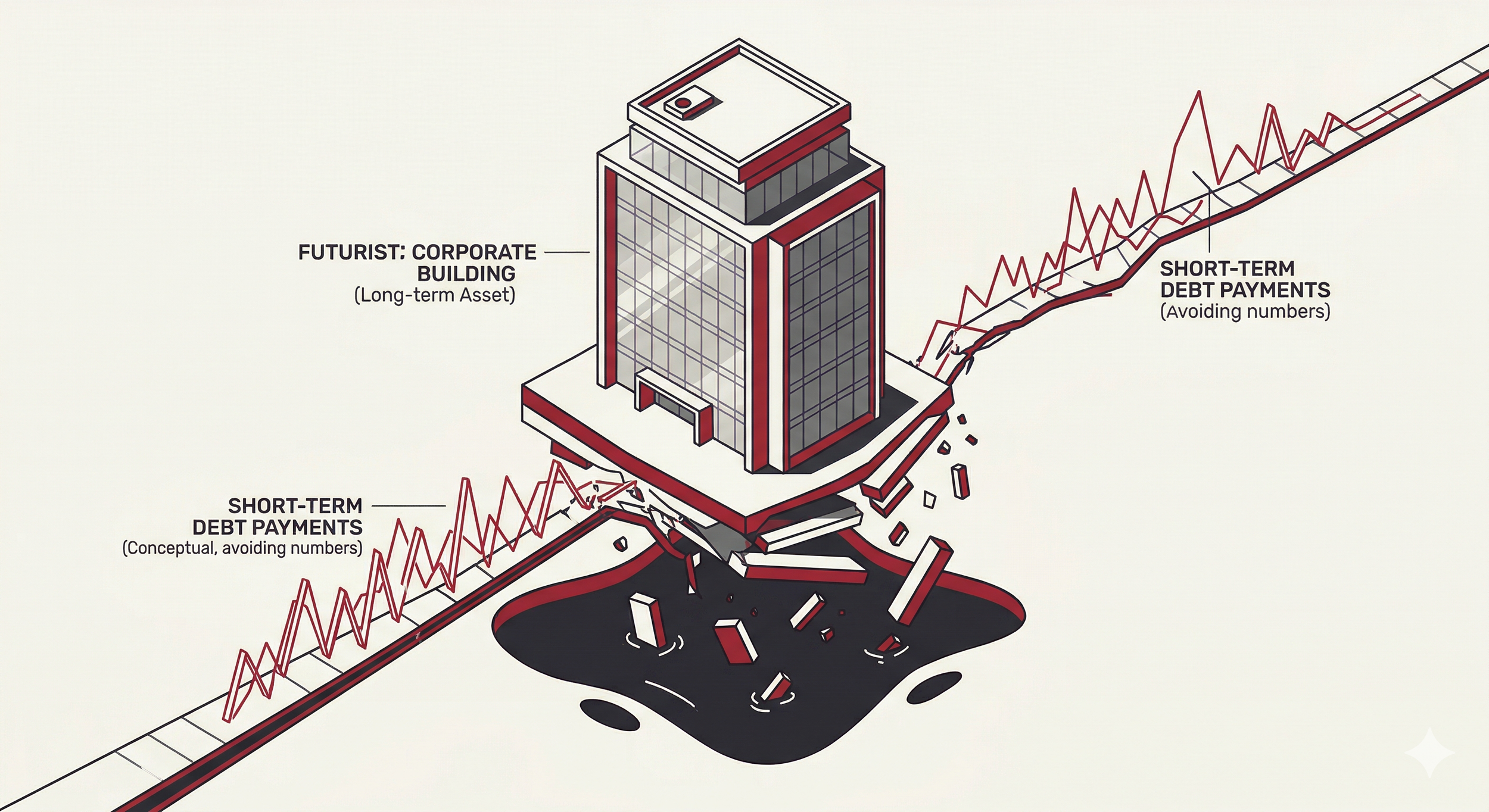
This imbalance is rarely the result of a single failure; more often, it is a combination of rapid expansion, rising interest rates, macroeconomic pressures, and, most critically, poorly structured short-term business debt. Many business owners, in an effort to solve quick cash crunches, turn to high-interest, short-term funding mechanisms like Merchant Cash Advances (MCAs) or high-frequency (daily and/or weekly) payment loans.
While these sources of capital offer immediate relief, their aggressive repayment structures quickly drain daily operating liquidity, creating a compounding debt spiral that suffocates the company's core operations.
When business debt service begins to cannibalize the capital needed to buy raw materials, pay key suppliers, or maintain payroll, operational performance inevitably suffers. This operational decline further reduces revenue, which in turn deepens the negative cash flow, leaving the business owner in a constant state of firefighting. To break this destructive cycle, a business must move away from temporary, band-aid funding solutions and commit to a fundamental restructuring of its existing liabilities.
Restructuring is not an admission of defeat; rather, it is a strategic and tactical intervention designed to halt the immediate bleed and re-align the business’s cash outflows with its actual, sustainable cash inflows. It requires a hard, objective look at all outstanding liabilities, including senior debt, subordinated loans, and accounts payable (AP) stretch, to establish a realistic baseline for recovery.
The primary objective of restructuring existing business debts and AP liabilities is to create breathing room. By renegotiating terms, extending maturities, and converting short-term, high-frequency payments into manageable long-term structures, you immediately reduce the daily and weekly cash drain on your operating accounts. This reduction in immediate business debt pressure allows the company’s core business engine to function properly once again.
When key suppliers are paid on predictable, agreed-upon schedules rather than via frantic, ad-hoc negotiations, supply chain stability is restored. This stability allows you to fulfill customer orders on time, maintain service quality and begin the process of rebuilding your top-line revenue. Ultimately, restructuring existing business debt is the essential first step that shifts your business from a state of survival to a state of preparation, preparing your balance sheet for a potential high-value, long-term refinancing transaction.
The Pivotal Role of a Business Finance and Strategy Advisor
Navigating the complex landscape of corporate debt restructuring and refinancing is not a task that a business owner should attempt to undertake alone. When an enterprise is facing financial distress, the owner is often consumed by the intense emotional and operational pressures of keeping the company afloat. This emotional involvement can cloud judgment, leading to reactive decision-making, such as taking on even more expensive short-term debt in a desperate attempt to maintain liquidity.
The average SMB (small and medium-sized business) owner, while exceptionally skilled at running their specific business, typically lacks deep, specialized knowledge of institutional credit markets, underwriting criteria and business debt restructuring strategies.
Attempting to negotiate directly with sophisticated creditors or institutional lenders without representation often results in unfavorable terms that do not solve the underlying cash flow crisis.
This is where the expertise of an experienced business finance and strategy advisor becomes invaluable. A professional advisor brings an objective, third-party perspective to the table, free from the emotional strain that plagues the business's internal leadership. They conduct a rigorous diagnostic assessment of the company’s financial health, identifying the root causes of the cash flow drain and determining the most viable restructuring path.
A business finance advisor understands the language of credit and knows exactly what institutional lenders and private credit funds are looking for when evaluating a transaction. By engaging a business finance and strategy advisor, the business owner gains a dedicated champion who can interface directly with existing creditors, assist in managing aggressive collection agencies, and establish a credible, professional buffer that gives the business room to breathe.
Beyond managing immediate crises, a strategic business advisor is instrumental in preparing the business for its transition to a long-term capital partner. They guide the internal accounting team in cleaning up financial records, help draft the essential underwriting documents and leverage their existing networks to introduce the business to the right private credit providers.
This professional representation signals to potential capital partners that the company is taking its balance sheet restructuring seriously and is committed to an orderly, institutional-grade process. The investment in an experienced business finance advisor is often the single most important factor that determines whether a refinancing transaction succeeds or fails, as they ensure that the resulting deal structure is designed for long-term stability rather than short-term survival.
Reconstituting Business Financials to Near-GAAP Standards
One of the most common and damaging obstacles that small and medium-sized businesses face when seeking institutional capital is disorganized, inaccurate or non-standard financial reporting. Many SMBs operate on a cash-basis accounting system or rely on internal bookkeepers who do not strictly adhere to standardized accounting principles. While this may suffice for tax filing or basic operational tracking during prosperous times, it is a major red flag for sophisticated underwriters and analysts.
When an institutional credit provider looks at a balance sheet or income statement that is messy, inconsistent, or lacks proper accrual adjustments, they cannot easily assess the company's true financial performance. To compensate for this high level of uncertainty and risk, underwriters will either reject the transaction outright or price the capital at a prohibitively expensive rate.
To overcome this hurdle, a business must undergo a thorough reconstitution of its financial statements, correcting errors and presenting them in a proper, near-GAAP (Generally Accepted Accounting Principles) format. Reconstituting financials involves moving from cash-basis to accrual-basis accounting, ensuring that revenues and expenses are matched to the exact period in which they were earned or incurred. This process requires a meticulous review of the general ledger, reconciling all bank accounts, verifying inventory valuations and correcting any historical bookkeeping errors. It also involves clearly separating personal owner expenses from legitimate business operating expenses, cleaning up intercompany transactions, and ensuring that depreciation and amortization are accurately accounted for.
A clean, near-GAAP set of financials is powerful because it speaks the universal language of institutional finance. It allows underwriters and credit analysts to quickly interpret historical performance, evaluate operating margins, analyze working capital trends and calculate key business debt service metrics without having to guess at the validity of the data. When financials are presented in this highly organized, professional format, it builds immediate trust and credibility with potential capital providers. It demonstrates that the business owner has professional control over their enterprise and is committed to transparency. This transparency significantly reduces the perceived risk of the transaction, paving the way for faster approvals, smoother due diligence, and ultimately, more favorable lending terms.
Crafting a Highly Detailed and Specific Credit Memorandum
Once the business financials have been reconstituted and normalized, the next critical step is to compile these figures and the company’s broader operational narrative into a highly detailed and specific credit memorandum. In the institutional lending world, a credit memorandum is the primary document used to present a transaction to credit committees and investment decision-makers. It is much more than a simple business plan; it is a rigorous, analytical document that outlines the history of the company, its current operational model, its competitive advantages and the specific dynamics of its industry.
A well-crafted business credit memo does not shy away from the company's recent financial challenges; instead, it proactively addresses them, explaining the root causes of past underperformance and detailing the strategic steps taken to correct them.
The core of a strong credit memorandum lies in its ability to translate complex financial data into a cohesive, logical story. It must include an in-depth analysis of recent business performance, showcasing monthly and quarterly trends in revenue, gross margins, and operating expenses. The document should feature key institutional underwriting workbook metrics, such as Debt Service Coverage Ratio (DSCR), Interest Coverage, Debt-to-EBITDA leverage ratios and accounts receivable/payable turnover rates. By presenting these metrics in a format that mirrors the lenders' own internal models, you make it incredibly easy for the analyst to evaluate the opportunity. Each metric should be accompanied by detailed commentary that provides context, explaining why certain ratios dipped historically and how the proposed refinancing will dramatically improve them post-closing.
Ultimately, the business credit memorandum serves as a comprehensive bridge that connects where the company has been with what it is trying to accomplish with a new capital provider. It clearly outlines the proposed "use of proceeds," showing exactly how the new credit facility will be allocated to refinance existing high-cost debt, pay down stretched accounts payable and bolster working capital.
By delivering a highly detailed, professional, and transparent credit memo, you take control of your company’s narrative, preventing underwriters from drawing their own, often more negative, conclusions. This proactive approach dramatically accelerates the underwriting process and maximizes your chances of securing a high-value partnership.
Understanding Earnings and Bridging Performance Gap
When institutional lenders, particularly those in the private credit sector, evaluate a middle-market business, they rarely rely solely on standard net income or operating cash flow figures. Instead, they focus heavily on the Quality of Earnings (QoE) and normalized Earnings Before Interest, Taxes, Depreciation, and Amortization (EBITDA). A Quality of Earnings assessment is a sophisticated financial analysis that evaluates the sustainability, repeatability and accuracy of a company’s historical earnings. It seeks to strip away one-time anomalies, non-operating items, and non-recurring events to uncover the "true" core profitability of the operating business. For an SMB that has recently experienced financial distress, a QoE bridge is the absolute key to proving to lenders that the business is fundamentally viable and capable of servicing new and re-amortized business debt.
A critical component of this process is identifying and documenting "add-backs" to EBITDA. Add-backs are legitimate adjustments made to historical financial statements to reflect what the earnings would look like under normal operating conditions. Common add-backs include excess owner compensation, personal expenses run through the business, one-time legal fees, moving costs, non-recurring consulting expenses or extraordinary losses due to temporary supply chain disruptions or natural disasters.
For example, if a business owner paid themselves a salary of $500,000 when the market rate for a replacement CEO is $200,000, the $300,000 difference can be added back to EBITDA. Similarly, if the company spent $100,000 on a one-time software implementation that will not recur, that expense is added back, instantly boosting the company’s adjusted EBITDA and making it far more attractive to underwriters.
Bridging the performance gap also involves creating a clear, quantitative "bridge" that connects historical underperformance with the projected future state of the business post-refinancing. This bridge must show, step-by-step, how the strategic restructuring of debt and operations will eliminate cash leaks, improve gross margins, and unlock latent profitability. By presenting a mathematically sound and thoroughly documented QoE bridge, you demonstrate to the private credit fund that your business possesses strong core earning power that has simply been masked by temporary balance sheet distress and high debt service costs. This analysis shifts the underwriting focus from historical distress to future cash-flow production, which is the exact foundation upon which successful private credit deals are built.
Why Private Credit is the Optimal Solution for Distressed SMBs
For many years, small and medium-sized business owners assumed that traditional commercial banks were their only realistic option for securing business loans and lines of credit. However, in the wake of successive financial crises and ever-tightening federal regulations, traditional banks have become increasingly conservative and risk-averse. Today, banks operate under rigid underwriting boxes governed by strict regulatory frameworks like Basel III. These regulations mandate that banks focus heavily on backward-looking financial metrics, strict debt-service coverage ratios, and high levels of tangible collateral. If a business has experienced a few quarters of negative cash flow, carries high leverage, or has a temporarily distressed balance sheet, traditional banks will almost certainly reject their application, regardless of the business's future potential or strong customer contracts.
Fortunately, the financial landscape has evolved, and the rapid growth of the private credit market for business has created a powerful, institutional alternative for SMBs. Private credit providers, such as specialized direct lending funds, business development companies (BDCs), professional investment institutions and credit-focused family offices, operate outside of the rigid regulatory constraints that bind commercial banks.
Because they manage private, committed capital, these funds have the flexibility to design highly customized business financing solutions tailored to the unique needs of middle-market enterprises. Private credit capital is often described as "long, patient, and flexible." Rather than demanding rigid monthly principal payments and immediate financial covenant compliance, private credit lenders are willing to partner with a business over a multi-year horizon, providing them with the runway needed to execute a successful turnaround.
Most importantly, sophisticated private credit underwriters possess the analytical depth to look past short-term balance sheet distress that would otherwise disqualify a company at a traditional bank. They focus on the core enterprise value, the strength of customer relationships, recurring revenue streams and the underlying EBITDA production capacity of the operating business. They understand that a company's historical financial statements may look weak due to a poorly structured capital stack, but that with the right balance sheet restructuring and a new, flexible credit facility, the business can quickly return to highly profitable operations.
By partnering with a private credit provider, a distressed SMB can access the patient, flexible capital needed to clean up its balance sheet, restore operational health, and unlock its full economic potential.
The Anatomy of a Private Credit Transaction from LOI to Closing
Once a business, supported by its business finance advisor, establishes positive traction with a potential private credit partner, the transaction moves into a highly structured execution phase. This process begins with the issuance of a Letter of Intent (LOI) or a detailed Term Sheet by the private credit fund. The LOI is a critical document that outlines the proposed structure of the financing transaction, including the total facility size, interest rate pricing (typically structured as a spread over a benchmark like SOFR), commitment fees, amortization schedules, financial covenants and the specific collateral security required. It also defines the "use of proceeds," detailing exactly how the new capital will be distributed to pay off existing creditors, clear accounts payable and fund working capital reserves.
The execution of the LOI or Term Sheet represents a mutual agreement in principle between the buy-side (the private credit fund) and the sell-side (the business owner). It is important to understand that while an LOI is largely non-binding regarding the ultimate funding commitment, it does establish a formal, exclusive relationship for a set period, typically 30 to 45 days. During this exclusivity period, the business is prohibited from negotiating with other capital providers, allowing both parties to commit the significant time and financial resources required to conduct deep due diligence and finalize legal documentation. This phase is characterized by intense collaboration between the company’s advisory team and the fund’s investment analysts and advisor, who will audit the company’s books, conduct background checks and perform third-party reviews, such as independent Quality of Earnings assessments or collateral valuations.
The final phase of the transaction is the closing process, which typically occurs 4 to 6 weeks after the execution of the LOI. During this closing window, legal counsels for both sides draft and negotiate the definitive credit agreement, security agreements and intercreditor agreements. This is also the period where the logistics of fund flows are meticulously planned. At closing, the private credit fund will wire funds directly to pay off existing senior and/or secured lenders, MCA providers and designated priority suppliers, ensuring that old, restrictive liens are officially released. The remaining capital is deposited into the business's newly established operating accounts as fresh working capital. This structured, disciplined closing process ensures that the transition is seamless, leaving the business owner with a clean slate and a strong, supportive capital partner.
Structuring Post-Closing Relationship for Sustainable Growth
Closing a business refinancing transaction with a private credit fund is not the end of a process, but rather the beginning of a long-term, highly strategic partnership. Unlike traditional bank loans that are often structured as rigid amortizing term loans, the resulting relationship with a private credit provider is typically built around a highly flexible revolving line of credit, often structured as an Asset-Based Lending (ABL) facility or a cash-flow-backed facility.
This revolving structure is designed to grow dynamically alongside your business. It allows you to draw down capital at closing to fully refinance and eliminate existing restrictive, high-interest debts, instantly lowering your average cost of capital and freeing up significant monthly cash flow.
A key advantage of this post-closing structure is the availability of "committed accordion" features or additional capital reserves built directly into the credit facility. As your business stabilizes post-closing, you do not have to go through the arduous process of applying for a new loan every time an expansion opportunity arises. Instead, you can draw on the pre-approved growth capital within your credit facility to fund strategic initiatives, such as purchasing discounted bulk inventory, hiring key sales personnel, upgrading equipment, or even executing bolt-on acquisitions of competitors. This immediate access to flexible growth capital transforms the credit facility from a defensive tool used for survival into an offensive asset used to accelerate enterprise value creation.
Furthermore, a private credit relationship provides the business owner with a sophisticated, institutional sounding board. Private credit funds are deeply invested in your success and often bring valuable industry insights, operational best practices and extensive networks of potential customers, suppliers, and executives to the table. Rather than acting as a distant, punitive creditor, a good private credit partner behaves like an institutional ally, working collaboratively with your business advisory team to help you navigate future market shifts and capitalize on growth opportunities. This alignment of interests ensures that the business is not just refinanced but is truly equipped with the capital structure and strategic partnership required to achieve long-term, sustainable market leadership.
The Paramount Importance of Bolstering Overall Liquidity
When analyzing a company's financial resilience, sophisticated underwriters and business strategists look far beyond standard profitability metrics; they focus intensely on overall liquidity. Liquidity, in its truest sense, represents a company’s ability to quickly access cash to meet its short-term obligations and respond to unexpected operational challenges. It is measured by the sum of cash on hand, available credit under active revolving facilities and liquid assets (such as high-quality accounts receivable or inventory) that can be converted into cash in less than 90 days. For small and medium-sized businesses, maintaining a robust liquidity cushion is the single most important factor that determines long-term survival and operational stability.
The reason liquidity is so paramount is simple: cash flow is highly volatile, and even the most profitable businesses can be pushed into bankruptcy if they experience a sudden, temporary cash mismatch. A delay in payment from a major customer, an unexpected equipment failure or a sudden macroeconomic downturn can instantly create an operational crisis if a company is running with zero liquidity reserves.
This is why long-term and patient capital providers, such as private credit funds, place such an extreme emphasis on this metric. If a company does not have enough liquidity, or a clear path to generating it, a private credit provider cannot take the risk of lending to them. A capital provider understands that without a sufficient liquidity buffer, any minor operational hiccup will immediately result in a payment default, threatening the safety of their credit investment.
Therefore, when structuring a business refinancing transaction, the primary goal must be the creation and preservation of a substantial liquidity cushion. The credit facility should be sized not just to pay off old business debts, but to ensure that a significant amount of credit remains undrawn and available for emergencies. Having a healthy liquidity cushion changes the entire operational dynamic of a business. It removes the anxiety of payroll management and gives you the confidence to make long-term strategic decisions.
In the volatile world of business, liquidity is not just a financial metric; it is the ultimate form of operational insurance, providing the necessary safety net that allows patient capital to work its magic over time.
Balance Sheet and Operational Restructuring for Success
To build the robust liquidity cushion that institutional lenders require, a business must actively engage in both strategic and tactical balance sheet and operational restructuring. This is not a passive exercise; it requires a systematic, aggressive effort to unlock the "trapped cash" that is often hidden within the company's daily operations and asset base.
By taking a proactive, disciplined approach to managing working capital, a business owner can generate substantial internal liquidity, demonstrating to potential private credit partners that the management team is highly competent and capable of self-correcting.
Tactical balance sheet restructuring starts with a rigorous analysis of working capital cycles, beginning with Accounts Receivable (AR). Many distressed businesses allow their AR collections to stretch out, effectively providing interest-free loans to their customers while they themselves suffer from cash shortages. To correct this, you must implement strict collection protocols, offer incentives for early payments (such as small percentage discounts for payments within 10 days), and establish firm terms for delinquent accounts.
On the other side of the balance sheet, you must strategically manage your Accounts Payable (AP). This involves negotiating extended payment terms with key suppliers, moving from 30-day terms to 45- or 60-day terms where possible, and establishing structured, predictable repayment plans for stretched liabilities. Managing these two cycles effectively can unlock massive amounts of non-dilutive liquidity.
Simultaneously, the business must undergo operational restructuring to eliminate waste and optimize cash-flow efficiency. This involves conducting a line-by-line review of all Selling, General, and Administrative (SG&A) expenses, cutting non-essential software subscriptions, renegotiating lease terms and optimizing staffing levels to match current revenue realities. It also requires a deep dive into inventory management; excess or slow-moving inventory represents idle cash that could be better utilized elsewhere.
By discounting and liquidating obsolete inventory, you instantly generate cash and reduce warehousing costs. Operational restructuring also means evaluating your product or service margins and adjusting pricing structures to ensure that every dollar of revenue generated contributes a healthy gross profit. Through these combined balance sheet and operational adjustments, you create a lean, cash-efficient business model that is highly attractive to sophisticated private credit partners, potentially ensuring your company’s long-term prosperity.