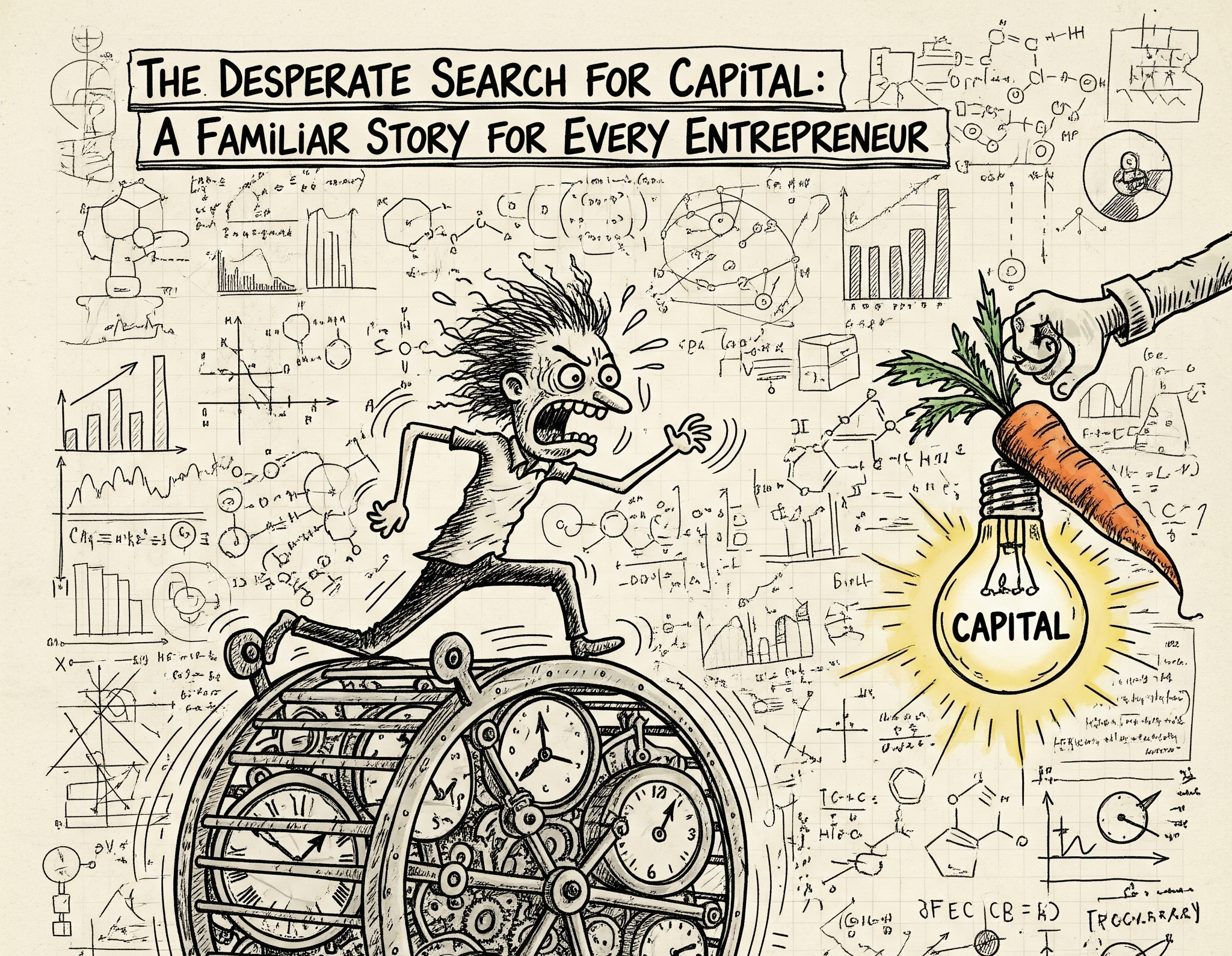
There is a better way. Longer-term business financing, structured properly, can often cost roughly half as much as high-cost short-term debt and stretch repayment over years instead of months. That combination can cut your monthly payments dramatically and hand control of your business cash flow and operations back to you.
This article explains how short-term and expensive business debt traps work, what longer-term business financing look like, how to compare offers honestly and how to prepare your business to qualify. Before you sign for another dollar of business financing, read this first. The right decision today could save your business on costs and cash flow, and a great deal of stress.
The Hidden Cost of Fast Money
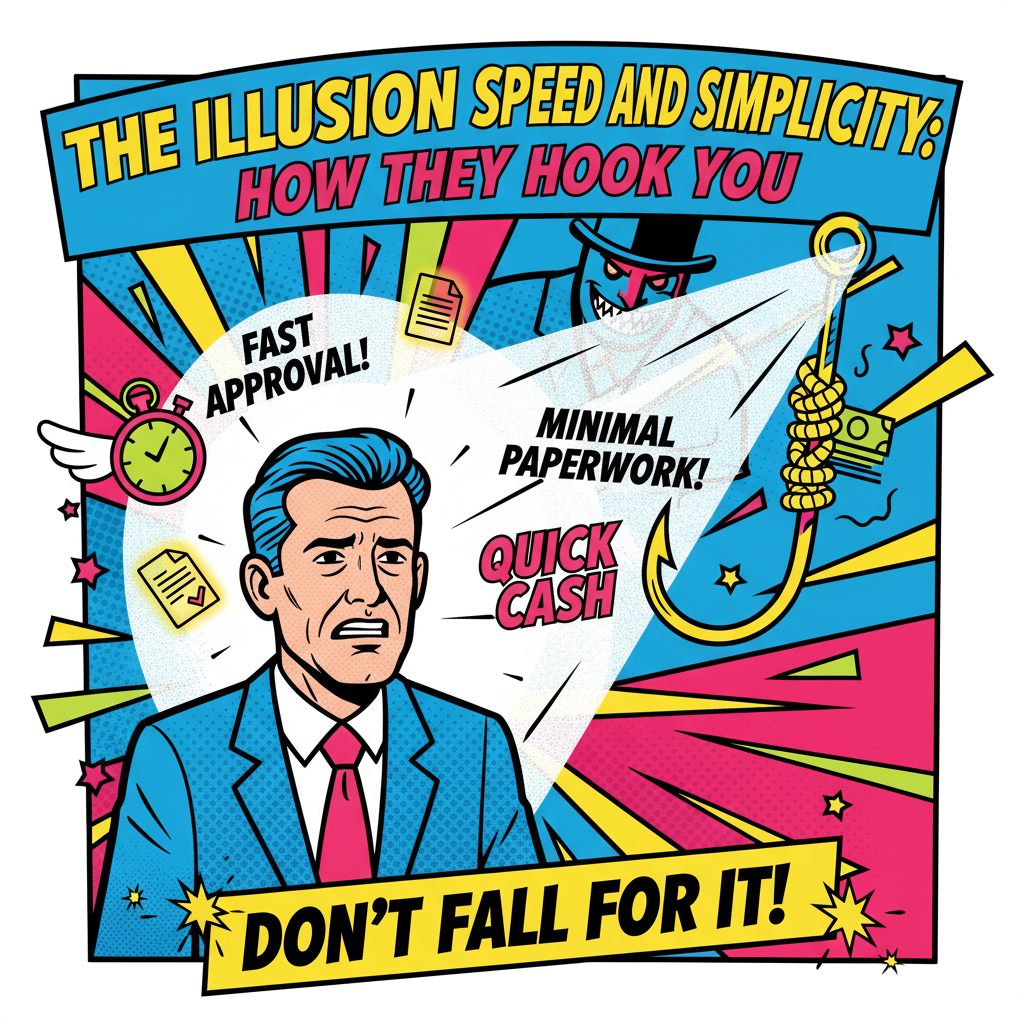
Speed is one of the most powerful selling points in business lending, and it is also one of the most expensive. When a piece of equipment breaks down, a large order requires inventory up front, payroll lands in a slow week, or a tax bill arrives sooner than expected, the business owner wants a solution today. Business lenders who can approve an application in an hour and fund it the next morning understand that urgency very well, and they price their products accordingly.
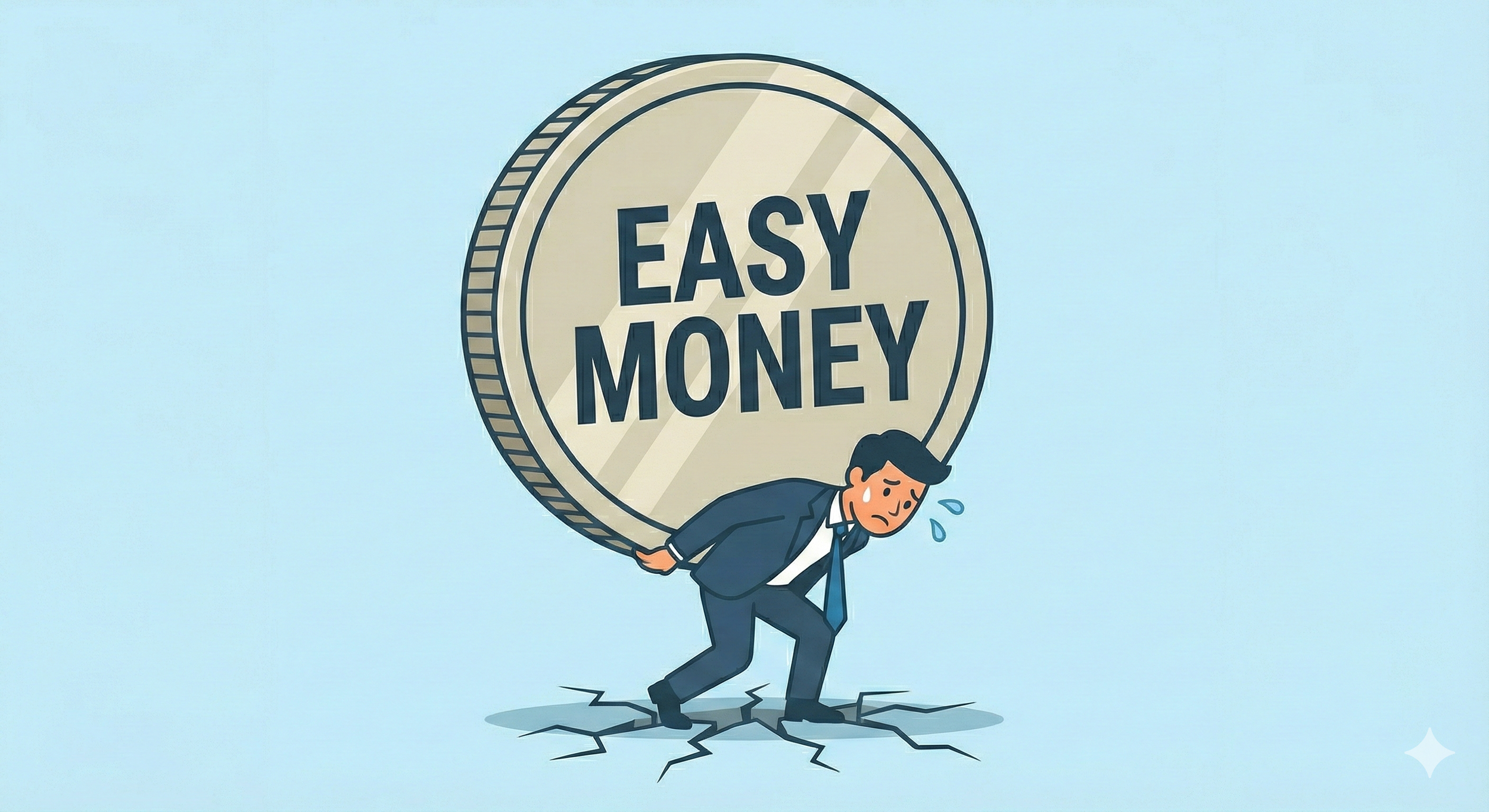
Fast business capital usually arrives in one of a few forms: a merchant cash advance (MCA) where future revenue is purchased, a short-term online loan, a revenue-based advance or a “line of credit” with steep fees. These products are many times illegal as far as interest rates and fees. A business with a short, clearly defined need and a reliable way to repay quickly may come out ahead. The trouble begins when fast money is used to solve a long-term problem, or when it becomes a habit rather than an exception.
The real cost of fast business financing is often hidden in plain sight. Instead of an interest rate expressed as an annual percentage, many of these products use factor rates, flat fees or holdback percentages. A factor rate of 1.35 sounds modest. It means you repay $1.35 for every dollar you receive. But if that money must be repaid in nine or ten-months through ach withdrawals from your bank account, the effective annual cost can easily climb well beyond 50 percent and, in many cases, past 100 percent.
Most business owners are experts in their own industry, not in finance. A restaurant owner knows food costs and labor. A contractor knows materials, crews, and bids. A medical practice owner knows patient care and billing. None of them should be expected to translate factor rates into annual percentage rates while under pressure to make payroll. That knowledge gap is exactly where expensive business financing thrives.
The first step toward better business financing is simply recognizing that the fastest offer is rarely the cheapest offer, and that a few extra days or weeks of preparation can make an enormous difference in what you ultimately pay. Patience, in business lending, is often worth thousands of dollars.
How Short-Term Business Debt Traps Drain Business Cash Flow
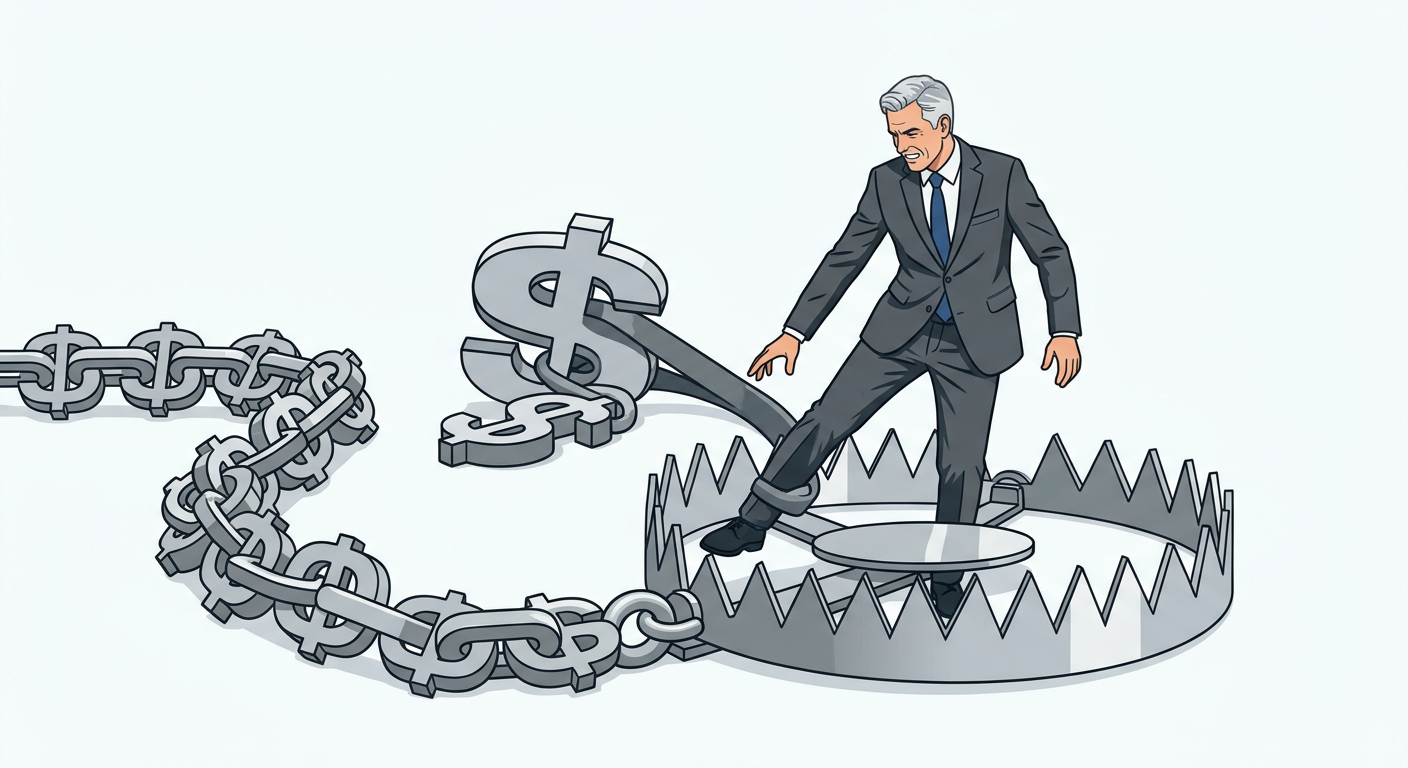
A business debt trap does not usually start with a bad decision. It starts with a reasonable one. A business takes quick financing to cover a seasonal dip or an unexpected expense. The payments begin immediately, often the very next business day, and they are pulled automatically from the operating account whether sales were strong or weak that day.
Because the repayment period is so short, each payment is large relative to the amount borrowed. A business that once had a comfortable cushion in its bank account now finds that cushion shrinking every day. Within a few weeks, the owner realizes that the same cash crunch that prompted the first business financing advance is back, only now there is a large daily payment on top of it.
At that point, a call or email often arrives offering more money. The original lender, or a new one, is happy to provide a second business capital advance. Sometimes the new business financing is used to pay off the remaining balance of the first, a practice called renewal or “refinancing” (not actually refinancing as rate and term are the same, or worse) within the same product. Other times the business stacks a second business capital advance on top of the first, carrying two sets of ACH payments at once. Each new layer adds fees and deepens the hole.
This cycle has several damaging effects on a business:
• ACH withdrawals consume business cash before it can be used for operations
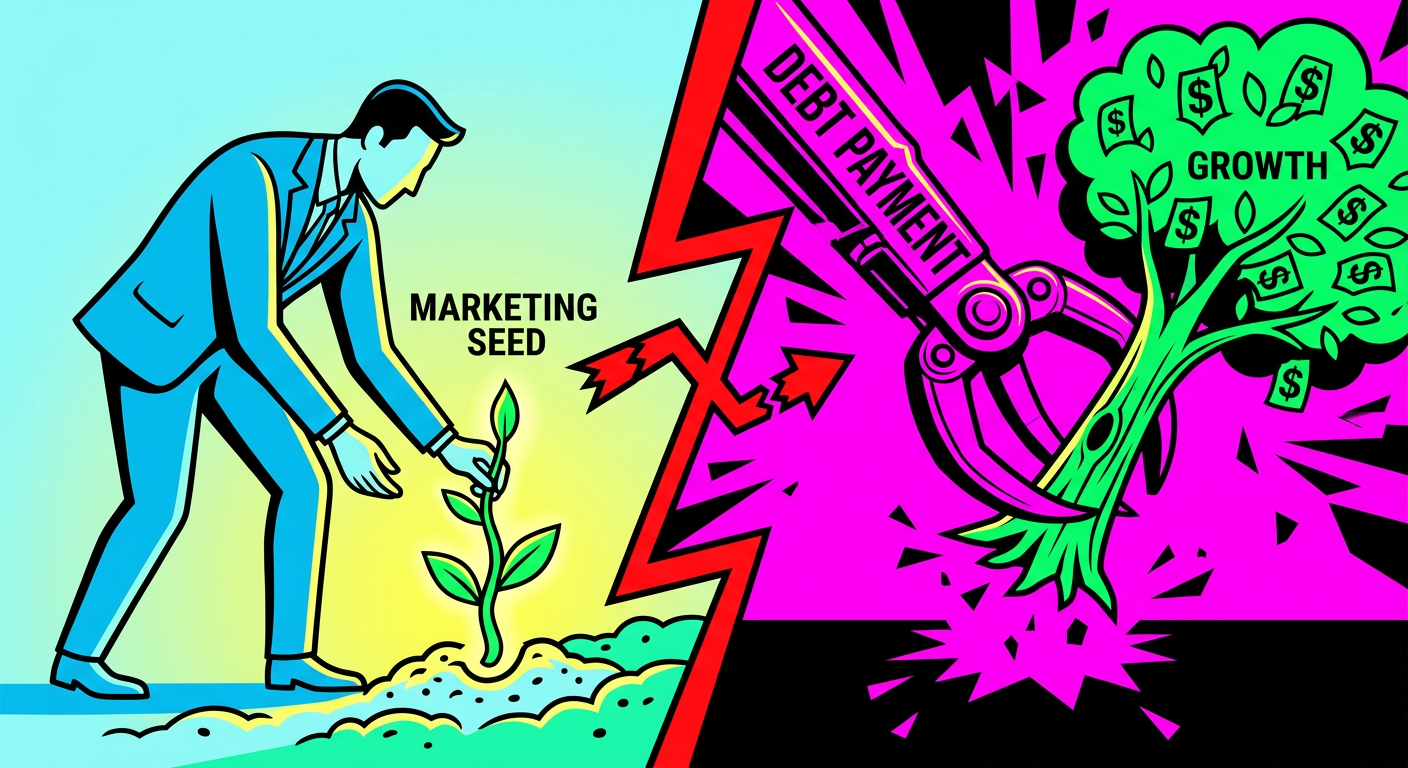
• Profit margins shrink because a large share of business revenue is going toward business financing costs instead of operations.
• Business owners delay paying vendors, taxes or themselves, creating new problems with suppliers and government agencies.
• Management attention shifts from running and growing the business to juggling payments and searching for the next round of business funding.
• Credit profiles can suffer as balances stack up and accounts become strained, making better financing harder to obtain later.
Perhaps the most serious damage is to decision-making. When every dollar is spoken for before it arrives, the business loses its ability to respond to opportunity. A good employee needs a raise, and there is no room. A promising new contract requires up-front investment, and the money simply is not there. Short-term business debt does not just cost money; it costs the future of the business.
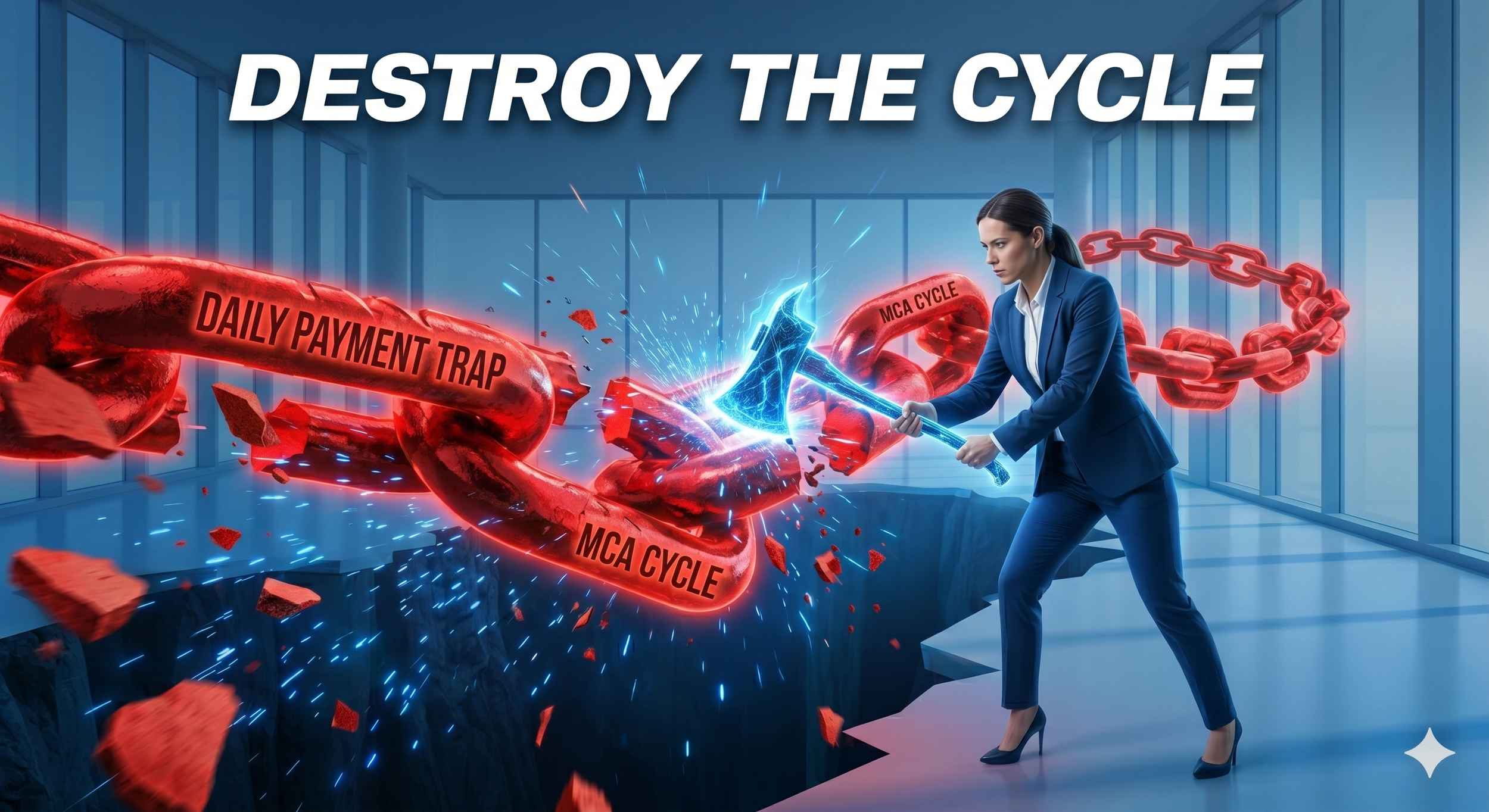
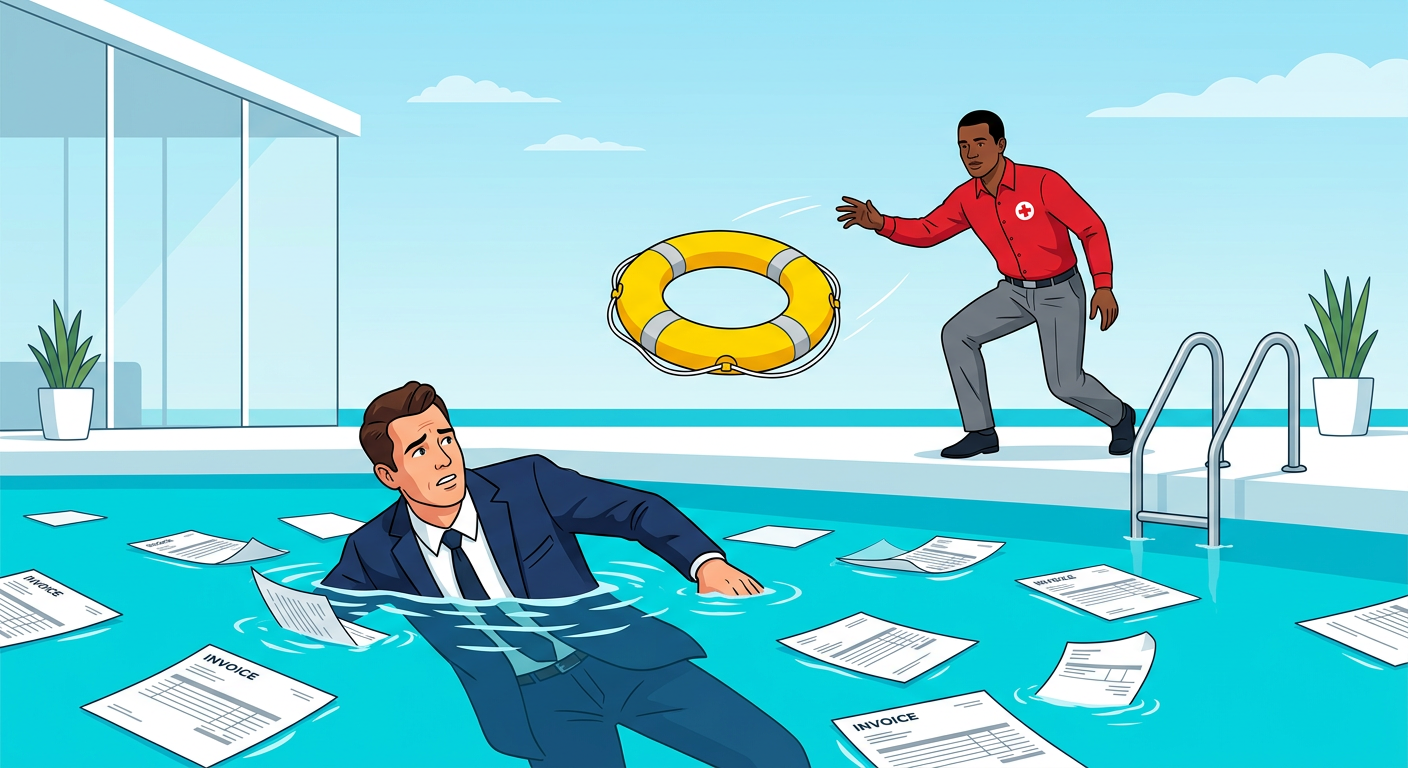
The encouraging news is that this business debt trap can be broken. Businesses that are generating steady revenue, even if they are currently strained by expensive and short-term business debt, often qualify for longer-term financing that can replace those high-cost obligations with a single, manageable monthly payment.
Understanding the True Cost of Business Financing
To compare business financing options fairly, you need a common language. The most useful one is the annual percentage rate, or APR. The APR expresses the total yearly cost of borrowing, including interest and most fees, as a percentage. It allows you to compare a 10-year term loan with a 12-month cash advance on equal footing.
Several features of short-term business financing make it more expensive than it first appears:
• Factor rates are applied to the full amount borrowed, regardless of how quickly you repay. You do not save on cost by paying faster unless the agreement specifically provides an early payoff discount.
• Short repayment periods magnify the effective annual cost of business capital. Paying a fixed fee over 9-months is far more expensive on an annual basis than paying the same fee over 2-years.
• Origination, underwriting and processing fees may be deducted from the funds before you receive them, meaning you pay to borrow money you never actually get to use.
• Aggressive business debt payment structures reduce the balance you have available almost immediately, so you are paying the full cost on money that is quickly being returned to the lender before you can even use it for business operations
Consider a simple illustration. Suppose a business receives a $100,000 advance with a factor rate of 1.35. It must repay $135,000 over roughly 9 or 10-months through weekly withdrawals. The total cost is $35,000. That may not sound outrageous until you consider the timeframe. On an annualized basis, accounting for the declining balance, the effective rate is well into the high double digits.
Now compare that with a longer-term loan for the same $100,000, carrying an interest rate in the low double digits and repaid over ten years. The annual rate in this example is often half or less of the effective rate on the short-term advance. That is what we mean when we talk about business debt at half the cost of capital.
It is important to be honest about one point. Because a longer-term loan stretches repayment over many more months, the total dollars of interest paid over the full life of the loan can sometimes be similar to or even higher than a short-term product, if you carry it to the very end. What changes dramatically is the rate you are paying, the size of each payment and the strain on your business cash flow. And many longer-term loans can be paid down early when the business is ready, which reduces the total interest significantly. The goal is to pay a lower rate while keeping your business healthy, not simply to minimize a single number on paper.
Always ask any lender for the APR, the total repayment amount, the payment frequency, all fees and any prepayment terms in writing. A reputable lender will provide them without hesitation.
What Longer-Term Business Financing Actually Looks Like
Longer-term business financing generally refers to loans with repayment periods measured in years rather than months. Depending on the purpose and the program, these terms commonly range from 2 to 10-years for working capital and equipment, and up to 25- years when commercial real estate is involved. Payments are typically made monthly rather than daily or weekly, and are in total, much less per month preserving valuable cash flow.
Several types of business financing fall into this category:
• SBA-guaranteed loans, including the popular 7(a) program, which can be used for working capital, equipment, refinancing existing business debt, business acquisition, and real estate. The government guarantee reduces risk for the lender, which allows for longer terms and more reasonable rates.
• SBA 504 loans, designed for major fixed assets such as buildings and long-life equipment, often featuring long fixed-rate terms.
• Conventional bank term loans offered by community banks, regional banks, and credit unions to established businesses with solid financial records.
• Equipment financing, where the equipment itself serves as collateral, often allowing terms that match the useful life of the asset.
• Commercial real estate loans for businesses that own or wish to purchase their property, which can sometimes be used to free up equity for other business needs.
• Private Credit Business Financing in the form of a credit facility that grows and scales with your business revenue and assets
Each of these options has its own requirements, documentation and timeline. They typically take longer to approve than a business cash advance, sometimes several weeks, because the lender reviews financial statements, tax returns, credit history and the overall health of the business. That additional scrutiny is precisely why the pricing is better. Lenders who understand your business can lend at lower rates because they are taking a more informed risk.
Longer-term financing is not only for large companies. Many small businesses, from family restaurants to trucking companies to professional practices, use SBA loans and bank term loans to fund operations and growth. The key is having reasonably organized financial records and working with someone who understands which programs fit your situation.
It is also worth knowing that longer-term financing can be used to refinance existing business debt, including high-cost, short-term obligations, as long as the refinancing meets the lender's and the program's guidelines. That single feature is what allows many struggling businesses to escape the business debt trap entirely.
The Math of Lower Business Debt Payments
Numbers tell the story better than any description. Let us return to the example of a $100,000 business debt obligation.
Under a short-term advance with a factor rate of 1.35, the business repays $135,000 over about 9-months. That works out to roughly $15,000 per month via weekly payments.
Now imagine the same $100,000 financed through a ten-year term loan at an illustrative rate of 11 percent. The monthly payment would be approximately $1,378. That is a reduction of more than $13,000 per month in payment obligations, for the same amount of business capital.
Even if the payback term were shorter, say 5-years at the same rate, the monthly payment would be roughly $2,174. That is still a reduction of nearly $13,000 per month compared with the short-term advance.
What could your business do with an extra $10,000 to $13,000 in monthly cash flow? For many owners, the answer is transformative:
• Build a cash reserve so that the next slow month or surprise expense does not require emergency business borrowing.
• Pay suppliers on time or early, often earning discounts and better terms.
• Hire or retain key staff and give raises that keep good people from leaving.
• Invest in marketing, equipment, or technology that drives future revenue.
• Pay yourself a reasonable salary, which many owners trapped in expensive business debt payments have stopped doing.
These figures are illustrative. Actual rates, terms, and payments depend on the program, the lender, market conditions and the qualifications of the business. But the principle holds across nearly every scenario: when you lower the rate and extend the term, the monthly payment drops dramatically, and business cash flow improves immediately.
There is also a psychological benefit that is hard to measure but very real. Owners who move from aggressive withdrawals to a lower, predictable total monthly payment often describe a sense of relief they had not felt in years. They can plan. They can budget. They can see a path forward. That clarity frequently leads to better decisions across every part of the business.
Lower payments also strengthen the business in the eyes of future lenders and partners. A company with healthy cash flow and manageable debt service looks far more stable than one with multiple stacked advances, which can open the door to even better terms down the road.
Refinancing and Consolidating High-Cost Business Debt
If your business is already carrying one or more expensive short-term obligations, refinancing and consolidation may offer the fastest route to relief. Consolidation means replacing several debts with a single new loan, ideally at a lower rate and with a longer payback term. Instead of managing multiple daily payments to different lenders, the business makes one monthly payment.
The process generally works like this. A qualified lender reviews your business finances, including revenue, existing business debts and payment history. If approved, the new loan pays off the existing high-cost balances directly. The business then repays the new loan on its more favorable schedule.
Several factors influence whether a business qualifies to refinance high-cost debt:
• Consistent revenue history, typically demonstrated through business bank statements and tax returns.
• A reasonable business debt service coverage ratio, which compares the business cash flow available to pay business debts with the total business debt payments. Ironically, refinancing often improves this ratio because the new payment is so much smaller.
• Acceptable personal and business credit for the owners, though programs vary in how much weight they place on credit scores.
• Evidence that the existing business debt was used for legitimate business purposes.
• A clear explanation of how the refinancing will benefit the business going forward.
Timing matters. It is generally easier to refinance before the situation becomes desperate. A business that is current on all its obligations, even if strained, is a far more attractive candidate than one that has already defaulted or is facing collection actions. If you see the warning signs, such as shrinking bank balances, delayed vendor payments or a growing reliance on new advances to pay old ones, the time to explore refinancing is right now.
One caution is worth emphasizing. Some short-term lenders market their own renewals as consolidation. They offer to roll your existing advances into a new, larger advance, often with fresh fees and a reset repayment period. This is not true business debt consolidation. It typically keeps the business locked into the same high-cost structure. Genuine relief comes from moving to a different type of financing altogether, one with a meaningfully lower rate and a meaningfully longer term.
Before agreeing to any refinancing, review the existing agreements for prepayment terms. Most merchant cash advances (MCAs) do not offer a discount for early payoff, and if they do, it is within 90 to 120-days only, which means the full repayment amount may be due. That is often still well worth it when the new loan dramatically reduces ongoing payments, but you should understand the numbers in advance.
Checking Every Option Before You Sign
The single most important habit a business owner can develop is to compare options before accepting business financing. Many owners accept the first offer they receive simply because it is in front of them. In business lending, that can be a costly mistake.
A thorough review of your options might include:
• Your current bank or credit union, which already knows your business and may offer favorable terms to existing customers.
• SBA-preferred lenders, which are approved to make SBA loan decisions more efficiently and often specialize in small business financing.
• Community development financial institutions, which focus on underserved markets and may offer flexible terms to businesses that do not fit traditional lending criteria.
• Equipment lenders and vendor financing programs, if your need is tied to a specific asset.
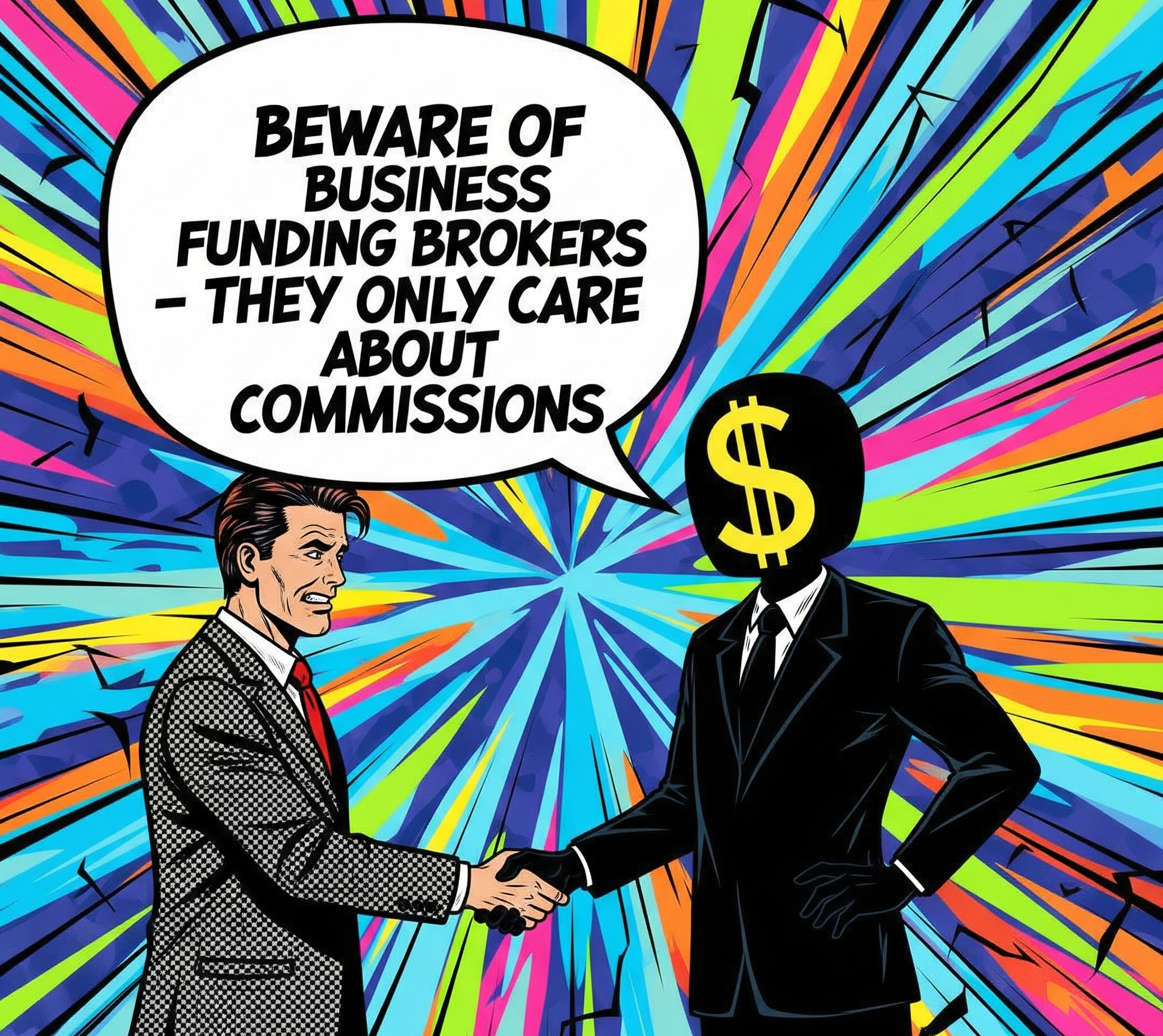
• Experienced business finance advisors or brokers who can evaluate your situation across many lenders and programs at once.
When you compare offers, line them up side-by-side using the same measures. Look at the APR, the total repayment amount, the payment amount and frequency, the term, all fees, collateral and personal guarantee requirements and prepayment rules. An offer that looks attractive on one measure may be unattractive on another.
It is also wise to consider whether borrowing is the right answer at all. Sometimes the best financial move is to tighten collections on accounts receivable, renegotiate supplier terms, sell unused equipment, or reduce expenses before adding new debt. Good advisors will raise these questions rather than simply pushing a loan.
Do not let urgency override judgment. Many high-cost lenders use time pressure as a sales tactic, presenting offers that expire within hours or suggesting that approval will not be available later. Legitimate financing does not require you to decide on the spot. If you are being rushed, step back and ask why.
Finally, remember that you are the customer. Business lenders compete for good business borrowers. A business with steady revenue and organized records has negotiating power, and it should use it. Ask questions, request better terms, and do not be afraid to walk away from an offer that does not serve your business.
Getting Your Business Ready to Qualify
Longer-term, lower-cost business financing is more accessible than many owners believe, but it does require preparation. The better organized your business is, the faster and smoother the process will be, and the better your terms are likely to be.
Start by gathering the documents lenders commonly request:
• Business tax returns for the past three years.
• Personal tax returns and Personal financial statement for owners with 20%+ stake.
• Year-to-date financials (P&L and balance sheet)
• Previous fiscal year financials (P&L and balance sheet)
• Recent business bank statements covering the last 12-months of operations
• A schedule of existing business debts, including lender names, balances, due dates, original balance, payment amounts, collateral and terms.
• Business licenses, formation documents, and any leases or major contracts.
Next, review your credit. Check both personal and business credit reports for errors and dispute anything inaccurate. Pay down revolving balances where possible and avoid opening new accounts or taking new advances in the months before applying, since multiple recent inquiries and new debts can raise concerns.
Clean up your books. If your business financial statements are disorganized or months behind, invest in getting them current. Many business lenders will decline or delay an application simply because the numbers are unclear. A good bookkeeper or accountant can be one of the best investments a business makes before seeking business financing.
Prepare a brief explanation of your business and your need in the form of a business credit memorandum. Business lenders want to understand what the business does, how it makes money, why it needs financing and how the new loan will improve its position. If your business has been strained by high-cost, short-term payback business debt, be candid about it. Business lenders who specialize in refinancing understand that many good businesses have been caught in these traps, and a clear plan to fix the problem is persuasive.
Finally, be realistic about timing. Longer-term financing may take a few weeks from application to funding. If you anticipate a need, start the process early. Owners who wait until a crisis are the ones most likely to accept expensive fast money because they feel they have no other choice.
Red Flags and Questions to Ask Any Business Lender
Not every business financing offer is what it seems. Knowing the warning signs can protect your business from costly mistakes.
Watch for these red flags in Business Finance:
• The business lender cannot or will not tell you the APR in writing.
• The offer must be accepted immediately or it will disappear.
• Payments are pulled aggressively on a 12-month or less payback period with little flexibility when sales are slow.
• The agreement includes a confession of judgment or similar clause that allows the business lender to obtain a court judgment against you without notice, where permitted by law.
• You receive unsolicited offers to stack additional advances on top of existing ones.
• Fees are vague, numerous, or deducted in ways that are hard to understand.
• The lender discourages you from having an accountant or attorney review the agreement.
Before signing anything, ask these questions:
• What is the annual percentage rate, and what is the total amount I will repay?
• How often are payments made, and how are they collected?
• What fees are charged, and are any deducted from the funds I receive?
• Is there a penalty or a benefit for paying the balance off early?
• What collateral is required, and is a personal guarantee required?
• What happens if my revenue drops and I cannot make a payment on schedule?
• Can I see the complete agreement before committing?
A trustworthy lender will welcome these questions. If the answers are evasive or the lender becomes impatient, take that as valuable information about the relationship you would be entering.
It is also wise to have an accountant, attorney, or experienced business finance advisor review any significant financing agreement. The cost of a professional review is small compared with the potential cost of signing an unfavorable contract that affects your business for months or years.
Building a Business Financing Strategy That Supports Growth
The best businesses treat business financing as a strategic tool, not an emergency rescue. When business debt is structured thoughtfully, it can fuel expansion, stabilize operations and create value. When it is used reactively and expensively, it can quietly undermine everything the business owner has worked to build and maintain.
A healthy business financing strategy starts with matching the type of business financing to the purpose. Long-term investments, such as equipment, real estate, acquisitions or refinancing of existing debt, generally belong in long-term financing. Short-term, self-liquidating needs, such as inventory that will sell within a few weeks, may be appropriately handled with a modest line of credit. Problems arise when long-term needs are funded with short-term, high-cost money.
Next, build and protect a cash reserve. Many businesses fall into business debt traps because they have no buffer when revenue dips. Once longer-term financing has lowered your monthly obligations, commit a portion of the savings to a reserve fund. A reserve covering 3-months or more of operating expenses can prevent the next crisis from turning into another round of expensive business borrowing.
Establish relationships with business lenders and business finance advisors before you need them. A banker or business finance advisor who knows your business, understands its seasonality and has seen its financial statements over time can move quickly when an opportunity or challenge arises. That relationship can be one of your most valuable business assets.
Review your financing regularly. At least once a year, look at your existing business debts, their rates, and their terms. As your business grows and your financial profile strengthens, you may qualify for better terms than you did previously. Refinancing at the right time can lower costs further and free up even more cash.
Finally, seek knowledgeable help. You do not have to navigate business financing alone. Experienced business finance advisors can evaluate your situation, identify programs you may not know exist, compare offers across business lenders, and help you avoid the traps that have caught so many hardworking owners. The right guidance can mean the difference between a business that merely survives and one that thrives.
If your business is currently weighed down by short-term, high-cost business debt, or if you are considering taking on new business financing, now is the time to step back and review all of your options. Longer-term financing at a fraction of the cost, with significantly lower monthly payments, may be well within reach. Taking that step could restore your cash flow, protect your profits and put you back in control of the business you built.

More Business Finance and Strategy Articles: