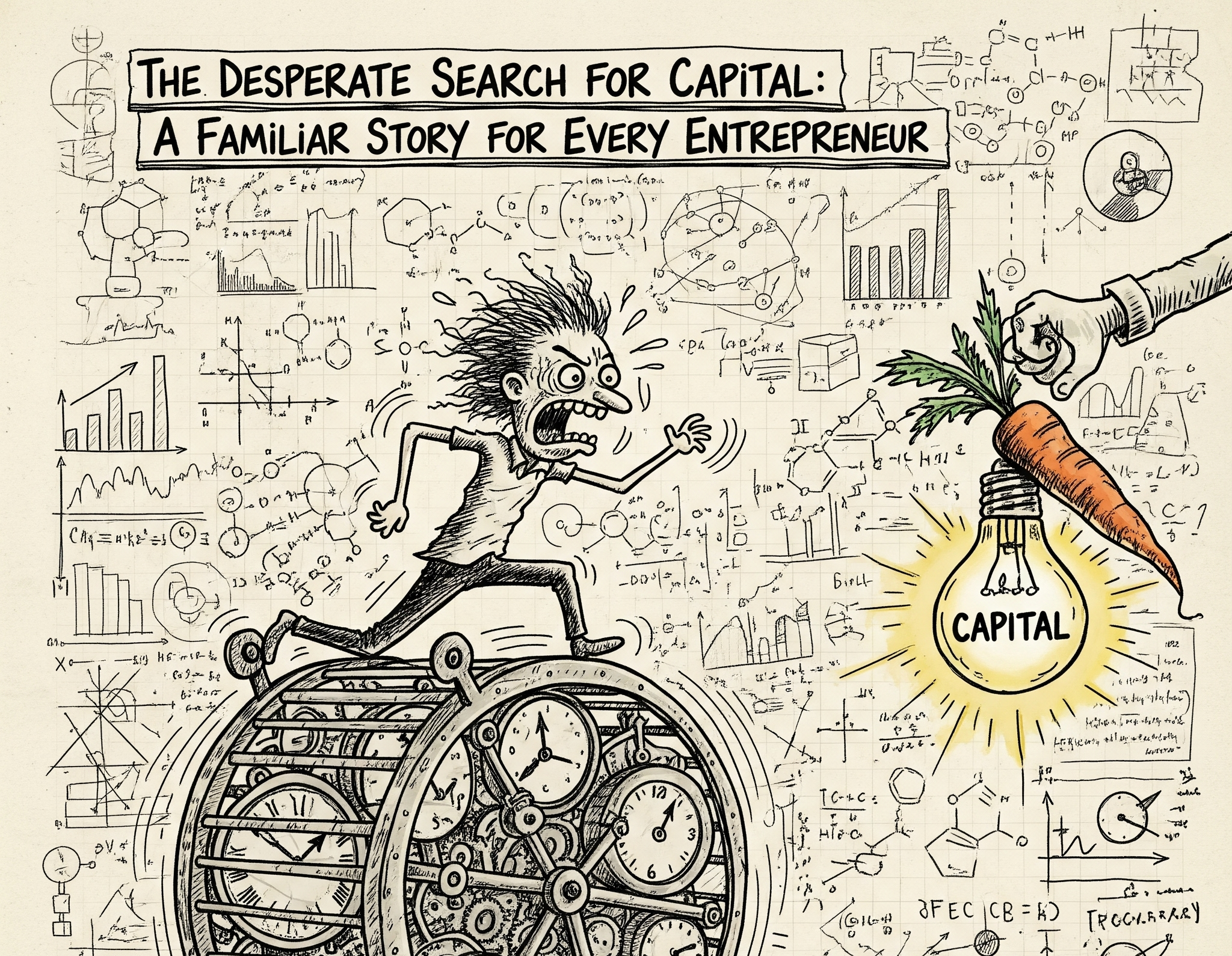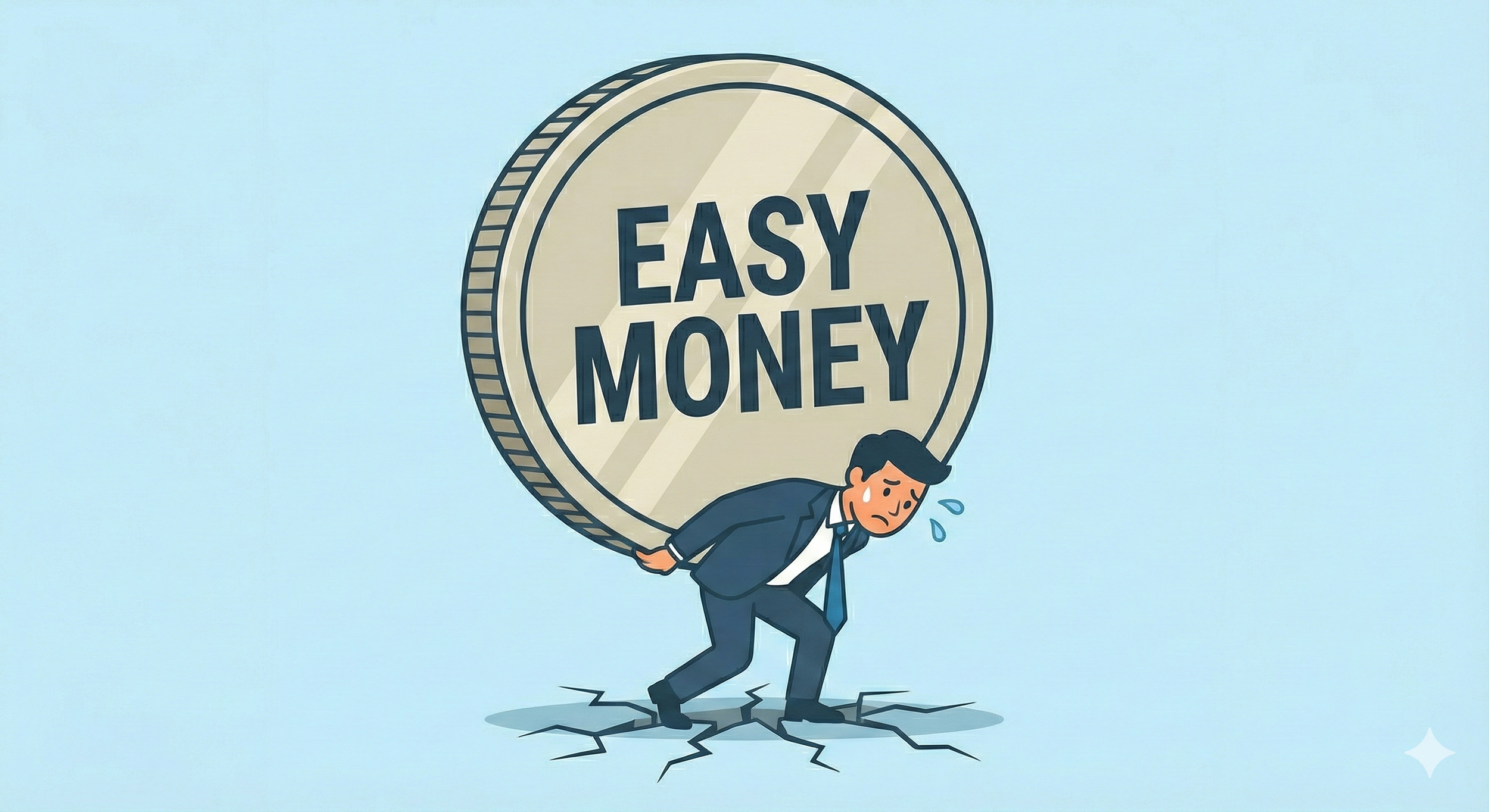
When cash flow turns negative and liquidity completely dries up, standard management strategies are no longer sufficient. Drowning in business debt service while struggling with maxed-out credit lines and stressed vendors requires an immediate, aggressive shift toward crisis management and cash preservation.
There is absolutely no room for error when every available dollar is consumed by obligations, leaving operations starved of the capital needed to function and grow.
Surviving this critical juncture demands clear-headed leadership, rapid operational triage and a ruthless prioritization of financial stability over short-term growth. The objective must immediately shift from profitability to absolute liquidity. By executing a series of uncompromising turnaround protocols, ranging from renegotiating existing business debt and restructuring vendor payments to unlocking hidden assets and drastically reducing overhead, business owners can halt the terminal cash bleed.
By moving away from denial and confronting the stark mathematical realities of your balance sheet, you can execute a tactical defense of your core enterprise. This detailed roadmap is designed to pull your business back from the absolute brink, stabilize your operational foundation, and ultimately build a sustainable pathway toward financial recovery.
Acknowledging the Crisis and Halting the Immediate Cash Bleed
The first and most critical step in saving a business on the brink of business cash flow collapse is acknowledging the sheer gravity of the situation. Denial is a fatal luxury that no business owner can afford when business cash flow turns negative and liquidity dries up entirely. Acknowledging the crisis means stopping all attempts to project an image of steady success and shifting entirely into a defensive, survival-oriented posture.
This requires an immediate cessation of all discretionary spending. The bleed of business cash must be halted unconditionally. You must instantly freeze all outbound payments that are not directly tied to keeping the doors open and the core revenue engine running. This is the initial triage phase, where the singular objective is preserving business cash flow.
To implement this triage effectively, the business owner must establish a rigorous, zero-based approval system. This means stripping away all employee purchasing authority and suspending general corporate credit card access across the board. Every single expense, down to the smallest office supply purchase, must cross the owner's desk for explicit approval. Furthermore, the company must immediately transition from reviewing monthly profit and loss statements to utilizing a rolling thirteen-week cash flow forecast.
Standard accrual accounting is completely useless when bank accounts are empty. The thirteen-week forecast focuses exclusively on actual cash entering and leaving the bank, allowing for proactive and informed business decision-making.
Building the 13-week cash flow forecast requires categorizing every single outbound expenditure with absolute precision. You must aggressively identify phantom expenses, those recurring auto-drafts for software or services that the company no longer actively utilizes. Cancel these immediately. Additionally, sweep cash into a protected operating account to prevent aggressive creditors from completely wiping out payroll funds.
By controlling the outflow at a microscopic level, you literally buy the enterprise time.
Time is the single most valuable asset when executing a turnaround strategy.
The execution of this aggressive business cash-preservation strategy will undoubtedly cause significant internal friction. Employees accustomed to generous operational budgets will feel the immediate constraint. It is the core responsibility of the business owner to communicate the severity of the situation transparently to the executive team without inducing sheer panic among the broader staff. Explain clearly that these controls and measures are protective mechanisms designed specifically to save their jobs. The spending freeze must be absolute and universally applied.
Strategic Communication with Stressed Accounts Payable Vendors
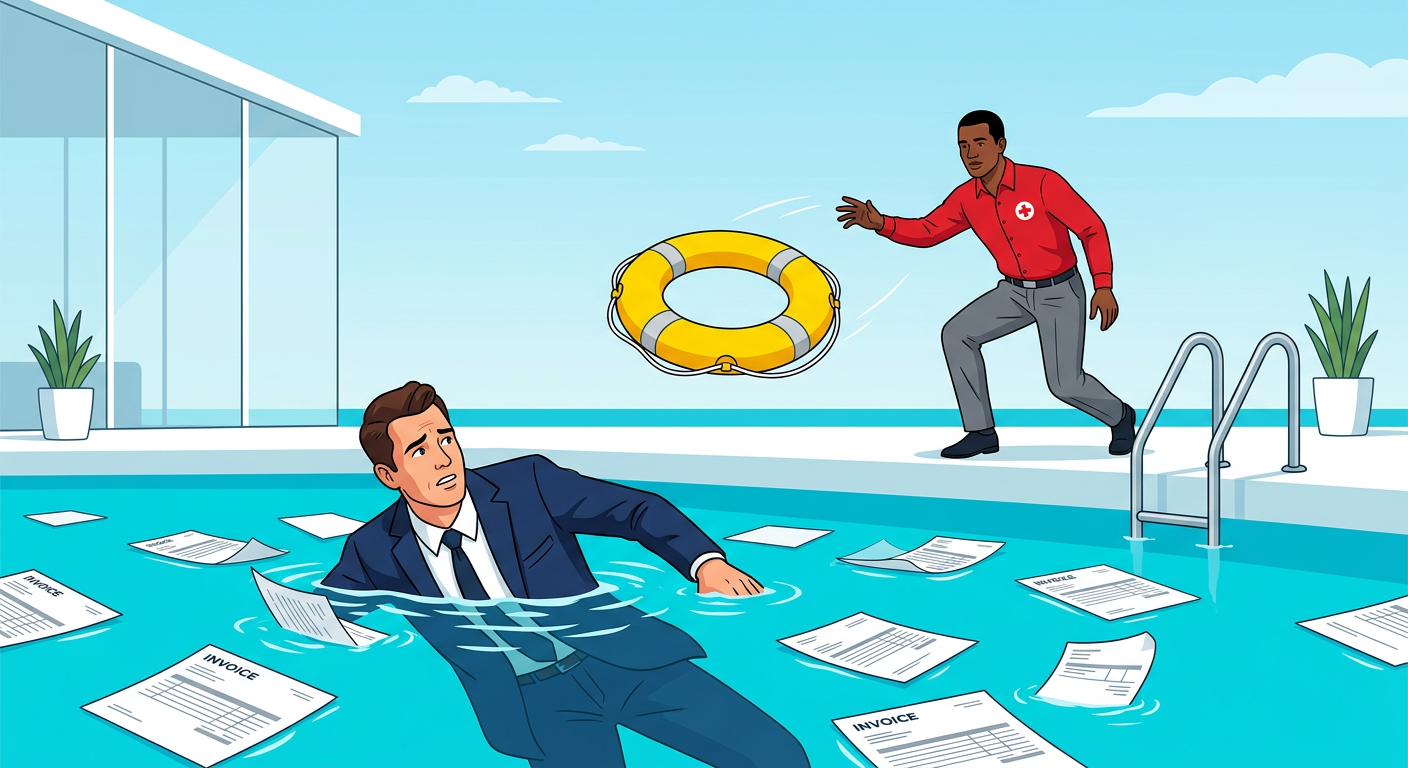
When working capital evaporates, accounts payable naturally begin to age, resulting in severely stressed vendor relationships. The natural human instinct when facing angry creditors is to hide and ignore phone calls. This avoidance behavior actively accelerates the path to potential liquidation or insolvency.
Silence breeds deep suspicion and forces vendors to assume the absolute worst, prompting them to halt critical supply lines. To navigate this volatile dynamic, business owners must initiate strategic communication with all creditors. The process begins with categorizing every vendor into two distinct tiers: critical vendors and non-critical vendors.
Once vendors are categorized, you must systematically draft a communication strategy tailored to each specific tier. For critical vendors, personal communication from the primary business owner is mandatory. Explain that the company is experiencing a temporary liquidity crunch and is currently executing a comprehensive balance sheet and operational restructuring plan.
The goal here is to shift the vendor from an adversarial stance into a collaborative one. Propose a highly structured payment plan that the business can realistically afford, even if the payments are extraordinarily small.
The concept of continuous payment is vital here; sending consistent, fractional payments demonstrates tangible good faith.
Negotiating with vendors requires extreme honesty regarding your current cash position. If a supplier threatens to send your account to collections, calmly explain that aggressive legal action will simply force the company into a worse cash flow situation, and possibly a scenario where unsecured creditors typically receive nothing. For non-essential vendors, formalize the communication through written hardship letters. Request an immediate temporary suspension of payments or an extension of terms. In many cases, vendors will reluctantly accept extended terms if they believe it is the only viable path to eventual compensation.
The sheer volume of vendor inquiries during a business cash crisis can easily paralyze a business owner. To mitigate this toll, designate a highly capable employee to act as the primary accounts payable liaison. All incoming collections calls must be routed directly to this individual. Equip this liaison with a strict script and a very limited weekly budget for payments. By creating this organizational buffer, the business owner shields their mental bandwidth from the daily barrage of creditor anxiety, allowing leadership to focus entirely on strategic turnaround maneuvers.
Restructuring and Renegotiating Business Debt Service Agreements
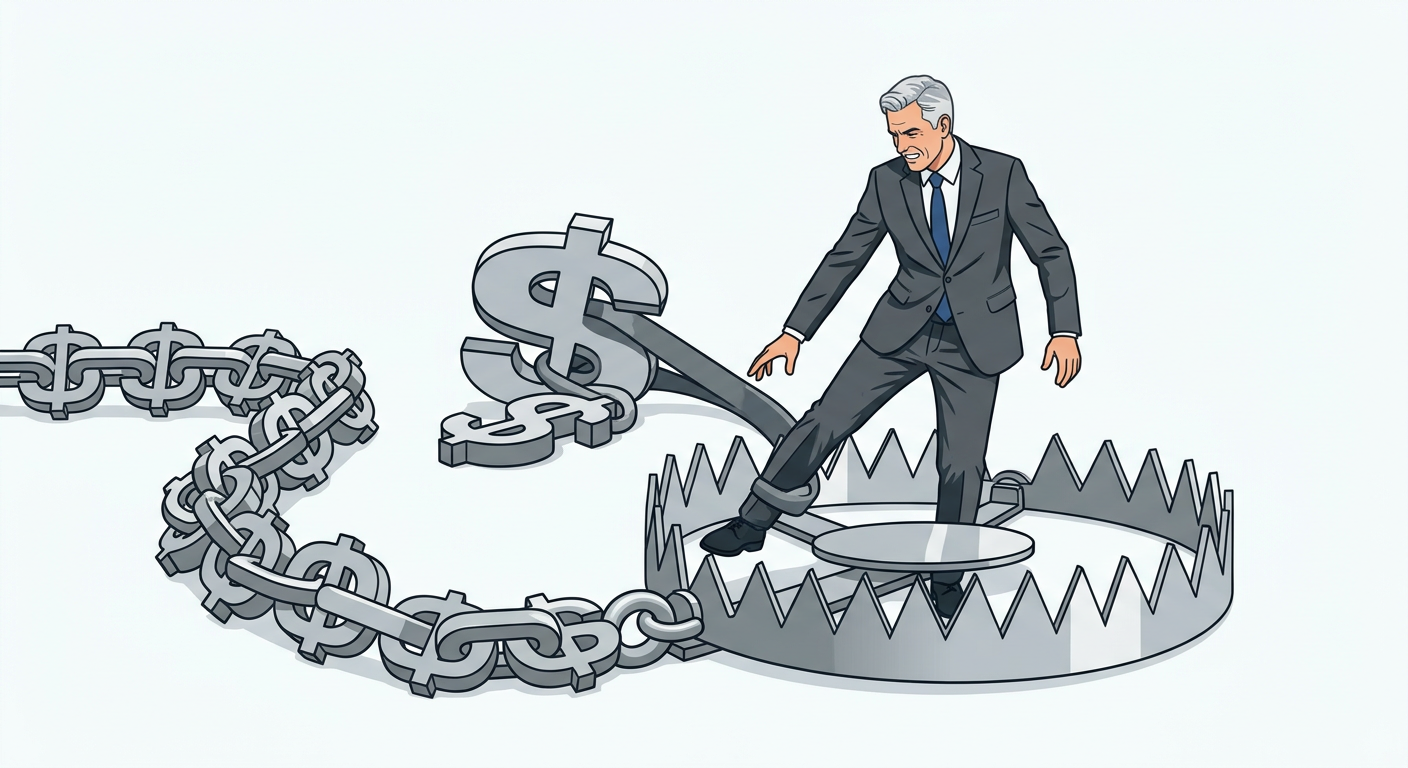
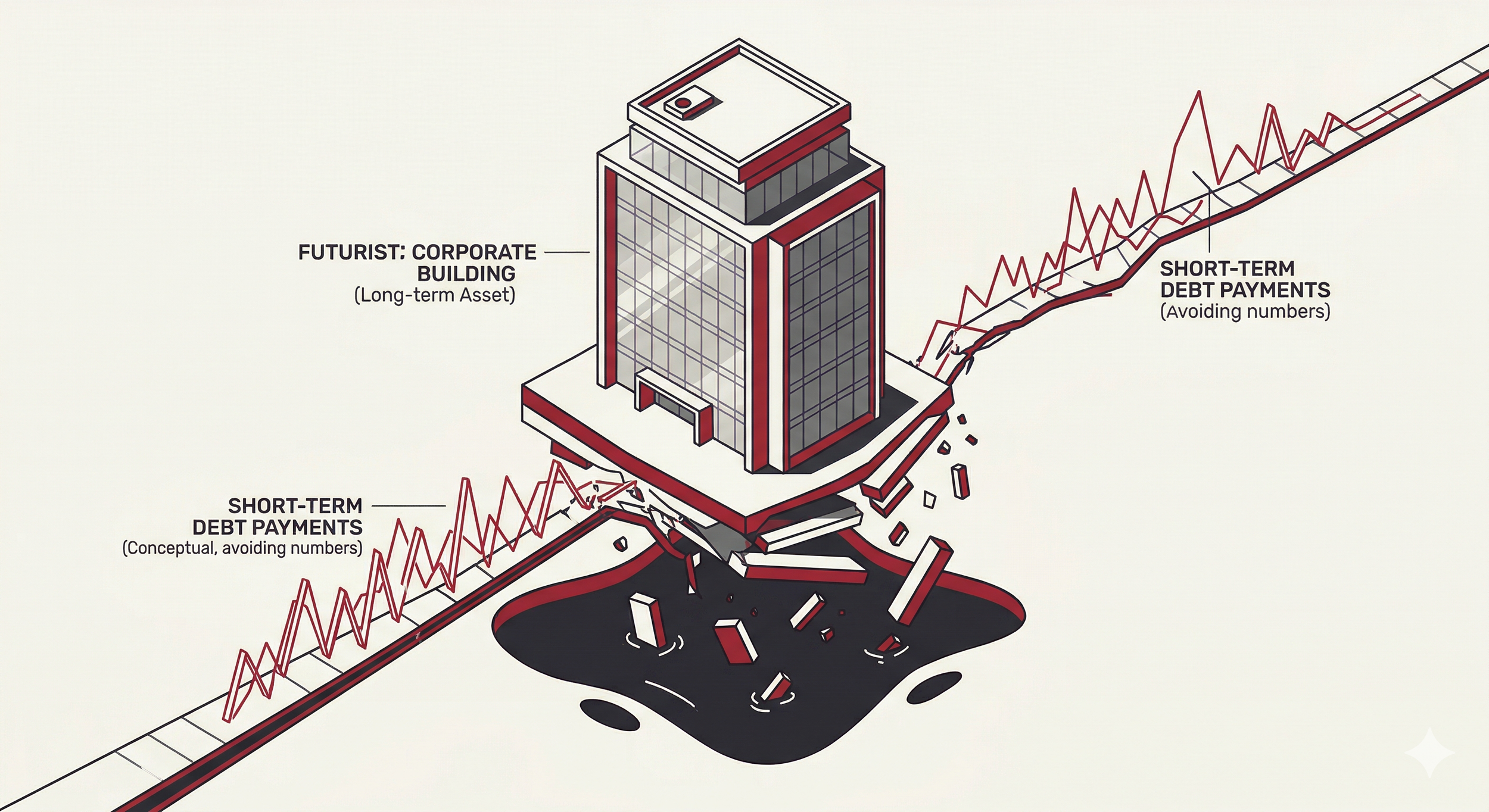
A primary catalyst for negative cash flow is often the crushing weight of high-interest business debt. When term loans and Merchant Cash Advances begin to consume every dollar of inbound revenue, the business enters a terminal debt spiral. Surviving this phase requires aggressive renegotiation and a fundamental restructuring of all debt obligations. The first step is to carefully differentiate between secured and unsecured debt. Secured debt is tied directly to essential business assets, making it highly dangerous to default upon. Unsecured debt offers slightly more leverage for the borrower during emergency negotiations. You must completely inventory all debt instruments.
Approaching traditional banking institutions for relief requires a highly professional strategy. Banks vastly prefer performing loans over defaults and liquidations. Contact your commercial loan officer immediately and proactively request a formal forbearance agreement or a temporary switch to interest-only payments. To secure this relief, present a detailed turnaround plan accompanied by your 13-week cash flow forecast. You must prove mathematically that a temporary reduction in business debt service will allow the company to stabilize. Transparency with traditional lenders is paramount; surprising a bank with a sudden default eliminates goodwill.
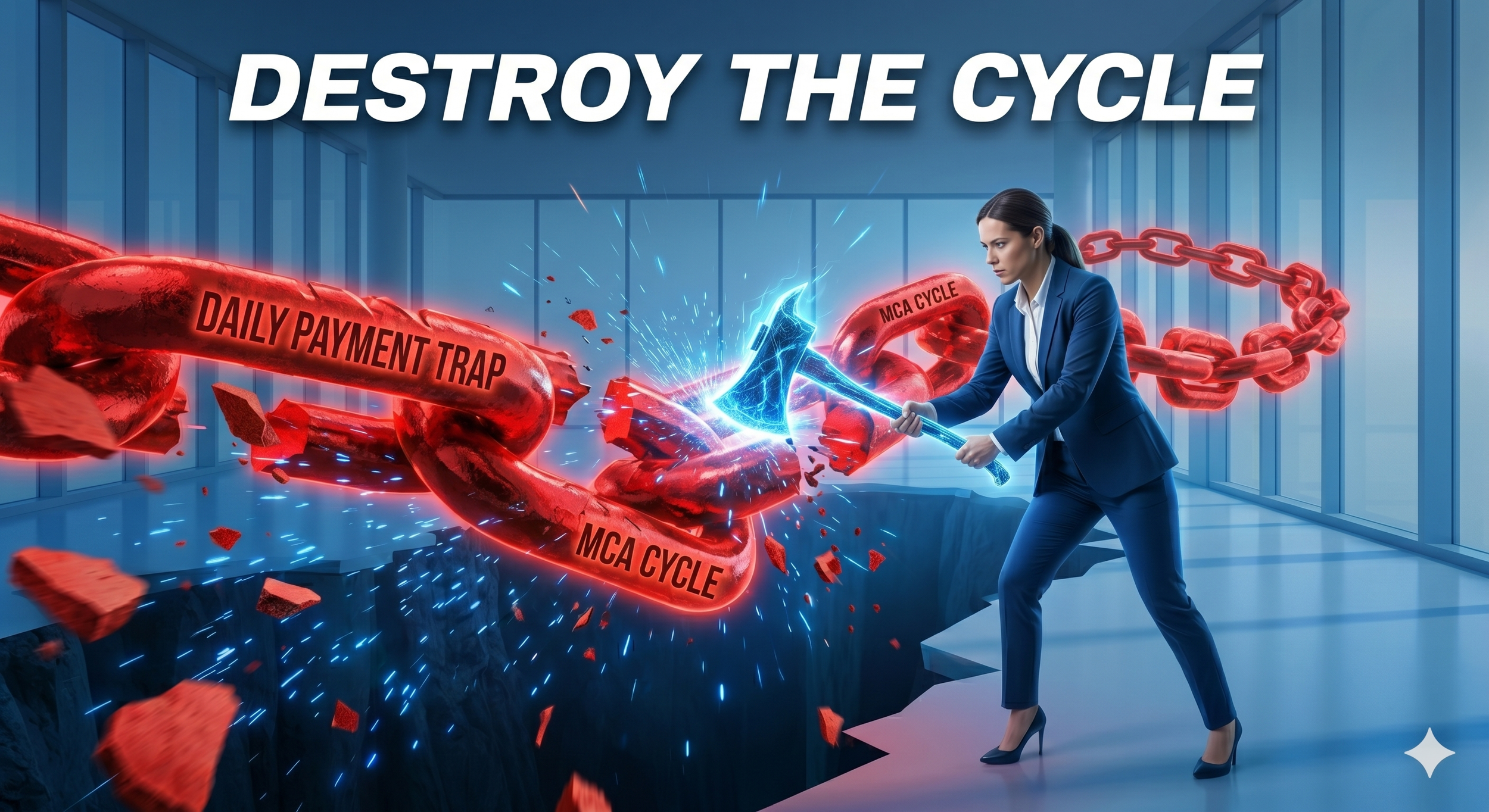
The most toxic form of modern business debt is the Merchant Cash Advance or MCA. These instruments often require crippling daily or weekly withdrawals directly from the operating account. Restructuring an advance requires immense caution.
Never attempt to solve a cash advance problem by taking out another cash advance as this process guarantees catastrophic failure.
Instead, consider engaging a specialized business debt restructuring consultant. These professionals can construct a legal buffer between your business and aggressive lenders, often negotiating a reduced payment plan to help stop the current business cash drain.
If business debt service simply cannot be sustained, a strategic default may become mathematically unavoidable under the guidance of legal counsel. A strategic default on business debt forces the lender to the negotiating table, often resulting in a settlement.
However, business owners must be acutely aware of personal guarantees, meaning the owner's personal assets are entirely at risk if the business fails to pay. Therefore, the restructuring strategy must prioritize protecting the corporate veil and shielding the owner's personal livelihood at all costs during the negotiation process.
Aggressive Liquidity Generation and Unlocking Balance Sheet Assets
When external business credit lines are exhausted and business cash flow is consistently negative, a distressed business must fundamentally manufacture liquidity from within its own existing balance sheet. This requires an exhaustive audit of all physical and digital assets owned by the enterprise. The objective is to identify any item of value that is not strictly essential and liquidate it rapidly.
Nearly all product-based businesses hold obsolete or slow-moving inventory that ties up significant capital. This inventory must be aggressively liquidated, even if it means selling at a steep discount relative to the original cost. Cash tomorrow is worth infinitely more than hypothetical margin next year or in the future.
Beyond inventory, business owners must evaluate heavy machinery, commercial vehicles and real estate. If the company owns significant physical assets outright, a sale-leaseback arrangement can provide an immediate injection of capital. The company sells the asset to an investor and simultaneously leases it back, retaining operational use while instantly converting equity into highly liquid cash.
Unlocking hidden business liquidity also applies to service-based businesses. Evaluate your customer base to identify opportunities for accelerating inbound capital. You can offer extended service contracts or massive upfront retainers to your most loyal clients in exchange for an immediate cash payment. While this effectively trades future revenue for present cash, it is a necessary sacrifice. Additionally, review your balance sheet for dormant customer deposits or old retainers that can be legally recognized as immediate operational revenue. Every single balance sheet entry must be ruthlessly scrutinized.
During this phase, business owners frequently consider injecting their own personal capital into the enterprise. This decision requires extreme caution. Draining personal retirement accounts or taking out second mortgages to float a struggling business is incredibly dangerous. Personal capital should only be injected if the underlying structural issues causing the negative cash flow have been definitively solved, and the funds are required as a short-term bridge to guaranteed revenue. Assets must be liquidated strategically, ensuring the core revenue engine remains fully intact.
Operational Cost Reduction and Systematic Efficiency Engineering
Trimming superficial business expenses is vastly insufficient when a business is operating with negative cash flow; management must execute severe, structural cost reductions across every department. This requires implementing a zero-based budgeting methodology.
Unlike traditional budgeting, which uses the previous year's expenditures as a baseline, zero-based budgeting assumes the baseline is absolute zero. Every single line item must be completely justified from scratch based on its immediate necessity for generating current revenue. If an expense does not directly contribute to keeping the doors open or driving immediate cash, it must be ruthlessly eliminated.
The most challenging but absolutely necessary component of drastic cost reduction is labor optimization. Payroll is consistently the largest fixed cost for any business. Management must conduct a painful, objective analysis of the entire workforce. The company simply cannot afford to carry underperforming staff or redundant management layers. To preserve the core team, leadership must choose between implementing across-the-board pay cuts, furloughs, or targeted, permanent layoffs. Failing to reduce the payroll burden will mathematically ensure the destruction of the entire company from within.
Beyond labor, you must execute a systematic audit of the physical and digital infrastructure. Conduct a comprehensive software review, terminating all redundant subscriptions and unused platforms. Re-negotiate your commercial lease immediately. Approach your landlord with extreme transparency; explain that the business requires a temporary rent reduction. Landlords facing a difficult market frequently prefer a reduced rent payment over a vacant property. Furthermore, completely cutback the marketing budget. Capital must only be deployed toward highly trackable, direct-response marketing channels that possess a proven, immediate return on investment.
True efficiency engineering requires converting as many fixed operational costs into variable costs as possible. This flexible structure ensures that expenses only rise when directly correlated revenue is actively generated. Explore outsourcing non-core, administrative functions to fractional workers or highly competent contractors. For example, replacing a full-time salaried bookkeeper with a fractional accounting service drastically reduces fixed overhead. The goal of this drastic cost reduction phase is to dramatically lower the company's monthly breakeven point, making the path to eventual profitability significantly more achievable.
Navigating Exhausted Credit Lines and Alternative Financing
A defining characteristic of a business on the brink is the complete exhaustion of traditional credit facilities. When corporate credit cards are nearly maxed out and traditional bank loan applications are universally rejected, the business enters a highly precarious state of financial paralysis. The immediate danger during this phase is the severe temptation to commingle personal and business finances to float the operation. Business owners must fiercely resist the urge to leverage personal credit cards for business expenses. Doing so not only jeopardizes personal financial ruin but also severely compromises the corporate veil, exposing personal assets to corporate creditors.
When traditional banking avenues are closed, the enterprise must carefully pivot toward exploring alternative business financing vehicles. These mechanisms evaluate lending risk differently, often focusing on underlying asset values rather than standard cash flow metrics. Asset-based lending is a primary alternative. In this structure, a specialized lender provides a revolving line of credit secured directly by the company's highly verifiable inventory and accounts receivable. Because the loan is heavily collateralized, underwriting standards are significantly more flexible. Asset-based lending provides a vital lifeline for asset-heavy businesses struggling with negative cash flow.
Exploring alternative financing often leads desperate owners to “hard money” business lenders. This path requires extreme caution. Hard money loans are characterized by exorbitant interest rates and incredibly short repayment windows. These loans should absolutely only be utilized as a temporary bridge when a massive influx of cash is definitively scheduled to arrive.
Using “hard money” to simply fund general operating losses is a catastrophic error. Furthermore, if all business debt options are entirely toxic, management must be prepared to explore equity financing, bringing on a distressed asset investor in exchange for operational survival.
Shifting the Business Model to High-Margin Revenue Streams
A sustained period of negative business cash flow is often a glaring symptom that the fundamental business model is structurally flawed. If the core operation consumes more cash to deliver a product than it ultimately collects, no amount of business debt restructuring will save the enterprise in the long term. Management must execute a rapid, decisive pivot to alter the core economics of the business. This transformation begins by strictly applying the “Pareto principle” (80% / 20% rule) to the company's entire catalog of services. You must conduct a ruthless margin analysis to definitively identify the twenty percent of your offerings that generate eighty percent of the profit. All resources must be exclusively redirected to scale these offerings.
Simultaneously, the business must immediately pause or permanently eliminate all loss-leader products, highly complex customized services or physical goods burdened by extremely tight margins. It is a common fallacy among distressed business owners to believe they must offer a massive variety of services to satisfy every potential customer.
In reality, offering complex, low-margin services actively destroys and ties up business cash. Furthermore, analyze your target demographic. If your current client base consists of low-end, highly price-sensitive consumers who consistently pay late, you must completely pivot your sales strategy toward pursuing premium, enterprise-level clients who value exceptional reliability.
The most effective business turnaround models often involve a strategic shift toward asset-light, scalable delivery systems. The ultimate objective is to standardize your offerings to radically reduce custom work, thereby decreasing the direct cost of goods sold.
Implementing a massive pivot in the core business model requires profound executive courage. It often means intentionally abandoning legacy product lines or turning away long-standing customers who demand unprofitable work. The leadership team must remain entirely focused on the mathematics of survival rather than historical sentimentality.
Communicate the strategic shift clearly to the remaining staff, emphasizing that focusing exclusively on high-margin offerings is the only mathematically viable pathway. By stripping the business down to its most profitable core, you construct a heavily fortified foundation capable of generating positive operational cash flow.
Legal and Financial Protective Measures to Shield Core Assets
IMPORTANT NOTE: Bernarsky Advisors is a business finance and corporate strategy firm and does not provide legal or tax advice. Please consult your company's legal and tax advisors.
When a business edges dangerously close to insolvency, the threat of aggressive litigation and severe regulatory penalties becomes an immediate reality. Protecting the core enterprise and the business owner's personal livelihood requires executing specialized legal protective measures. The absolute priority is guaranteeing the integrity of the corporate veil.
To maintain this legal separation, corporate formalities must be flawlessly maintained. There must be zero commingling of personal and business funds. All major executive decisions must be meticulously documented. If creditors successfully pierce the corporate veil due to administrative sloppiness, the owner's personal savings and real estate may potentially become entirely exposed to corporate liabilities.
Navigating the extreme complexities of a severe business liquidity crisis should never be attempted without professional guidance. The executive team must immediately consult with a dedicated corporate restructuring firm long before the financial situation becomes legally terminal. Business restructuring firms possess the expertise to deploy statutory tools designed to protect distressed operations.
Among the most severe threats to a distressed business are unmanaged tax liabilities, specifically the failure to remit payroll taxes. When business cash is exceptionally tight, utilizing cash withheld from employee paychecks to fund general operations is a fatal error.
The IRS views this as direct theft and enforces the Trust Fund Recovery Penalty, which completely bypasses the corporate veil and holds owners personally liable for the unpaid amount. If the business is behind on any tax obligations, management must initiate proactive communication to establish formal installment agreements or present an Offer in Compromise, demonstrating that enforcing full collection would destroy the business's ability to pay anything.
Beyond managing financial liabilities, the business must aggressively secure its critical intellectual property and essential trade secrets during this period of extreme vulnerability. Disgruntled former employees or frustrated vendors may attempt to misappropriate vital information. Ensure that all non-disclosure agreements and digital security protocols are rigorously enforced. Furthermore, carefully review all contracts containing insolvency clauses, which may allow essential partners to abruptly terminate their services. By establishing a heavily fortified legal perimeter around the corporate entity, the leadership team ensures that the core intrinsic value of the enterprise is safely preserved.
Establishing Business Cash Management Discipline
Successfully navigating a business away from the brink of total failure is an immense achievement, but it is ultimately meaningless if the company simply reverts to the same deeply flawed financial habits that initially caused the crisis. Long-term survival demands a permanent shift in the organization's overarching financial culture. The enterprise must transition from chaotic crisis management to highly sustainable operational control. This requires the permanent adoption of the strict cash management protocols established during the initial triage phase.
The rolling thirteen-week cash flow forecast must permanently replace the standard profit and loss statement as the primary instrument for executive decision-making. Cash accounting remains the sole metric for evaluating operational reality.
To institutionalize this rigorous financial discipline, the role of the financial controller must be significantly elevated, or the company must engage an experienced fractional Chief Financial Officer (CFO). Management must establish a daily financial dashboard of crucial key performance indicators, rigorously tracking daily available cash on hand, detailed accounts receivable aging schedules and the precise daily operational burn rate.
Every single major strategic decision, whether hiring a new employee or launching a new initiative, must be exhaustively evaluated specifically through the lens of its immediate impact on the company's daily cash position and overall liquidity.
The primary goal is to accumulate three to six months of absolute baseline operating expenses in a heavily protected treasury savings account. This strategic cash reserve permanently insulates the business from future macroeconomic shocks or unexpected disruptions in the global supply chain.
Ultimately, ensuring long-term survival requires a profound psychological evolution within the business owner. The near-death experience of the enterprise must instill a deeply ingrained respect for the extreme dangers of negative cash flow due to over-leveraging business debt. The owner must permanently abandon the pursuit of superficial vanity metrics, such as aggressive top-line revenue growth, which often mask deep structural decay.
Instead, the focus must permanently shift to driving bottom-line cash generation, maximizing gross margins and fortifying the structural integrity of the balance sheet. By cultivating a company-wide culture of rigorous financial frugality, the owner transforms a fragile entity into an incredibly resilient enterprise.