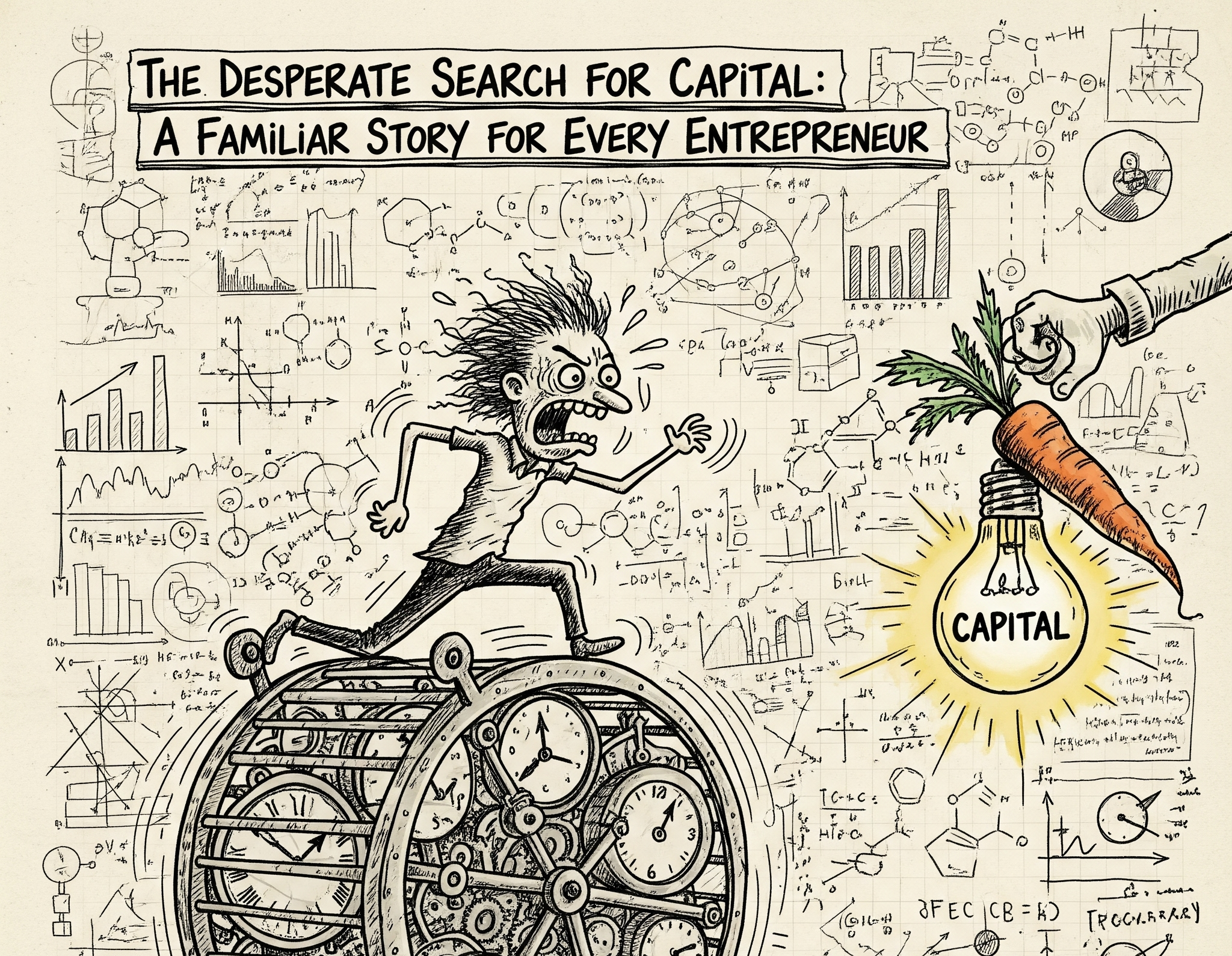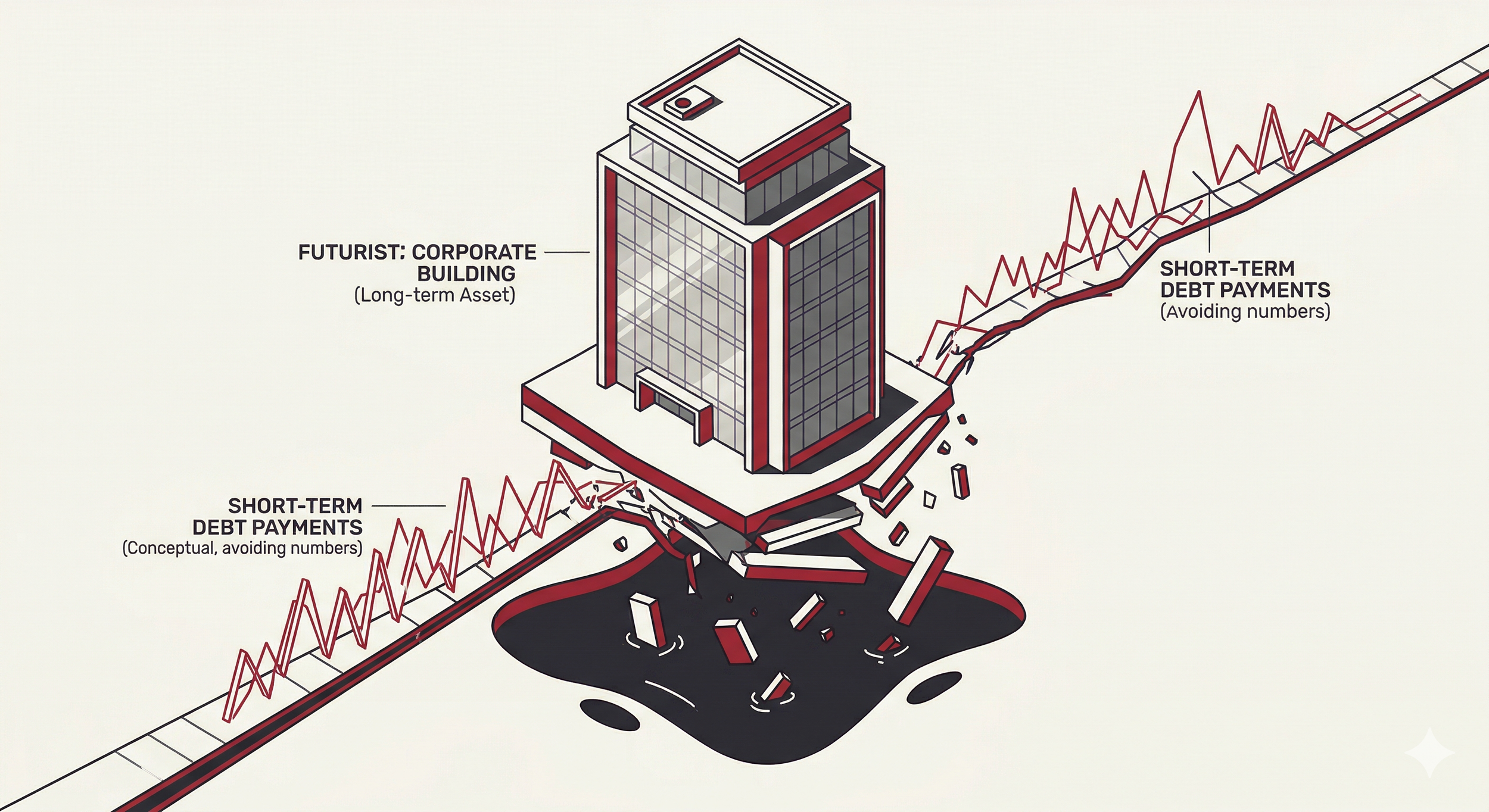
Many business owners wake up one day to a terrifying realization: the cash is gone, the accounts are drained, and the daily or weekly business debt service payments are suffocating the life out of what was once a thriving enterprise. It is a lonely and isolating place to be. You look at your gross margins, you see that your customers still love your product or service, your staff is working hard, yet the bank account balance continues to trend downward at an alarming velocity.
The natural, panic-induced assumption is that the business itself is failing. However, for a massive segment of the small and medium-sized business economy, this is a fundamentally flawed diagnosis. You are not operating a failing business, rather you are operating a business with a failing capital structure.
The distinction between a failing business and a failing capital structure is the most critical realization an entrepreneur can make when facing insolvency. These businesses all share the exact same core problem: at some point in the recent past, they hit a temporary revenue snag. Perhaps it was a seasonal dip, a delayed major contract, a sudden macroeconomic shift or a supply chain disruption.
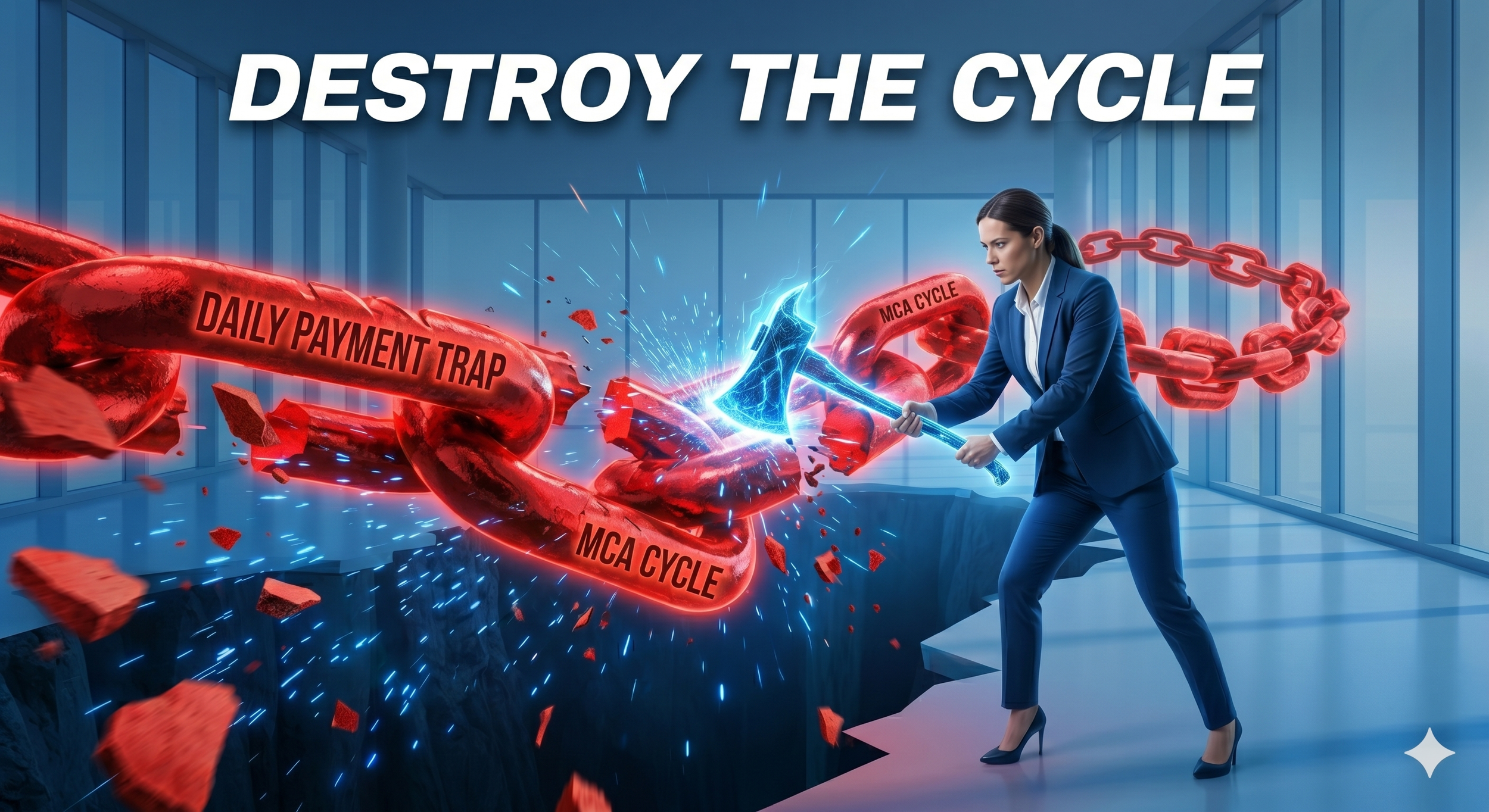
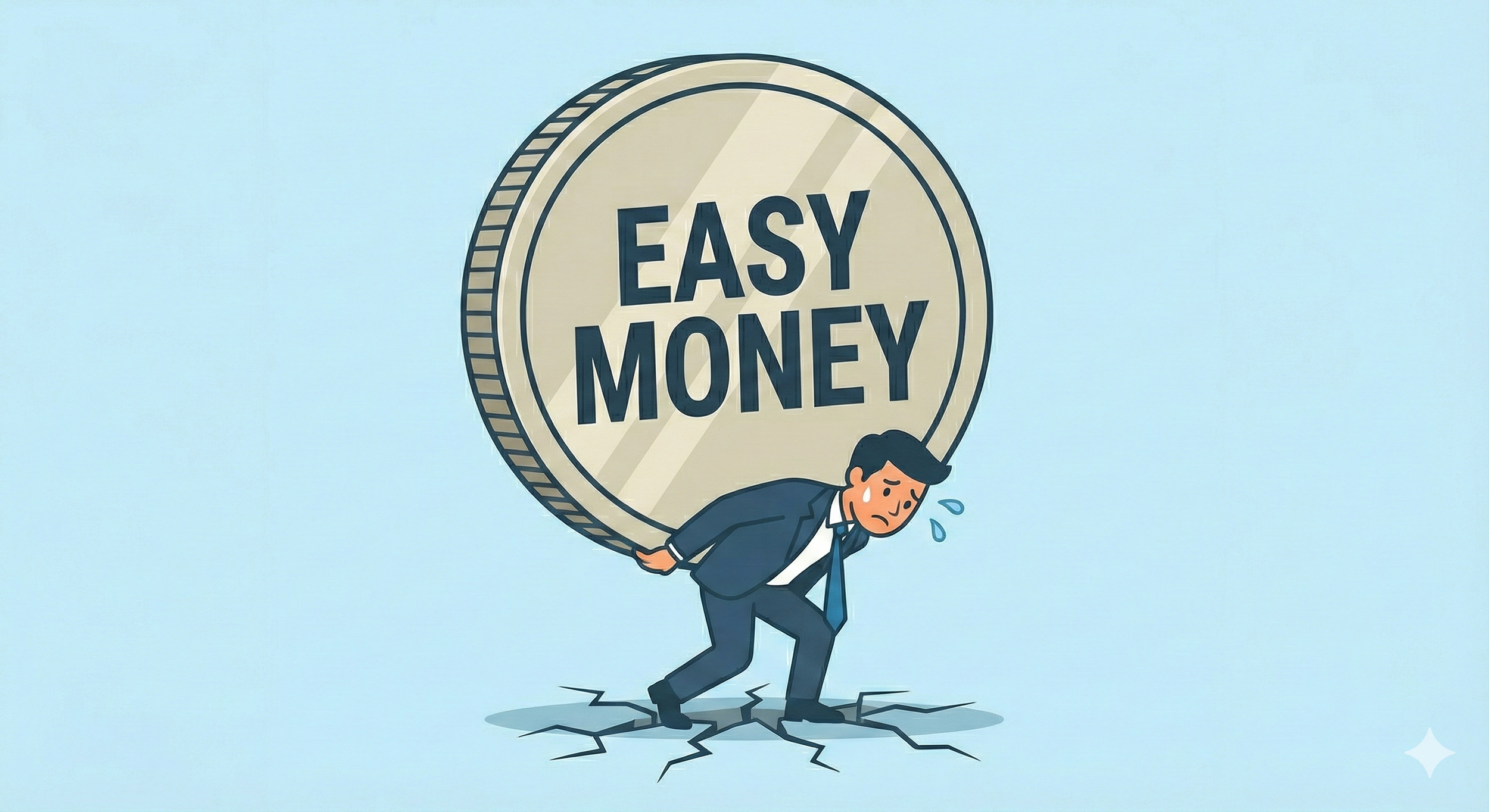
Cash got tight. The traditional banking system, known for its slow underwriting and rigid criteria, was too slow to help. The only "help" available in that moment of desperation was a fast, easy, but ultimately predatory business financing instruments. This capital, often disguised as merchant cash advances or high-interest short-term loans, was injected to solve a temporary problem, but aggressive and unsustainable repayment terms turned a temporary cash flow hiccup into a permanent, existential crisis.
The path forward requires a radical shift in strategy and mindset. You cannot borrow your way out of a predatory business debt cycle with more short-term business debt. Instead, you must embark on a comprehensive balance sheet restructuring. These businesses need to rapidly boost their liquidity back to a healthy threshold of 10% to 15% percent of annual revenue. They must forcefully re-align business cash flow and business debt service payments to break the cycle of frequent remittances and return the operation to a cash flow positive state.
The ultimate goal is to completely reconstitute the business financials to more accurately represent the performance of the business. By doing so, you can elevate your enterprise out of the predatory alternative lending space and prepare for serious, productive discussions with institutional solutions. Entities such as private credit funds and Small Business Investment Companies (SBICs) offer the long-term business financing you actually need, providing sustainable amortizations of two, three, and five years, and even ten years for working capital (pending approval) and fifteen or twenty-five-year amortizations when leveraging commercial real estate assets.
The Difference Between a Failing Business and a Failing Capital Structure
The first and most vital step in saving your enterprise is diagnosing the disease correctly. Too many business owners confuse operational failure with financial structuring failure. A failing business is one where the core economic engine is fundamentally broken. In a failing business, the product or service no longer has market fit, customer acquisition costs wildly exceed customer lifetime value, gross margins are negative before overhead is even applied, and revenue is declining because nobody wants to buy what the company is selling. No amount of time or perfectly structured debt can save a truly failing business; it requires a complete operational pivot or liquidation.
A failing capital structure, on the other hand, occurs when the underlying economic engine of the business is still viable, but the way the business is financed is bleeding it dry. In this scenario, your gross margins are healthy, demand remains steady or growing, and your product or service is highly valued by your customer base. The problem lies entirely beneath the gross profit line, specifically in the business debt service or “Financing” section of your cash flow statement. You might be generating a million dollars a month in revenue with a healthy 40% percent gross margin, but if your business loan remittances total a significant of your available operating capital, you will spiral into eventual default.
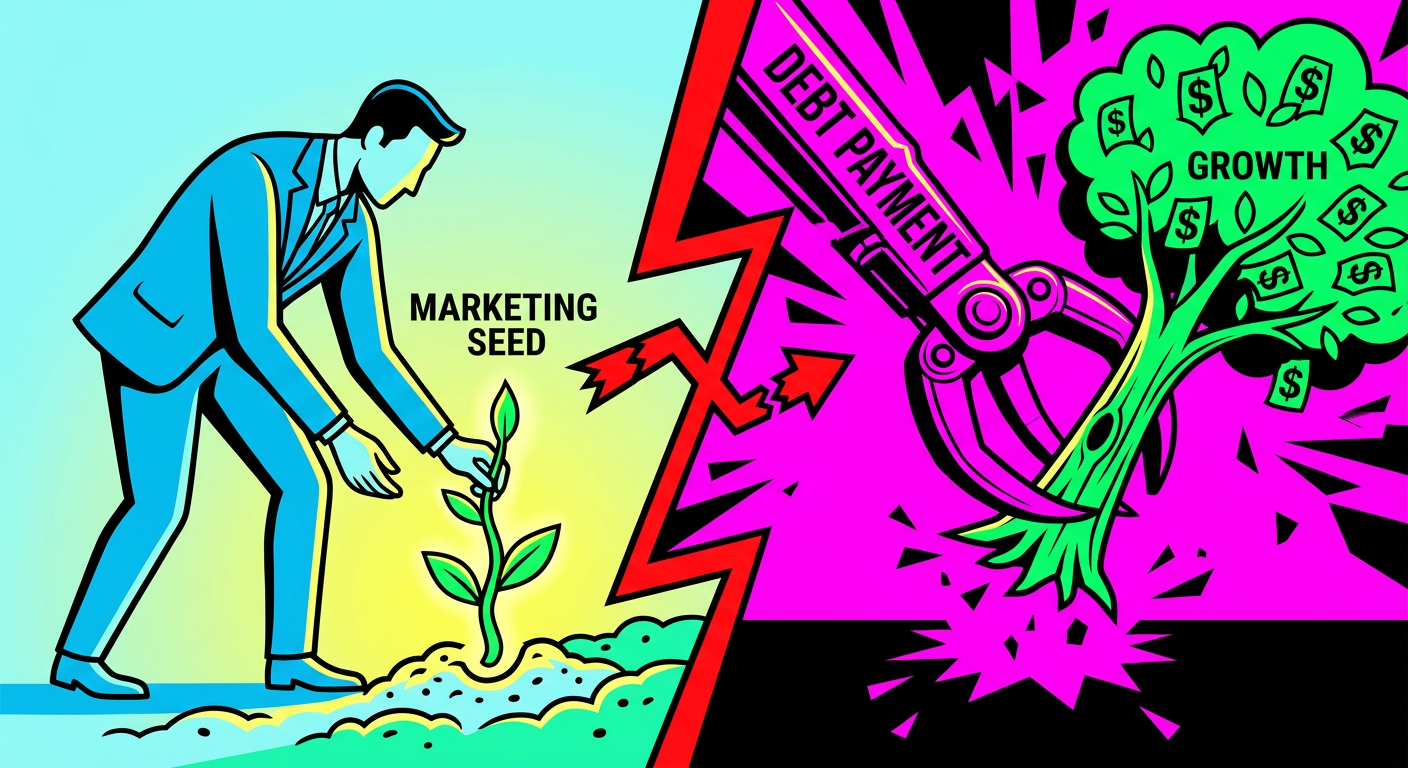
Understanding this distinction is psychologically empowering. It removes the shame of failure and replaces it with the clarity of a structural problem that can be engineered away. When you recognize that your core business is sound, you can communicate with creditors, stakeholders, and employees with a renewed sense of confidence. You are not asking them to throw good money or effort after a dying concept; you are asking them to support a balance sheet restructuring effort that will unlock the trapped value of a fundamentally good business. This paradigm shift is the foundation of your recovery. You must stop trying to fix the product or push your sales team to unrealistic quotas to outrun the business debt payments. You cannot out-sell a predatory business financing amortization schedule. Instead, you must focus entirely on fixing the balance sheet and the business debt instruments that are strangling your otherwise healthy operation.
The Anatomy of the Predatory Capital Trap
To escape the trap, you must thoroughly understand how it was set and how it operates. The predatory business capital trap almost always begins with a temporary revenue snag. Small and medium-sized businesses are notoriously susceptible to short-term cash flow gaps. A major client takes 90-days to pay instead of 30. A critical piece of equipment breaks down and requires immediate replacement. A global event disrupts the supply chain, leaving you with inventory you cannot sell for two months. Traditional banks, constrained by strict regulations and heavily reliant on historical financial data, view these temporary snags as red flags. They decline your request for a temporary line of credit increase or a short-term bridge loan.
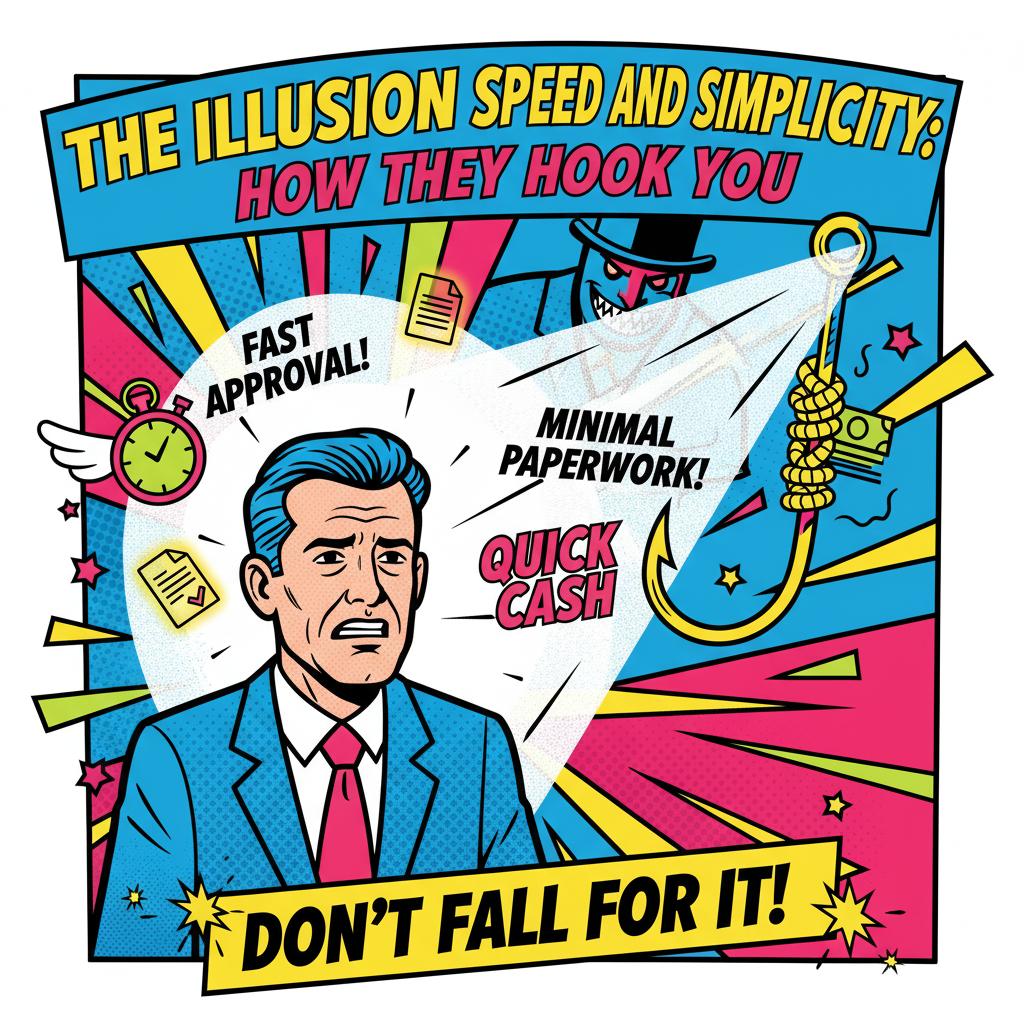
Enter the alternative lending market, specifically the providers of merchant cash advances (MCAs) and extremely high-interest, short-term UCC-secured loans. These dangerous business financing instruments are marketed as fast, flexible and accessible. The underwriting process takes hours, not weeks or months. The funds are in your account the next day. However, this speed comes at an astronomical cost. Because these lenders are taking on significant risk by ignoring traditional underwriting standards, they structure their repayments to extract cash from your business as quickly as humanly possible. They do not charge traditional interest rates; they use "factor rates," which obscure the true Annual Percentage Rate (APR). An advance of $100,000 with a factor rate of 1.40 requires you to pay back $140,000 in about 9-months. (40% cost of capital in a 9-month period, less than 12-months!)
Crucially, the repayment is not structured over years, but over months sometimes as few as four to six months. To collect this, the lender sets up frequent automatic clearing house (ACH) withdrawals from your operating account. Suddenly, thousands of dollars a day are being automatically siphoned before you can even pay payroll, buy inventory, or keep the lights on. The temporary cash flow snag is solved, but it is immediately replaced by a business-debt-induced structural cash flow deficit. When the automated payments become too much, the business owner often takes out a second, third, or fourth advance to cover the payments of the first. This is called "stacking," and it is the financial equivalent of a death spiral. The temporary problem has officially metastasized into a permanent, systemic crisis that can destroy the foundation of your business in months, not years.
The Imperative of Rebuilding Liquidity Reserves
When your business is caught in a crushing cycle of daily or weekly business debt remittances, every single dollar of revenue feels like it belongs to someone else. The psychological and operational toll of operating with zero cash buffer is immense. You cannot negotiate with vendors effectively, you cannot seize unexpected market opportunities, and the slightest delay in a customer payment threatens to trigger a cascade of bounced checks and failed ACH pulls. Therefore, the absolute most urgent operational priority during a financial restructuring is to artificially and aggressively boost your liquidity.
The target you must aim for is establishing a cash reserve equal to 10% to 15% percent of your annualized gross revenue. If you generate $10M a year in revenue, you need $1M to $1.5M in accessible cash, current assets or undrawn, stable credit lines. This is not a luxury; it is the minimum threshold required to operate safely, absorb the natural volatility of business cycles and most importantly, give you the breathing room needed to negotiate with aggressive short-term creditors. Achieving this level of liquidity while currently bleeding cash requires drastic, immediate, and sometimes painful operational measures.
Boosting liquidity starts with looking internally before seeking external solutions. You must ruthlessly liquidate underperforming assets. Obsolete inventory, unused equipment, or non-core business units must be sold for cash, even if it means taking a book loss. Cash today is worth infinitely more than a hypothetical book value tomorrow. Secondly, you must hyper-accelerate your accounts receivable. Offer significant early payment discounts to your largest and most reliable clients to pull cash forward. Put aggressive collection agencies on accounts that are over sixty days past due. Simultaneously, you must stretch your accounts payable as far as legally and ethically possible, prioritizing critical vendors who keep your doors open while negotiating extended payment terms with non-critical suppliers. This combination of liquidating assets, pulling receivables forward and pushing payables back is the only way to work towards building that 10% to 15% percent liquidity buffer without taking on more toxic business debt.
Halting the Cash Drain and Re-Aligning Business Debt Service
Building a liquidity buffer is futile if the bottom of the bucket still has a gaping hole caused by predatory business debt service. Once you have managed to scrape together a marginal amount of cash through internal operational efficiencies, you must immediately address the structural outflow. You cannot survive if 25% or 40% of your gross receipts are automatically swept away by alternative lenders. Re-aligning business cash flow and business debt service payments is a high-stakes negotiation process that requires a strong stomach, absolute transparency about your financial reality, and often, the assistance of specialized restructuring advisors.
The goal here is simple: you must return to a state where the business is cash flow positive on a monthly operating basis, ignoring the current toxic debt structure
If the business cannot be cash flow positive (from operations) before debt service, you are back to having a failing business, not just a failing capital structure. To achieve this re-alignment, you must immediately open lines of communication with your short-term lenders. You must present them with the stark reality: the current daily or weekly payment schedule is mathematically impossible to sustain. If they continue to pull the funds, the business will collapse into insolvency, and they, as secured but junior creditors, will likely recover pennies on the dollar, if anything at all.
You must negotiate a forbearance agreement or a temporary restructuring of the existing payment terms. This often involves converting daily or weekly ACH payments into manageable monthly payments, extending the term of the loan from three months to twelve or eighteen months, or agreeing to a temporary pause on principal payments while only paying interest. Lenders will resist this fiercely, but their alternative is a total loss.
By presenting a well-documented financial model showing that the core business is profitable and that their recovery is maximized by giving you breathing room, you force them to the negotiating table. This re-alignment of business debt service is the tourniquet that stops the bleeding; it does not cure the patient, but it keeps the business alive long enough to implement a permanent solution.
Operational Adjustments to Ensure Positive Cash Flow
Stopping the predatory business debt drain is only half of the cash flow equation. To truly stabilize the business and prepare for institutional refinancing, you must aggressively optimize your core operations to guarantee a return to a sustained, positive cash flow state.
This goes beyond the emergency measures used to build your initial liquidity buffer. This requires a deep, uncompromising audit of your entire business model, your pricing strategy, your cost of goods sold and your operating expenses. Every single line item on your profit and loss statement must justify its existence.
Begin by analyzing your gross margins with surgical precision. Many businesses facing capital structure crises discover that a significant portion of their revenue comes from low-margin or even negative-margin clients.
You must have the courage to fire your lower-tier customers. Customers who demand excessive customization, require constant customer service, pay late and drag down your overall profitability must be let go or forced into higher pricing tiers. Simultaneously, you must implement strategic price increases across the board. In an inflationary environment, holding prices steady while costs rise is a recipe for margin compression and cash flow destruction. Communicate the value you provide, justify the increases and accept that losing a small percentage of price-sensitive customers is a necessary trade-off for overall margin health.
Next, you must attack your operating expenses. This is often the most painful part of the process, as it may involve headcount reductions, closing underperforming physical locations, or severely cutting marketing and travel budgets. However, you must operate with a lean, highly efficient team. Implement strict spend controls and require executive approval for any non-essential purchase. The objective is to lower your break-even point so drastically that even a mild economic downturn or a slight dip in sales will not plunge the business back into a negative cash flow state. By expanding margins and slashing overhead, you prove to yourself and future lenders that the underlying engine of the business is a highly efficient cash-generating machine.
The Necessity of Reconstituting Business Financials
Once the bleeding is stopped and the business is operating with a positive cash flow, you must pivot your attention to your financial reporting. Predatory “alternative” business lenders do not care about Generally Accepted Accounting Principles (GAAP). They only care about your bank statements, cash flow and your daily credit card batch receipts. Because of this, many small to medium-sized businesses trapped in the alternative lending cycle allow their formal financial bookkeeping to deteriorate. They operate on cash-basis accounting, fail to properly reconcile accounts and treat their general accounting ledger as an afterthought.
To escape this tier of lending and have serious, productive discussions with institutional capital providers, you must completely reconstitute your business financials. Institutional lenders, such as private credit funds and SBICs, speak the language of GAAP financials, accrual accounting, EBITDA (Earnings Before Interest, Taxes, Depreciation, and Amortization) and Quality of Earnings (QoE) reports. If you approach these institutions with messy, improperly-structured cash-basis QuickBooks reports and commingled personal and business expenses, they will immediately reject your application, regardless of how strong your underlying business model might be.
Reconstituting your financials means transitioning from cash-basis to accrual-basis accounting so that revenues and expenses are matched in the period they occur, providing a true picture of operational profitability. You must hire a reputable, independent experienced accounting firm to perform, at a minimum, a reviewed financial statement, and ideally, GAAP-adjusted financials. You must clean up your balance sheet, ensuring that all assets are properly valued and all liabilities, including the exact terms and balances of your toxic debt, are accurately recorded. This process is time-consuming and can be a bit expensive, but it is an absolute prerequisite. Institutional capital demands institutional-grade reporting. Your financial statements are the resume of your business; they must be flawless, transparent and built on a foundation of complete accounting integrity.
Preparing the Narrative for Institutional Lenders
With clean, reconstituted business financials in hand, you must now prepare the qualitative aspect of your refinancing campaign. Institutional lenders do not just underwrite numbers; they underwrite management teams and business narratives. They need to understand exactly how a fundamentally good business ended up suffocating under a pile of short-term debt. If you cannot articulate this journey clearly and honestly, they will assume the worst: that the management team is incompetent or that the core business is flawed.
You must craft a compelling, transparent, and data-backed narrative. Start by clearly explaining the original "revenue snag." Was it a specific supply chain failure during a global crisis? Was it a delay in a massive, verifiable government contract? Document the exact nature of the temporary problem that necessitated the initial alternative loan. Next, explain the mechanics of the trap. Show them how the current payment structure is crippling your working capital and forcing the business into a defensive posture. Most importantly, do not shy away from taking responsibility. Acknowledge that taking on merchant cash advances “MCAs” was a mistake born of desperation, but frame it as a hard-learned lesson in capital structuring rather than a fundamental failure of business leadership.
Finally, your narrative must transition from the past to the future. You must present the rigorous operational and financial changes you have implemented since hitting rock bottom. Show them the liquidity buffer you have built through internal discipline. Show them the expanded gross margins and the slashed overhead.
Present a detailed financial forecast that demonstrates exactly how their long-term, properly amortized capital will be used to permanently extinguish the toxic debt, freeing up massive amounts of monthly cash flow that will be redirected into growth, hiring, and building equity. You must convince the institutional lender that they are not rescuing a sinking ship, but rather providing the rocket fuel for a proven, profitable engine that was merely temporarily starved of oxygen.
Navigating the World of Private Credit Solutions
When your business financials are reconstituted and your narrative is perfected, you are ready to engage with the institutional markets. For many small and medium-sized businesses, the traditional commercial bank remains out of reach due to lingering balance sheet damage from the toxic debt era. This is where the private credit market becomes your most valuable resource.
Private credit encompasses a vast ecosystem of non-bank direct lenders, business debt investment funds and specialized finance companies that focus on lending to middle-market businesses that require more flexible, bespoke solutions than traditional banks can offer. Private credit investors can take more risks than banks and are more flexible.
Unlike the predatory alternative business lenders, private credit facilities are structured for sustainability. They understand that a business needs working capital to survive and grow. Therefore, they offer term loans and revolving credit facilities with realistic amortization schedules, typically ranging from 2 to 5-years.
Moving from a daily repayment schedule spanning 9-months to a monthly repayment schedule spanning years is a transformational event for a business's cash flow. It instantly dramatically reduces the total monthly business debt service burden, almost instantly flipping a cash-strapped operation into a cash-rich enterprise.
However, accessing private credit requires navigating a highly sophisticated underwriting process. These lenders will conduct deep due diligence. They will scrutinize your customer concentration, analyze your historical churn rates and model your cash flows against various stress-test scenarios. Furthermore, private credit facilities come with strict financial covenants. These are legally binding agreements that require you to maintain certain financial ratios, such as a maximum debt-to-EBITDA ratio or a minimum fixed-charge coverage ratio. If you breach these covenants and do not cure them over time, the lender can place you into default. Therefore, while private credit offers the structural relief you desperately need, it demands a level of ongoing financial discipline and operational excellence that leaves no room for the chaotic management styles that may have contributed to the original crisis.
Exploring the Power of Small Business Investment Companies
Alongside private credit funds, Small Business Investment Companies (SBICs) represent one of the most powerful and often overlooked institutional solutions for businesses seeking to restructure their capital. SBICs are privately owned and managed investment funds that are licensed and regulated by the Small Business Administration (SBA). They use their own capital, augmented with funds borrowed with an SBA guarantee, to make equity and debt investments into qualifying small and medium-sized US businesses. Because of the SBA backing, SBICs can often take on slightly more risk or offer more flexible terms than traditional senior lenders or even some conservative private credit funds.
SBICs are particularly well-suited for businesses executing a turnaround from a failing capital structure because they often provide subordinated business financing or mezzanine (junior or subordinated) financing. This type of capital sits below senior secured debt but above equity in the capital stack. SBIC loans typically feature longer terms, often 5 to 7-years and may include interest-only periods or structures where a portion of the interest is accrued and paid at the end of the loan term (Payment-In-Kind or PIK interest). This structure is incredibly powerful for maximizing immediate cash flow relief, giving the business maximum runway to recover, stabilize, and grow before heavy principal repayments begin.
Partnering with an SBIC is not merely a financial transaction; it is a strategic partnership. Because they often take warrants or small equity kickers in exchange for their flexible debt terms, SBICs are deeply invested in your long-term success. They bring significant institutional knowledge, board-level guidance and extensive networks to the table.
When approaching an SBIC, you must pitch them not just as a lender, but as an active partner in your company's resurgence. You must demonstrate that their capital will fundamentally transform the trajectory of the business, allowing you to capture market share, launch new products, or make strategic acquisitions that were impossible while suffocating under predatory daily remittances.