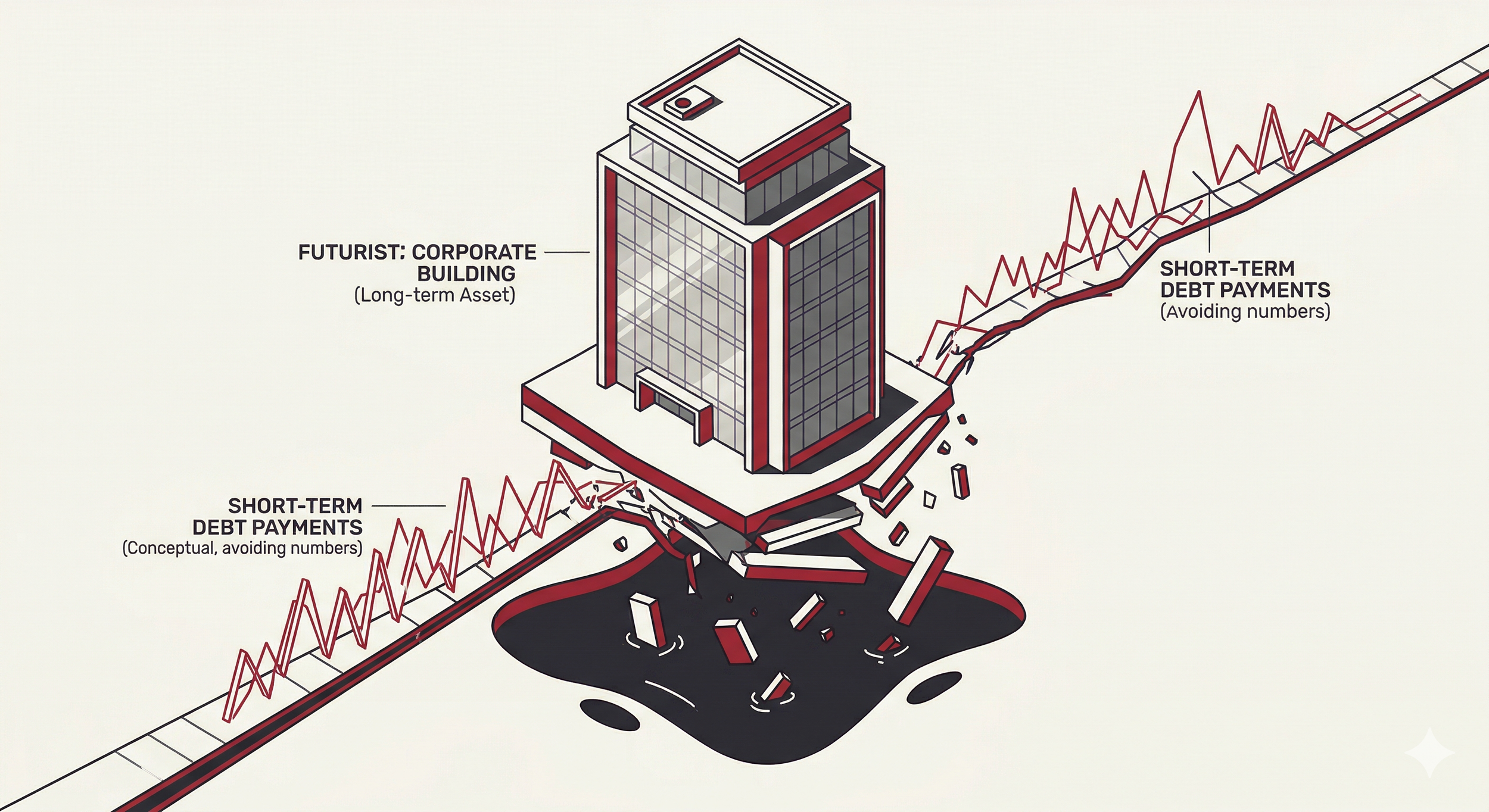
It’s a story we see every day: a business, forged through years of dedication and hard work, stands as a pillar of its community. It has survived economic downturns, celebrated a decade or more in operation, and generates what should be a healthy revenue stream. Yet, behind the scenes, the owner is fighting a silent, relentless battle. Cash flow is a constant struggle, growth is stalled, and a sense of being trapped is setting in. This isn't the story of a failing business; it's the story of a successful business caught in a dysfunctional financial structure, often unknowingly pulled into a cycle of high-cost, high-payment business debt, loans and leases that slowly strangles its future growth potential.
This article is for you, the seasoned business owner who recognizes this struggle. You’ve poured your life into your company, and you have the revenue to prove it. Yet, you find yourself overwhelmed by business debt obligations, hounded by aggressive lenders and unsure of the next step. You may have even taken out a short-term loan or financing like a Merchant Cash Advance (MCA) out of necessity, only to find yourself in a deeper hole.
We want you to know that not only is your situation common, but it is also solvable. Your years of experience, established operations, infrastructure and even your personal financial discipline are powerful assets waiting to be leveraged.
The path forward is not about finding another quick fix or a slightly better short-term and high-interest loan. It’s about a strategic reset.
It requires understanding the mechanics of the business debt amortization trap you're in, recognizing the hidden value within your business, and engaging with a partner who can provide a comprehensive strategy, not just a product. This guide will walk you through the steps to reclaim your business financial freedom, restructure and potentially refinance your obligations for sustainable growth and turn your established business back into the vehicle for success it was before business debt leverage became an issue.
The Profile of a Hidden Struggle
Does this sound like you? You’ve been at the helm of your company for a long time. You are not a novice; you are a survivor, an expert in your field who has navigated the complexities of the market for years. Your business generates substantial revenue annually. On paper, you are a success story. Yet, the reality of your day-to-day operations feels more like a struggle for survival than a story of triumph. This is the profile of a vast number of business owners today who are privately grappling with immense financial pressure.
These are not failing startups. They are mature, established enterprises. They have weathered storms and have a proven business model. The core issue is rarely a lack of customers or revenue.
Instead, the problem lies in a financial structure that has become misaligned with the business's health. Years of making payroll, investing in equipment and managing uneven cash flow may have led to taking on various forms of business debt financing. What started as a necessary tool for survival or growth has slowly morphed into an anchor, dragging the business down.
The feeling is one of running on a treadmill: revenue comes in, but it immediately flows out to service business debt payments, leaving little to no breathing room sometimes for payroll, investment or profit. This hidden struggle is isolating, but it is critical to understand that you are part of a large cohort of successful entrepreneurs facing the exact same challenge. Recognizing that your situation is a shared archetype is the first step toward understanding that there are well-trodden paths to a solution.
Over 7.0% of US Business owners (businesses with 500 or less employees = small business) have used Merchant Cash Advances (MCAs) and short-term loan and “line of credit” products with APR in excess of 40% and up to sometimes up to 60%+
The High-Revenue, Low-Cash-Flow Paradox
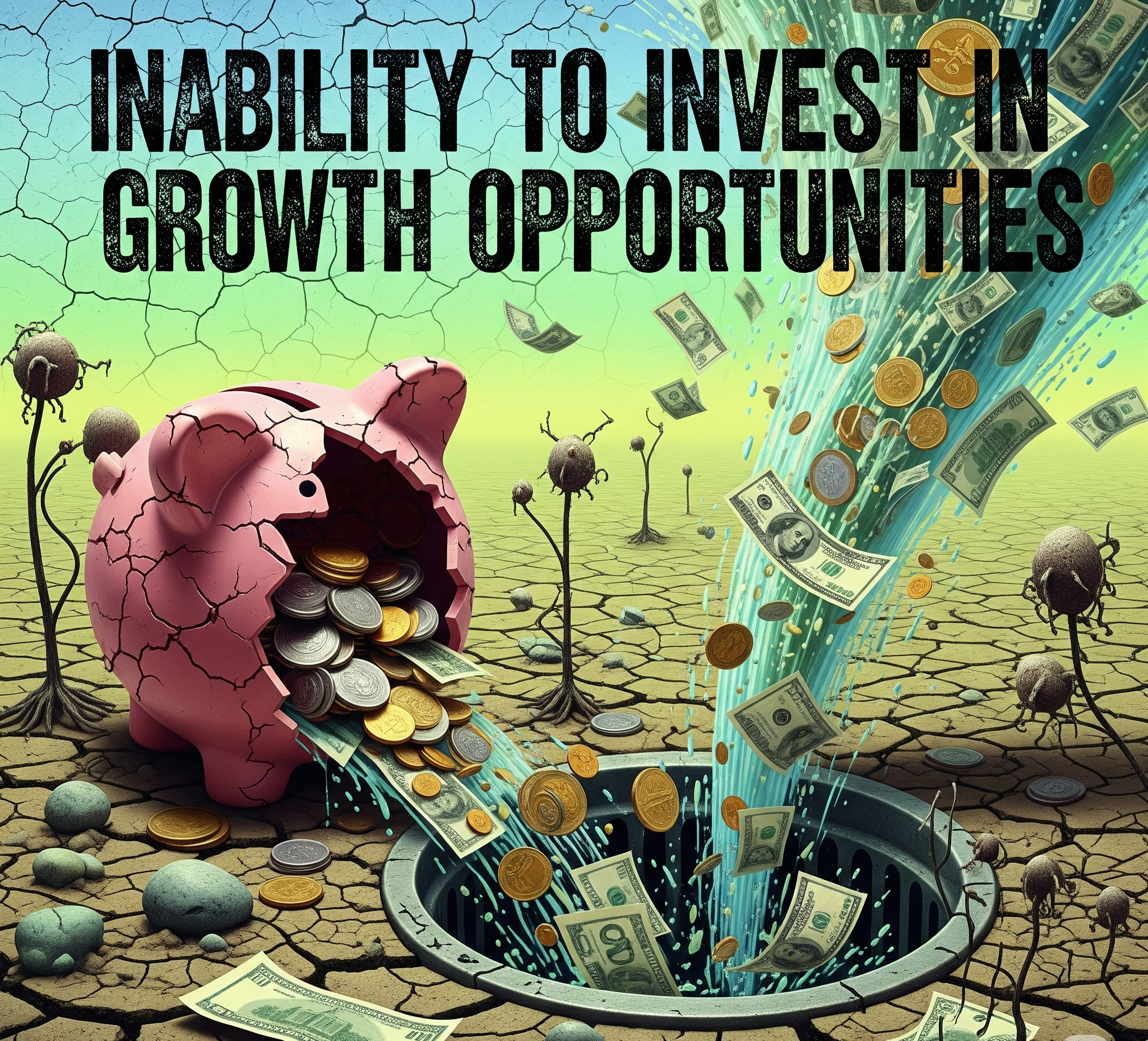
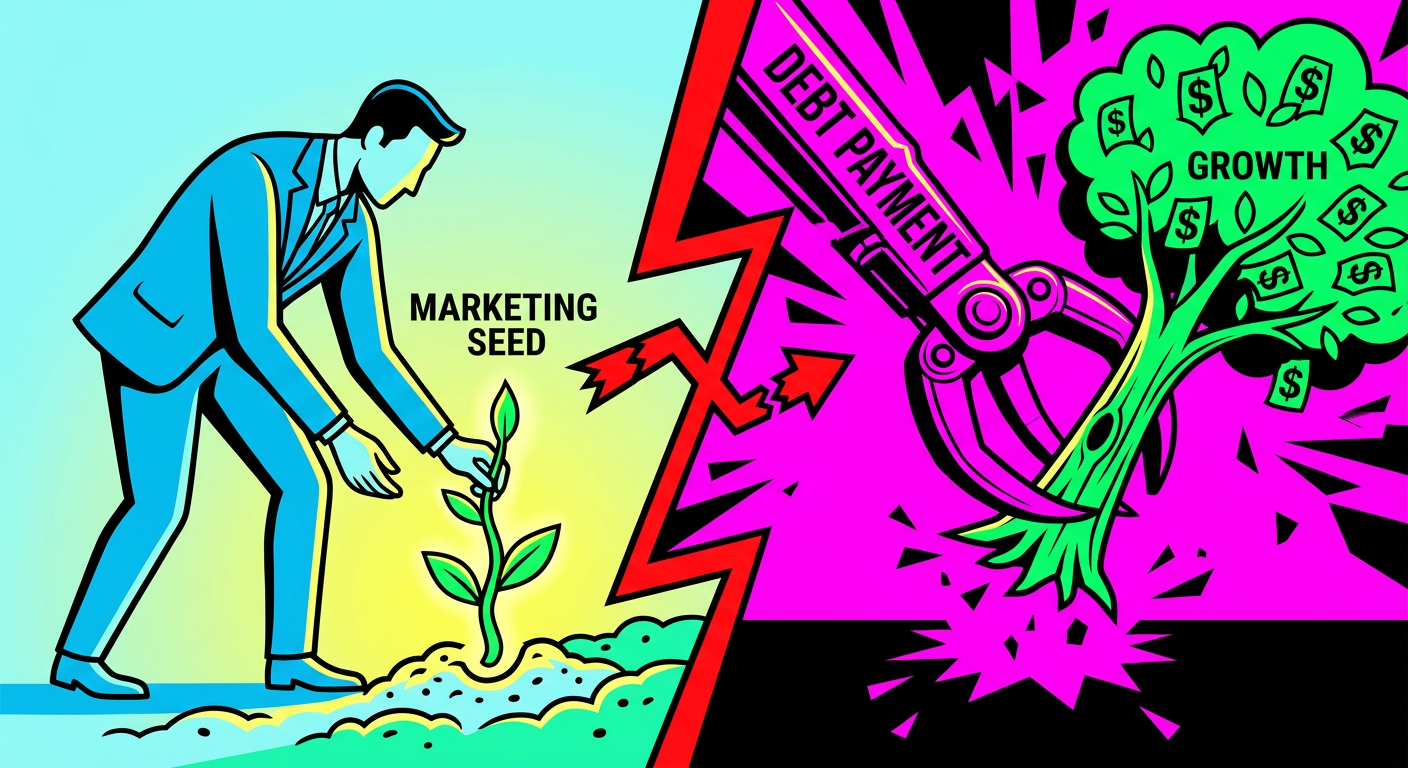
One of the most frustrating positions for a business owner is to look at a profit and loss statement showing significant gross revenue, yet have a bank account that is perpetually empty. This is the high-revenue, low-cash-flow paradox, and it’s the defining characteristic of a business caught in a business debt payment trap. Revenue is not the same as cash flow. Revenue is the total amount of money your business earns from its sales and services. Cash flow, on the other hand, is the net amount of cash moving into and out of your business. When incorrectly amortized business debt payments are disproportionately high, they can consume your revenue before it ever has a chance to become working capital, defeating its purpose (the capital) as growth capital.
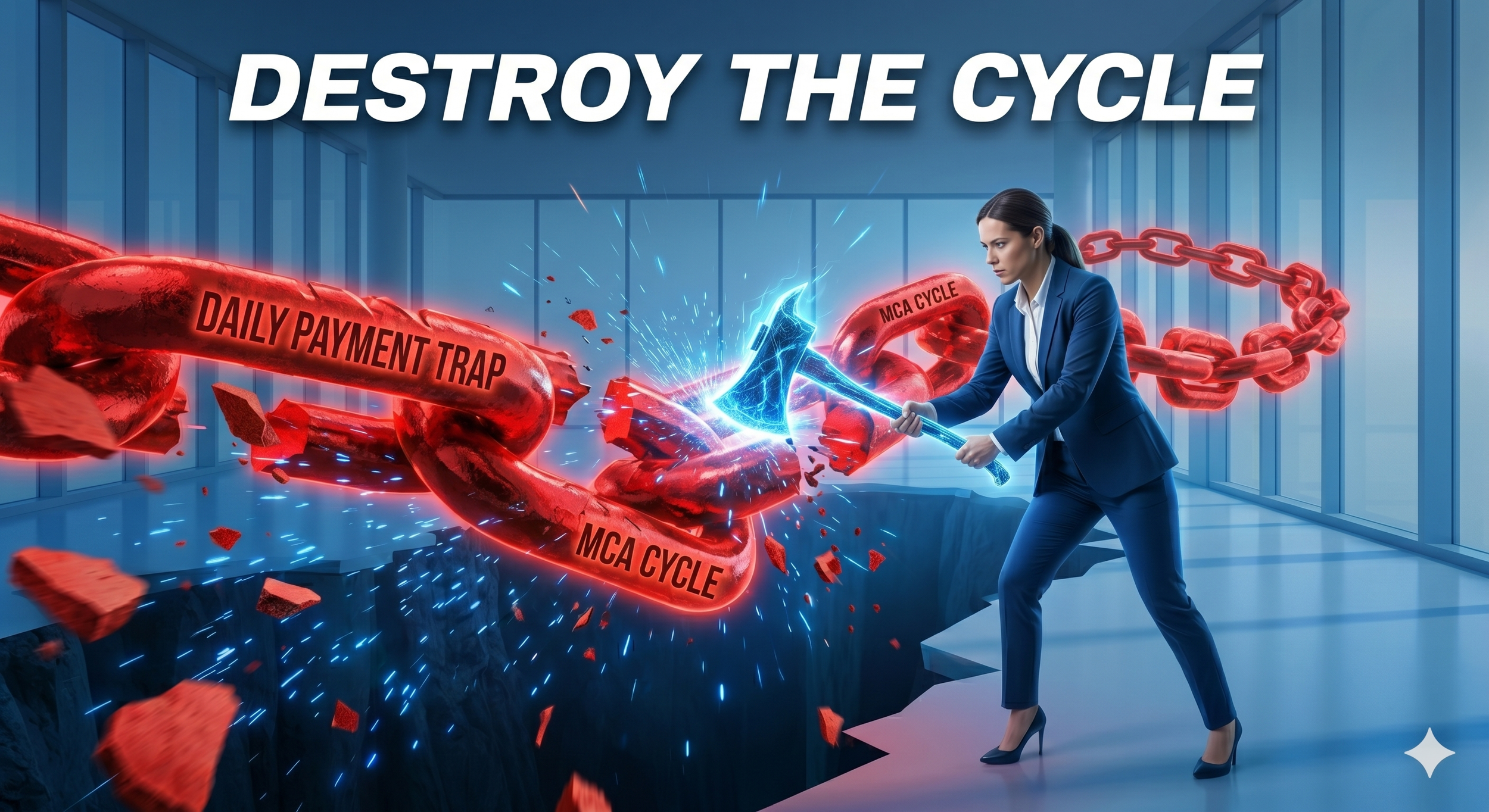
The primary culprit behind this paradox is often the reliance on high-cost, short-term financing, most notably Merchant Cash Advances (MCAs). These products are structured with daily or weekly payments that are automatically debited from your bank account. Because the payment schedule is so aggressive and the implied interest rates are so high, a huge portion of your weekly sales is immediately siphoned off. For example, a business generating $100,000 in monthly revenue might find that $20,000, $30,000, or even more is instantly withdrawn to satisfy MCA obligations. This leaves you operating on a fraction of your actual earnings. You’re forced to "stack" another advance or short-term loan product (less than 18-months with weekly payments) just to make payroll, creating a vicious cycle where each new loan “slowly” digs a deeper hole.
This is how a profitable, high-revenue business can be cash-poor, constantly chasing its own tail and unable to fund growth, hire new talent, or even build a small cash reserve for emergencies.
What is a UCC Lien and Why Does it Matter?
If you have ever taken out a business term loan or line of credit loan, an equipment lease or a Merchant Cash Advance, chances are a UCC-1 financing statement has been filed against your business. Many business owners are either unaware of these filings or don't fully grasp their significance. A UCC (Uniform Commercial Code) lien is a legal notice that a lender files with the secretary of state to publicly declare that they have a security interest in some or all of your business assets. These assets could be your accounts receivable, inventory, equipment or general business assets. It is a standard, legitimate part of commercial finance that protects the lender’s investment by giving them a right to seize those assets if you default on the loan.
However, the critical aspect of a UCC filing that most owners overlook is that it is a public record. And in today's data-driven world, this public filing acts as a giant flare, signaling to the entire lending industry that you are a business that has sought and received financing. This is not inherently negative, but it has created a feeding frenzy.
Data companies scrape these public records and sell them as leads to thousands of brokers and lenders across the country. This is why, shortly after taking out a loan or MCA, your phone starts ringing off the hook and your email inbox is flooded with aggressive, often misleading offers for more money. The UCC filing becomes a beacon for predatory lenders who see you not as a business to be helped, but as a lead to be monetized.
They know you have a need for capital, and they will compete to be the next one to give it to you, often on progressively worse terms. Understanding that this public filing is what triggers the deluge of offers is crucial to navigating the noise and finding a truly strategic financial partner.
The Merchant Cash Advance (MCA) and Short-term Business Debt Trap
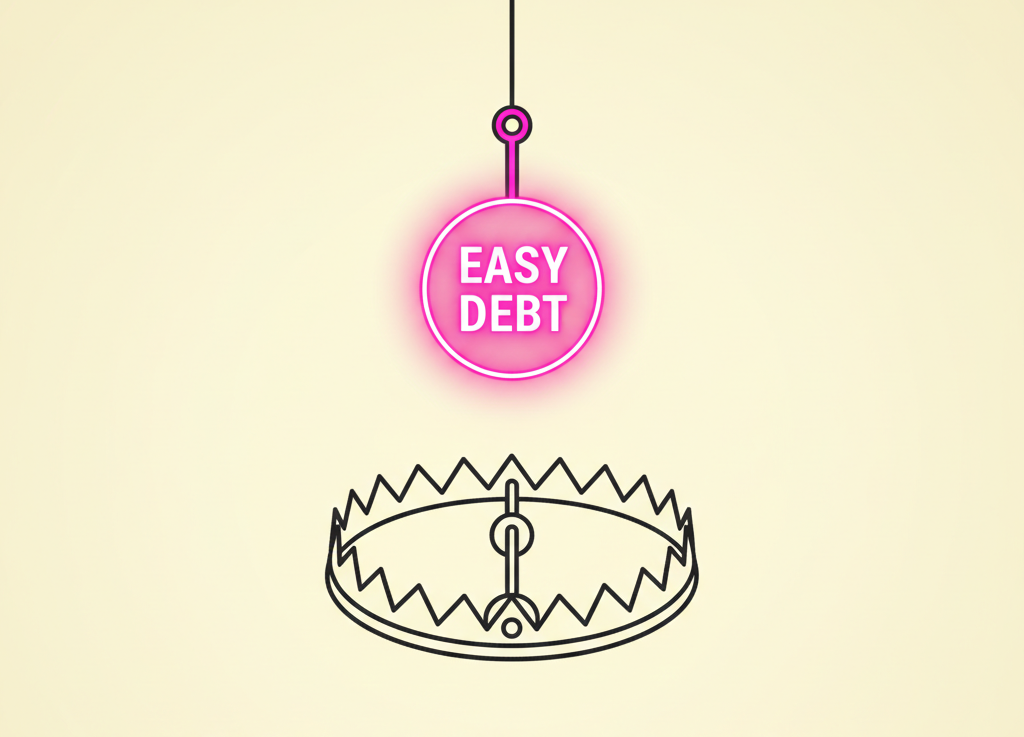
The Merchant Cash Advance was initially designed as a niche product for businesses with heavy credit card sales, like restaurants and retail stores, to get quick access to capital. Today, it has metastasized across nearly every industry, presented as a flexible and fast "business loan." However, an MCA is not a loan; it is a sale of your future receivables at a discount. This legal distinction is what allows MCA providers to evade traditional lending regulations, usury laws and interest rate caps, leading to the creation of the "MCA trap."
The trap works like this: You are offered a lump sum of cash, for instance, $50,000. In return, you agree to pay back $70,000. This $20,000 difference is the "factor rate" (in this case, 1.4x), which is a fixed cost. You then repay this $70,000 through automatic daily or weekly debits from your business bank account over a short period, typically 6, 9 to 12-months.
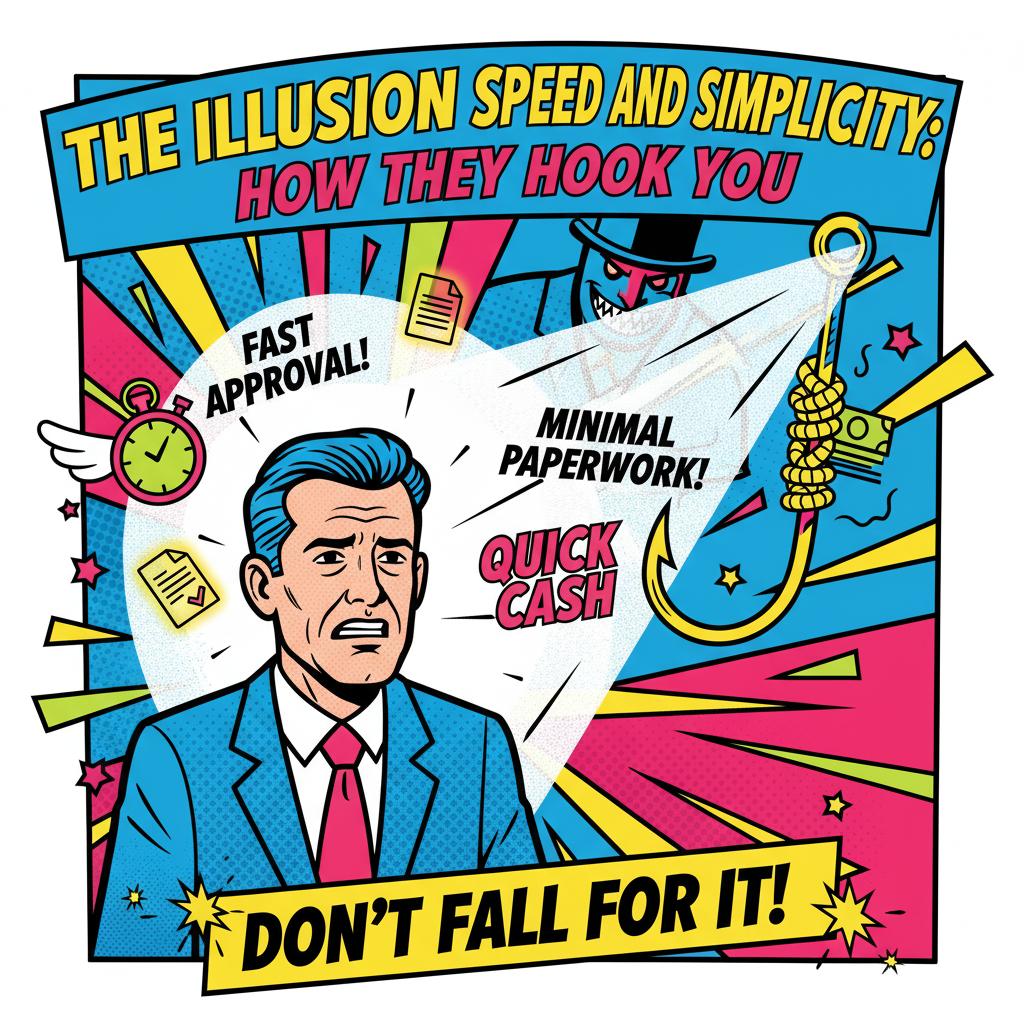
The appeal is speed and convenience; the money can be in your account in 24-hours with minimal paperwork.
The danger lies in the devastating impact on your cash flow.
A huge weekly payment starves your business of the working capital it needs to operate. When cash gets tight, the only apparent solution is to take another MCA or a short-term loan that is essentially the same thing except not as aggressive.. This is called "stacking," and it is the beginning of the end for many businesses.
You soon find yourself with multiple weekly payments coming out, each with its own exorbitant cost, creating a financial black hole from which escape seems impossible. The very solution that promised to save you has now become your biggest liability.
Your Personal Credit is Good, But Your Business is Drowning
One of the most common and surprising findings from our analysis is the number of business owners who are caught in a severe business debt cycle while simultaneously maintaining a good or even excellent personal credit score (700+ FICO model 8.0® Score).
From the outside, this seems like a contradiction. How can the business be struggling so mightily while the owner’s personal finances appear to be in order? This situation often arises because the business owner is a financially responsible individual who has been forced to make difficult choices. They may be using personal funds to prop up the business, prioritizing business debt payments over their own salary, or simply running a fundamentally sound business that has been ensnared by the cash flow trap of high-cost business debt.
Far from being a contradiction, a strong personal credit score is your single most powerful asset in this situation. It is a testament to your reliability and financial discipline. While the business's balance sheet may be underwater due to exploitive business debt terms, your personal credit history tells a different story. It tells potential lenders that you are a good risk. This is the key that can unlock the door to legitimate, lower-cost financing solutions like SBA loans or private credit term loans and credit facilities.
Predatory short-term lenders often don't place as much emphasis on personal credit because their model is based on your daily revenue, not your long-term creditworthiness. However, for banks and institutional lenders like private business credit, a strong credit score is paramount. It signals that if the business's debt can be restructured into an affordable, sustainable monthly payment, you are highly likely to honor that obligation.
Do not underestimate this advantage. It is the leverage you will use to transition from suffocating daily payments to a healthy, long-term financial structure.
The Dangers of "Internally Prepared" Financials
When a business is in its early stages or running lean, it’s common for the owner or an internal bookkeeper to manage the finances. These "internally prepared" financials, often managed through software like QuickBooks, are perfectly adequate for tracking daily operations and filing taxes. However, when you need to seek significant financing to refinance debt or fund growth, these same financial statements can become a major roadblock.
Institutional lenders, such as banks and SBA-approved institutions, have rigorous underwriting standards. They require financial documents that are not just accurate, but are also prepared in a specific format that clearly communicates the financial health and trajectory of the business. (Typically, near-GAAP accounting standards are best to follow here.)
The danger of internally prepared financials in a crisis is twofold. First, they may lack the detail and formal structure that underwriters need to see. They might not include a clear statement of cash flows, detailed business debt schedules or pro-forma projections that demonstrate how the new financing will improve the business's performance. Without these elements, your application may be quickly denied, not because your business is unworthy, but because your financial story is poorly told.
Second, they may unintentionally contain errors or inconsistencies that raise red flags for lenders. An underwriter's job is to mitigate risk, and messy or unprofessional financials signal a higher risk.
This is why transitioning to having your financials reviewed or compiled by an Accountancy expert is a critical step in preparing to seek business debt refinancing. Properly-prepared near-GAAP financial statements lend a level of credibility and professionalism to your application that can make the difference between a denial and an approval for the kind of loan that will truly solve your business debt amortization mismatch, which is the core issue we need to face and solve.
Seeking Comprehensive Business Finance and Strategy Advice
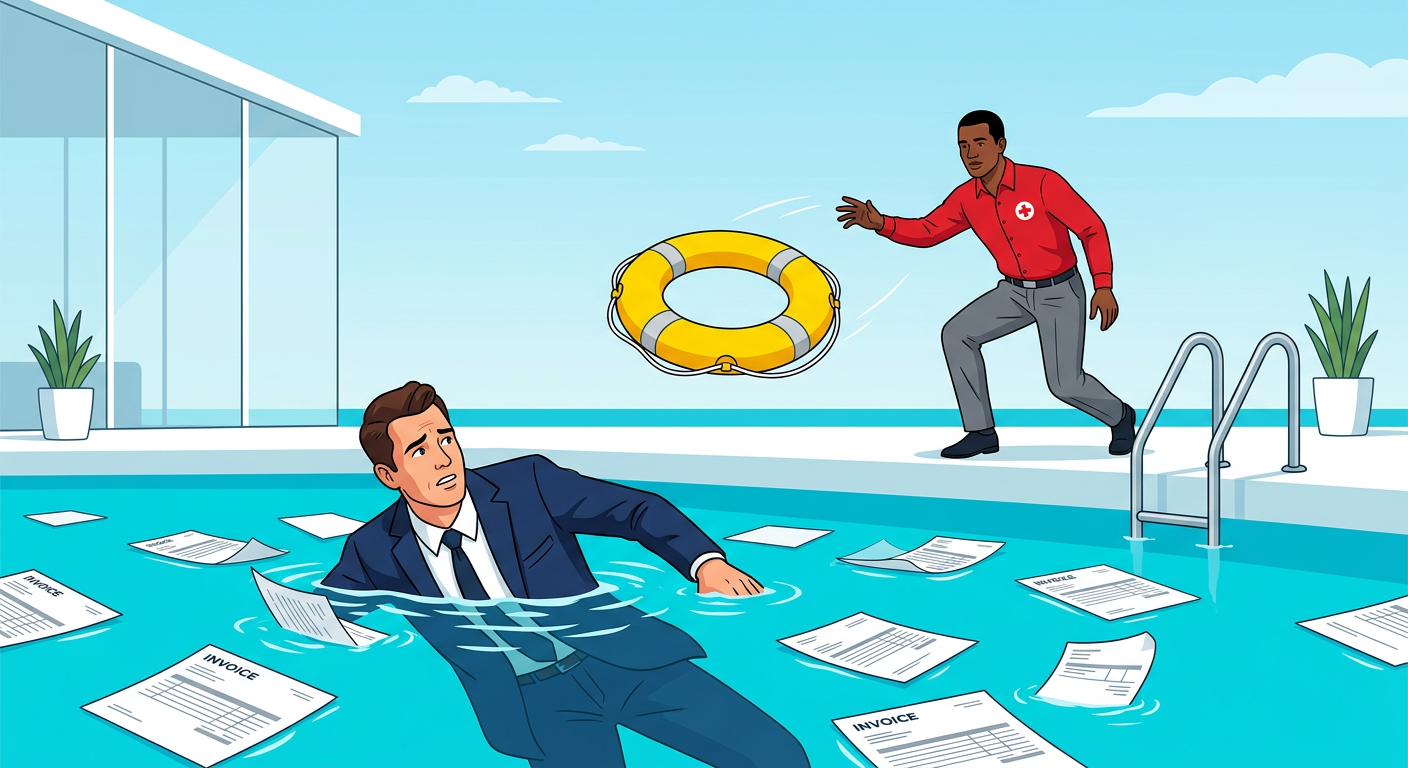
When you are drowning, you don’t need someone to offer you a glass of water; you need a lifeguard to pull you out, assess your situation and provide a path to recovery. Similarly, when your business is overwhelmed by business debt payments and cash flow strain, the last thing you need is another aggressive broker offering you another high-cost loan. Yet, this is the experience of most business owners with UCC liens. Their cry for help is met with a barrage of transactional offers that only address the symptom (a temporary lack of cash) and worsen the disease (a toxic business debt structure).
This is why a significant number of business owners in this situation express interest in hearing "all solutions." They have intuitively recognized that a single product is not the answer. They need a comprehensive strategy.
This is where the role of a true business finance and strategy advisor becomes indispensable. Unlike a broker who is paid a commission by a lender to sell you a specific loan product, an advisor takes a holistic view of your business. Their first job is not to sell, but to listen and diagnose. They will conduct a deep dive into your revenue, your expenses, your existing debt obligations and your operational challenges. They will analyze your financials and help you understand your true financial position.
Only after this thorough diagnosis will they propose a strategy. This strategy might involve business debt consolidation, business balance sheet refinancing through a private credit, or a commercial bank or registered SBA lender, restructuring existing obligations or a combination of approaches. The goal is to create a sustainable financial foundation for your business's future. The first step to freedom is to stop engaging with the transactional noise and instead seek out a strategic partner who is committed to providing a comprehensive plan, not just another quick fix.
The Power of Business Debt Refinancing and Existing Business Debt Restructuring
Once you have a clear diagnosis of your business financial situation, the two most powerful tools at your disposal are refinancing and restructuring. Though often used interchangeably, they represent distinct strategies for dealing with problematic debt. Understanding both is key to reclaiming your business's financial health.
Refinancing is the process of taking out a new, single loan to pay off multiple existing business debts. The primary goal of refinancing is to move from high-cost, short-term debt to a lower-cost, long-term solution. The new loan will have a single, fixed monthly payment and the interest rate will be significantly lower, and the repayment term will be extended over several years (e.g., 2, 2.5, 3, 5 or 10 years). This extension and loosening of loan amortization immediately and dramatically improves business cash flow. The portion of your revenue that was being devoured by business debt service is now freed up to be used for operations, investment and profit. For the business owner with a good personal credit score, refinancing is the ultimate goal, as it represents a complete reset of the business's financial footing onto solid, sustainable ground.
Restructuring, on the other hand, involves negotiating with your existing creditors to change the terms of your current business debts. This likely involves modifying the existing agreement temporarily or permanently. The goal is to make the existing payments more manageable (lower and more aligned with business cash flows).
Restructuring can be a powerful interim step if your business does not yet qualify for a full refinance and also provides a valuable “liquidity window” in which to go through a thorough underwriting process that is mandated by “patient” and “slower” capital. It can provide the immediate breathing room needed to stabilize cash flow, improve your financial statements, and position the business to qualify for a better refinancing option down the road. In many cases, a comprehensive solution will involve a combination of both: restructuring some existing business debts and liabilities while refinancing others into a new, consolidated term loan.
Building a Financial Moat for the Future
Escaping the immediate business debt trap is a monumental victory, but the work does not end there. The final and most critical phase is to build a "financial moat" around your business to ensure you never find yourself in that precarious position again. This is about shifting from a reactive financial mindset to a proactive, strategic one. The first component of this moat is establishing robust financial planning and analysis (FP&A) practices.
In business finance, FP&A stands for Financial Planning and Analysis. It is a corporate finance function responsible for budgeting, forecasting and analyzing financial data to guide a company's strategic decisions and ensure its long-term profitability.
The field bridges the gap between historical accounting and forward-looking business operations, primarily helping executives (like the CFO) map out the future of the business.
This goes beyond simple bookkeeping. It involves creating detailed financial forecasts, pro-forma modeling and a forward-looking business plan. It means understanding your key performance indicators (KPIs), managing your cash conversion cycle, and making data-driven decisions about pricing, hiring, and investment.
The second component is building a relationship with a trusted financial advisory team. Your business should have a "CFO on call” an expert resource you can turn to for strategic advice before making major financial decisions. This relationship transforms business finance from a source of stress into a strategic advantage. Instead of waiting for a crisis to seek help, you will have a partner who can help you anticipate challenges and seize opportunities.
The final, and perhaps most important, component is a commitment to building a cash reserve. Once your business debt is restructured into a manageable monthly payment, you must be disciplined about allocating a portion of your newly freed-up cash flow into a reserve fund. This fund is your shield against future economic shocks, seasonal downturns or unexpected expenses. It is what breaks the cycle of dependency on high-cost business debt for good. By implementing these practices, you transform your business from one that is merely surviving to one that is built to last.
Your Next Chapter Starts Now
The journey from being overwhelmed by business debt to reclaiming your financial freedom is a challenging but achievable one. It begins with the recognition that your situation is not a reflection of your failure as a business owner, but rather the result of a financial system that is often stacked against small businesses.
You have already done the hardest part: you have built an established business that generates revenue and serves its customers day in and day out. Your longevity, your experience, and your personal financial discipline are formidable assets.
The path forward requires a shift in perspective. It means turning away from the quick fixes and empty promises that flood your inbox and instead embracing a strategic, holistic approach to your company's finances. It requires a partner who will take the time to understand your unique situation and craft a comprehensive plan tailored to your needs.
The goal is not just to survive another month, but to build a thriving enterprise with a strong financial foundation that can support your ambitions for years to come. The relief that comes from consolidating chaotic daily payments into a single, affordable monthly payment is transformative. It is the moment you stop working for your lenders and start investing in your own future again. Your next chapter, one of growth, stability, and renewed passion for your business, starts now.