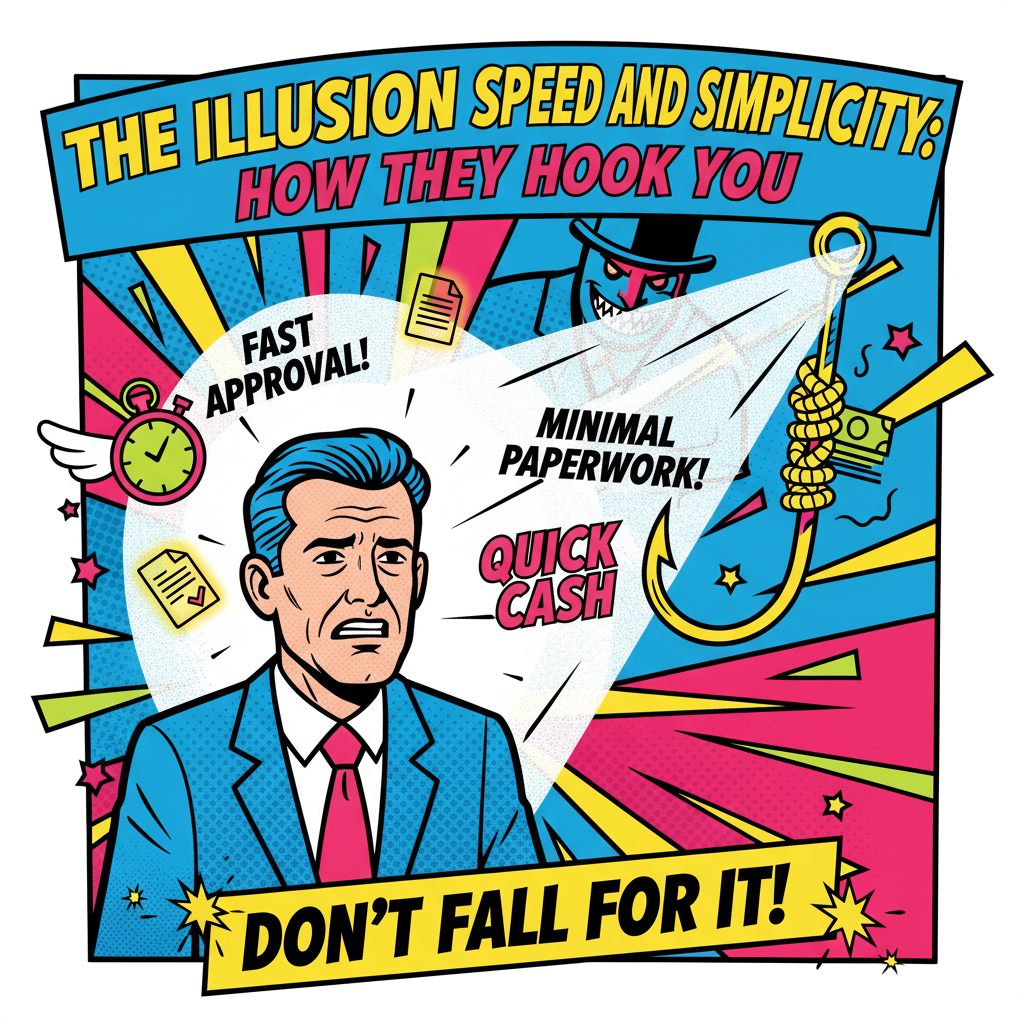
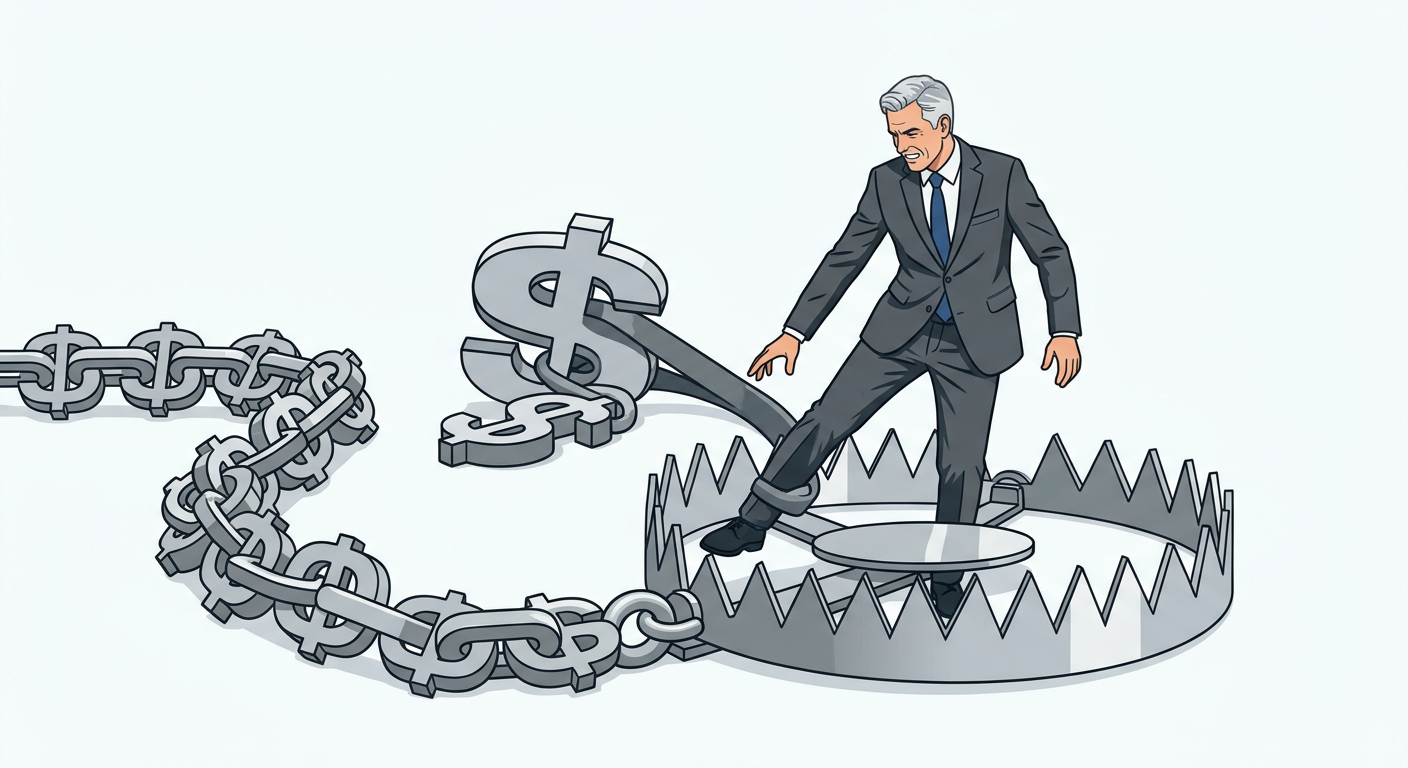
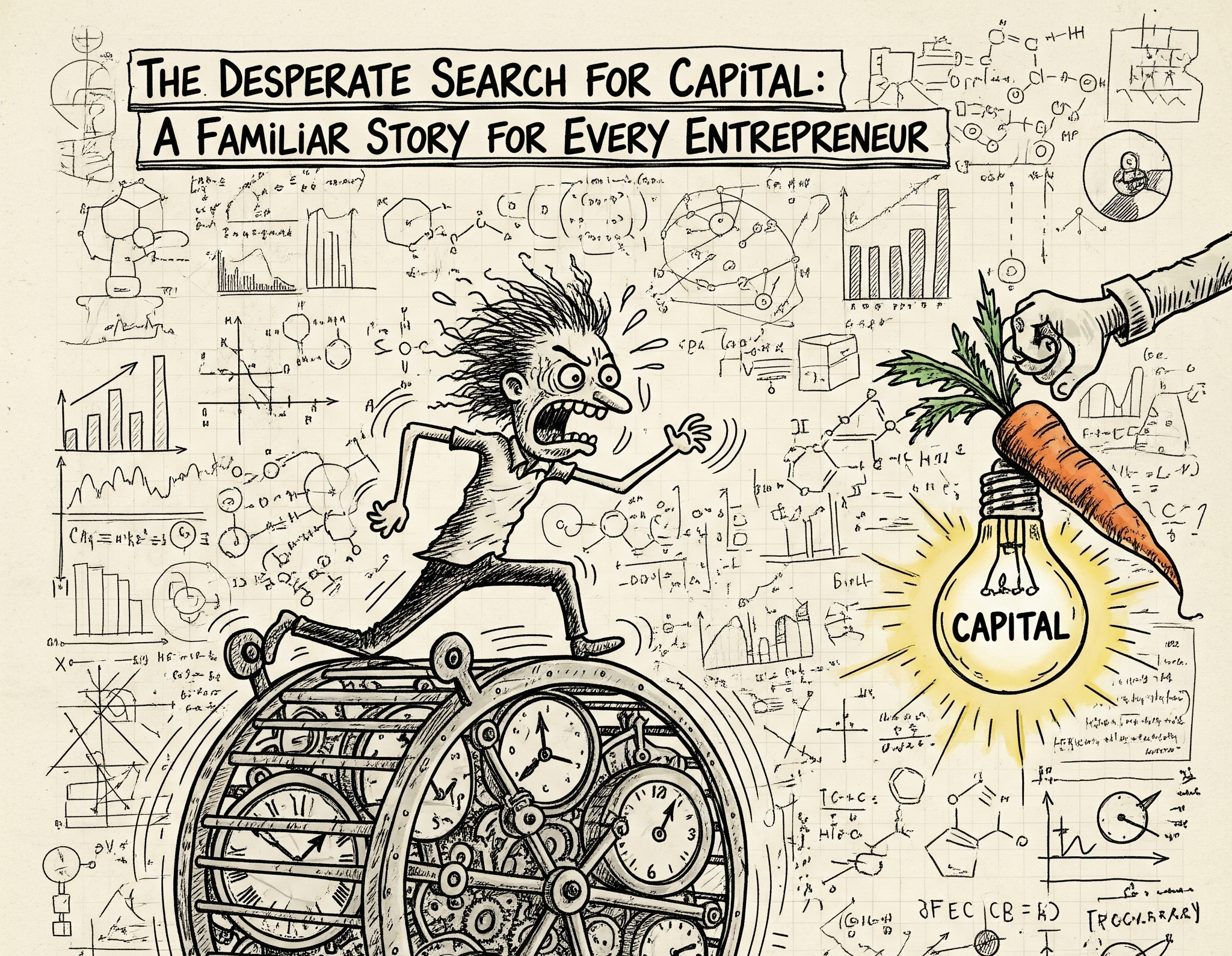
What most owners were never shown is the playbook running behind that phone call. A majority of the short-term business lending marketplace are built around fees, renewals, and repeat transactions rather than the long-term health of the business on the other side of the deal. Some business funding brokers and short-term business lenders have refined a set of tactics that look like service but work like a sales funnel, and very few of those tactics are ever explained in plain language.
This article walks through that playbook so you can recognize it, step outside of it and move toward longer, steadier business financing. If you are carrying positions you did not fully understand when you signed, that is not a personal failing. It is the predictable result of a marketplace designed to move faster than its customers could read.
The Quiet Commissions Paid by the Lender (Counterparty) to Your Broker
To understand the tactics, start with how the money moves. In much of the short-term business lending world, a business funding broker is paid a commission on every deal placed, often 8 to 13%+ of the total business funding received. That commission is paid at closing, and it is paid again on every renewal. A broker who places a $100,000 short-term business advance today and renews it twice over the next year may earn three separate commissions from the same business owner.
None of this is automatically wrong. Plenty of brokers are honest, and every business funding source needs a way to find customers. The problem is the incentive. When compensation rewards volume, speed and repeat transactions, the structure quietly favors bigger deals, faster closings and more of them. What is best for the business owner, which is often a smaller, slower, longer-term business loan, can end up last in line.
The cost of that structure is not invoiced separately. It is built into the pricing. Most short-term business fundings are priced with a factor rate rather than an interest rate. A factor rate of 1.38 means the business repays $138,000 for every $100,000 received, regardless of how quickly the balance is paid down. When that amount is collected over six or eight months through high frequency payments, the annualized cost can be several times what a traditional business loan would carry. Factor rates are easy to quote and hard to compare, and that confusion is part of why the marketplace works the way it does.
The Bait and Switch at the Finish Line
One of the most common experiences business owners describe goes like this: The first conversation is encouraging. The business funding broker mentions a generous amount, a reasonable factor rate and a term long enough to feel manageable. The owner sends bank statements, signs an application and starts planning around the number they heard.
Then the final business funding agreement arrives, often late in the day and with a deadline attached. The amount is smaller. The factor rate is higher. The term is shorter, and the payment schedule has shifted to high frequency payments that pull from the account far more often than once a month. The explanation is usually vague: underwriting came back differently, the business lender tightened its guidelines or the original offer was only an estimate.
By that point the owner has already invested time, may have promised a vendor payment and feels the pressure of a closing window that seems about to slam shut. That pressure is the point. The bait and switch works because it arrives at the moment when walking away feels most expensive.
The strategy here is simple and powerful. Ask for every offer in writing before you send a single document, including the amount, factor rate, total payback, term, payment frequency and every fee. When the final business funding agreement arrives, compare it line by line against that written quote. If the numbers moved, you have every right to pause, ask why and decline. A business funding offer that only holds up under time pressure was never a good offer.
The “Take This Now and Refinance Later” Myth
Few phrases have cost business owners more money than this one: “…take this now, and we will handle the business debt refinancing in a few months once your numbers improve”. It sounds like a bridge to something better. In practice, it rarely leads anywhere but another short-term business advance.
Here is why. Genuine business debt refinancing into a longer-term structure, such as a private credit term or line of credit facility, or a commercial bank business loan, depends on bank statements that show healthy business cash flow, consistent balances and few existing business financing positions. A new short-term business advance with high frequency payments works directly against every one of those measures. Ninety days later, the account balances are often lower, the payments are higher and the statements look more stretched than they did before. The business is usually less qualified for real business debt refinancing, not more.
When the broker calls back at that point, the business debt refinancing they offer is frequently a renewal or a new short-term business advance from the same network, with a fresh commission attached. The promise was technically kept. The business just did not get what it was promised.
If you hear the fix it later pitch, ask three questions. What specific business loan product would the business debt refinancing be? Which business lender offers it? What would the business need to show on its statements to qualify? A broker who has a real path in mind can answer all three. A broker who cannot is describing a sales cycle, not a plan.
Several Business Financings Active at Once
Some of the most damaging situations begin with a business funding broker submitting the same business to several short-term business lenders at the same time and then closing two or three business advances in the same week. Each business lender may believe it is the only one, or the first one, because each deal closes before the others show up in the bank statements or the lien records.
To the business owner, this can feel like good news. More approvals, more working capital, problem solved. The reality arrives a few weeks later, when multiple sets of high frequency payments are leaving the account at once. Taken together, they often create high total monthly payments in excess of business cash flow after operations, and the business begins leaning on tomorrow's revenue just to cover yesterday's obligations.
There is a second problem that most owners never hear about. Many business funding agreements include a clause that prohibits the business from taking on additional business financing without the business lender's consent. These are often called anti-stacking provisions. When a business funding broker arranges several business advances at once, the business may be in technical breach of more than one agreement from the very first day. The business funding broker typically knows these clauses exist. The business owner often does not, because nobody pointed them out.
That breach matters. It can give each business lender grounds to declare a default, accelerate the balance or refuse a reasonable modification later, just when the business needs flexibility most.
The Business Funding Agreement Clauses That Quietly Collide
Short-term business funding agreements are long, dense and written to protect the business lender. Read on their own, they are hard enough to follow. Stacked on top of each other, their clauses start to collide in ways that leave the business owner squeezed from several directions.
Common provisions worth understanding include anti-stacking covenants, personal guarantees, blanket UCC liens on business assets, default triggers tied to other business borrowing, and in some states, clauses that allow a business lender to obtain a judgment quickly if a default is claimed. When three agreements each claim a broad lien on the same receivables, and each treats the existence of the others as a default event, the business has very little room to move.
There is also a clause that often works in the owner's favor but is rarely explained. Many short-term business financings are structured as purchases of future receivables rather than business loans, and many of those agreements include a reconciliation provision. In plain terms, if revenue drops, the business may have the right to request that payments be adjusted to reflect actual receipts. Few business funding brokers mention this, because a business that knows about reconciliation is harder to rush into a renewal.
The strategy is to gather every agreement you have signed and review them together, ideally with a Business Finance Advisor and, where needed, a qualified attorney. Map out which clauses overlap, which business lender holds which lien, and which agreements include reconciliation rights. You cannot negotiate well against terms you have never fully seen.
The “Lockout” Situation Behind Multiple Positions
Giving a business two, three, or more positions at once does more than raise its payments. It changes which doors remain open. Traditional banks, credit unions, SBA business lenders, and most longer-term business debt refinancing sources look closely at bank statements. When they see multiple short-term business advance payments leaving the account, many will decline the file outright, regardless of how strong the underlying business may be. Unless the short-term business financings are paid off and consolidated with bridge financing (typically 18, 24 and 36-month bridge financing structures), there is little hope of engagement and ultimately a transaction with long-term business lenders and capital partners.
That outcome of stacked business financings in banking history creates a lockout. Once a business carries several short-term positions, the most realistic remaining option is often the same short-term network that created the stack. The broker who arranged those positions becomes the only phone number that still works, and every future transaction runs back through them.
It is not always a deliberate scheme. Sometimes it is simply the natural result of a model that rewards volume. But the effect on the business owner is the same either way. The business is steered away from the longer, cheaper business financing it may qualify for and kept inside a marketplace where each new deal carries another fee and continues to crush the business’ cash flow.
Recognizing the lockout is the first step to breaking it. The goal is to stop adding positions, stabilize the ones that exist and build a path toward a single business debt refinancing that can satisfy multiple balances at once. That kind of consolidation is exactly what reopens the doors that the business debt stacking closed.
The Business Funding Churning Cycle and the Real Cost of Renewals
Renewals are where much of the short-term business lending marketplace makes its money, and where many business owners lose the most without realizing it. The call usually comes when about half of the balance has been paid. The pitch is friendly: you have a great payment history, and you qualify for more.
Consider a simple example. A business receives a $100,000 short-term business advance at a 1.40 factor rate and owes $140,000 in total over about 9 to 10-months. When half is paid, $70,000 remains. The business is offered a renewal of $120,000 at the same factor rate, which means it will now owe $168,000. From that $120,000, the remaining $70,000 balance is paid off, and the owner receives about $50,000 in new working capital.
Look closely at what happened. The business is now repaying $168,000 to access $50,000 of fresh money. The unpaid portion of the first factor charge was not discounted, because many agreements do not reduce the cost for early payoff. In effect, the business paid fees on money it already owed and then paid new fees on top of that. The broker, meanwhile, typically earns a fresh commission on the full $120,000.
Repeat that cycle two or three times and a business can spend a year working hard just to stay in place. The churn cycle is not a sign that an owner managed money poorly. It is a sign that the product was designed to be renewed. Before accepting any renewal, ask for the net new cash, the total payback, and the true cost of the payoff in writing, then compare that against what a genuine business debt refinancing would cost.
The Vanishing Broker When Business Debt Refinancing Matters Most
Many business owners notice a strange pattern. The business funding broker who was available at all hours during the sale of fast financing becomes difficult to reach once payments start to strain business cash flow. Calls go unanswered. When the business funding broker does respond, the only solution offered is another short-term business advance or renewal (falsely claimed as a “refinance” of existing business advances.)
There are practical reasons for this. Longer-term business loans, such as SBA business loans or bank term business loans, often pay smaller commissions, take longer to close, and require more detailed financial work than many short-term brokers are set up to handle. A true business debt refinancing that pays off every position at once also ends the broker's stream of renewals. From the broker's point of view, the most valuable outcome for the business may be the least valuable outcome for them.
The result is that business owners are often left alone at the exact moment they need guidance most, fielding calls from collections departments while trying to keep payroll covered. If your broker has gone quiet, treat that as information rather than as a reflection on you. It may simply mean the help you need now lives outside their network.
Looking Beyond the Broker Network for Longer, Cheaper Business Financing
One of the least discussed facts in this marketplace is how much overlap exists between short-term broker networks. Many business funding brokers draw from the same pool of short-term business lenders, which is why a business owner who calls three different brokers may hear three versions of the same offer. Shopping around inside one network can feel like comparison, but it often produces more of the same.
Checking outside those networks can change the picture entirely. Depending on the business, options may include commercial bank business loans, SBA-backed business loans, CDFI or community development business lenders focused on small businesses, private credit business lending, asset-based business financing secured by receivables or inventory, equipment-based business financing, and business debt refinancing programs built specifically to consolidate multiple short-term positions into one longer-term payment.
These sources tend to ask more questions and take longer to decide. That patience and through due diligence (risk management) is part of what makes them cheaper. When evaluating any option, ask for the total cost of business borrowing in dollars, the full term, the payment frequency, whether early payoff reduces the cost, and whether the new structure will actually pay off existing positions rather than sit on top of them.
This is where an independent Business Finance Advisor can make a real difference. Unlike a business funding broker paid by the lender for each transaction, a Business Finance Advisor who works on the owner's behalf can look across markets, present the business accurately to longer-term business lenders and focus on structures that fit the business rather than structures that pay the biggest commission.
Rebuilding on Your Terms With a Clear Business Financing Plan
Stepping out of the short-term cycle does not happen in a single phone call, but it does follow a clear sequence. The aim is to replace a stack of fast, expensive business loans and advances with business financing that matches how the business actually earns money.
• Inventory every position, including the business lender, remaining balance, payment amount, payment frequency, factor rate, lien, and any reconciliation or anti-stacking clause.
• Measure true business cash flow by separating operational revenue from business financing proceeds and transfers between accounts, so the numbers reflect what the business genuinely earns before paying its debt obligations.
• Pause new stacking. Each added position makes the eventual business debt refinancing harder and more expensive.
• Open a conversation with existing business lenders about reconciliation or modification where revenue has declined, ideally with professional support of a business advisor
• Pursue a business debt refinancing that consolidates balances into a longer term with payments aligned to monthly business cash flow.
• Set simple guardrails for future business funding decisions, such as requiring written terms, total payback figures, and a cooling-off day before signing anything.
The marketplace that produced the stack counted on speed, confusion and urgency. Rebuilding relies on the opposite: clear numbers, patient comparison and an advocate who is on the business owner's side of the table. With the right structure in place, business cash flow can go back to doing its real job, which is fueling growth, paying people, and building the business you set out to build.
If you recognize parts of this playbook in your own business financing history, you are far from alone, and you are not out of options. The first step is simply seeing the full picture. From there, a smarter path to business debt refinancing is usually closer than it looks.

More Business Finance and Strategy Articles: