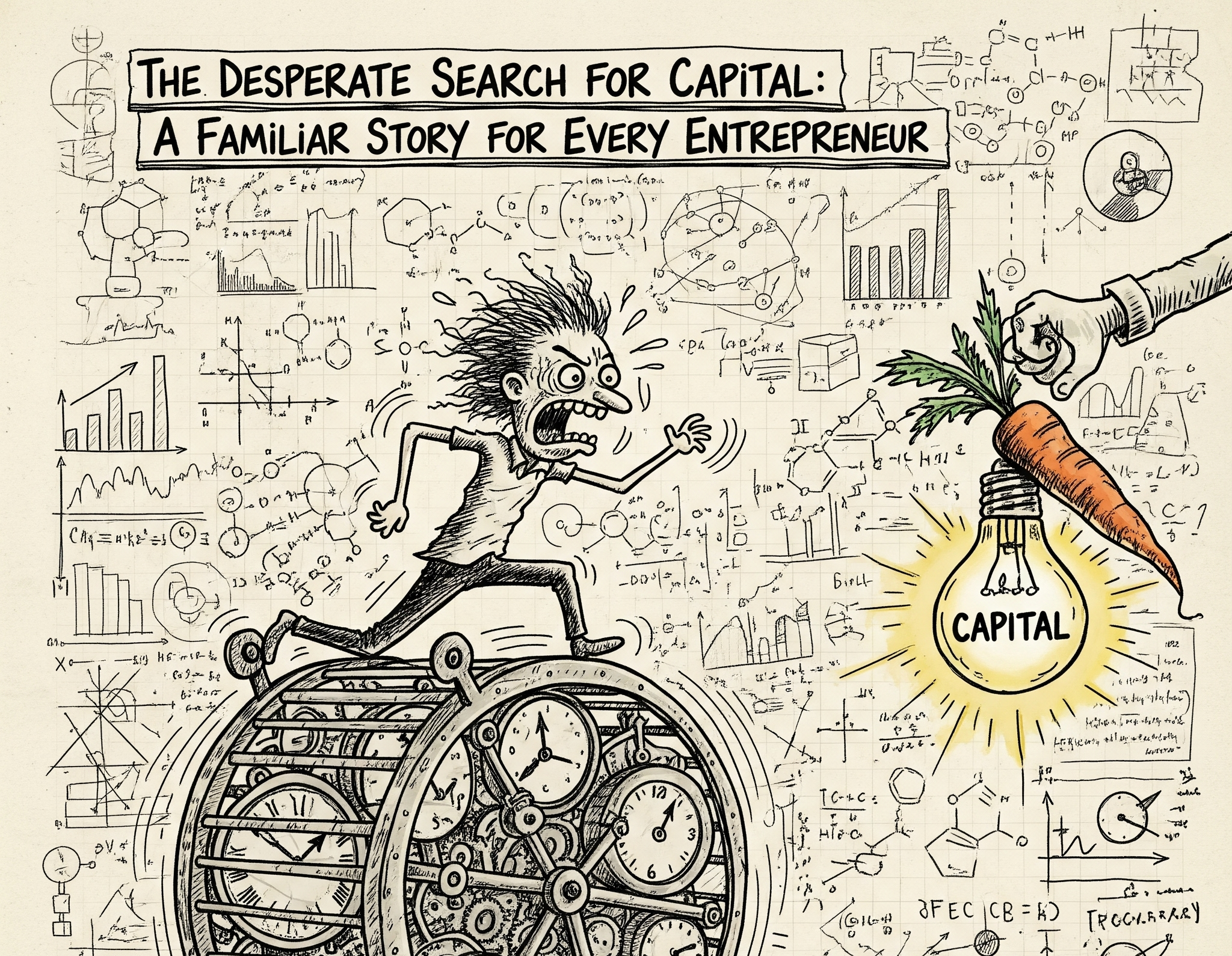
Most businesses do not fail because they lack a viable product or a loyal customer base; they fail because they are architecturally unsound. They operate within a house of cards built on the shaky foundations of inaccurate accounting, toxic debt structures and a fundamental misunderstanding of capital velocity and liquidity needs.
When an executive team ignores the integrity of their balance sheet to chase top-line growth, they are not building an enterprise, they are piloting a suicide mission. Solving a business cash flow crisis is certainly not a matter of "finding more money"; it is a matter of ruthless structural reconstructive surgery. To save a distressed company and “right the ship”, leadership must stop looking for lifelines and start dismantling the internal mechanisms that are actively incinerating their liquidity.
This analysis dissects the lethal financial vulnerabilities inherent in modern business and provides the aggressive, data-driven maneuvers required to reclaim sovereignty over your capital and engineer a newer and stronger enterprise capable of multi-generational dominance.
The Liquidity Mirage and the Cash Conversion Cycle Crisis
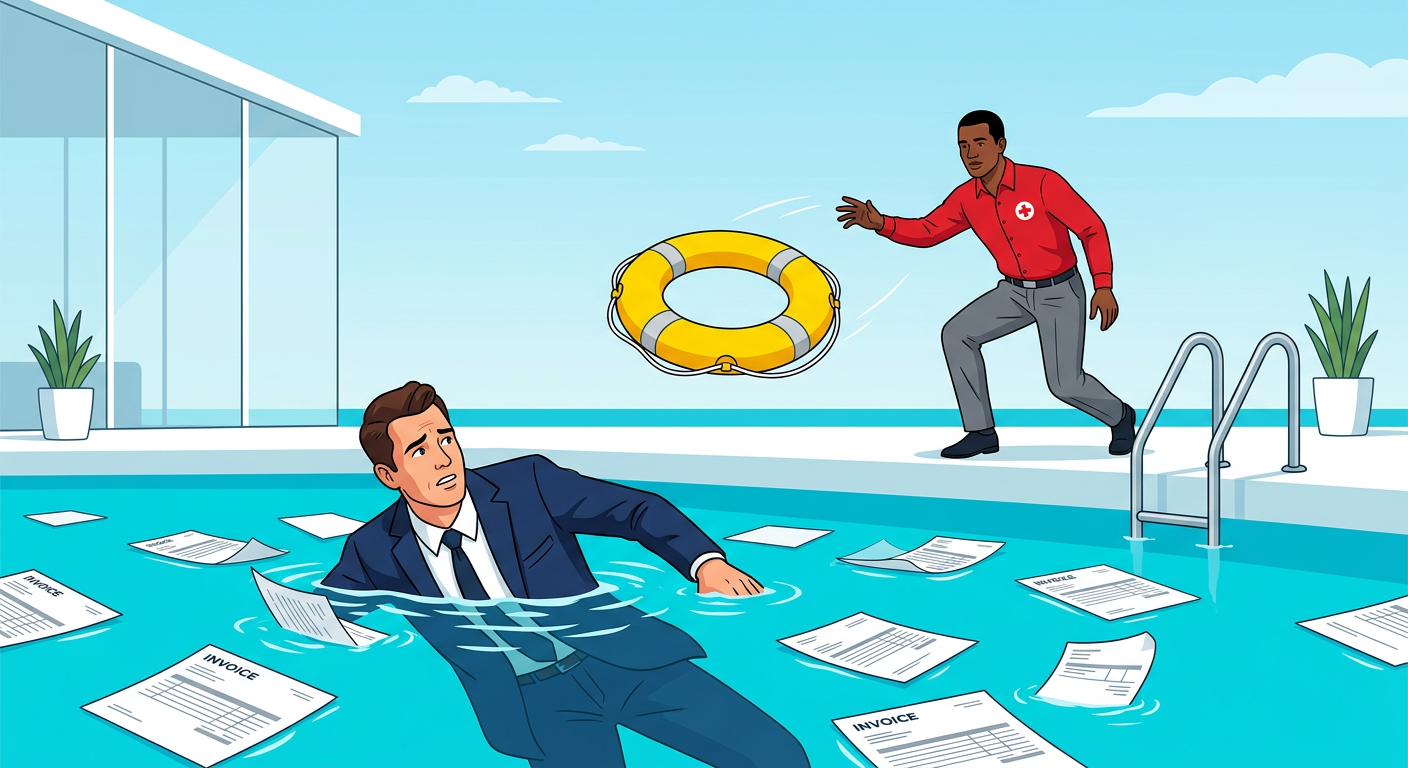
The most dangerous illusion in corporate finance is the belief that a profitable income statement equates to a healthy bank account. This "liquidity mirage" is the primary cause of sudden-death insolvency for growing firms. A business can report record profits on an accrual basis while its actual cash is trapped in a fractured Cash Conversion Cycle (CCC).
The CCC measures the time elapsed between the initial cash outlay for sales efforts, raw materials and labor and the eventual receipt of cash from customer settlements. When this cycle is unmanaged or left protracted, the business becomes an interest-free lender to its customers while acting as a high-interest borrower to its creditors.
Solving this requires the aggressive compression of the receivables window. Leadership must move beyond the passive "net 30" suggestion and implement a tiered, high-velocity collection engine. This involves revoking credit for slow-paying clients, demanding upfront deposits for large contracts and utilizing automated dunning systems that remove the emotional barrier to collections. Simultaneously, the procurement team must strategically decelerate payables. If your customers settle in 45 days but your vendors demand payment in 15, you have a 30-day structural cash gap that will eventually bankrupt you, regardless of your profit margin. Correcting this mismatch is the first step toward reclaiming operational sovereignty and ending the reliance on emergency, high-cost financing.
Eradicating the Debt Spiral of Toxic Transactional Finance
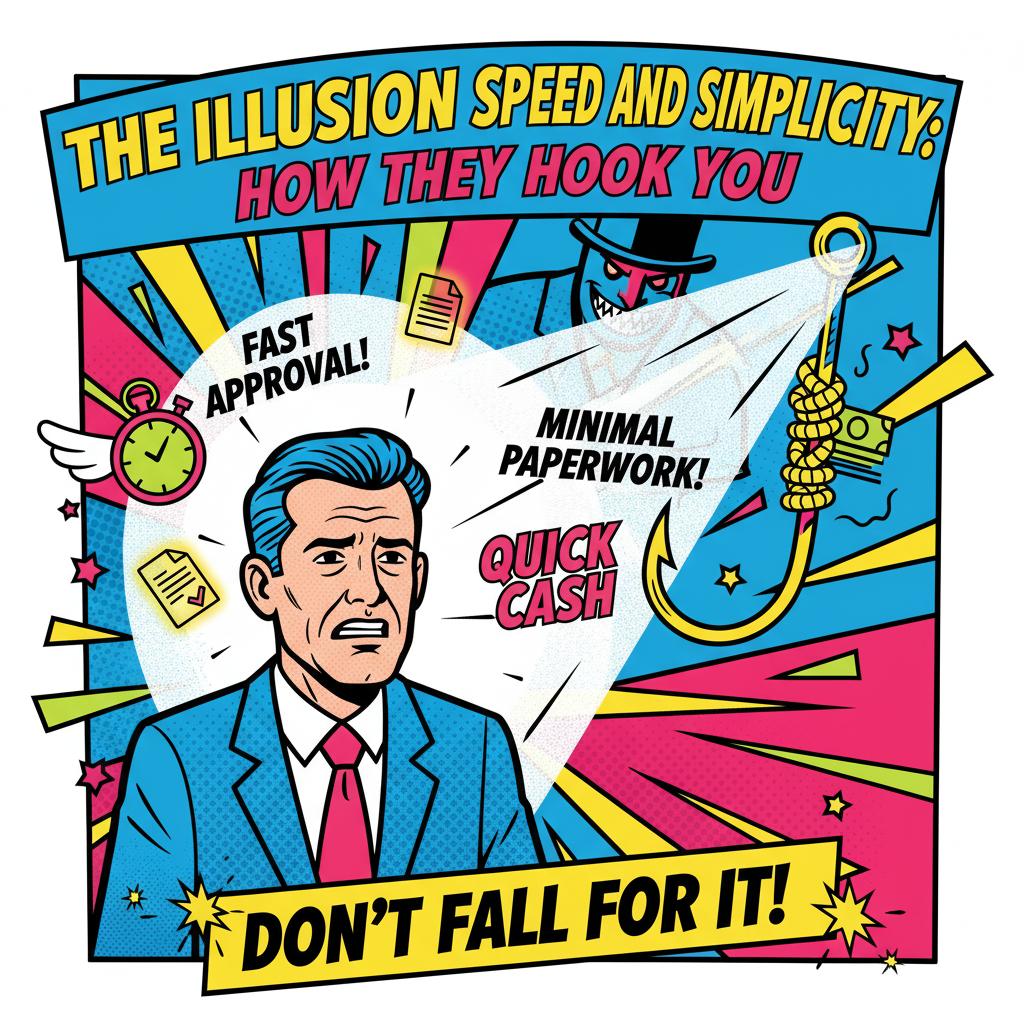
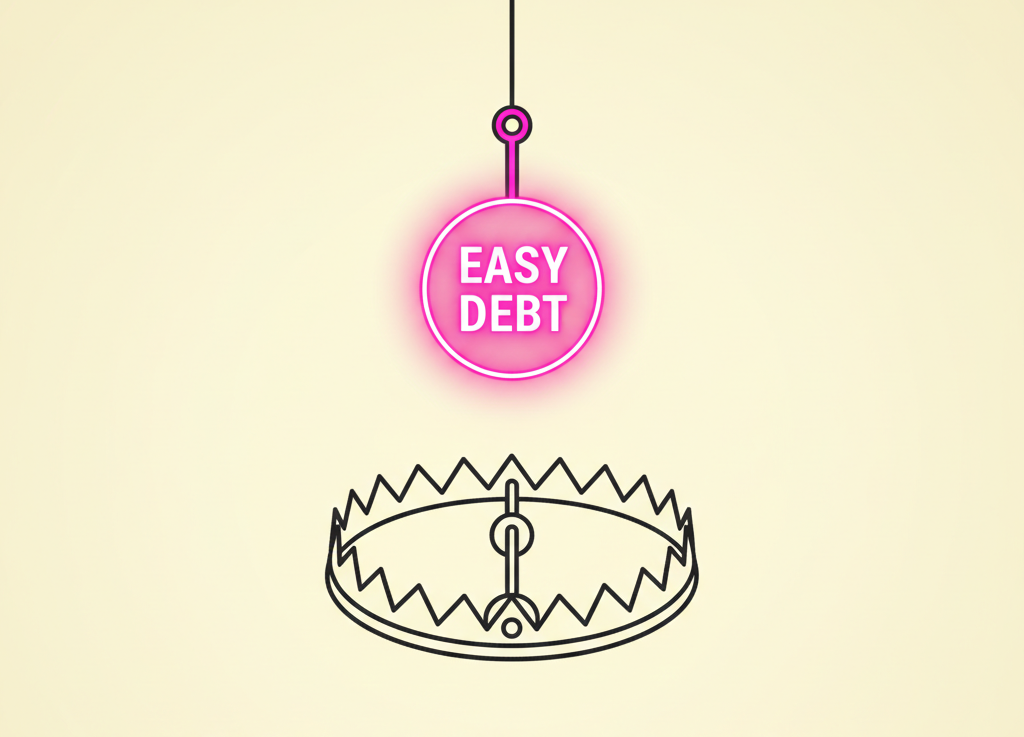
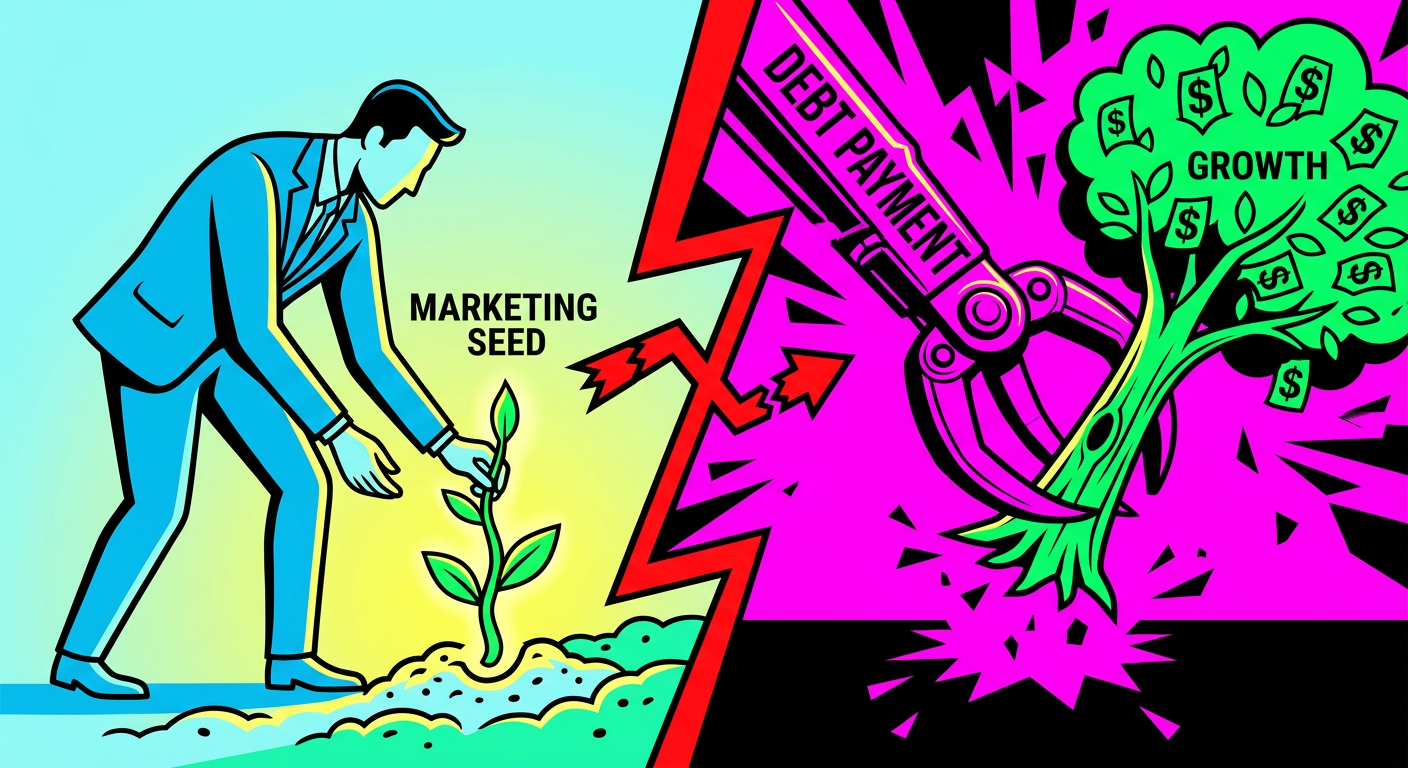
When liquidity gaps become acute, many businesses commit strategic malpractice by turning to subprime or cashflow-based transactional debt. Merchant Cash Advances (MCAs) and weekly or daily ACH-draw loans are not "working capital solutions", they are parasitic instruments designed to extract capital at a velocity that exceeds the growth rate of any healthy enterprise. Once a business begins "stacking" these loans, taking a third high-interest note to pay withdrawals on the second, it has entered a terminal business debt spiral. The effective APR on these products often exceeds 100%, and their automated frequency strips the treasury of the capital needed for basic operational maintenance. High-cost and short-term business debt always negatively affects business operations and cash flow.
Escaping this trap requires a violent pivot toward debt consolidation and the total abandonment of reactive borrowing. Leadership must present a transparent, data-backed turnaround plan to traditional commercial lenders or asset-based financiers (private credit lenders, SBA or SBIC lenders) who prioritize long-term stability over short-term extraction. The objective is to replace the chaotic, high-frequency business debt stack with a single, lower-interest facility featuring a traditional and longer monthly amortization (payback) schedule.
This maneuver immediately reduces the "velocity" of cash outflow, providing the breathing room necessary to fix the operational failures that triggered the crisis. Credibility is the only currency in this transition; without accurate financials to prove the underlying viability of the business, the exit from the transactional business debt market is permanently blocked.
Inaccurate Business Accounting is Fatal
Inaccurate accounting is the silent engine of corporate destruction. When a business operates with an "accuracy deficit", where the general ledger is riddled with unreconciled accounts, unrecorded liabilities and misclassified expenses, the executive team is essentially navigating a storm with a broken compass. Leadership makes irreversible strategic moves based on internal reporting that has no basis in economic reality. They might over-allocate resources to a product line that is technically losing money, or approve an expansion when the company’s actual debt-service coverage ratio is already in the red.
The cost of this inaccuracy is both direct and indirect. Directly, it leads to overpaying taxes, incurring massive audit penalties and missing out on critical tax credits. Indirectly, it destroys the company’s "Investment Readiness." When a sophisticated lender or a private equity partner discovers that your reported earnings do not match your bank reconciliations, or that your retained earnings do not roll over correctly, the deal is dead on arrival.
Reclaiming financial integrity requires a "return to first principles" by implementing a rigorous month-end accounting closing process, enforcing strict segregation of duties and ensuring that every balance sheet entry is supported by third-party documentation (statement balances). Accurate accounting is not an administrative choice; it is the prerequisite for existence.
The High Cost of Reactive Capital Planning
The majority of lower middle-market firms operate in a profound "strategic vacuum" treating business financing as a reactive emergency rather than a proactive discipline. They only seek capital when the bank balance is nearing zero and the pressure from creditors is reaching a boiling point. This reactive posture is the weakest possible position for any negotiation. It signals desperation, which allows lenders to demand punitive interest rates, draconian covenants and extensive personal guarantees that put the owner's personal estate at risk.
Operating with a proactive financing blueprint requires a rolling 13-week cash flow statement forecast that anticipates capital needs long before they become emergencies. This involves establishing "shelf credit" and revolving lines of credit during periods of high profitability and high liquidity. By forecasting major capital expenditures or seasonal cash dips 3 to 6-months in advance, a business can shop for the lowest-cost and, most importantly, the longest payback term in the marketplace. This foresight allows the organization to bypass predatory transactional lenders and architect a capital stack that supports—rather than hinders—its long-term growth milestones. In the world of finance, if you wait until you need money to ask for it, you have already lost the negotiation.
The Maturity Mismatch and Why Short-Term Debt Kills Assets
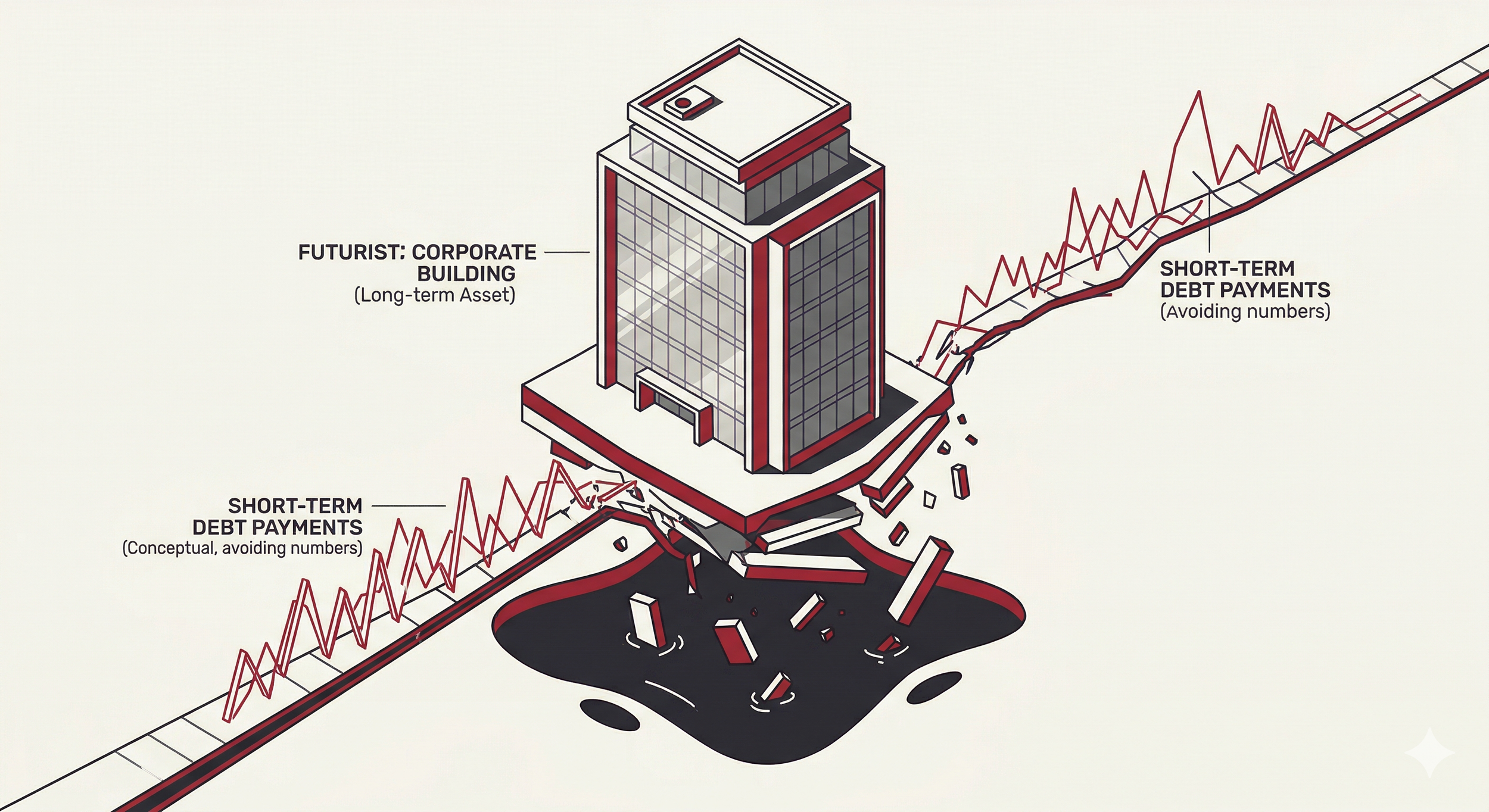
One of the most profound violations of corporate finance is the "maturity mismatch" or the practice of using short-term, high-payment business debt to finance long-term capital investments such as sales growth, infrastructure, etc. If a business uses a twelve-month bridge loan or an operating line of credit to purchase heavy machinery, commercial real estate or complex software development, it is setting a financial trap for itself.
Long-term assets generate a return on investment (ROI) over many years, but short-term debt demands immediate, massive principal repayments. When the short-term note comes due, the asset has not yet produced sufficient cash to satisfy the obligation.
This mismatch creates a "refinancing risk" that can trigger total collapse. If the credit markets tighten or interest rates spike at the moment the short-term note expires, the business may find itself unable to renew the credit, forcing a fire sale of the very assets intended to drive its future.
The strategic imperative is to match the duration of the liability with the life of the asset. Long-term investments should be funded by long-term commercial mortgages or equipment leases that feature an amortization (payback) schedule mirroring the useful life of the equipment. By matching these timelines, the business ensures that the cash generated by the asset covers the business debt service obligations, protecting its operating liquidity from being cannibalized by capital investment.
Restructuring for Business Cash Flow Health
Even a business loan with a seemingly reasonable interest rate can plunge a company into the "amortization abyss" if the payback period is too aggressive. Amortization is the velocity of principal repayment, generally the schedule of payback or payback period. Many lenders, seeking to minimize their own exposure, push businesses into 12 or 18-month payback terms for loans that mathematically require 2, 3 or 5-years to be sustainable. This results in "profitable insolvency" which is a state where the company shows a profit on its financial reports, but its mandatory monthly business debt service is so high that it is constantly overdrawn and there is not enough cash or cash flow.
Solving this requires a granular understanding of the Debt Service Coverage Ratio (DSCR). A healthy business must maintain a DSCR of 1.25 or higher, meaning it generates $1.25 in operating cash flow for every $1.00 of debt service (debt payments due). When aggressive amortization drops this ratio toward 1.0, the business has no margin for error. Executive leadership must proactively negotiate "term-out" agreements, converting short-term, high-payment notes into long-term facilities with manageable monthly burdens. While stretching the term may result in higher total interest costs, the "liquidity premium", or the value of having cash and cash equivalents available to run the business today is far more critical for an entity in a recovery or expansion phase.
Liberating Trapped Capital from Excess Inventory Stock
Inventory is frequently the largest "sinkhole" for a company’s liquidity. The "inventory quagmire" occurs when management over-purchases raw materials or finished goods based on flawed demand forecasts or the seductive lie of bulk-purchase discounts. While a warehouse packed to the ceiling might feel like a safety net, it actually represents "dead capital" that is actively losing value through storage costs, insurance and the relentless risk of uselessness. For most businesses, the interest cost on the debt used to buy excess inventory far exceeds any theoretical savings gained from a bulk discount.
Reclaiming this capital requires a transition to data-driven inventory management. Leadership must implement SKU-level turnover analysis, identifying slow-moving items and liquidating them immediately, even if at a loss, to liberate the valuable cash trapped inside them. The goal is to maximize the Inventory Turnover Ratio, ensuring that capital is constantly recycled back into the business rather than sitting on a pallet gathering dust.
By reducing inventory levels by even twenty percent, a mid-sized business can often uncover enough hidden liquidity to pay down its high-interest debts entirely, without needing a single new piece of financing. This liberated cash is the "found money" that can fuel business turnaround and growth.
Correcting Inaccurate Financial Reporting
If accounting is the engine, financial reporting is the "dashboard." When that dashboard is inaccurate, management is flying blind into a storm. Inaccurate financial reporting involves more than just clerical errors; it involves a failure to present data in a way that reflects the true economic reality of the enterprise. This includes failing to accrue for upcoming large liabilities, misrepresenting the aging of receivables or neglecting to record depreciation on major assets. When a lender sees a "clean" profit report that actually hides a massive upcoming tax payment, the company’s credibility is permanently scorched.
Restoring trust requires the implementation of a "real-time reporting" framework. Management must move away from retrospective, quarterly reviews and toward weekly and daily reports that track key performance indicators (KPIs) like cash-on-hand, daily sales velocity, and accounts payable due dates. This level of transparency allows for "micro-adjustments" to spending before a minor deficit turns into a terminal crisis. Furthermore, by providing lenders with proactive and transparent reporting, a business builds a "Trust Premium" that results in more flexible credit terms and lower interest rates during difficult economic cycles.
Identifying and Stopping Operational Cash Leaks
Operational business cash leaks are the "death by a thousand cuts" for a distressed business. These are recurring, small-scale expenses that, taken together, create a massive internal hemorrhage. Common leaks include "subscription creep" (paying for unused subscription fees), duplicate vendor payments caused by poor A/P controls, and excessive "soft costs" in the procurement process. Because these leaks are often buried in broad expense categories, they are rarely identified during a high-level review of the income statement.
Stopping the bleed requires a "zero-based budgeting" (ZBB) exercise at least twice a year. In a ZBB environment, every department must justify every dollar of spending from scratch, rather than simply carrying over last year's budget with a percentage increase. This process forces managers to identify and eliminate redundant services and inefficient workflows. Additionally, implementing an automated spend management system can catch duplicate invoices and ensure that all purchases are made at pre-negotiated contract rates. By plugging these leaks, a business can often improve its net profit margin by 3% to 7%, providing a massive boost to its DSCR and its overall enterprise valuation without requiring any external capital.
Building a Culture of Fiscal Discipline
The ultimate defense against business financial distress is not a single strategy, but the creation of a "culture of fiscal discipline." In strained organizations, the finance department is seen as a "back-office" function that simply records history. In a resilient enterprise, the finance team is the central nervous system of every strategic conversation. Every manager must understand the "unit economics" of their department and how their specific spending decisions impact the company's overall cash position.
Building this culture requires total transparency and constant education. Leadership should share key financial targets with the entire staff and incentivize employees based on "free cash flow" (cash flow available after operations and debt service) rather than just top-line revenue. When everyone from the warehouse floor to the executive suite understands that "cashflow is king," the business naturally begins to make more disciplined, data-driven decisions. This cultural alignment ensures that the organization remains lean and agile during downturns and is prepared to capitalize on growth opportunities during upswings. A business that treats its profit loss and balance sheet with the same intensity as its sales pipeline is a business that is built to dominate, capable of navigating any market fluctuation with confidence and strategic precision.
What is the Best Way to Fix Business Debt that is causing Business Cash Flow issues?
It is NOT by stopping ACH payments.
It is NOT by taking on another business loan.
It is NOT ALWAYS a Refinancing
It is NOT by entering into a debt settlement program.
Find out the BEST strategies to get your Business back to where it was

More Business Finance and Strategy Articles: