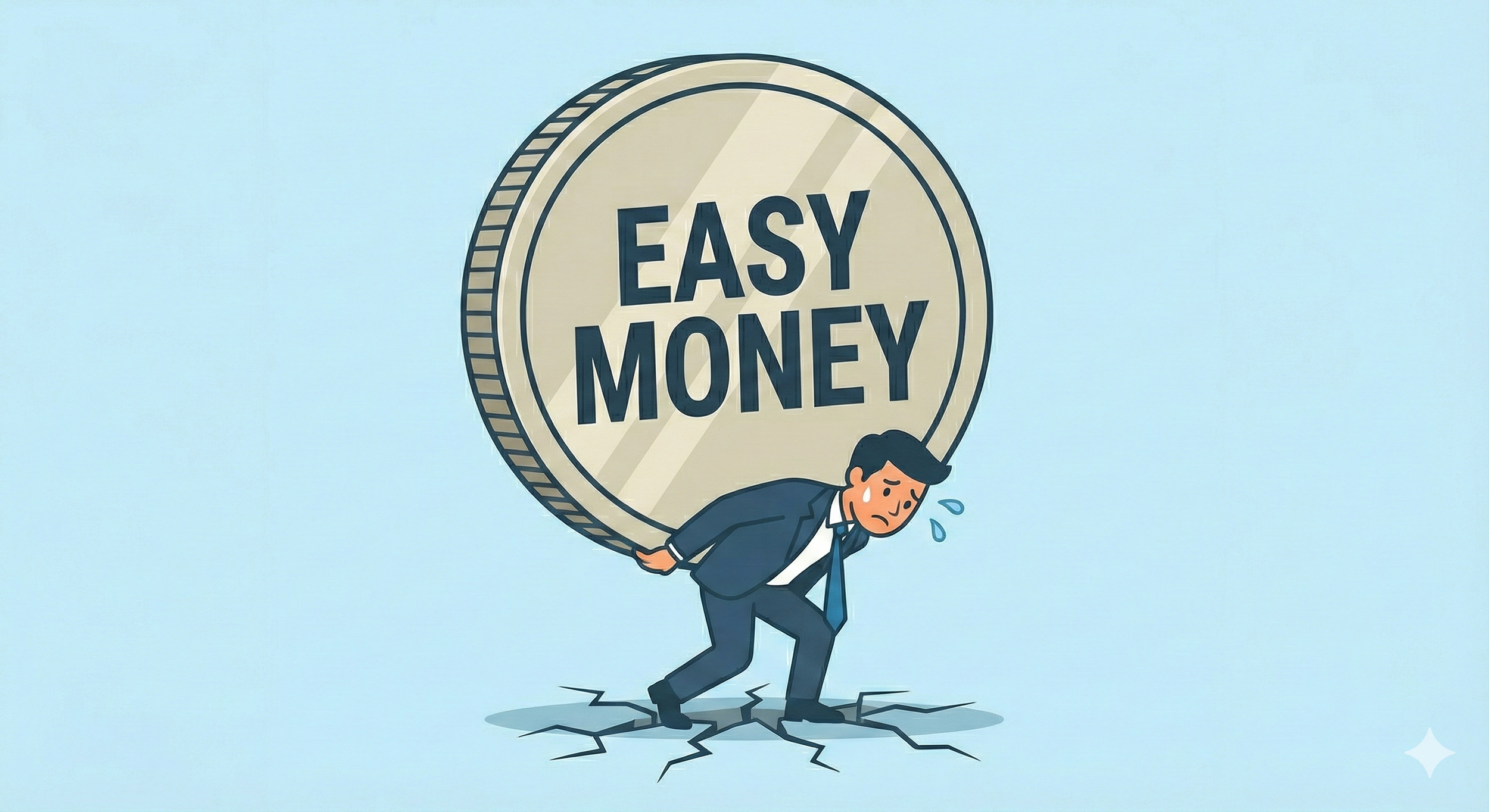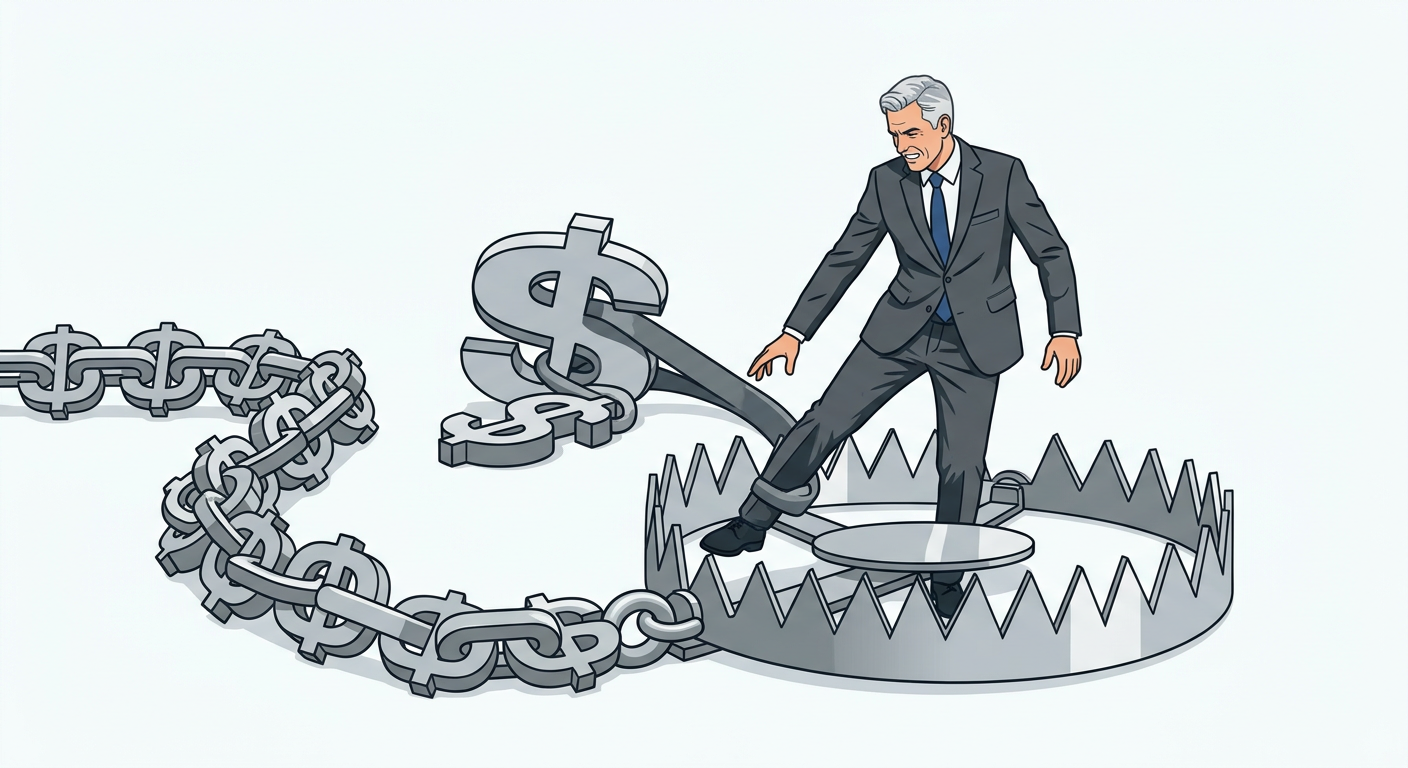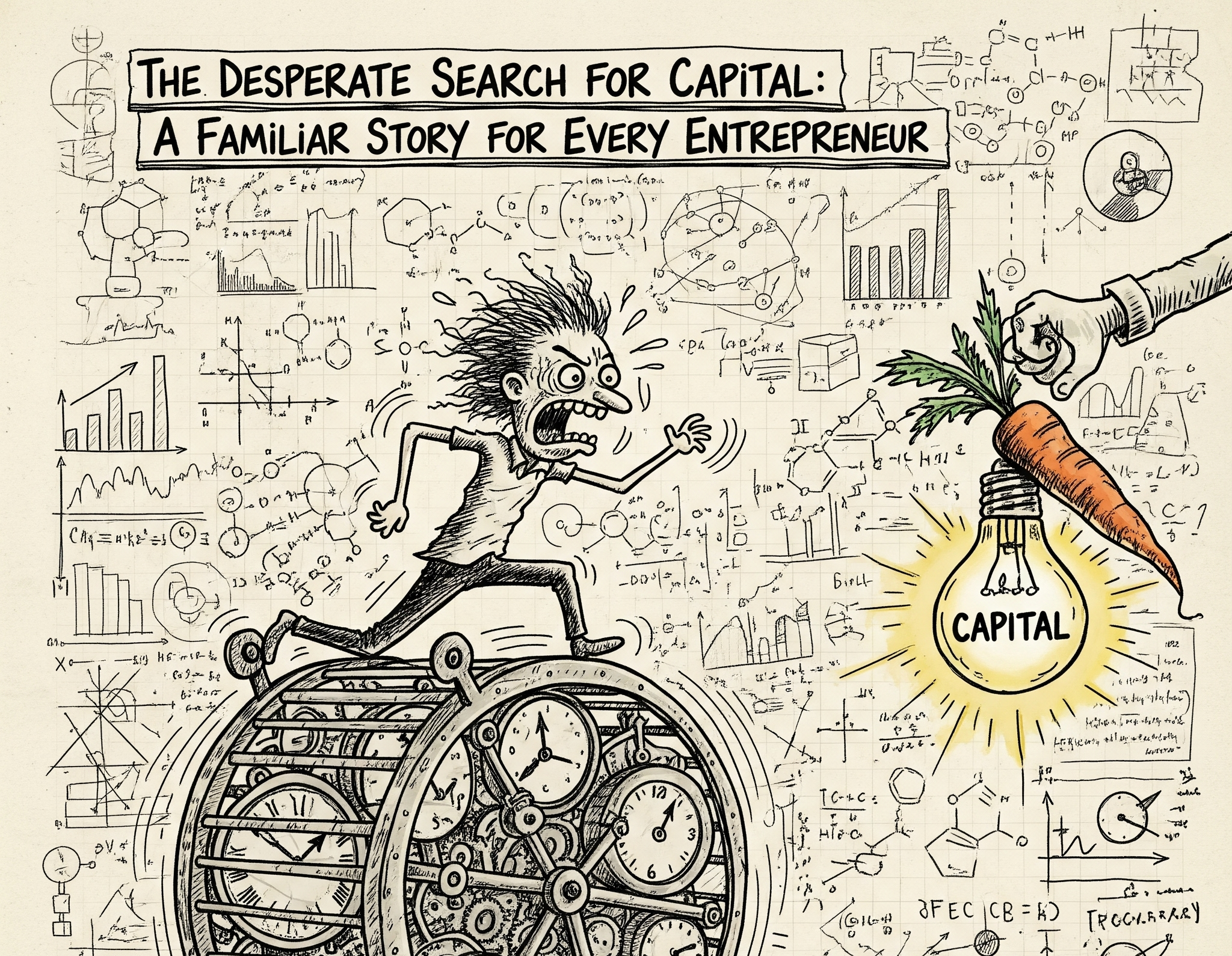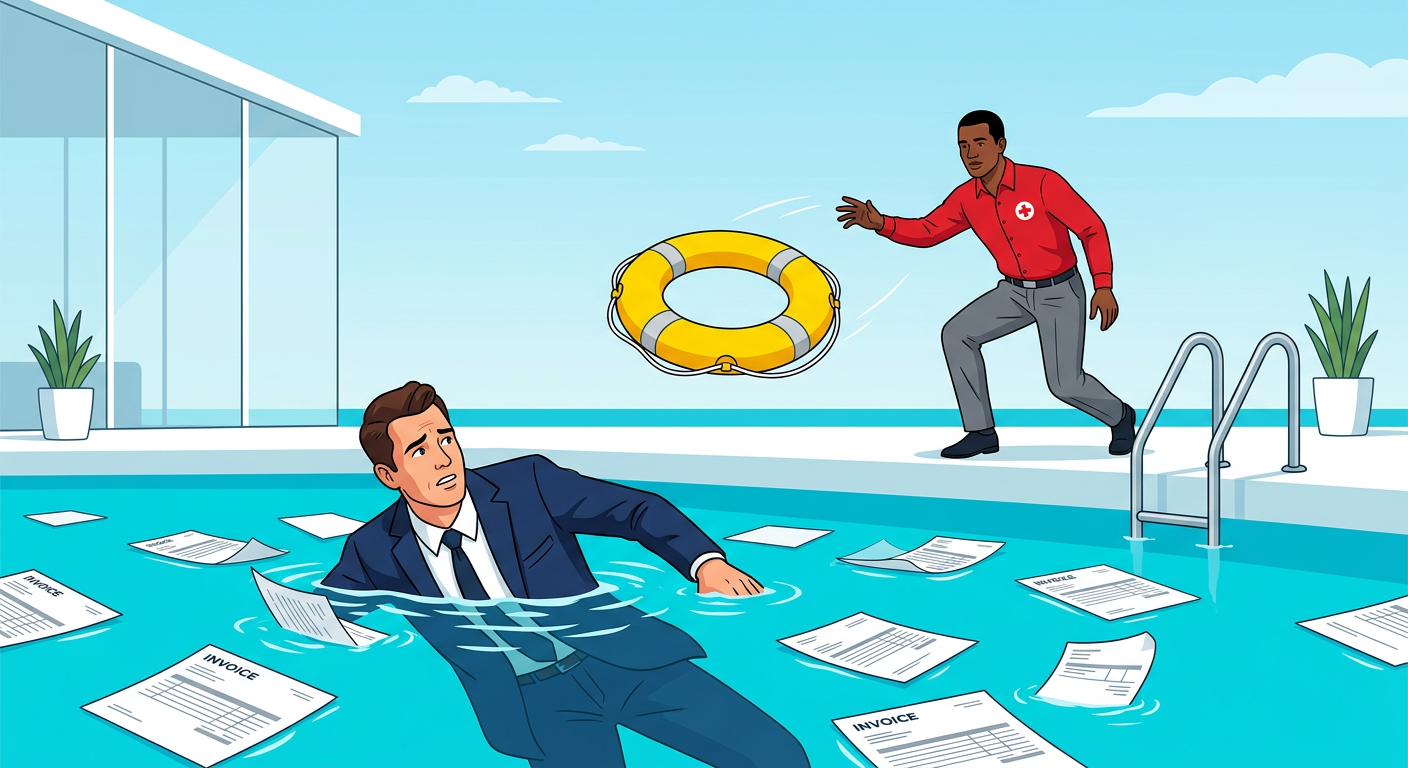
The title of Chief Financial Officer is frequently the most dangerously misunderstood position on the executive organizational chart. An astonishing number of corporate leaders suffer from a profound executive delusion: they believe that because they have hired a senior accountant to reconcile the bank statements and interface with their external tax CPA, they have fulfilled the requirement for a strategic financial commander. This operational arrogance is a direct catalyst for corporate mortality. A business that confuses a glorified bookkeeper with a true Chief Financial Officer is actively engineering its own financial ruin.
The true mandate of a middle-market CFO is not to act as a passive historian recording the chaotic aftermath of your operational decisions. Their mandate is to function as the architect of your capital structure and the ruthless defender of your enterprise valuation. If your business is currently suffocating from cash flow shortages, paralyzed by high-interest and high-payment debts or operating blindly with chronically incorrect financials, the diagnosis is absolute: your CFO is categorically failing to execute their fiduciary duties.
To survive, scale, and dominate, executive leadership must intellectually separate the administrative burden of daily accounting from the strategic weaponization of corporate finance. This comprehensive analysis dissects the uncompromising, multifaceted duties that a legitimate Chief Financial Officer must execute to transition an enterprise from a state of reactive survival into a fortress of sustained market dominance.
The Eradication of the Glorified Bookkeeper Syndrome
Businesses routinely bestow the title of Chief Financial Officer upon a competent controller or a loyal, long-term bookkeeper. This immediately creates a massive strategic vacuum within the C-suite. The primary duty of a controller is to look backward: to ensure that the general ledger is accurate, that historical transactions are categorized correctly and that the month-end close is executed with precision. A true CFO, however, is mandated to look exclusively through the windshield. Their primary responsibility is to synthesize that historical data into aggressive, forward-looking strategies that dictate the future trajectory of the enterprise.
If your current CFO spends the majority of their operational bandwidth manually entering journal entries, matching vendor invoices, or arguing with your external CPA about minor tax classifications, they are stealing a strategic salary to perform administrative labor. A legitimate CFO must operate above the transactional fray. They are supposed to be stress-testing your business model against macroeconomic volatility, calculating the exact ROI of your proposed capital expenditures, and identifying structural weaknesses in your revenue model before those weaknesses trigger a liquidity crisis.
When a CFO operates as a glorified bookkeeper, the enterprise is stripped of its strategic radar, leaving the Chief Executive Officer to navigate complex market conditions based entirely on gut feeling and the misleading daily balance of the corporate checking account. Eradicating this syndrome requires stripping transactional duties from the CFO and forcing them to own the strategic financial outcomes of the organization.
Architecting the Capital Stack and Eradicating Toxic Debt
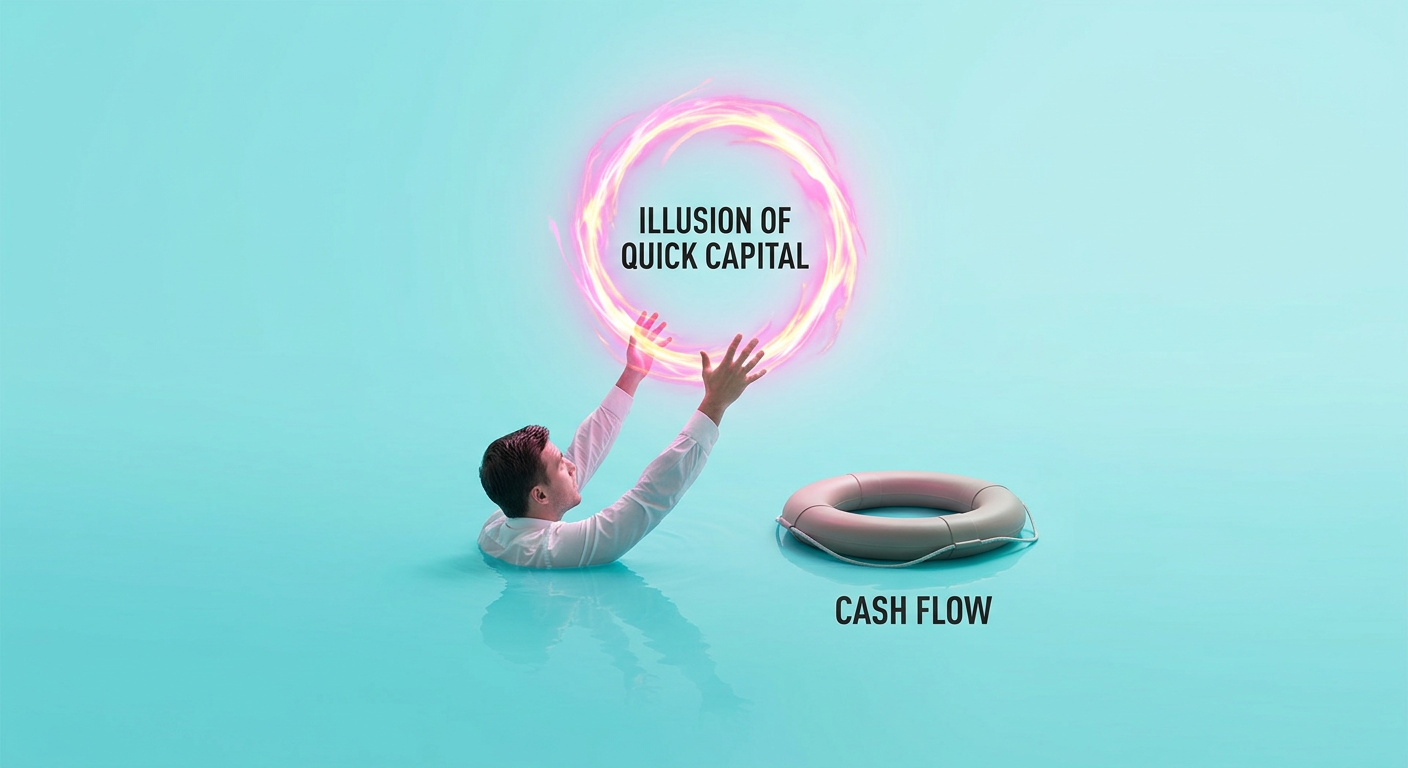
One of the most lethal threats to any middle-market company is a chaotic, reactionary capital structure. A core duty of the Chief Financial Officer is the deliberate, mathematical architecture of the company’s Capital Stack. If your business is relying on short-term and excessively high-interest short-term business debt to fund daily operations, your CFO has committed strategic malpractice. These parasitic instruments are designed to extract capital at a velocity that exceeds the growth rate of any healthy enterprise, and relying on them is the definitive hallmark of financial incompetence.
The CFO is explicitly responsible for managing the company’s Weighted Average Cost of Capital (WACC). Their mandate is to ruthlessly hunt for the lowest-cost, most patient capital available in the commercial markets. They must continuously evaluate the balance sheet to identify opportunities to restructure existing debt and refinance existing business debt to a longer payback period at a lower cost. By aggressively negotiating with traditional commercial banks, institutional debt funds, and asset-based lenders, the CFO replaces toxic, high-velocity debt with stable, long-term commercial facilities. This transition immediately neutralizes amortization asphyxiation and repairs structural negative cash flow. A CFO who passively accepts exorbitant interest rates or fails to maintain the institutional relationships necessary to secure prime commercial debt is actively destroying the equity of your enterprise and jeopardizing its fundamental survival.
Complete Mastery of the Cash Conversion Cycle
A company can present a highly profitable income statement while simultaneously collapsing into bankruptcy because its cash is trapped in operational friction. The Chief Financial Officer is the ultimate custodian of the company’s liquidity, and this requires complete, uncompromising mastery over the Cash Conversion Cycle (CCC). The CCC measures the precise amount of time it takes for the business to convert its initial cash outlay for raw materials and labor back into cash collected from its final customers. If your business is constantly experiencing cash flow shortages despite strong sales, your CFO is failing to manage this critical operational velocity.
The CFO must dictate the terms of engagement for both inbound and outbound capital. They must implement and enforce rigorous accounts receivable protocols, transitioning collections from a passive administrative task into a high-velocity cash acceleration engine. This involves instituting strict credit checks, demanding upfront deposits and utilizing automated dunning systems to slash the Days Sales Outstanding (DSO). Simultaneously, the CFO must strategically decelerate accounts payable.
They must negotiate extended, favorable payment terms with critical vendors to maximize the company's Days Payable Outstanding (DPO) without damaging supply chain relationships. By actively compressing the CCC, the CFO essentially generates free, internal working capital, ending the company's dangerous reliance on external, high-interest bridge financing to survive routine operational cycles.
The 13-Week Cash Flow Forecast as a Tactical Weapon
Operating a middle-market business without a precise understanding of future liquidity is strategic suicide. A CFO who manages the company's finances by simply checking the daily bank balance or reviewing a historical profit and loss statement is operating in a permanent state of reaction. The absolute, non-negotiable duty of a competent Chief Financial Officer is the creation, maintenance, and rigorous weekly execution of a rolling thirteen-week cash flow forecasting model. This specific model is the definitive tactical weapon for navigating complex operational environments.
Unlike an accrual-based income statement, which can mask impending liquidity crises through accounting timing differences, the thirteen-week forecast tracks the actual, physical movement of cash in and out of the treasury. It forces the CFO and the executive team to look a full fiscal quarter into the future. By maintaining this model, the CFO can accurately predict severe cash flow shortages, massive upcoming tax liabilities, or seasonal revenue dips months before they actually materialize.
This advance warning is the difference between life and death for a corporate entity. It empowers the leadership team to secure low-cost revolving lines of credit from a position of absolute strength, rather than waiting until the bank account hits zero and begging for subprime bailout money in a state of absolute panic. A CFO who cannot produce an accurate thirteen-week cash model is entirely useless to a growing enterprise.
Enforcing Data Integrity and Internal Controls
The fundamental law of corporate data architecture is "garbage in, garbage out." If the raw transactional data entering your general ledger is categorized incorrectly, timed improperly, or simply missed altogether, every single strategic decision made by the executive team is based on a dangerous lie. While the CFO should not be manually entering invoices or reconciling the bank accounts, they are absolutely responsible for the structural integrity of the data. The CFO must architect and enforce an uncompromising system of internal controls that guarantees the flawless accuracy of the company’s financial reporting.
This mandate begins with the aggressive implementation of the segregation of duties. The CFO must construct rigid bottlenecks within the accounting department ensuring that the individual who authorizes payments is never the individual who reconciles the bank statements, thereby neutralizing the threat of internal fraud and invisible corporate hemorrhage. Furthermore, the CFO must enforce a ruthless, highly disciplined month-end close procedure. If the executive team is not receiving perfectly reconciled, GAAP-compliant financial dashboards by the fifth day of the new month, the CFO is failing. Inaccurate financials lead directly to capital misallocation, massive tax penalties, and the total destruction of lender credibility. The CFO is the final line of defense against the accuracy deficit, and they must hold the accounting staff to an unyielding standard of absolute empirical truth.
Strategic Asset-Liability Matching and Amortization Control
One of the most profound and destructive violations of corporate finance is the maturity mismatch, a structural failure that inevitably leads to negative cash flow and corporate insolvency. A competent CFO is hyper-vigilant against this specific threat. The doctrine of asset-liability matching dictates that the duration of a debt instrument must explicitly mirror the useful economic lifespan of the asset it is financing. When an organization utilizes short-term debt—such as an aggressive twelve-month commercial line of credit or a daily-payment cash advance—to fund long-term capital investments like heavy manufacturing equipment or commercial real estate, they engineer their own suffocation.
The long-term asset requires years to generate the return on investment necessary to justify its purchase, but the short-term debt demands immediate, massive principal repayments. A true CFO prevents this trap by mathematically evaluating the proposed amortization schedule against the asset's capability to generate cash. They must aggressively negotiate with commercial lenders to ensure that long-term assets are funded exclusively by long-term commercial mortgages or equipment leases. By aligning these timelines, the CFO ensures that the cash generated by the asset easily covers the mandatory debt service. A CFO who allows the executive team to blindly use short-term debt for long-term investments is complicit in the creation of structural negative cash flow and the subsequent destruction of the company's operating liquidity.
Preparing for Institutional Scrutiny and Defending Earnings
When a middle-market company seeks to execute a complex strategic maneuver—such as raising institutional capital, securing prime commercial debt, or executing a merger and acquisition event—they will be subjected to an exhaustive, brutal underwriting process. The CFO’s duty is to prepare the enterprise for this exact level of institutional scrutiny. Prime commercial lenders and private equity buyers do not dispense capital based on simple tax returns or unverified QuickBooks reports; they demand a comprehensive, forensic Quality of Earnings (QoE) analysis to uncover the unvarnished economic reality of your cash-generating capabilities.
The CFO must preemptively construct an unassailable digital data room containing years of reviewed or audited financials, detailed accounts receivable and payable aging reports, and comprehensive capitalization tables. More importantly, the CFO must master the art of EBITDA normalization. They must proactively identify, document, and defend the stripping out of non-recurring revenue and the adding back of one-time extraordinary expenses to calculate the company’s true operational run-rate. If the CFO cannot confidently defend the balance sheet against the aggressive interrogation of an institutional underwriter, the deal will collapse. The inability to survive a QoE audit destroys the company’s "Investment Readiness," permanently locking the business out of the prime capital markets and severely damaging its total enterprise valuation on the open market.
Eradicating Operational Cash Leaks
A strategic CFO understands that massive top-line revenue is entirely meaningless if the underlying unit economics of the business are fundamentally flawed. It is not enough to simply report the total gross margin; the CFO must forensically analyze profitability down to the individual product, service line, and specific customer level. They must identify exactly which divisions are driving the enterprise forward and which are silently cannibalizing the company’s working capital. This requires moving beyond high-level P&L reviews and implementing a culture of rigorous, data-driven operational analysis throughout the entire organization.
To execute this, the CFO must champion the implementation of Zero-Based Budgeting (ZBB). Rather than lazily copying the previous year’s budget and adding a percentage increase, the CFO must force every department head to justify every single dollar of expenditure from scratch during each budgeting cycle. This clinical process is the only effective method for identifying and stopping operational cash leaks. The CFO must aggressively hunt down "subscription creep," eliminate duplicate vendor payments caused by poor internal controls, and eradicate excessive "soft costs" hidden within the procurement process. By relentlessly plugging these minor but cumulative internal hemorrhages, the CFO can frequently drive massive margin expansion, significantly improving the company’s Debt Service Coverage Ratio (DSCR) without requiring a single dollar of new external revenue.
Eliminating Trapped Inventory and Liberating Capital
For organizations that manufacture, distribute, or retail physical goods, the warehouse is frequently the exact location where operational capital goes to die. Over-purchasing of inventory is a massive, silent killer of corporate liquidity, and the CFO is directly responsible for preventing it. Driven by a lack of internal data, irrational fears of supply chain disruptions, or the false economy of bulk-purchasing discounts, businesses routinely tie up millions of dollars in dead capital. This inventory sits on racks, actively losing value to obsolescence, shrinkage, and warehouse carrying costs, all while the business starves for the cash required to make payroll or service its institutional debts.
The CFO must transition the enterprise away from anecdotal, emotion-driven procurement and enforce strict, data-driven inventory management protocols. They must implement granular, SKU-level turnover analysis, ruthlessly identifying slow-moving items and forcing the operational teams to liquidate them immediately, even if it requires taking a temporary loss on the income statement. The CFO’s objective is to maximize the Inventory Turnover Ratio, ensuring that capital is constantly recycled back into the business rather than sitting on a pallet gathering dust. By exposing the inventory quagmire and forcing the liberation of this trapped capital, the CFO turns a static, depreciating asset into a dynamic engine for cash flow generation, permanently breaking the cycle of internal capital starvation.
Capital Allocation and Market Dominance
The final, defining duty of a middle-market Chief Financial Officer is the masterful execution of capital allocation. Once the CFO has restructured the toxic liabilities, compressed the cash conversion cycle, enforced data integrity, and secured patient institutional capital, they must shift their focus from corporate survival to aggressive market dominance. Capital allocation is the continuous, high-stakes decision-making process of determining exactly where to deploy the firm’s surplus cash to generate the absolute highest risk-adjusted return on investment.
A passive CFO allows cash to sit idle in low-yield accounts, effectively destroying shareholder value through the silent erosion of inflation and missed opportunity cost. A dominant CFO treats the optimized balance sheet as an offensive weapon. They set rigid ROI hurdle rates that every proposed capital expenditure must surpass before approval. They aggressively evaluate the financial viability of acquiring struggling competitors who are suffocating under the weight of toxic debt. They model the precise long-term economic impact of expanding into new geographical territories, investing in proprietary technology, or distributing targeted dividends to shareholders.
The CFO’s ultimate fiduciary mandate is to ensure that every single dollar retained by the enterprise is strategically deployed to compound value, continuously expanding the company’s competitive moat, and engineering an organization that is architecturally designed to dominate its industry for generations to come. If your current CFO is not operating at this elite, strategic altitude, you do not have a CFO, you have an administrative liability that must be immediately replaced.
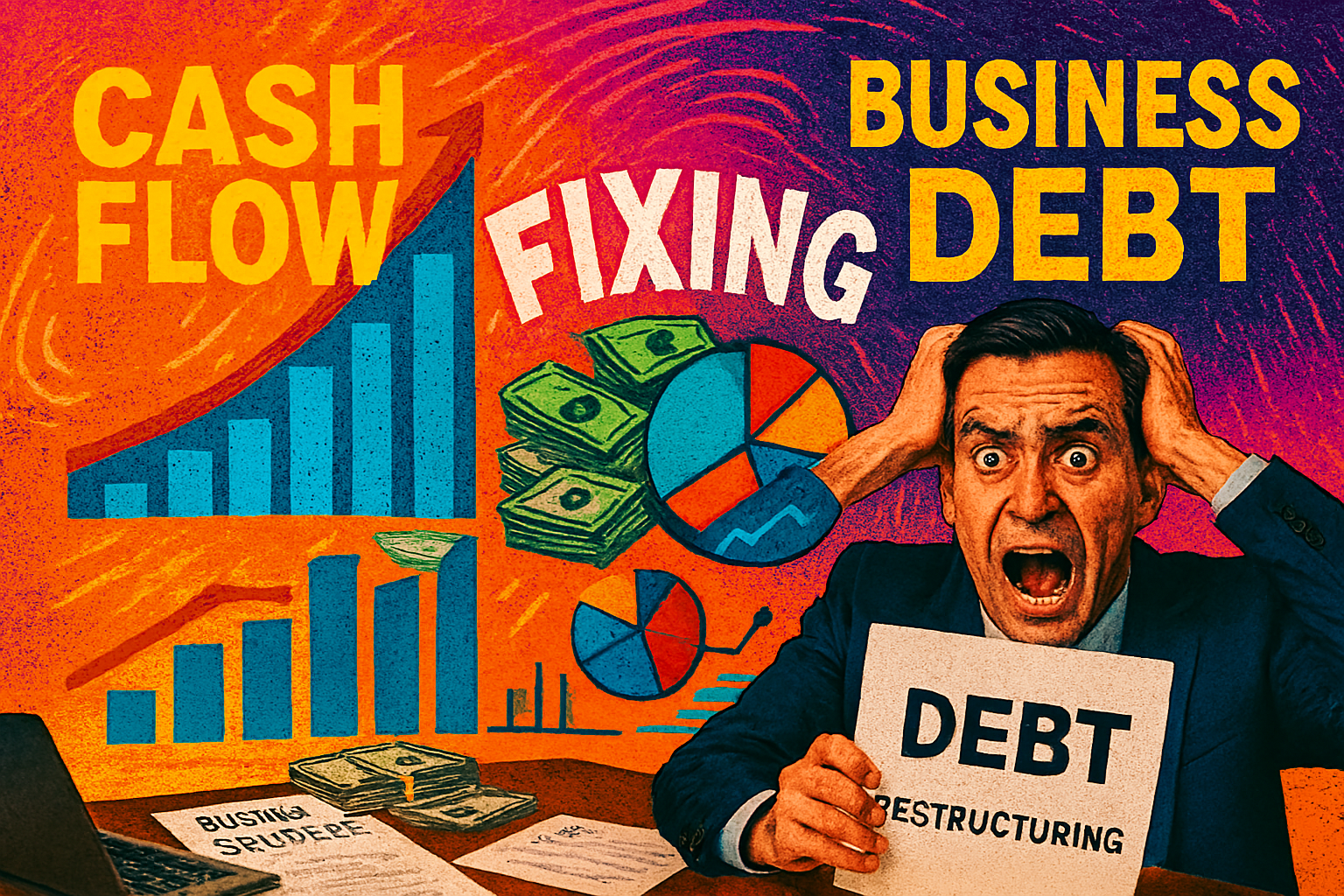
What is the Best Way to Fix Business Debt that is causing Business Cash Flow issues?
It is NOT by stopping ACH payments.
It is NOT by taking on another business loan.
It is NOT ALWAYS a Refinancing
It is NOT by entering into a debt settlement program.
Find out the BEST strategies to get your Business back to where it was

More Business Finance and Strategy Articles: