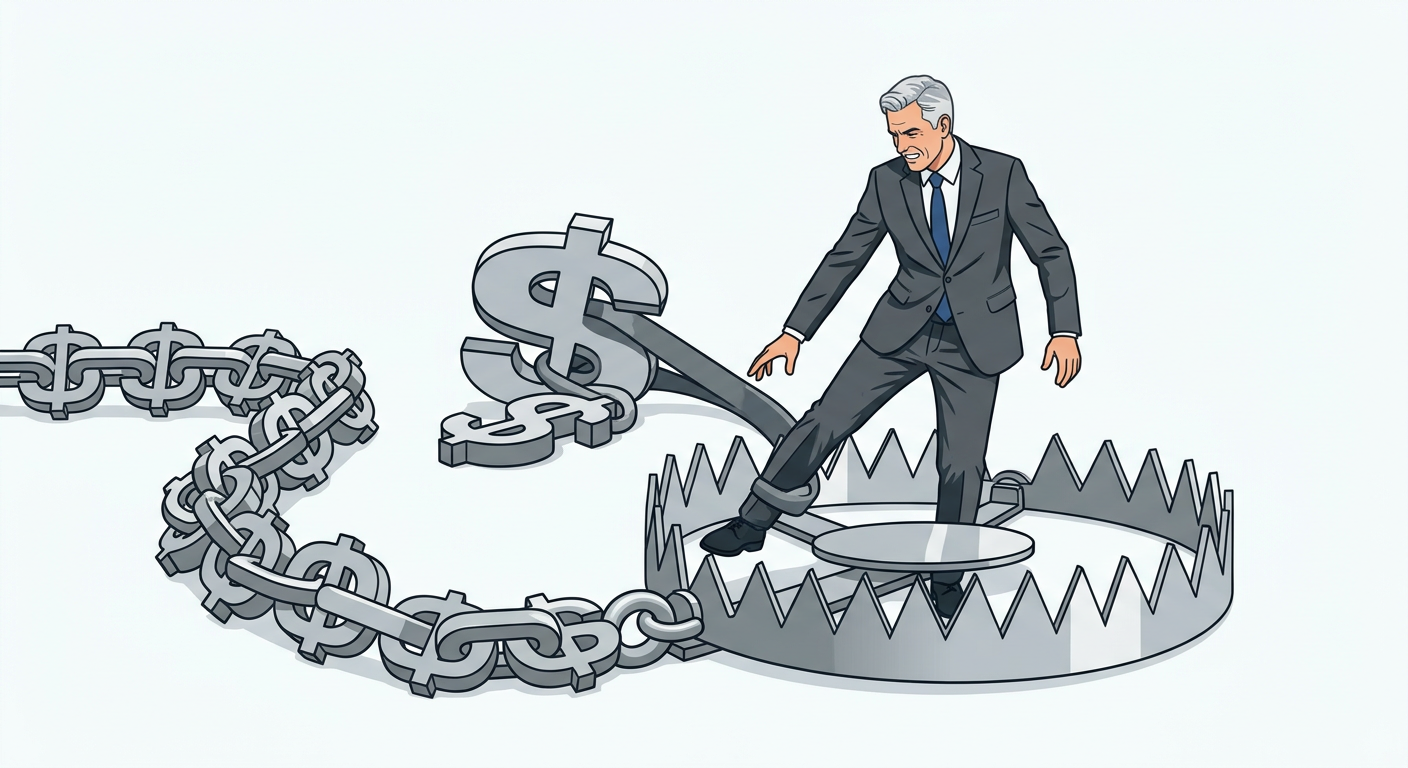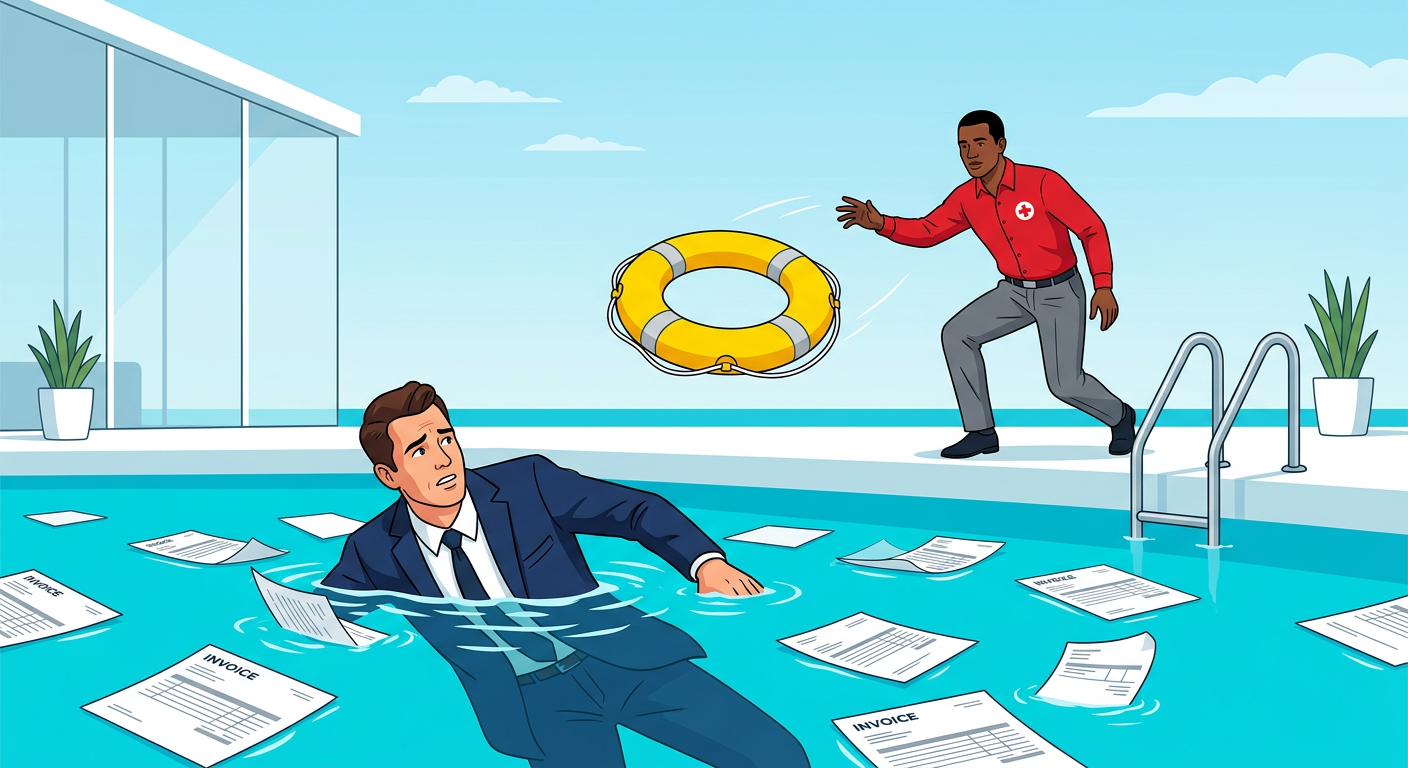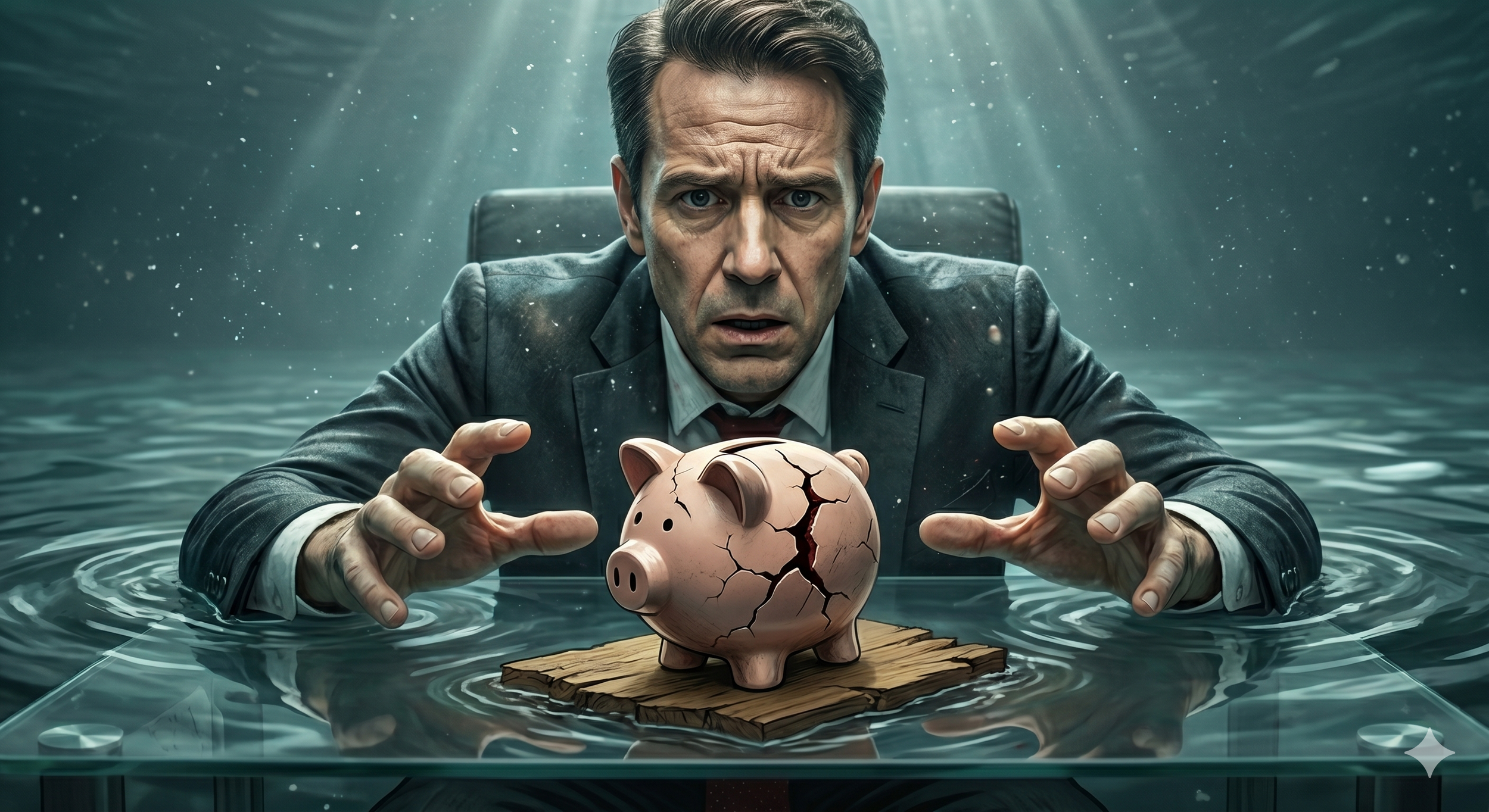
For the average small and medium-sized business owner, the interest rate is the most visible metric, the one we are taught to haggle over, and the one that feeds the ego. We want to brag about a "cheap" loan. But in the cold, hard reality of the balance sheet, a low interest rate is a vanity metric. If you are prioritizing the cost of capital over the amortization schedule (payback period), you aren't being frugal—you are being dangerous. You are effectively prioritizing the "price" of the money over your company’s ability to draw its next breath.
The cost of capital tells you what the business debt costs in a vacuum. Business loan amortization tells you whether that business debt will actually fit through your front door without breaking the hinges. An 25%+ interest rate on a loan that must be repaid in twelve-four months can be a death sentence, while an 11% rate spread over ten years is a strategic asset. If you want your business to survive a downturn or fund a massive expansion, you must stop obsessing over the rate and start weaponizing the business debt payback timeline.
The Cost of Capital Can Be a Distraction
Let’s be blunt: the cost of capital is a static, academic figure. It includes your interest, origination fees, and closing costs. It matters for your "hurdle rate," sure, but it does absolutely nothing to protect you on a Tuesday morning when payroll is due and a major client’s check hasn't cleared. You can have the "cheapest" money in the world, but if the repayment velocity is too high, you can still face severe cash flow issues.
Business Lenders love it when you focus on the rate because it keeps you from looking at the structure and length of payback. They know that a short-term business loan (under 2-years payback period) forces you into a cycle of "re-borrowing" just to keep up with the principal payments. This is how "cheap" money becomes the most expensive mistake you’ll ever make. Real business financial mastery isn't about finding the lowest price; it’s about securing the most flexible terms.
Amortization: The Only Metric That Governs Survival
Business loan amortization is the mechanical reality of your business debt. It dictates how much of your total hard-earned revenue is clawed back by the business lender every thirty days. When you fight for a longer amortization period, you are fighting for your own autonomy and for cash flow sanity. You are ensuring that your Debt Service Coverage Ratio (DSCR) stays in the safe zone, giving you a buffer against the inevitable volatility of the market.
If your business loan amortization is too aggressive, you are essentially working for the business lender. Every dollar you make above your operating costs is immediately funneled into principal repayment. This leaves zero margin for error. A business with a long amortization schedule can survive a 20% drop in revenue; a business choked by a short-term, aggressive payback "deal" will see its cash reserves evaporate in a matter of weeks. Stop looking at the total interest paid over the life of the loan—that’s a problem for the "future you." The "current you" needs to worry about the monthly "nut" and the hemorrhaging business cash flow situation.
The Fatal Allure of Short-Term "Easy" Debt
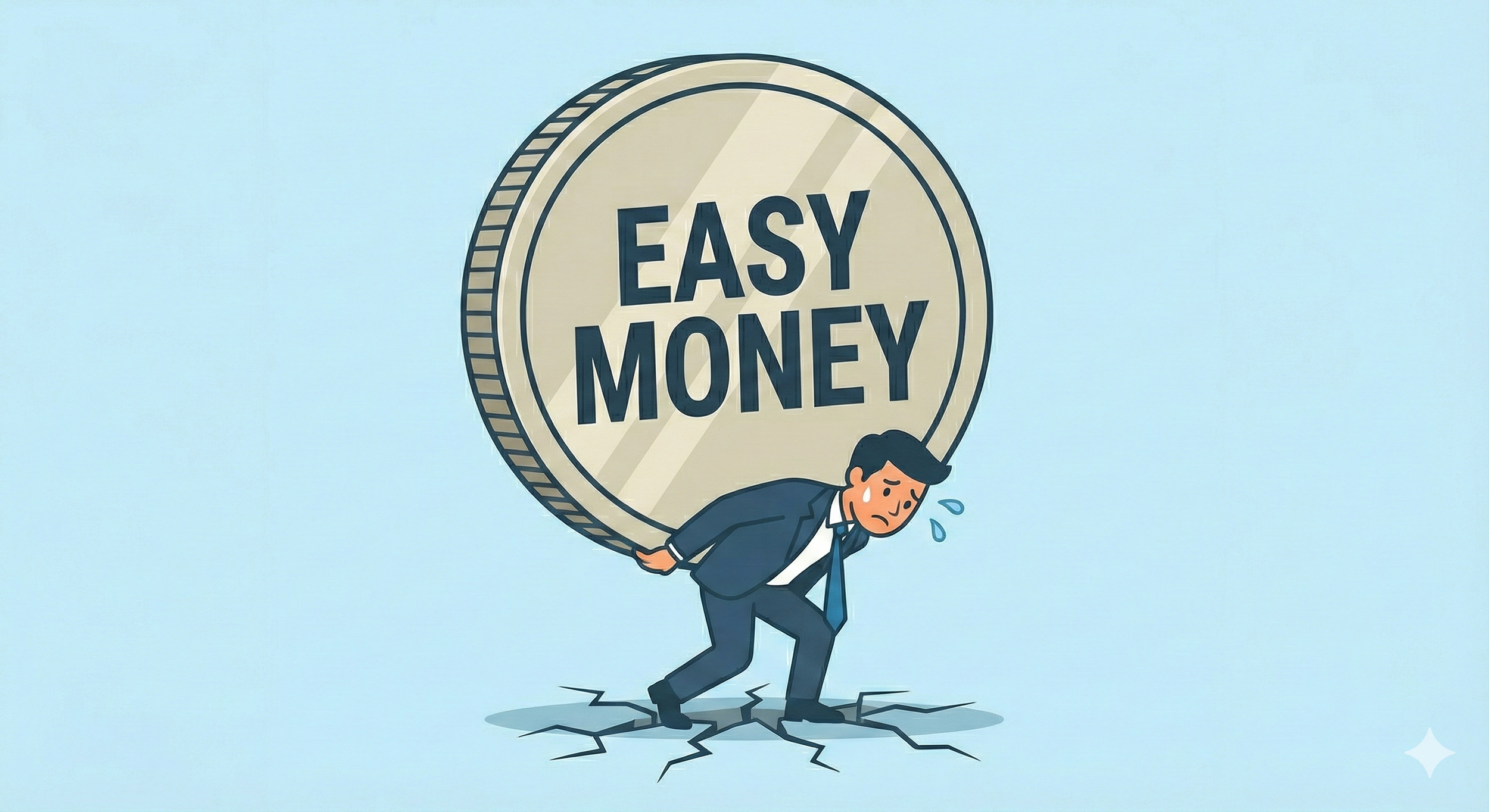
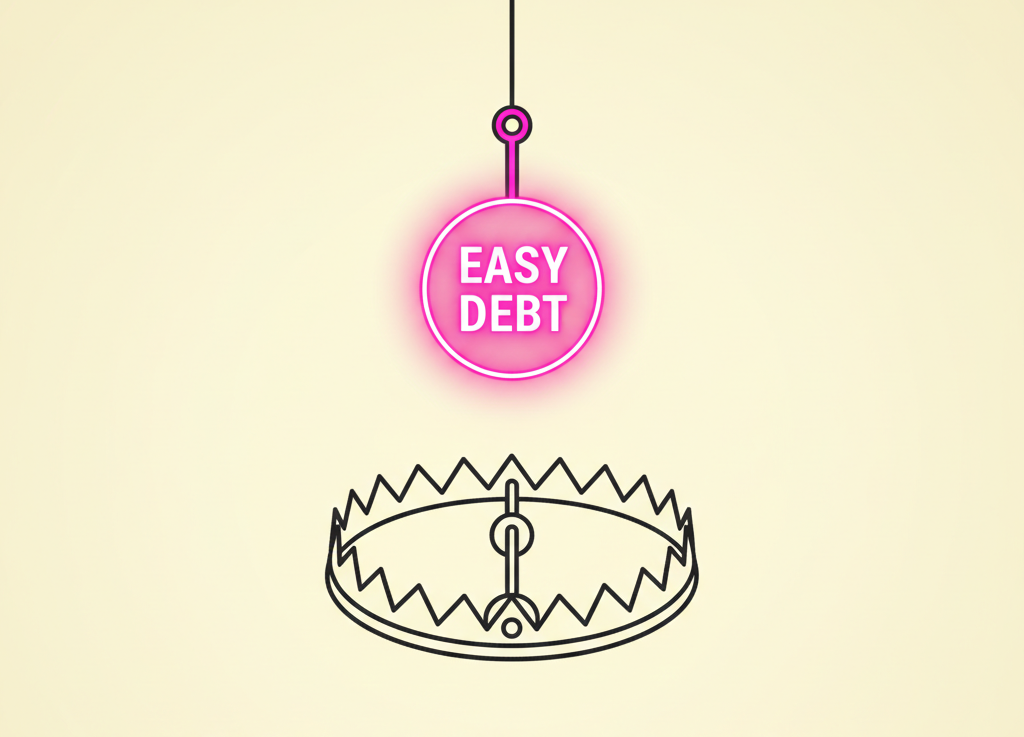
There is a specific kind of business financial suicide that involves taking out short-term bridge loans or lines of credit, or Merchant Cash Advances (MCAs) because the "total interest" seems lower than a long-term SBA 10-year or 25-years loan. This is an optical illusion that kills thousands of businesses every year. These business loans are often marketed with "competitive" rates, but the payback schedules create a liquidity vacuum.
When you allow a business lender to suck cash out of your bank account every week or day, you lose the ability to pivot. You can't buy inventory at a discount, you can't fix a broken delivery truck, and you can't hire the talent you need to scale.
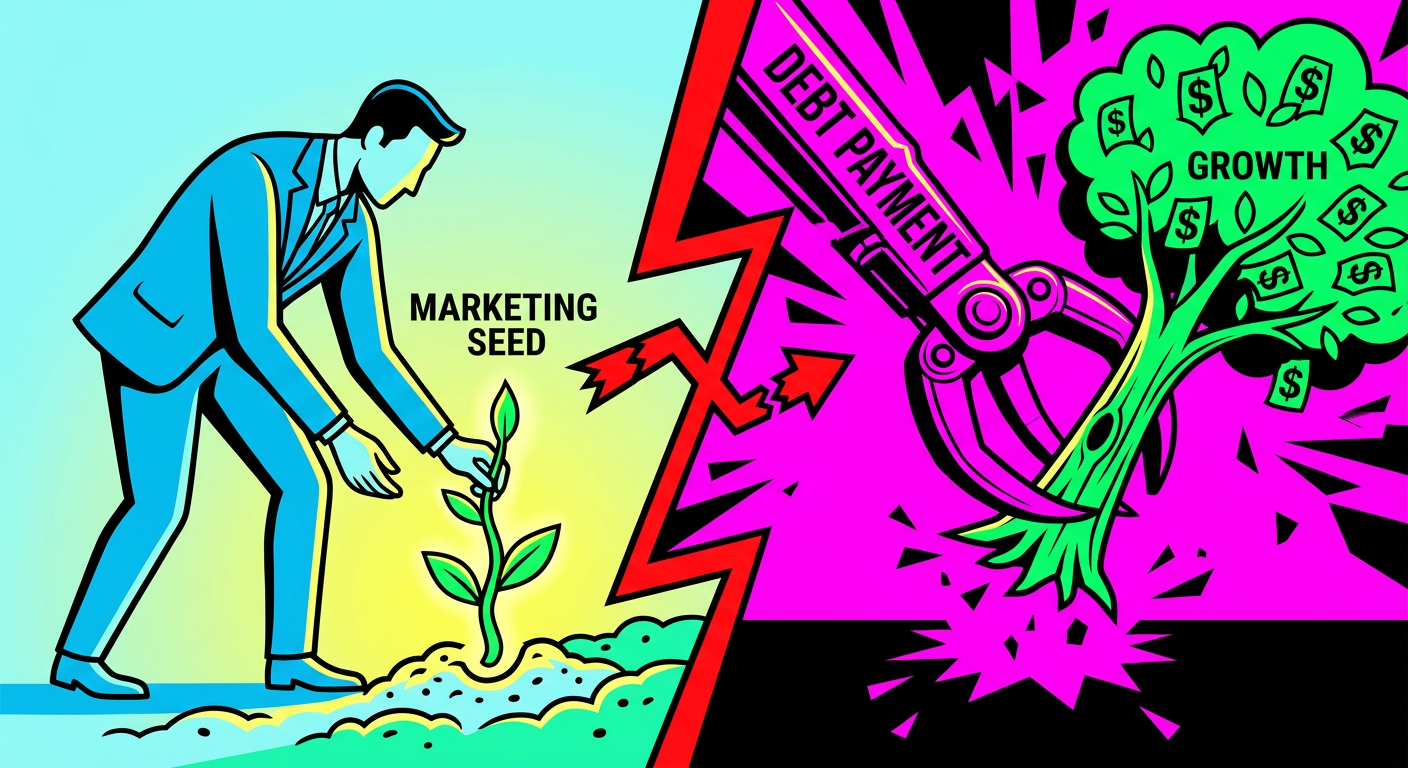
You saved a few points on the interest rate, but you sacrificed your company's growth potential to do it. That is a losing trade every single time.
Weaponizing Time to Build a Fortress
A long amortization schedule is a form of business financial insurance. It buys you the most valuable asset in business: time. Time allows your investments to actually work. If you borrow money to launch a new product line, that product isn't going to be profitable on day one. It might take twelve or eighteen months or more to hit its stride.
If your loan is amortized over one years, you are under immediate, crushing pressure to perform. You start making desperate, short-term decisions just to meet the principal and interest payments.
If that same business loan is amortized over five or ten years, you have the breathing room to execute your strategy correctly. You can weather the "valley of death" that accompanies every major growth phase. Amortization-focused borrowing isn't just about cash flow; it’s about the psychological freedom to lead your company without a gun to your head.
Predictability Is Your Greatest Competitive Advantage
In an economy defined by "black swan" events and shifting consumer behavior, predictability is a superpower. When you lock in a long-term, fixed-payment amortization schedule, you are capping your downside. You know exactly what your obligation is for the next five years or ten years.
Chasing short-term debt often means you have to "renew" or “refinance” or "roll over" the business debt frequently (called “churning”). This exposes you to interest rate risk. What happens if rates have doubled by the time your two-year loan is up? Now you're stuck with a massive principal balance and a skyrocketing cost of capital.
A longer amortization period protects you from the whims of the Federal Reserve interest rate decisions and the volatility of the banking sector. It provides a stable foundation upon which you can build a skyscraper.
Stop Financing Pencils with 30-Year Debt (and Vice-Versa)
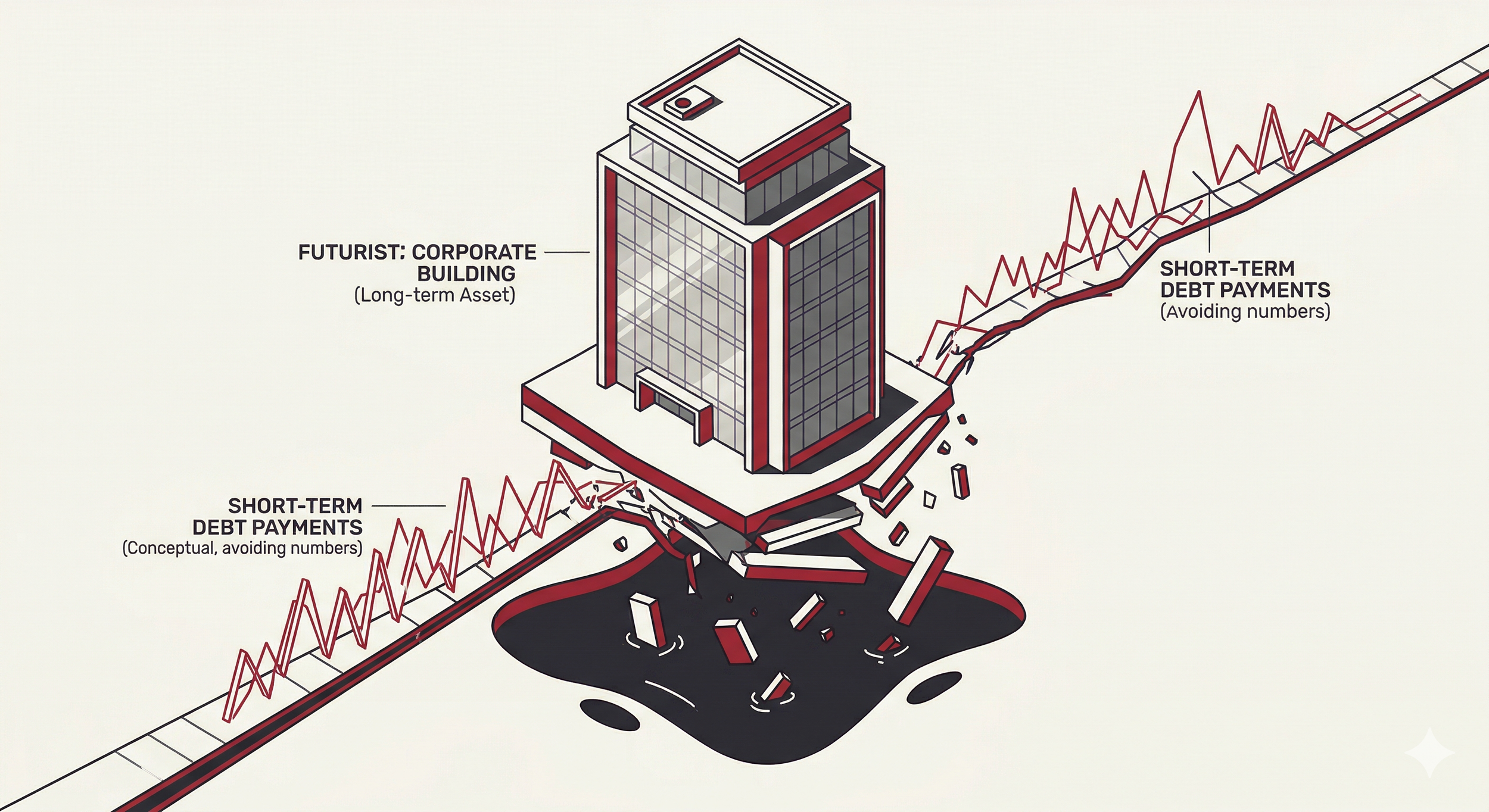
The most egregious mistake small business owners make is a business loan maturity mismatch. They finance long-term assets with short-term payback debt. If you are buying a building or a piece of industrial equipment that will generate revenue for fifteen years, you are out of your mind if you try to pay for it in three.
By aligning your amortization with the useful life of the asset, you ensure that the asset’s production covers its own cost. This is the "free money" of the corporate world. When the equipment generates $5,000 in monthly profit and the loan payment is only $2,000 because it’s spread over a decade, you have created $3,000 of monthly "found" capital. If you had shortened that amortization to three years to "save on interest," your payment might be $6,000—meaning the asset is actually costing you $1,000 a month just to own. That isn't "saving money"; it's a cash flow hemorrhage. Its just plain stupid.
Business Loan Amortization Is Not a Life Sentence
The most common excuse for avoiding long business loan amortization is the desire to be "debt-free." This is an emotional response, not a financial one. A long amortization schedule is a safety net, not a cage. As long as your loan doesn't have a predatory prepayment penalty, you can pay it off as fast as you want.
Think of a long amortization as an "adjustable" commitment that only adjusts in your favor. If you have a record-breaking quarter, you can throw an extra $50,000 at the principal and crush the business debt. But if the market crashes, you are only obligated to pay the low, amortized monthly amount. By prioritizing long business loan amortization, you are giving yourself the option to be a short-term borrower while retaining the protection of a long-term borrower. It is the only way to have your cake and eat it too.
The Scaling Secret: Don't Let Business Debt Outpace Business Growth
Scaling a business is inherently risky because it requires investing and spending money today for the hope of more revenue tomorrow. This is why aggressive amortization is the enemy of business growth and frustrates the scale-up. When you are growing, your overhead is rising, your payroll is ballooning, and your receivables are lagging. This is the exact moment when a large debt payment will break your back, crush your cash flow and then bleed into operational issues.
A long business loan amortization period allows your revenue to "catch up" to your business debt payments. It lowers the bar for success. It means you don't need to be a genius every single month to keep the doors open; you just need to be consistent. If you focus on the cost of capital, you might get a "better deal," but you'll have a much smaller company because you couldn't afford the cash flow requirements of true expansion.
How to Win with a Business Creditor
When you engage with a business lender, stop acting like a victim and start acting like a strategist. The lender wants to talk about the interest rate because it’s a simple lever. You need to talk about the term, payment schedule and payback period. Demand the longest amortization and least frequent payment possible. Ask for "interest-only" periods. Negotiate for "step-up" payments that start low and increase as your revenue grows.
Lenders are selling a product—money. And like any product, the "packaging" and “functionality” (the terms) of the product is often more important than the "price." If a lender won't budge on the rate, fine. Force them to give you another five years on the amortization.
That extra five years of cash flow is worth ten times more to your business than a two-point reduction in the interest rate. You aren't there to save pennies on interest; you are there to secure the capital structure that allows you to dominate in your business’ market.
Stop Being a "Rate Shopper" and Start Being a CEO
The bottom line is this: profitability is a theory; cash flow is a fact. You can be "profitable" all the way to the insolvency and even bankruptcy court if your cash is tied up in aggressive principal repayments (loan amortizations). It is time to stop thinking like a consumer looking for a car loan and start thinking like a CEO managing a capital structure.
Prioritizing amortization over the cost of capital is an admission that the future is uncertain and that you business cash flow is your only real defense. It is a commitment to sustainability over "cheapness." Build your business on the foundation of long-term, manageable debt. Protect your monthly cash flow with everything you’ve got. If you do that, the interest rate won't matter, because you’ll actually be around long enough to pay it off.
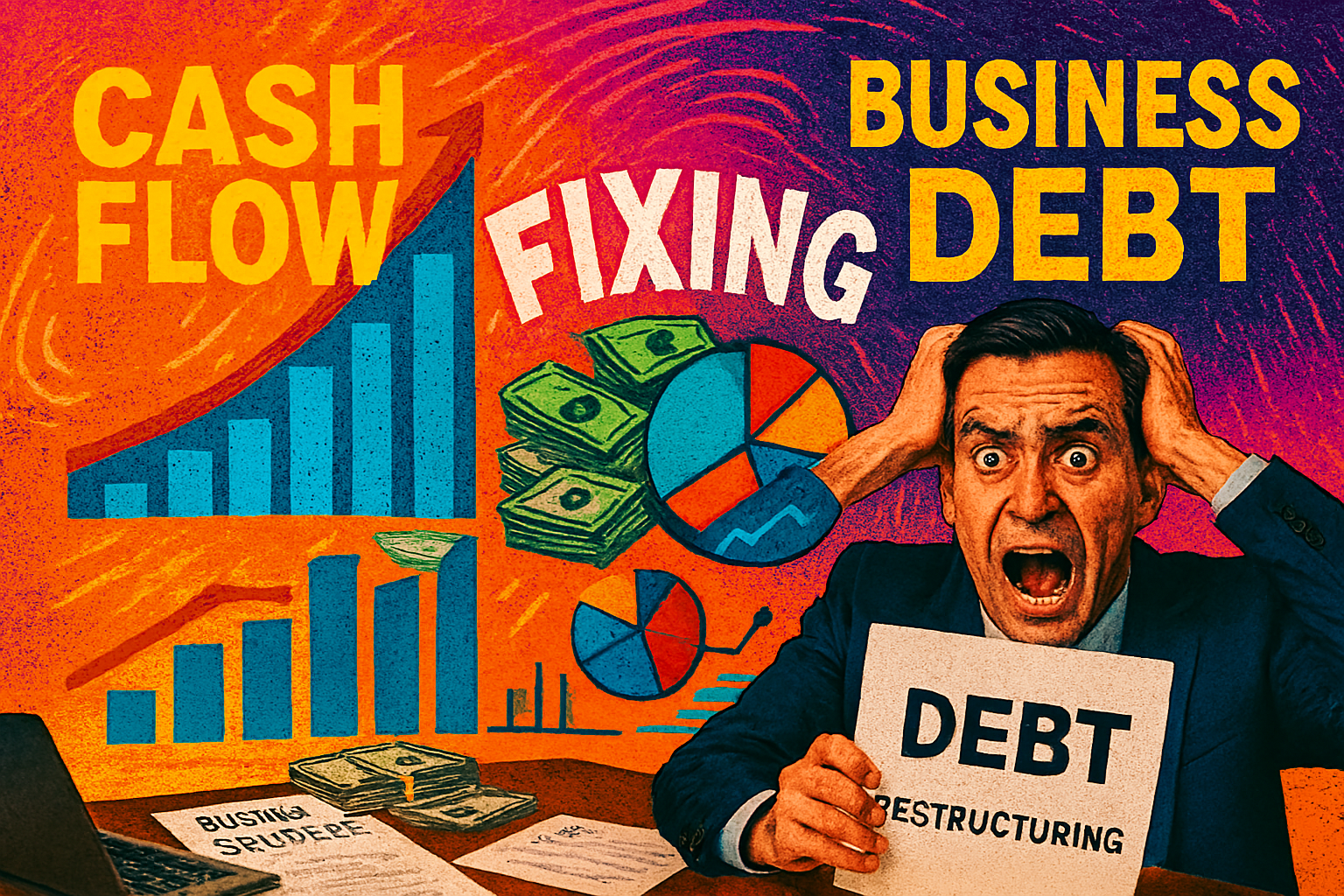
What is the Best Way to Fix Business Debt that is causing Business Cash Flow issues?
It is NOT by stopping ACH payments.
It is NOT by taking on another business loan.
It is NOT ALWAYS a Refinancing
It is NOT by entering into a debt settlement program.
Find out the BEST strategies to get your Business back to where it was

More Business Finance and Strategy Articles:
For business owners, navigating financial turbulence like cash flow shortages, liquidity constraints, and the weight of business debt service payments can be a significant crisis. These challenges are often temporary hurdles stemming from market downturns, the loss of a key customer or supply chain disruptions, rather than a failed business model. The first critical step is a thorough and honest assessment of your company’s financial health, focusing on three key metrics: cash flow, liquidity, and business debt service capacity
Cash flow is the cycle of money moving in and out of your company. A negative cash flow is unsustainable. A detailed cash flow analysis, which goes beyond the profit and loss statement, is essential. A business can be profitable on paper but face a cash crisis if its customers are slow to pay. The analysis involves tracking inflows and outflows, identifying timing gaps that create a squeeze, and questioning operational efficiencies. Are your payment terms too generous? Are you holding excess inventory? Are operating expenses too high? Answering these questions with data is the foundation of a credible recovery plan.
Liquidity is your company’s ability to meet its short-term obligations. This is often measured by the current ratio and the quick ratio. A low liquidity ratio signals to investors that your business may struggle to cover immediate business debt payments, suggesting a lack of a financial cushion. Understanding your liquidity requires a detailed examination of your balance sheet to determine how quickly current assets can be converted to cash and when current liabilities are due. This analysis highlights the urgency of your situation and can reveal potential sources of short-term relief, such as selling underutilized assets or negotiating more favorable payment terms with suppliers.
The challenge of business debt service payments is often the most pressing symptom of financial distress. When a significant portion of your cash flow is consumed by loan payments, it leaves little room for error. A comprehensive analysis requires creating a detailed business debt schedule listing all outstanding debts, their cost of capital, payment amounts, original balances, current balances and maturity dates. This provides a clear picture of your total business debt burden and helps identify the most onerous obligations. It is a critical component for discussions with potential new investors, as it allows them to understand the existing capital structure and how their debt or equity investment would be positioned.
Corporate failure is rarely a sudden or unforeseen event. It is the mathematical culmination of a long-term architectural decay within the balance sheet. When an enterprise finds itself suffocating under the weight of severe cash flow issues, paralyzed by insurmountable debt service payments and operating in a state of perpetual panic, it has not simply encountered bad luck. It has actively engineered a financial mess through a series of flawed strategic decisions, reactive borrowing practices and a profound lack of planning for business financing.
The executive suite often attempts to mask these deep structural failures by chasing top-line revenue, operating under the fatal delusion that you can out-sell a broken capital structure. This is an absolute impossibility. Revenue is a vanity metric; operational cash flow is the only empirical truth and is the backbone of healthy business operations.
Diagnosing a severe business financing mess requires executive leadership to strip away their operational arrogance and confront the unvarnished mathematical reality of their enterprise. The mess typically manifests as a convergence of lethal symptoms: structural negative cash flow created by poor business debt amortization, capital stacks heavily weighted toward toxic, short-duration liabilities and a complete loss of visibility driven by chronically incorrect financials.
When a business is bleeding liquidity and experiencing negative cash flow, the underlying cause is almost always a misalignment between the velocity at which the company generates cash and the velocity at which its creditors extract it. Fixing this crisis is not a matter of securing one more temporary bridge loan to cover this week’s payroll or whatever hole is trying to be filled. It demands a ruthless, systematic dismantling of the existing financial architecture.
Leadership must commit to aggressive deleveraging, forcing operational margin expansion and executing a comprehensive restructuring of the company's existing liabilities to align with existing business debt service strictly with the physical reality of the company's cash conversion cycle.
A business does not typically expire or fail from a sudden lack of revenue; it perishes from the systematic suffocation of its cash and liquidity. Of all the strategic failures that lead to corporate mortality, none is more lethal, more mathematically certain or more entirely self-inflicted than the terminal business debt spiral. This occurs when an executive leadership team, paralyzed by cash flow shortages and blinded by inaccurate accounting, begins borrowing new capital for the explicit purpose of meeting current cash flow gaps and for servicing the payments of existing debt. This is not a financing strategy; it is a rapid, managed descent into insolvency.
When an enterprise acts as a mere pass-through vehicle, collecting revenue from customers only to immediately send it to a syndicate of alternative lenders, it ceases to be a functional business. It becomes a hostage to its own capital stack.
Stopping this destructive cycle requires far more than securing another temporary bridge loan. It demands a complete architectural overhaul of the company's balance sheet, a ruthless optimization of internal operations and a total rejection of subprime or high-rate, short-term transactional finance. This comprehensive blueprint dismantles the mechanics of the business debt spiral and provides the uncompromising directives necessary to restructure your liabilities, reclaim your operating cash flow and engineer an enterprise capable of permanent market dominance.
The title of Chief Financial Officer is frequently the most dangerously misunderstood position on the executive organizational chart. An astonishing number of corporate leaders suffer from a profound executive delusion: they believe that because they have hired a senior accountant to reconcile the bank statements and interface with their external tax CPA, they have fulfilled the requirement for a strategic financial commander. This operational arrogance is a direct catalyst for corporate mortality. A business that confuses a glorified bookkeeper with a true Chief Financial Officer is actively engineering its own financial ruin.
The true mandate of a middle-market CFO is not to act as a passive historian recording the chaotic aftermath of your operational decisions. Their mandate is to function as the architect of your capital structure and the ruthless defender of your enterprise valuation. If your business is currently suffocating from cash flow shortages, paralyzed by high-interest and high-payment debts or operating blindly with chronically incorrect financials, the diagnosis is absolute: your CFO is categorically failing to execute their fiduciary duties.
To survive, scale, and dominate, executive leadership must intellectually separate the administrative burden of daily accounting from the strategic weaponization of corporate finance. This comprehensive analysis dissects the uncompromising, multifaceted duties that a legitimate Chief Financial Officer must execute to transition an enterprise from a state of reactive survival into a fortress of sustained market dominance.
Most businesses do not fail because they lack a viable product or a loyal customer base; they fail because they are architecturally unsound. They operate within a house of cards built on the shaky foundations of inaccurate accounting, toxic debt structures and a fundamental misunderstanding of capital velocity and liquidity needs.
When an executive team ignores the integrity of their balance sheet to chase top-line growth, they are not building an enterprise, they are piloting a suicide mission. Solving a business cash flow crisis is certainly not a matter of "finding more money"; it is a matter of ruthless structural reconstructive surgery. To save a distressed company and “right the ship”, leadership must stop looking for lifelines and start dismantling the internal mechanisms that are actively incinerating their liquidity.
This analysis dissects the lethal financial vulnerabilities inherent in modern business and provides the aggressive, data-driven maneuvers required to reclaim sovereignty over your capital and engineer a newer and stronger enterprise capable of multi-generational dominance.
In the complex ecosystem of business finance, the speed of capital is inversely correlated with the survival of the enterprise. The modern business landscape has been completely infected by an addiction to instant gratification, leading executive leadership to treat corporate capitalization with the same impatience as a consumer ordering a retail product online.
This is a fatal strategic delusion. The fundamental law of corporate finance dictates that “good money moves slowly”. The longer the repayment term and the cheaper the annualized cost of the financing, the longer and more mathematically exhaustive the underwriting process will be. Commercial banks, SBICs, institutional private credit funds and prime asset-based lenders do not dispense capital based on a single automated algorithm or a cursory glance at a bank statement. They deploy capital based on deep forensic verification.
When a business demands funding within 24-four hours to 48-hours or a few business days, it guarantees its own exploitation. This architectural analysis dissects the lethal mathematics of impatient capital and provides the uncompromising blueprint required to survive the rigorous underwriting of institutional private credit financing, transform your balance sheet and secure the patient capital necessary for multi-generational business market dominance.
When a business relies on an external tax firm to operate as its accountant or Chief Financial Officer, the result is typically an absolute operational catastrophe. This dynamic is the exact root cause of chronic cash flow issues, reliance on high interest and high payment debts, and the generation of entirely incorrect financials.
Your CPA is paid to look backward, conducting a post-mortem autopsy on a fiscal year that has already concluded. By the time they inform you that your cash burn rate was unsustainable or that your gross margins collapsed, the damage is already permanent, and you are likely already insolvent.
Operating a business in this manner is the equivalent of driving a commercial vehicle at highway speeds while exclusively looking in the rearview mirror. To survive and dominate your industry, you must recognize that operational accounting is the proactive, daily management of cash, business debt, and assets—is an internal strategic mandate that can never be outsourced to an annual tax preparer.
The modern corporate landscape is littered with the corpses of businesses that operated under a fatal delusion: the belief that transactional, short-term debt is a viable mechanism for sustaining operations or fueling growth.
Let us be absolutely clear—merchant cash advances (MCAs), weekly or daily ACH debit business loans, and subprime alternative lending products are not business financial lifelines. They are predatory traps designed to extract maximum capital from a distressed enterprise at an accelerated velocity.
Executive leadership teams frequently succumb to these toxic instruments out of sheer desperation, driven by a profound lack of forward-looking financial planning and chronically inaccurate accounting. When an organization fails to forecast its cash requirements, it inevitably finds itself backed into a corner, staring down imminent payroll failures or critical vendor stockouts. In this state of panic, management reaches for the fastest, easiest money available, ignoring the catastrophic long-term consequences.
Transactional lenders exploit this desperation. They do not care about your business model, your market share, or your enterprise value. They care exclusively about securing access to your gross receipts and draining them before you have the opportunity to deploy that capital toward actual operational needs.
Continuing to rely on these instruments is not a strategy; it is a slow, agonizing march toward corporate suicide.
Most business owners are operating under a delusion that borders on negligence: they believe that because they have a "good CPA" their accounting is handled. They see a professional designation, a signed tax return, a steady relationship and they assume the financial engine of their company is tuned for performance.
The reality is far more brutal. There is a fundamental, systemic, and often fatal gap between the compliance services a traditional Certified Public Accountant (CPA) firm provides and the high-level, aggressive accounting a growing business actually requires to dominate its market.
To put it bluntly: Your CPA is a historian. You need a navigator. If you continue to confuse tax filing with business strategy, you aren’t running a company, you’re presiding over a slow-motion car crash.
For most private business owners, success is often a gut-wrenching paradox. You watch your top-line revenue climb and your customer base expand, yet your bank balance remains a ghost town at the end of every month.
This isn't just a "rough patch." It is a structural business debt wall designed to suffocate you. High total debt service payments each month are consuming the very lifeblood of your operation. When your debt-to-income ratio tightens, you lose the power to pivot.
You aren't an entrepreneur anymore; you are a glorified collection agent for your lenders. Instead of seizing market share, you are trapped in a primitive cycle of servicing the past. You must realize that this is a systemic financial shackle.
If you do not break it now, the business debt will eventually break the business.
Securing long-term business financing is rarely about a single grand gesture or a lucky meeting with a loan officer or a private credit allocator. Instead, it is the culmination of meticulous operational discipline and strategic financial positioning.
For middle-market companies and growing enterprises, the transition from short-term transactional bridge loans or high-interest lines of credit to stable, long-term business debt is a rite of passage that signals institutional maturity. This process requires a shift in mindset from "managing cash flow" to "engineering a balance sheet."
To a lender, a business is not just a provider of goods or services; it is a predictable engine of cash flow. The goal of any executive seeking favorable terms—lower interest rates, longer amortizations, and minimal covenants—is to prove that this engine is well-maintained, transparent, and resilient.
The landscape of institutional lending has evolved to become highly data-centric. Whether you are approaching a traditional commercial bank, a credit union, a SBA lender, a Small Business Investment Corporation (SBIC) or a private credit fund providing credit facilities, the underwriting process is designed to strip away optimism and focus on cold, hard historical performance.
However, the "numbers" alone do not tell the whole story. The narrative you build around those numbers determines your risk profile. Long-term financing is an exercise in risk mitigation from the perspective of the creditor. By presenting a business that is "bankable" through flawless accounting and sophisticated financial analysis, you move your application from the bottom of the pile to the top of the credit committee’s agenda.
In the modern commercial landscape, operational excellence is frequently undermined by invisible fiscal fractures. A business may possess a dominant market share, a revolutionary product, and a loyal customer base, yet still find itself spiraling toward insolvency due to a fundamental misunderstanding of its financial architecture.
The most lethal threats to corporate longevity are rarely found on the competitive front lines; instead, they reside in the back office—within the ledgers, the business debt agreements, and the inventory warehouses.
When a company operates without a sophisticated, forward-looking financial strategy, it cedes control over its own destiny. From the suffocating weight of misaligned business debt and the silent menace of inaccurate financial reporting to the systemic drain of inventory over-purchasing, these obstacles demand a proactive and sophisticated response.
The journey of an established enterprise is full of financial intricacies that require diligent planning and a continuous commitment to fiscal health. This analysis explores the core financial impediments that plague businesses today, offering a comprehensive guide to understanding, mitigating, and ultimately overcoming them to build an enduring framework for sustainable, multi-generational prosperity.
In the intricate and unforgiving architecture of corporate finance, data is the ultimate currency of truth. Executive leadership, investors, and lenders all rely on a continuous, accurate stream of financial information to make critical decisions that dictate the trajectory of an enterprise.
However, a pervasive and deeply destructive threat constantly undermines this process: flawed business accounting.
When the fundamental mechanisms of recording, classifying, and summarizing financial transactions are compromised, the resulting chaos permeates every level of the organization. Flawed accounting is not merely an administrative annoyance; it is a systemic vulnerability that distorts reality, masks critical cash flow hemorrhages, and ultimately paralyzes strategic execution.
Businesses operating with inaccurate financials are essentially navigating a treacherous economic landscape completely blind. They mistake liabilities for assets, confuse phantom profits with actual liquidity, and inadvertently architect their own demise through toxic borrowing and catastrophic capital misallocation.
This comprehensive analysis dissects the profound mess and the exorbitant costs created by inaccurate accounting. It explores how bad data accelerates debt traps, destroys external credibility, and forces leadership into a perpetual, exhausting state of crisis management, while outlining the absolute necessity of building a resilient, precision-driven financial framework.
In an attempt to bridge the gap and keep operations running, many business owners turn to high-cost, short-term capital. What begins as a single merchant cash advance or a short-term, high-interest business loan quickly spirals, exponentially. As the frequent automated ACH withdrawals strip the operating account of its working capital, the business takes on another advance or financing to pay off the first, or to cover essential payroll and vendor obligations. This creates a destructive cycle known as stacked debt or transactional debt.
Stacked debt is corporate suffocation. It paralyzes operational agility and forces leadership to manage cash balances hour by hour rather than steering the strategic direction of the enterprise. The fundamental issue is that short-term debt is being used to finance long-term operational deficits, creating an unsustainable capital structure. The business is no longer operating to generate profit; it is operating solely to service its debt stack.
To survive this period of distress of the balance sheet and business cash flow, the company must undergo a radical financial transformation. The ultimate goal is to transition from this toxic, short-term debt stack into a restructured balance sheet supported by a strategic capital partner that provides a sustainable, long-term credit facility.
Achieving this requires more than just finding a new lender. Institutional capital partners will not refinance a mess. They require total transparency, rigorous financial reporting, and a clear path to profitability. Moving from crisis to stability demands an exact, methodological process to rebuild the financial infrastructure of the business from the ground up.
In corporate finance, profitability is often championed as the ultimate indicator of business success. However, seasoned executives and financial professionals understand a more sobering truth: a business can be highly profitable on paper and still face catastrophic failure.
The silent assassin in these scenarios is rarely a lack of revenue or market demand; rather, it is the persistent, suffocating grip of negative cash flow. While cash flow deficiencies can stem from various operational missteps, one of the most destructive and difficult to untangle is a poorly constructed business debt portfolio.
When a company's debt structure is fundamentally misaligned with its operational reality and cash generation capabilities, it creates a systemic liquidity drain. This financial friction prevents the business from fulfilling basic obligations, stifles growth, and forces leadership into a perpetual state of crisis management.
Navigating out of this perilous situation requires a forensic understanding of how specific loan terms, amortization schedules, and capital misallocations drain working capital. It demands a shift away from reactive borrowing and toward strategic financial engineering.
This comprehensive analysis explores the intricate mechanics of how poor debt structures precipitate negative cash flow. It dissects the interconnected financial challenges that businesses face—from high-interest burdens and asset-liability mismatches to the compounding effects of inaccurate accounting—and provides a definitive, strategic roadmap for restructuring debt, reclaiming liquidity, and building an enduring foundation for long-term fiscal health.
The core function of any commercial enterprise is not merely its product or service, but the fluidity and stability of its financial structure. When businesses experience rapid growth or encounter unforeseen economic headwinds, the underlying financial mechanics are put to the ultimate test.
Often, business leaders discover that their operational success is being undermined by structural weaknesses in their financial management. These weaknesses manifest in various ways, from debilitating cash flow issues and crushing debt burdens to the quiet but equally destructive forces of inaccurate accounting and reporting.
A business cannot thrive on revenue alone; it requires a meticulously calibrated approach to capital management, business debt structuring, and strategic cash flow forecasting. The complexities of managing business working capital, securing appropriate business financing and maintaining precise financial visibility are paramount for long-term viability and decision-making.
This comprehensive analysis explores the most critical financial challenges businesses face and provides strategic imperatives to correct course, optimize capital efficiency, and build a resilient foundation for future growth. By addressing these foundational elements, organizations can transition from a state of constant financial reactive distress to one of proactive, sustainable expansion.
Securing business financing is rarely just about having a great product or a growing customer base. When you sit down with a private credit lender, an SBA-backed institution, or a long-term commercial lender, you are not just selling them on your vision; you are selling them on your reliability.
In the realm of business lending, reliability is measured through the lens and accuracy of your business financial reporting. Many small to medium-sized business owners view accounting as a backward-looking necessity, something done to satisfy the IRS or to keep track of bank balances.
However, sophisticated pro-growth business lenders like private credit funds, commercial or investment banks and SBA-backed lenders view your accounting system as the "operating system" of your business. If the system is buggy, outdated, or inconsistent, the lender assumes the business itself is risky.
To increase your chances of approval, you must transition from "checkbook accounting" to a robust, institutional-grade financial framework. This shift doesn't just help you get long-term and better-suited business working capital; it provides you with the data needed to run a more profitable enterprise.
For many business owners, the bank balance feels like a pulse. When it is strong, the business feels healthy and vibrant; when it drops, a sense of tectonic instability sets in.
However, a common misconception is that a lack of business cash is always a result of a lack of profit. In reality, some of the most profitable companies in the world have collapsed because they ran out of liquid currency.
Understanding business cash flow shortages requires moving beyond just the Profit and Loss statement and looking into the mechanical timing of how money moves. A shortage occurs when the timing of your outgoings does not align with the timing of your incomings.
This gap, often referred to as the “cash gap”, can be caused by various internal and external pressures. By identifying these causes early, you can move from a reactive state of "firefighting" your finances to a proactive state of strategic business financial management.
Once a business falls into a cycle where a significant portion of daily or weekly revenue is diverted to business debt service payments (principal and interest), the result is a catastrophic erosion of business liquidity. Operating in a state of negative liquidity—where current liabilities exceed liquid assets—stifles innovation, damages vendor relationships, and ultimately threatens the solvency of the enterprise.
This article outlines a comprehensive, multi-phase strategy for breaking the high-interest debt cycle, restoring positive cash flow, and rebuilding a sustainable capital structure.
When interest payments begin to eclipse operating margins and the "burn rate" becomes a daily anxiety, the path back to stability feels like navigating a labyrinth in the dark.
However, business debt is not a death sentence. It is a financial condition that requires a clinical, disciplined, and strategic response to its demand. This article serves as a deep-dive manual for the business owner currently treading water or underwater, providing a step-by-step framework for turning around a debt-ridden business, re-stabilizing cash flow, and ultimately returning to a state where profits can once again be reinvested into growth.
In the world of commercial finance, the structure of a business debt instrument is often more critical than the interest rate itself. While many business owners obsess over a few percentage points, the true architect of business financial stability is the amortization schedule (payback frequency & period). When a business loan’s repayment structure is misaligned with the company’s natural cash flow cycle, it creates a structural friction that can lead to technical insolvency, even for a profitable and thriving enterprise.
A mismatch between how a business earns money and how it is required to pay it back is a silent profit killer. It forces management into a defensive posture, prioritizing liquidity (a company’s ability to meet near-term obligations) over growth and often leading to a reliance on expensive, short-term "bridge" funding to cover gaps. To build a resilient company, one must ensure that the debt service payments are a synchronized partner to operations, not an adversary.
For the average small and medium-sized business owner, the interest rate is the most visible metric, the one we are taught to haggle over, and the one that feeds the ego. We want to brag about a "cheap" loan. But in the cold, hard reality of the balance sheet, a low interest rate is a vanity metric. If you are prioritizing the cost of capital over the amortization schedule (payback period), you aren't being frugal—you are being dangerous. You are effectively prioritizing the "price" of the money over your company’s ability to draw its next breath.
The cost of capital tells you what the business debt costs in a vacuum. Business loan amortization tells you whether that business debt will actually fit through your front door without breaking the hinges. An 25%+ interest rate on a loan that must be repaid in twelve-four months can be a death sentence, while an 11% rate spread over ten years is a strategic asset. If you want your business to survive a downturn or fund a massive expansion, you must stop obsessing over the rate and start weaponizing the business debt payback timeline.
As a business owner, you wear more hats than any single person should. But when it comes to business financing and cash flow—the very lifeblood of your operation—even a small misstep can have a ripple effect that touches every corner of your business.
Strategic financing is not just about securing capital; it’s about making every dollar count, preserving your solvency, and setting the stage for sustainable growth.
This article is your practical guide to the most common, yet most damaging, business financing mistakes businesses make. More importantly, we’ll provide concrete, step-by-step solutions to help you fix them if they’ve already happened, and build a more resilient business financial future.
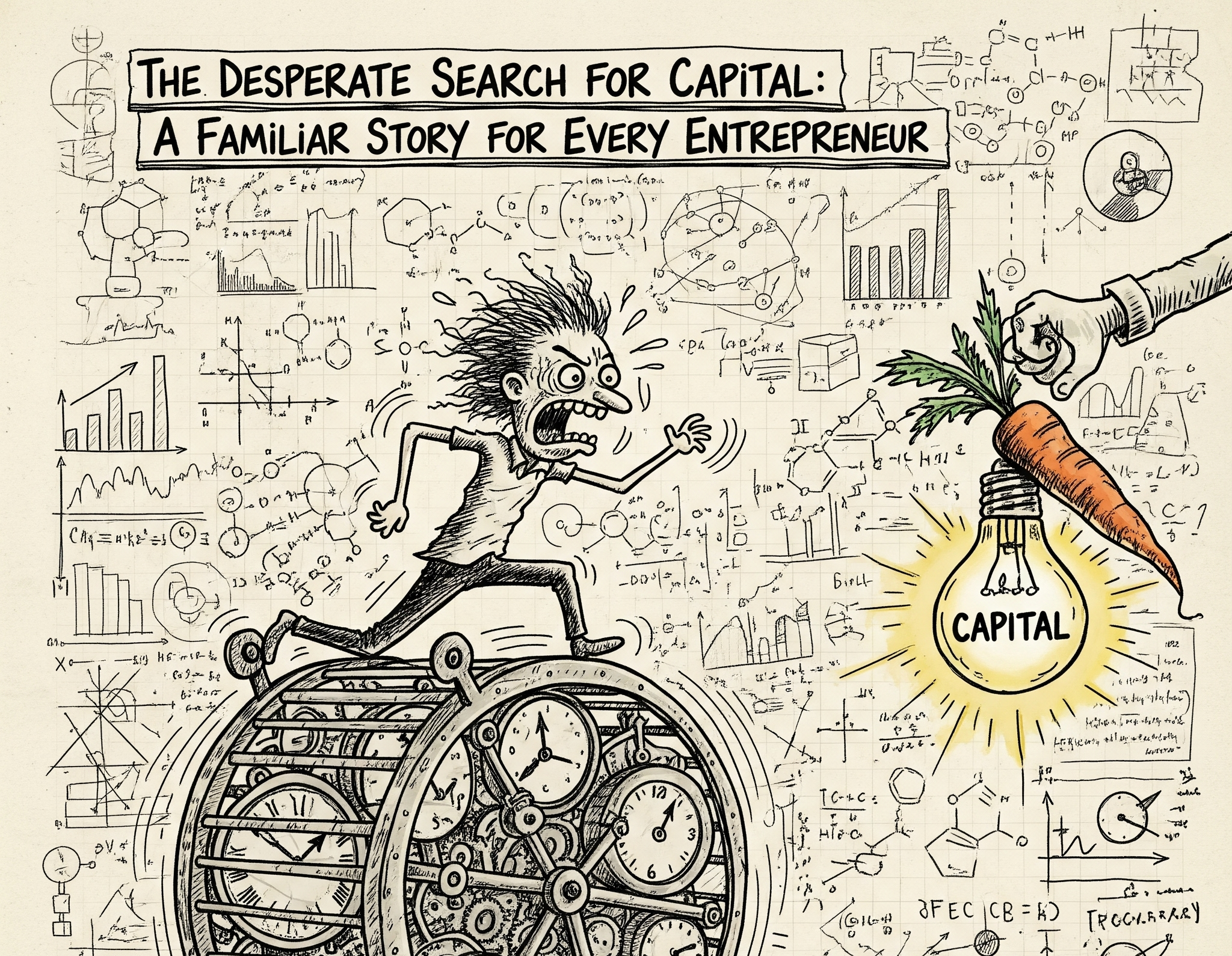
When the problem you need to solve is a lack of capital, the path forward can seem foggy and fraught with peril. You know you need money to grow your business, to hire, to purchase equipment, or simply to survive a cash-flow crunch. In your search for a solution, you will inevitably encounter two very different types of professionals: the Business Finance and Strategy Advisor and the Transactional Business Funding Broker.
To the uninitiated, they might seem to serve the same purpose—they both help you get money for your business. However, this is like saying a fast-food cashier and a personal nutritionist both help you get food. While technically true, their roles, processes, motivations, and the long-term impact on your business's health are worlds apart.
Choosing the right partner and advisor isn't just a simple decision; it's a strategic choice that can define your company's trajectory for years to come. This article will demystify these roles, explore their profound differences, and empower you to decide which one is the right fit for your unique situation. We will journey beyond the surface-level pitch and delve into the core philosophy that separates a one-time transaction from a long-term strategic partnership.
Managing business debt and navigating the sometimes choppy waters of business creditor relations is a constant, demanding task. You juggle inventory, payroll, and customer service, all while trying to keep your financials stable and compliant.
But what happens when the waters turn turbulent, and an aggressive junior (subordinate) creditor (provides business loans “behind” or “after” your first creditor) starts applying serious pressure? You might feel exposed, even desperate.
This is precisely when understanding the role of your senior business creditor becomes not just prudent, but a vital strategic advantage. They are not merely the holder of your largest debt; they are, in many crucial ways, your most powerful, and often unexpected, ally.
This article will define these two critical creditor types and explore the multifaceted ways your senior lender can become your shield and guide in times of financial duress. Understanding this dynamic is key to surviving and thriving when faced with an uncompromising junior business debt lienholder.
It is the ultimate gut-punch. You pull your year-end reports, and the numbers are screaming success. Your Profit and Loss statement shows a healthy, enviable net income. Your sales team is hitting targets, and on paper, you’re killing it. But when you log into your business banking app, the reality is a cold, hard slap in the face: the balance is pathetic.
You’re staring at a screen that says you’re rich, while your actual bank account says you’re broke. You find yourself pacing the floor, demanding an answer to one question: "If I’m making so much money, where the hell is the cash?"
This isn’t just a "glitch" in the system; it’s the Phantom Profit Paradox, and it’s the silent killer of otherwise "successful" companies. You need to understand right now that profit is nothing more than an accounting theory. It’s an opinion.
Cash, on the other hand, is a physical fact. You can’t pay your employees with "profit." You can’t pay your rent with "net income." If you don’t bridge the gap between these two metrics immediately, your "profitable" business is going to go bankrupt with a smile on its face. It’s time to stop looking at your P&L through rose-colored glasses and start hunting down the cash thieves hiding in your operation.
Banks have become paralyzed by regulation and risk-aversion, leaving high-performing businesses trapped in a "credit gap." Short-term lenders are charging unsustainable and excessive fees and interest for business financing. Where can a business owner turn in this economy for strategic growth capital or for business refinancing of existing business debt?
Private credit is the weapon of choice for business owners who refuse to be sidelined. It is not a secondary option; it is a sophisticated, aggressive alternative to the lethargic lending practices of the past and the aggressive and expensive fintech lending of current day. For the business owner who wants to win, private credit is the strategic tool to recapitalize suffocating business debt and replace it with flexible, high-velocity capital.
Private credit providers are not looking for reasons to say "no" like your local bank manager. These are private debt investment funds, high-net-worth family offices and institutional investors who value enterprise strength over static collateral. They do not care about the "one-size-fits-all" metrics that banks use to reject ambitious companies. They look at your business cash flow, your market dominance, your story and your trajectory.
By moving into the private credit space, you are stepping away from the amateur hour of retail banking and online lenders, entering a market where business capital is structured to fuel expansion, not just monitor compliance.
When a company finds itself burdened by high-interest business obligations or a repayment schedule that outpaces its incoming cash flow, the situation demands immediate, strategic intervention.
Fixing business financing mistakes is not merely about finding more capital; it is about fundamentally altering the structure of existing liabilities and the operational habits that created them. By leveraging business debt restructuring, refinancing, and rigorous operational pivots, a company can turnaround a looming crisis into sustainable stability.
The pathway towards recovery begins with an honest assessment of how the organization reached its current state. Financial distress rarely happens overnight; it is typically the result of a series of decisions that, while perhaps logical at the time, failed to account for the unpredictable nature of the modern economy.
For the small and medium-sized business owner, the weight of business debts and high payments can feel personal, but the solution must be entirely professional. Strategic recovery requires a cold, analytical look at the income statement, cash flow statement and balance sheet with willingness to dismantle and rebuild the financial architecture of the business from the ground up. This process is intensive, but it is the only way to reasonably ensure that the business does not just survive the current month, but thrives well into the future.
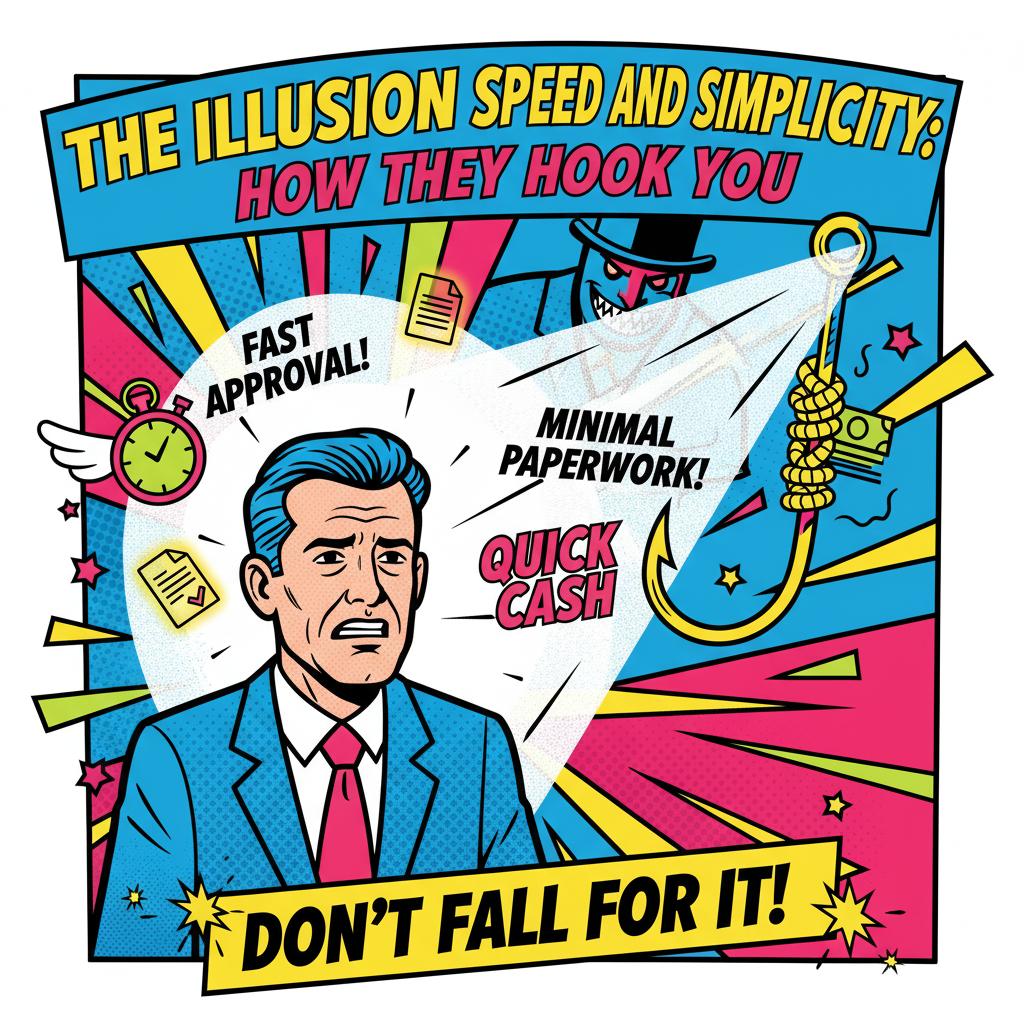
In the modern business financing marketplace, quick-fix capital is often marketed as a lifeline for small and medium-sized businesses, offering immediate relief from cash flow constraints with minimal underwriting. However, beneath the surface of “fast” or “24-hour” approvals and easy accessibility lies a predatory mechanism that effectively dismantles organizations from the inside out by reducing a company’s ability to re-invest into itself.
By trading future revenue for immediate liquidity through high-cost factor rates and daily or weekly remittances, business owners unwittingly enter a cycle of "negative compounding" that siphons off the very resources required to sustain basic operations: Cash Flow
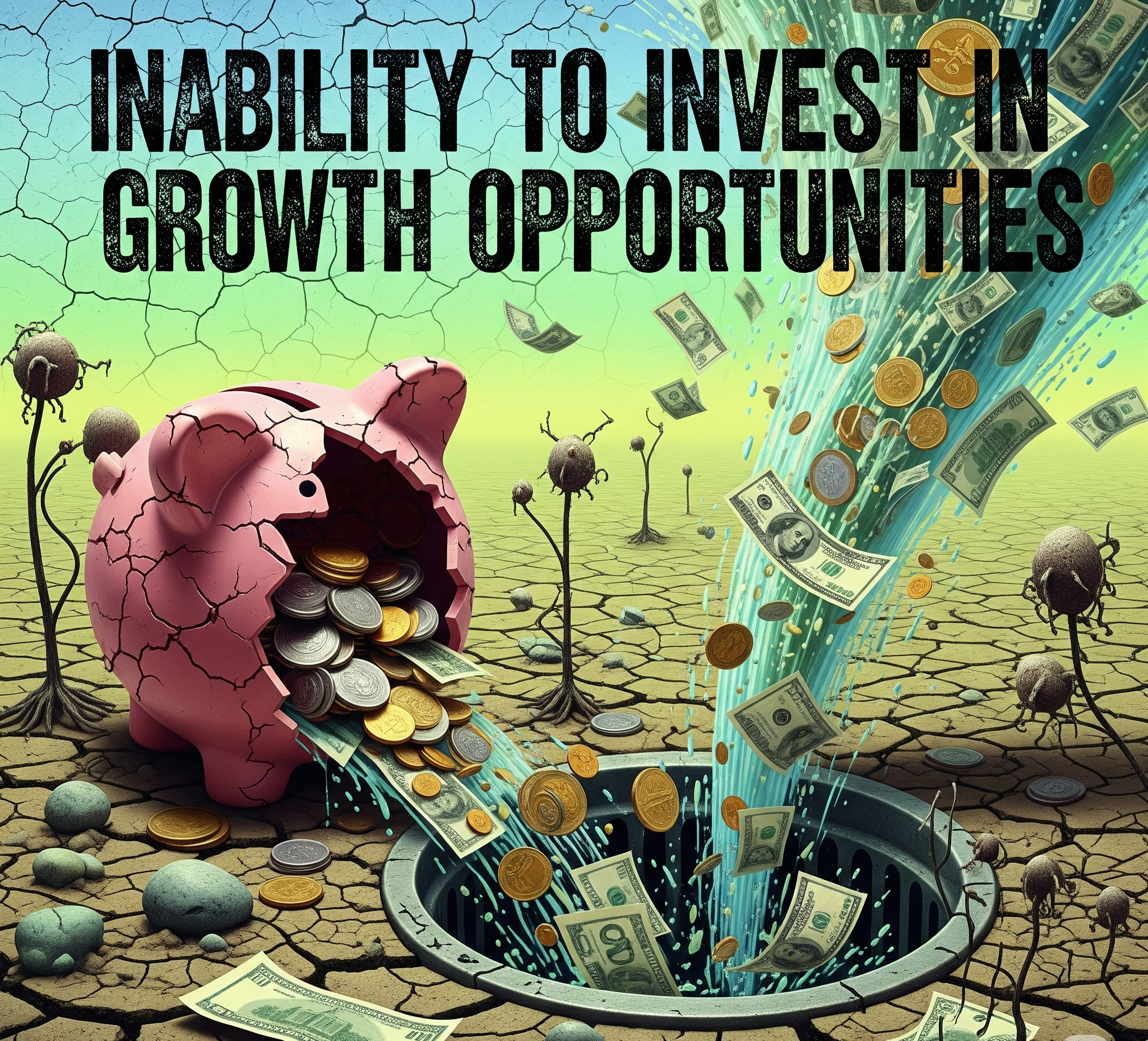
This article explores the systemic erosion of business value that occurs when high-interest, short-term business debt payments replaces strategic reinvestment. Beyond the immediate financial strain, we examine how these obligations create a "lost half-decade," where marketing efforts are silenced, talent acquisition is frozen, and product innovation grinds to a halt.
When an organization prioritizes the profits of a lender over its own growth, it does more than just lose money—it relinquishes its market position to unburdened competitors and traps the business in a state of permanent stagnation.
When business cash flow tightens or an urgent growth opportunity arises, the standard three-month wait for a traditional bank loan feels like an eternity. This is why many entrepreneurs turn to the alternative business lending market. However, speed and convenience often come with a hidden, heavy price tag. While some providers offer necessary bridges for business growth, others utilize structures that can slowly bleed a business of its cash flow and ability to invest in the future.
The alternative business lending landscape is a spectrum, ranging from established financial technology companies to aggressive marketplaces and brokers. Understanding the specific mechanisms used by the lenders frequently featured in the alternative business lending space is essential for your survival. This article examines the most common high-risk lenders and the structural "traps" they use, ensuring you can identify when an offer is designed to help your business—and when it is designed to consume it.