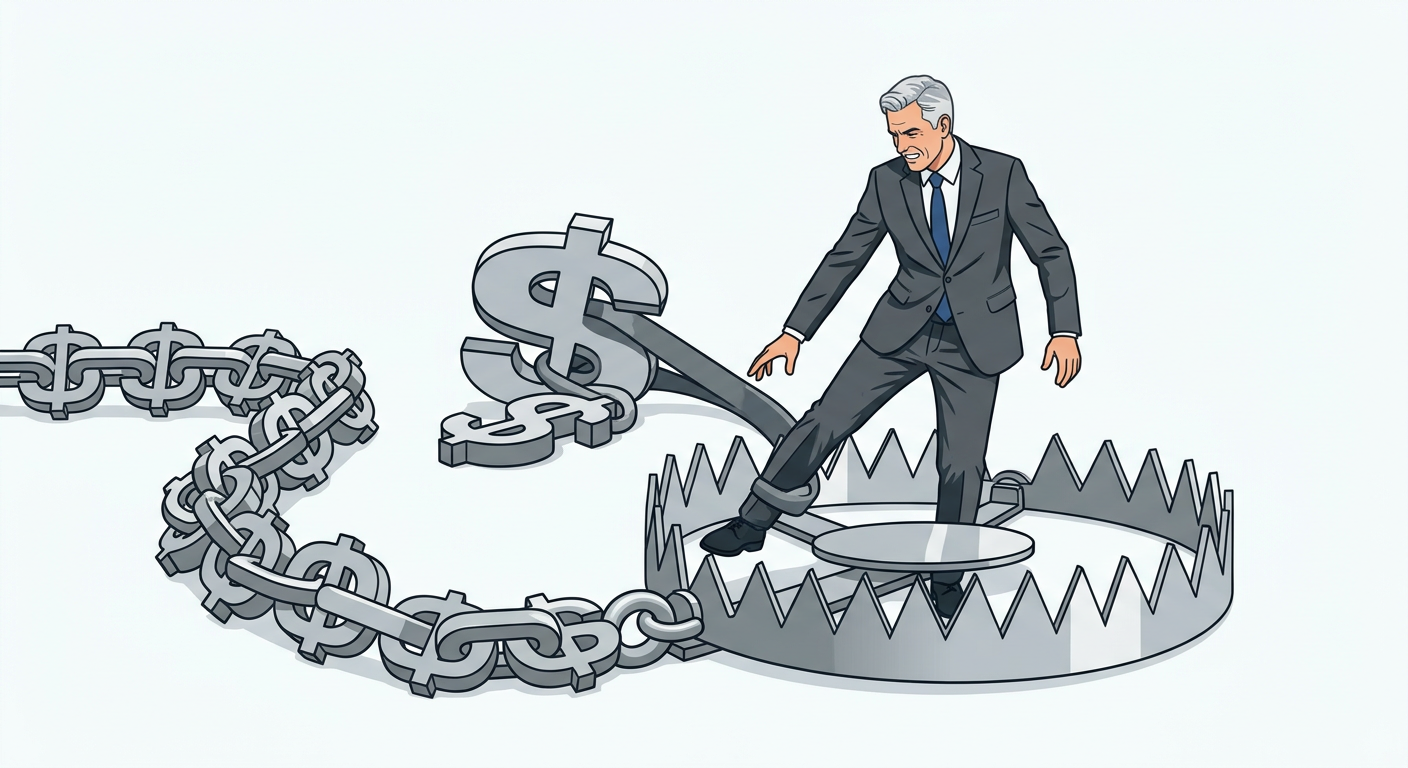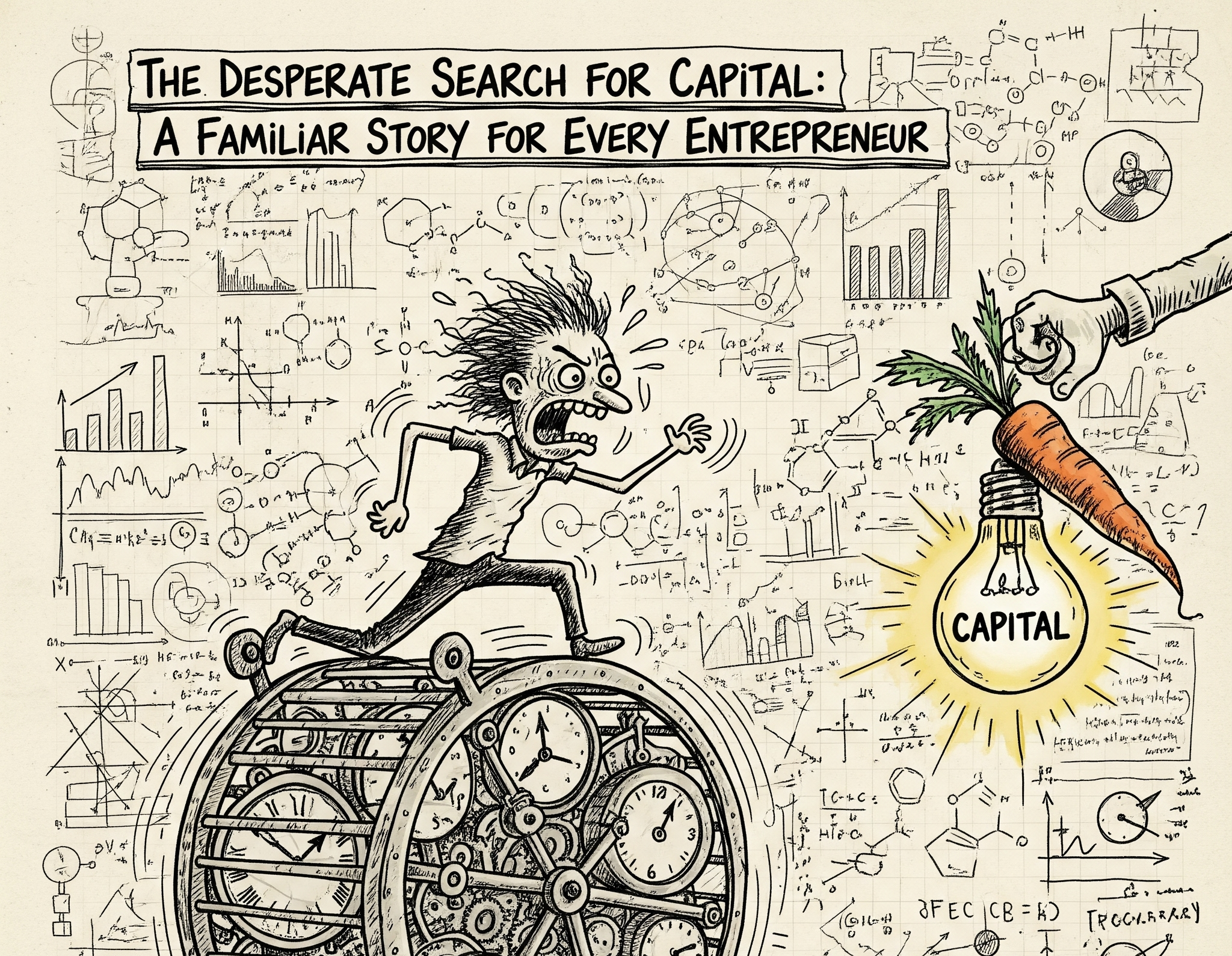
Banks have become paralyzed by regulation and risk-aversion, leaving high-performing businesses trapped in a "credit gap." Short-term lenders are charging unsustainable and excessive fees and interest for business financing. Where can a business owner turn in this economy for strategic growth capital or for business refinancing of existing business debt?
Private credit is the weapon of choice for business owners who refuse to be sidelined. It is not a secondary option; it is a sophisticated, aggressive alternative to the lethargic lending practices of the past and the aggressive and expensive fintech lending of current day. For the business owner who wants to win, private credit is the strategic tool to recapitalize suffocating business debt and replace it with flexible, high-velocity capital.
Private credit providers are not looking for reasons to say "no" like your local bank manager. These are private debt investment funds, high-net-worth family offices and institutional investors who value enterprise strength over static collateral. They do not care about the "one-size-fits-all" metrics that banks use to reject ambitious companies. They look at your business cash flow, your market dominance, your story and your trajectory.
By moving into the private credit space, you are stepping away from the amateur hour of retail banking and online lenders, entering a market where business capital is structured to fuel expansion, not just monitor compliance.
The Brutal Reality of Your Current Balance Sheet
Recapitalization is not a "fix" for a broken company; it is a tactical strike to optimize a successful one. If your balance sheet is a patchwork of high-interest short-term loans, restrictive bank lines, and equipment leases, you aren't running a business—you’re managing a collection of liabilities. This fragmentation kills your focus. Every hour you spend worrying about a covenant breach or a revolving credit limit is an hour you aren't spending stealing market share from your competitors.
When you use private credit financing to recapitalize, you are aggressively cleaning house. You replace those fragmented, nagging obligations with a single, unified capital structure and one capital provider to serve as your lender. This is the "reset" button that most owners are too timid to push.
You need to consolidate those high-cost liabilities now. The goal is to stop the bleeding of cash flow into high-interest business debt payments and start redirecting that capital where it belongs: into your sales force, your R&D, and your acquisitions. A recapitalized balance sheet is a signal to the world that you have the institutional backing to play for keeps.
Flexibility as a Competitive Weapon
The rigidity of traditional banking is a cage. Banks demand hard assets—real estate, machinery, inventory—and they ignore the actual value of your business: your brand, your intellectual property, and your recurring revenue. Private credit breaks that cage. Because private credit business lenders are unencumbered by the archaic regulations that govern banks, they can structure deals that actually make sense for your specific operation.
This flexibility is your greatest competitive advantage. A private credit facility can include "Payment-In-Kind" (PIK) options, allowing you to roll interest into the principal during aggressive growth phases. It allows for "interest-only" periods that align with your cash flow cycles. While your competitors are struggling to meet rigid monthly bank and egregious alternative lender payments, you are using that same cash to out-hire and out-market them. Private credit isn't just a loan; it's a customized financial engine designed to run at the speed of your business ambition.
Ending the Amortization Squeeze
Traditional bank loans and alternative online lenders are designed to protect the lender, not grow your company. They force you into aggressive principal repayments from day one, effectively draining your liquidity just when you need it most. This "amortization squeeze" is a silent killer of growth. Private credit offers a different path: extended amortization schedules or "bullet" maturities where the principal isn't due until the end of the term.
By extending your amortization runway, you are essentially buying time and liquidity—the two most valuable commodities in business. When you move from a punishing 12-month business debt payment schedule to a 3-year or 5-year private credit facility, you instantly unlock massive amounts of free cash flow. This isn't just "extra money"; it is dry powder. It is the capital you need to weather a market downturn or pounce on an acquisition target. If you are still paying down principal on a bank loan while your industry is evolving, you are losing.
The Myth of "Cheap" Bank Debt
Let’s kill the idea that bank debt is "cheap." A bank loan with an 11% interest rate that comes with restrictive covenants, personal guarantees, and aggressive repayment schedules is incredibly expensive in terms of opportunity cost. If that "cheap" loan prevents you from taking a $5 million contract because you lack the liquidity to fulfill it, that loan just cost you millions. Private credit is for owners who understand the math of the "all-in" cost.
Private credit typically targets an all-in cost of capital in the high-teens to low-20s range. Yes, the headline rate is higher than a bank's, but it is significantly cheaper than equity. Bringing in an equity partner means giving up control and a piece of your soul forever. Private credit allows you to keep 100% of your company while accessing the capital you need to scale. When you factor in the transparency, the lack of hidden fees, and the sheer volume of liquidity provided, driving your cost of capital into the high-teens is the smartest financial move you can make. It is the price of freedom and fast-tracked growth.
Purge Predatory Business Debt from Your Books
If you have Merchant Capital Advances (MCAs) or high-interest and short-term business loans on your books, you have a parasite. These products are designed to exploit short-term cash needs by charging triple-digit effective APRs. They are the financial equivalent of a payday loan for businesses, and they will eventually destroy your margins. Private credit is the heavy-duty antibiotic you need to purge these predators from your system.
Using private credit to recapitalize and wipe out MCAs is a non-negotiable step for any serious business. The "high-teens" rate of a private credit facility is a godsend compared to the 60%, 80%, or 100% APR rates associated with subprime commercial debt. More importantly, it stops the daily or weekly drain on your bank account. It replaces chaos with a predictable, professional interest payment. If you want to be treated like a real company, you need to stop borrowing like a desperate one.
Eliminating the Friction of Hidden Fees
Banks are masters of the "death by a thousand cuts" strategy. Appraisal fees, audit fees, unused line fees, and compensating balance requirements all serve to drive up your actual cost of borrowing while keeping the "headline" rate look low. It is a shell game. Private credit eliminates this friction. Because these lenders are focused on the total return of the deal, the fee structures are generally far more transparent and consolidated.
When you recapitalize with a private lender, you are cutting out the middleman and the administrative bloat. You are dealing with a single source of capital that doesn't need to justify its existence with "service charges." By consolidating your business debt, you stop paying multiple sets of fees to multiple institutions. Over the life of the loan, the thousands of dollars saved in these "soft costs" directly contribute to lowering your effective cost of capital. Every dollar saved on a fee is a dollar that stays on your bottom line.
Building a Fortress for Your Business Exit
If you think a buyer is going to pay top dollar for a company with a messy, bank-heavy, or MCA-laden balance sheet, you are delusional. Sophisticated buyers—whether they are private equity firms or larger competitors—look for "clean" companies. They want to see a capital structure that can handle stress and support growth. A company that has successfully recapitalized with private credit is a company that has already passed the ultimate test of thorough business underwriting and due diligence.
Having a private credit partner shows that your business is "institutional-ready." It proves that professional investors have looked at your numbers and placed investment bets on your success. This adds an immediate layer of credibility and "enterprise value" that a standard bank loan simply cannot provide. It signals that the business is scalable and that the owner has the financial sophistication to manage high-level capital. When it comes time to sell, your private credit structure will be an asset, not a liability.
Partnership Over Permission
In the bank world, you are a number. Your relationship manager has to ask permission from a credit committee that has never seen your office or met your team. When things get tough, the bank’s first instinct is to protect itself at your expense. Private credit is built on partnership. The people who write the checks are the ones who manage the relationships. They aren't just lenders; they are stakeholders in your success.
The covenants in a private credit deal are not designed to trip you up; they are designed to be sensible guardrails for your specific industry. Because these lenders are taking more risk, they are more incentivized to help you win. They have seen dozens of companies in your position and can offer strategic insights that a bank manager couldn't dream of. In a volatile market, you don't want a lender who will run for the hills at the first sign of a down quarter; you want a partner who will sit at the table and help you navigate the storm.
Dominate the Next Phase of Growth
The era of begging banks for a line of credit is over. The future belongs to the business owners who are bold enough to utilize private credit to restructure, recapitalize and rearm. By moving your business debt into a flexible, long-term private credit facility, you are choosing to drive down your cost of capital and maximize your operational freedom. You are moving from a position of weakness to a position of absolute strength.
Stop settling for the crumbs the traditional banking system throws you. Target that high-teens or low-20s cost of capital and use it to build a fortress. Recapitalization is the most aggressive move you can make to ensure your business doesn't just survive the coming years, but dominates them. The business capital is out there, waiting for owners with the guts to take it. The question is: Are you ready to stop managing business debt and start managing a legacy?
What is the Best Way to Fix Business Debt that is causing Business Cash Flow issues?
It is NOT by stopping ACH payments.
It is NOT by taking on another business loan.
It is NOT ALWAYS a Refinancing
It is NOT by entering into a debt settlement program.
Find out the BEST strategies to get your Business back to where it was

More Business Finance and Strategy Articles: