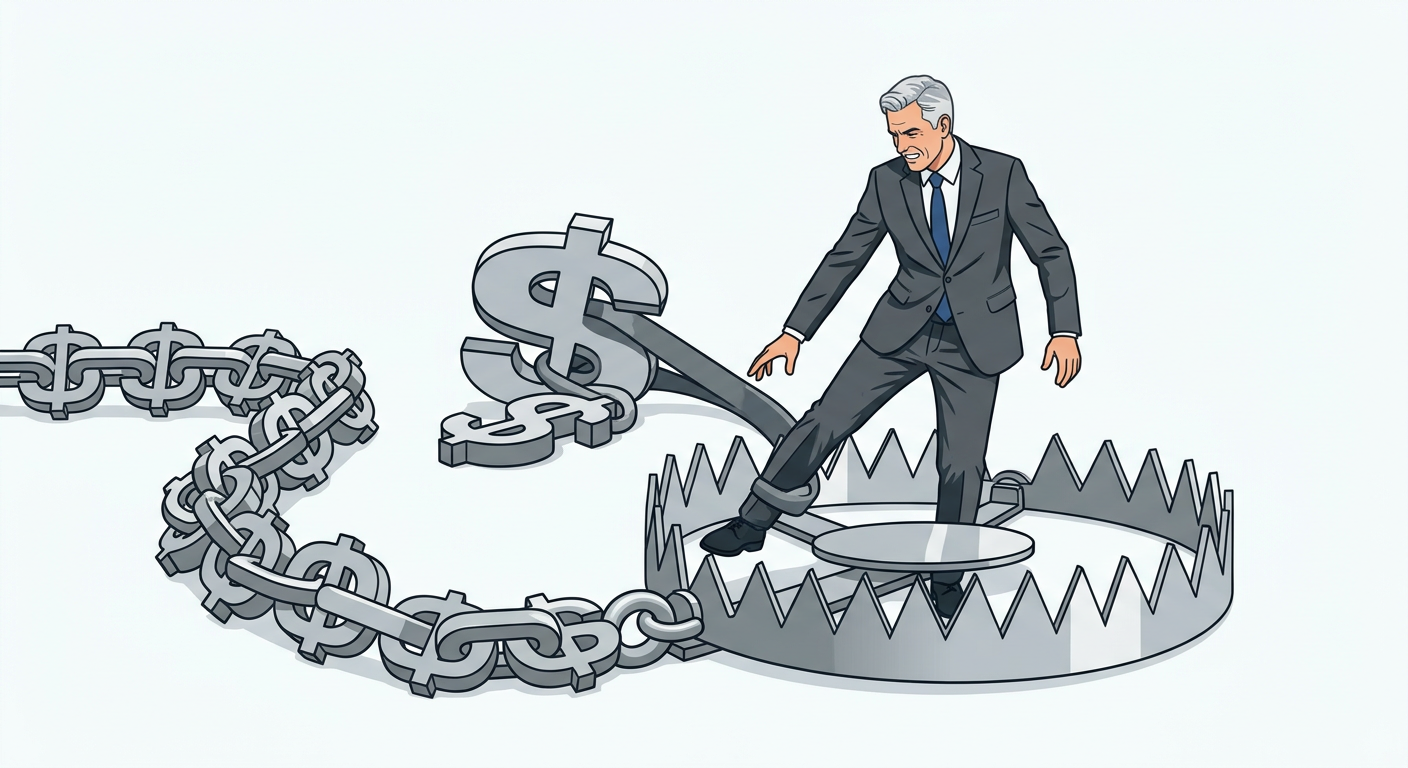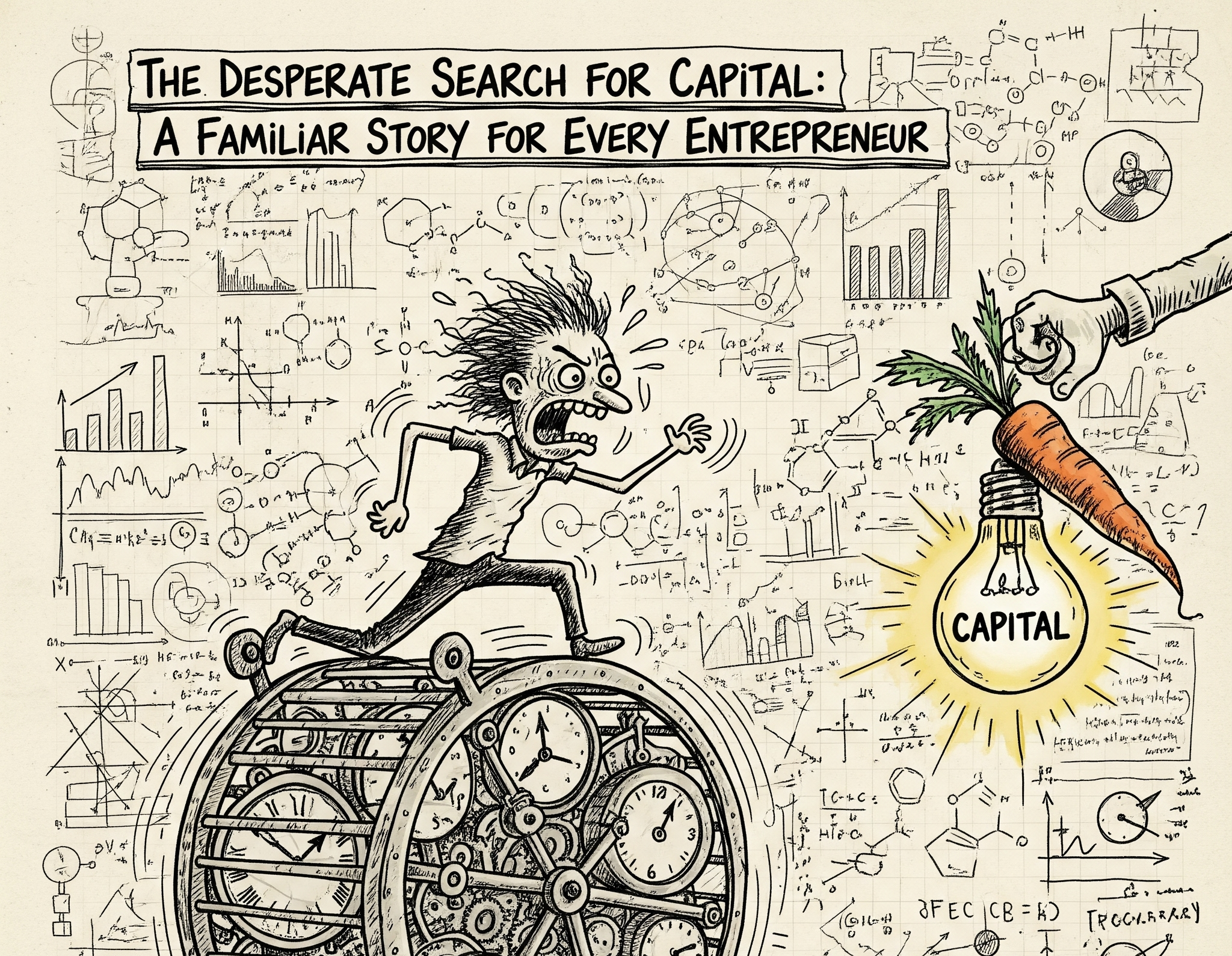
The core function of any commercial enterprise is not merely its product or service, but the fluidity and stability of its financial structure. When businesses experience rapid growth or encounter unforeseen economic headwinds, the underlying financial mechanics are put to the ultimate test.
Often, business leaders discover that their operational success is being undermined by structural weaknesses in their financial management. These weaknesses manifest in various ways, from debilitating cash flow issues and crushing debt burdens to the quiet but equally destructive forces of inaccurate accounting and reporting.
A business cannot thrive on revenue alone; it requires a meticulously calibrated approach to capital management, business debt structuring, and strategic cash flow forecasting. The complexities of managing business working capital, securing appropriate business financing and maintaining precise financial visibility are paramount for long-term viability and decision-making.
This comprehensive analysis explores the most critical financial challenges businesses face and provides strategic imperatives to correct course, optimize capital efficiency, and build a resilient foundation for future growth. By addressing these foundational elements, organizations can transition from a state of constant financial reactive distress to one of proactive, sustainable expansion.
Demystifying Business Cash Flow Constraints
Business cash flow is the ultimate arbiter of a business's operational reality. While profitability on an income statement indicates theoretical success, positive cash flow dictates whether an organization can meet its payroll, satisfy vendor obligations, and invest in immediate opportunities solely from operations or if the company requires additional financing as working capital or growth capital.
Business cash flow issues often stem from a fundamental misalignment between accounts receivable and accounts payable. When a company extends overly generous credit terms to its customers while being held to stringent payment schedules by its suppliers, a systemic liquidity gap is created. This gap forces the business to constantly scramble for capital, often resorting to sub-optimal financing methods (short-term and high cost business debt obligations) just to keep the lights on.
Addressing this constraint requires a rigorous examination of the business cash conversion cycle. Businesses must actively negotiate better payment terms with their vendors, seeking extended windows that align more closely with their own revenue realization.
Concurrently, they must tighten their receivables processes. This includes implementing stricter credit checks, offering early payment discounts to incentivize faster settlements, and establishing robust collections procedures for delinquent accounts.
Furthermore, comprehensive cash flow forecasting becomes an indispensable tool. By projecting cash inflows and outflows on a weekly or even daily basis, management can anticipate shortfalls before they occur and arrange for appropriate bridging capital.
Ultimately, resolving business cash flow constraints is not a one-time fix but a continuous operational discipline. It requires every department, from sales to procurement, to understand how their actions impact the broader liquidity pool. When the entire organization operates with cash awareness, the business can begin to build internal reserves.
These reserves not only insulate the company against unforeseen shocks but also provide the strategic agility required to capitalize on sudden market opportunities without being held hostage by immediate funding limitations.
Mismatched Timelines: Short-Term Debt for Long-Term Assets
One of the most dangerous, yet common, missteps in corporate finance is the mismatching of asset lifespans with business debt maturity profiles. In the urgency to acquire essential long-term assets—such as heavy machinery, real estate, or complex technological infrastructure—businesses sometimes utilize short-term financing facilities like lines of credit or high-interest bridge loans. This creates an immediate and severe structural imbalance. Long-term assets generate return on investment slowly over many years, whereas short-term debt demands rapid repayment.
This misalignment forces the business to continuously refinance or renew (re-draw) the debt or bleed its operational cash flow to meet aggressive and short-term principal repayment schedules. The constant pressure of impending maturities distracts management and places the company at the mercy of fluctuating interest rates and tightening credit markets. If a short-term note comes due during an economic downturn, the inability to refinance can lead to catastrophic liquidity crises or forced liquidation of the very assets intended to drive growth.
The strategic remedy is rigorous asset-liability matching. Long-term investments must be capitalized with long-term debt or equity. Instruments such as traditional commercial mortgages, long-term bonds, or equipment financing agreements ensure that the repayment schedule mirrors the economic utility of the asset.
This allows the asset to essentially pay for itself over its useful life through the revenue it generates or the efficiencies it creates. By restructuring existing mismatched obligations into properly amortized long-term structures, a business immediately relieves the pressure on its working capital, restoring balance to the balance sheet and creating a more predictable, sustainable path for future capital expenditures.
Breaking Free from High-Interest Obligations
High-interest and short-term payback business debt is a corrosive force that silently erodes a company's profit margins and stifles its capacity for innovation. Often acquired during periods of desperation, rapid expansion, or limited creditworthiness, these high-cost obligations—ranging from merchant cash advances (MCAs) to predatory alternative term loan or Line of Credit lending products—carry payment structures that disproportionately and quickly drain revenue. The sheer volume of business cash directed toward interest expenses prevents the business from reinvesting in critical areas such as talent acquisition, product development, or market expansion.
Breaking free from this spiraling cycle requires a comprehensive business debt restructuring strategy. The first step is a thorough inventory of all existing liabilities, calculating the true weighted average cost of capital. Management must then actively seek refinancing opportunities. This often involves improving the company's credit profile by resolving inaccurate financial reporting and demonstrating consistent, albeit currently strained, revenue generation.
By presenting a transparent and viable turnaround or Restructuring plan to commercial banking institutions or specialized private business credit providers, businesses can often replace multiple high-interest loans with a single, lower-cost facility with amortizations in 2-year, 3-year, 5-year and even 10-year or 25-year term loan amortizations freeing up immense amounts of cash flow for a business.
Furthermore, businesses must critically evaluate their operational expenditures to free up surplus cash dedicated strictly to aggressive business debt reduction. Implementing a debt restructuring strategy allows the company to systematically eliminate the most toxic liabilities first. As high-interest obligations are retired, the newly liberated cash flow accelerates the repayment of remaining debts.
his disciplined approach not only reduces the aggregate interest expense but also fundamentally shifts the company's leverage ratio, making it a more attractive candidate for favorable, conventional financing in the future.
The Devastating Impact of Inaccurate Business Financial Reporting
In the modern business environment, navigating without accurate financial data is akin to flying a commercial aircraft completely blind. Inaccurate financials create a perilous illusion of operational reality. A company might believe it is highly profitable based on flawed income statements, only to find itself suddenly unable to meet obligations due to an unrecognized cash flow deficit. Errors in categorization, failure to reconcile accounts, and delayed entry of expenses distort critical metrics such as gross margin, operating leverage, and net income.
This distortion has catastrophic ripple effects across the organization. It leads to deeply flawed strategic decision-making. Management might approve aggressive expansion plans, hire unnecessary personnel, or authorize massive inventory purchases based on phantom profits.
Furthermore, when these inaccuracies are eventually exposed—often during a critical audit or a restructuring to attempt to obtain more favorable financing terms or a refinance transaction of existing business debt obligation—the credibility of the leadership team is instantly destroyed in the eyes of investors, lenders, and key stakeholders. Without trust in the numbers, external capital completely dries up.
Rectifying this issue demands an uncompromising commitment to financial hygiene. Businesses must implement rigorous, standardized accounting procedures and invest in robust enterprise resource planning systems. Regular, timely reconciliations of all bank accounts, credit facilities, and intercompany transfers must become mandatory.
More importantly, leadership must cultivate an environment where financial transparency is prioritized over an artificially positive narrative (inaccurate financials). By ensuring that every ledger entry is meticulously verified, the organization replaces dangerous illusions with the hard, objective truths required to make sound, strategic business decisions.
The High Cost of Operating Without a Financing Plan
A pervasive vulnerability among growing enterprises is the glaring absence of a comprehensive, forward-looking business financing plan. Many organizations operate reactively, waiting until a cash crisis is imminent or a major capital expenditure is absolutely necessary before scrambling to secure funding.
This ad-hoc approach forces the business into a position of weakness during negotiations with lenders. When capital is sought under duress, the company is almost always subjected to punitive interest rates, draconian covenants, and unfavorable repayment terms that cripple future flexibility and devour the most precious business commodity: cash flow
A proactive business financing plan is an integral component of overall corporate strategy. It requires management to forecast capital requirements one year or more into the future, anticipating the costs of planned expansions, equipment upgrades, and potential market downturns.
This plan must identify optimal capital sources long before the funds are actually needed. By establishing relationships with commercial banks, private credit and/or equity partners or alternative lenders during periods of stability and strength, the business secures access to capital on its own terms.
Developing this plan involves rigorous scenario analysis, stress-testing the balance sheet against various economic conditions. It requires maintaining a target capital structure, balancing equity and debt to optimize the overall cost of capital while preserving operational agility.
When a business has a clearly defined financing roadmap, it transforms the acquisition of capital from a desperate survival tactic into a strategic weapon, enabling calculated growth and ensuring that the organization is never forced to accept toxic debt structures merely to sustain operations.
Structural Flaws: Realigning Business Debt Amortization
The specific structure of a business's debt—specifically its amortization schedule and payback period— is typically much more critical than the interest rate it carries. Poorly structured business debt payback period and terms (amortization schedule) often demands principal repayments at a velocity that vastly exceeds the cash generation capabilities of the underlying business operations.
For example, a loan that requires aggressive, straight-line amortization over a truncated period creates an immense, recurring drain on operating cash flow, leading to structural negative cash flow even if the business is technically profitable on paper.
This situation requires an immediate and strategic realignment of all debt instruments. Management must analyze the business cash flow profile of the enterprise and negotiate amortization schedules that mirror cyclical revenue patterns. For businesses with highly seasonal sales, this might mean securing structures with flexible or balloon payments during peak seasons and interest-only periods during slower months.
The goal is to stretch the payback period to a length that allows the business to comfortably service the debt while retaining sufficient working capital for day-to-day operations and necessary reinvestment into the business operations and assets.
Achieving this realignment often requires transparent communication with current lenders. By presenting highly detailed cash flow projections and demonstrating how a revised amortization schedule will ultimately decrease the risk of default, businesses can often convince lenders to modify the terms of existing agreements.
When business debt structures are properly synchronized with operational realities, the business is no longer starved of the liquidity it needs to function, effectively neutralizing a major source of internal financial friction.
How Over-Purchasing Inventory Destroys Liquidity
Inventory management is a critical balancing act; however, many businesses fall into the trap of over-purchasing. Driven by the fear of stockouts, the allure of bulk discount pricing, or overly optimistic sales forecasts, companies accumulate massive reserves of raw materials and finished goods. While this inventory sits idle in warehouses, it represents trapped capital. Every dollar tied up in excess inventory is a dollar that cannot be used to pay down high-interest and short-term payback business debt, invest into marketing or keep reserves against unforeseen business cash flow disruptions.
Furthermore, over-purchasing introduces significant secondary costs. Warehousing expenses, insurance, obsolescence, and shrinkage all erode the initial savings gained from bulk purchasing. In rapidly changing industries, holding excessive stock can lead to catastrophic write-downs if consumer preferences shift or new technologies render the products obsolete. The business essentially becomes asset-rich but cash-poor, paralyzing its operational capabilities.
To resolve this, companies must adopt rigorous, data-driven inventory management practices. Implementing systems based on Just-In-Time principles or utilizing Economic Order Quantity models ensures that purchasing is tightly aligned with actual, verified demand rather than speculative forecasting. Management must establish strict inventory turnover targets and regularly liquidate slow-moving stock to liberate trapped cash.
By transitioning to a lean inventory model, the business drastically improves its liquidity position, reduces holding costs, and ensures that its capital is actively deployed to generate maximum return.
Rectifying Inaccurate Accounting Practices
The foundational bedrock of all financial strategy is the accuracy of the underlying accounting practices. When an organization suffers from inaccurate accounting—whether due to poorly trained staff, improper procedures, outdated software or a lack of internal controls—every subsequent financial report, forecast, and strategic decision is inherently flawed.
Inaccurate accounting masks operational inefficiencies, misstates tax liabilities, and prevents management from identifying the root causes of cash flow hemorrhages. The principle of "garbage in, garbage out" applies absolutely to corporate financial sand their preparation and presentation.
Rectifying these practices requires a top-down mandate for meticulous financial discipline. The organization must transition to recognized standards, such as Generally Accepted Accounting Principles (GAAP), ensuring consistency and comparability in financial reporting.
This involves establishing stringent internal controls, separating financial duties to prevent errors and fraud, and implementing multi-tiered approval processes for expenditures. Furthermore, the business must ensure that all financial data is recorded in real-time, eliminating the dangerous lag that occurs when accounting is treated as a delayed, retrospective exercise.
Investing in the continuous education of the finance team and leveraging advanced, automated accounting platforms are critical steps in this transformation. When accounting practices are elevated to a standard of absolute precision, leadership gains a clear, unvarnished view of the organization's true financial health. This clarity is the essential prerequisite for executing complex debt restructurings, securing favorable financing, and navigating out of deeply entrenched financial difficulties.
Shifting from Reactive to Proactive Financial Management
A defining characteristic of businesses struggling with debt and cash flow is their reactive posture. Management teams spend their days putting out immediate financial fires—delaying vendor payments, rushing collections, and negotiating emergency credit line extensions. This constant crisis mode leaves no cognitive space or resources for long-term strategic planning. The business is entirely controlled by its immediate financial pressures, rather than controlling its own destiny through deliberate, calculated execution.
The strategic pivot requires a fundamental shift in corporate culture and management focus. It necessitates the installation of a robust financial leadership function, often led by an experienced Chief Financial Officer (CFO) or a highly qualified external business financial advisory team. This leadership must enforce a discipline of forward-looking financial modeling, continuously analyzing market trends, competitive pressures, and internal performance metrics to anticipate challenges months or years in advance.
Proactive management involves setting rigid financial policies, such as strict limits on debt-to-equity ratios, mandatory cash reserve thresholds, and inflexible criteria for capital expenditures. By institutionalizing these policies, the organization creates a protective framework that prevents the recurrence of past mistakes. This shift empowers the leadership team to make decisions based on strategic objectives rather than desperate necessity, allowing the business to slowly but definitively reclaim control over its financial trajectory.
Building a Resilient Future: Establishing Long-Term Financial Stability
The ultimate objective of resolving immediate financial crises is the establishment of enduring, long-term stability. Surviving a period of high debt and negative cash flow is merely the first phase; the true measure of success is the construction of a financial architecture that can withstand future economic volatility. This requires the continuous synthesis of all the aforementioned strategies—maintaining pristine accounting records, optimizing inventory, aligning debt structures, and executing proactive financing plans.
Long-term stability is characterized by strong liquidity ratios, manageable and properly amortized debt loads, and consistent, predictable cash generation. It allows the business to transition from a defensive posture to an offensive one. With a fortified balance sheet, the organization can confidently pursue strategic acquisitions, heavily invest in research and development, and expand into new geographical markets. It possesses the financial fortitude to absorb temporary setbacks without risking insolvency.
Achieving this state is an ongoing, iterative process. It requires relentless vigilance and an unwavering commitment to financial excellence at every level of the organization. By refusing to tolerate inaccurate reporting, punishing debt structures, or misaligned capital strategies, a business ensures that its operational successes are fully realized and protected. Ultimately, a resilient financial foundation transforms a struggling enterprise into an enduring market leader, fully equipped to navigate the complexities of the modern commercial landscape and achieve sustainable, exponential growth.
What is the Best Way to Fix Business Debt that is causing Business Cash Flow issues?
It is NOT by stopping ACH payments.
It is NOT by taking on another business loan.
It is NOT ALWAYS a Refinancing
It is NOT by entering into a debt settlement program.
Find out the BEST strategies to get your Business back to where it was

More Business Finance and Strategy Articles: