Your business might be profitable on paper and you still feel broke every single week. If that sounds familiar, the problem may not be your sales, your margins or your work ethic. It may be the shape and structure of your business debt.
When business loans and advances are structured to be paid back faster than the money they fund can earn a return (ROI), every payment pulls cash out of business operations before it has a chance to do its job. Payroll gets tight, suppliers wait and owners start borrowing again just to cover the last loan payments.
The good news is that this is a structural problem, and structural problems have structural fixes. This article explains how short-term business debt payback creates business cash flow strain, how to spot it in your own numbers and what practical steps you can take to restore breathing room and get your business back on solid ground.
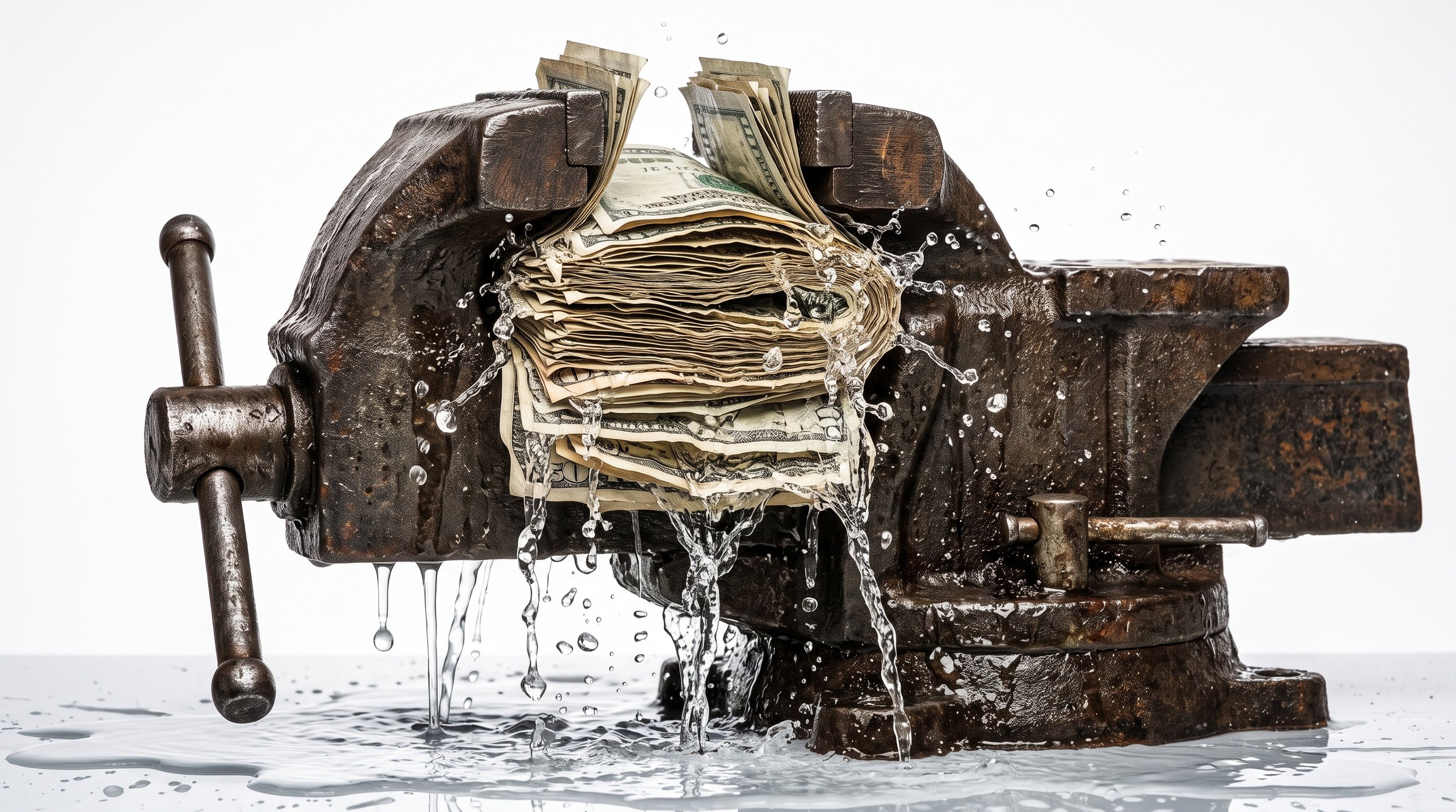
If your business is making payments to one or more merchant cash advance (MCA) or short-term business lending companies, you already know the feeling. Revenue comes in, and before you can pay your suppliers, your crew, or yourself, a large share of it is gone. You took the first advance to solve an urgent problem. You took the second to cover the payments on the first. Now the payments are running the business instead of the other way around.
You are not alone, and you are not out of options. Thousands of healthy, revenue-producing companies end up in this exact position every year, not because the business is broken, but because the financing is. Short-term business debt was never designed to be permanent capital, and when it is used that way, it quietly drains even strong operations.
This article lays out a clear, three-step path out of that cycle: restructure what you owe today, look to quickly replace expensive short-term financing with longer and cheaper bridge financing and then graduate to a true credit facility with a private credit or commercial bank partner. Each step builds on the one before it, and together they can move your company from survival mode back to growth.

Most business owners know exactly what their last advance or short-term loan cost them on paper. Far fewer know what it cost them in practice. The factor rate, the origination fee and the frequent remittances are the visible part of the bill. The larger part shows up later, in thinner inventory, delayed hires, strained vendor relationships, skipped maintenance and an owner who spends more time managing cash than running the company.
This article is for owners who have taken on expensive, fast funding to get through a tight stretch and now feel the business working for the lender instead of the other way around. It is also for owners who are considering that kind of financing right now and want to understand what they are really signing up for.
What follows breaks down how short-term and stacked financing quietly reshapes business operations, why the true cost is almost always higher than the quoted cost and what practical steps you can take to stabilize cash flow, regain control and move toward capital that supports growth instead of draining it.

If your business is juggling several short-term loans, merchant cash advances, equipment financings and lines of credit, you already know the feeling. Money comes in, and before you can use it to grow, it is whisked away by ACH debits to a handful or more of transactional business funders and lenders. Business is profitable on paper, yet always short on cash.
There is a better business financing structure. The funding brokers and lenders you are working with now do not have the experience or ability to offer 24, 36 and 60-month terms on a business credit facility starting at 13% to 16% cost of capital. They are in the business of short-term, fast-moving and expensive capital, not long-term growth capital. By consolidating those individual transactional financings into a single, longer-term business private credit facility, many small and mid-sized businesses can reduce their cost of capital by one-half to two-thirds, dramatically lower their monthly and annual total debt service payments and free up cash that can go straight back into investment and operations.
This article explains how that works, why private credit investment funds and boutique commercial banks are often the right partners for it, and what the process looks like when an experienced business finance advisor manages the process on your behalf.

If your business has taken on expensive business debt like expensive term loans or merchant cash advances (MCAs) with rates that quietly eat your profit margins, you already know the feeling. It doesn't show up all at once. It shows up in the space between what you thought you'd have left over and what's actually sitting in the account on a Friday afternoon.
The good news is that expensive business debt is rarely a dead end. It's a solvable problem. But solving it takes more than hope, and it takes more than trusting the first friendly voice that calls you promising a way out. This article walks through what actually gets a business owner out of the expensive business debt cycle, and just as important, what keeps well-meaning business owners stuck in it for far longer than they need or want to be.